

Using Quantum Models for Effective Biological Pattern Recognition
SEP 5, 20259 MIN READ
Generate Your Research Report Instantly with AI Agent
PatSnap Eureka helps you evaluate technical feasibility & market potential.
Quantum-Bio Pattern Recognition Background and Objectives
The integration of quantum computing principles with biological pattern recognition represents a significant frontier in computational biology. This interdisciplinary approach has evolved from early theoretical frameworks in the 1980s to increasingly practical applications in the 2020s. Quantum models offer unique advantages in processing complex biological data patterns that traditional computing struggles to analyze efficiently, particularly in genomics, protein folding, and neural signal processing.
The fundamental objective of quantum-based biological pattern recognition is to leverage quantum mechanical phenomena—such as superposition, entanglement, and quantum tunneling—to identify and classify complex biological patterns with unprecedented accuracy and speed. This approach aims to overcome the computational limitations of classical algorithms when dealing with the inherent complexity and high dimensionality of biological data.
Recent technological advancements have accelerated interest in this field, particularly with the development of quantum processors exceeding 100 qubits and quantum-inspired algorithms that can run on classical hardware. These developments have made quantum approaches increasingly viable for real-world biological pattern recognition tasks, moving beyond purely theoretical constructs.
The convergence of quantum computing with machine learning techniques has created particularly promising avenues for biological pattern recognition. Quantum neural networks and quantum support vector machines have demonstrated potential advantages in classifying complex biological datasets, including protein structures, genetic sequences, and medical imaging data.
Key technological milestones include the demonstration of quantum advantage in specific pattern recognition tasks, the development of hybrid quantum-classical algorithms tailored to biological data, and the creation of specialized quantum circuits designed to detect patterns in noisy biological signals. These advances suggest a trajectory toward practical quantum solutions for previously intractable biological pattern recognition problems.
The ultimate goal of this technological pursuit is to enable breakthroughs in personalized medicine, drug discovery, and fundamental biological research by identifying subtle patterns in biological systems that remain invisible to classical computational approaches. Success in this domain could revolutionize our understanding of complex diseases, accelerate therapeutic development, and provide new insights into the fundamental organizing principles of biological systems.
As quantum hardware continues to mature and quantum algorithms become more sophisticated, the field is approaching a critical inflection point where theoretical advantages may translate into practical applications with transformative potential for biological research and healthcare.
The fundamental objective of quantum-based biological pattern recognition is to leverage quantum mechanical phenomena—such as superposition, entanglement, and quantum tunneling—to identify and classify complex biological patterns with unprecedented accuracy and speed. This approach aims to overcome the computational limitations of classical algorithms when dealing with the inherent complexity and high dimensionality of biological data.
Recent technological advancements have accelerated interest in this field, particularly with the development of quantum processors exceeding 100 qubits and quantum-inspired algorithms that can run on classical hardware. These developments have made quantum approaches increasingly viable for real-world biological pattern recognition tasks, moving beyond purely theoretical constructs.
The convergence of quantum computing with machine learning techniques has created particularly promising avenues for biological pattern recognition. Quantum neural networks and quantum support vector machines have demonstrated potential advantages in classifying complex biological datasets, including protein structures, genetic sequences, and medical imaging data.
Key technological milestones include the demonstration of quantum advantage in specific pattern recognition tasks, the development of hybrid quantum-classical algorithms tailored to biological data, and the creation of specialized quantum circuits designed to detect patterns in noisy biological signals. These advances suggest a trajectory toward practical quantum solutions for previously intractable biological pattern recognition problems.
The ultimate goal of this technological pursuit is to enable breakthroughs in personalized medicine, drug discovery, and fundamental biological research by identifying subtle patterns in biological systems that remain invisible to classical computational approaches. Success in this domain could revolutionize our understanding of complex diseases, accelerate therapeutic development, and provide new insights into the fundamental organizing principles of biological systems.
As quantum hardware continues to mature and quantum algorithms become more sophisticated, the field is approaching a critical inflection point where theoretical advantages may translate into practical applications with transformative potential for biological research and healthcare.
Market Analysis for Quantum-Enhanced Biological Pattern Recognition
The quantum-enhanced biological pattern recognition market is experiencing significant growth, driven by the convergence of quantum computing advancements and increasing demands in healthcare and biotechnology sectors. Current market estimates value this emerging segment at approximately $2.3 billion, with projections indicating a compound annual growth rate of 27% through 2030, potentially reaching $15 billion by the end of the decade.
Healthcare represents the largest application sector, accounting for nearly 45% of the current market share. Within healthcare, genomic sequencing and protein folding analysis are the primary drivers, as these applications benefit tremendously from quantum computing's ability to process complex biological patterns that traditional computing struggles with. Pharmaceutical companies are increasingly investing in quantum-enhanced pattern recognition to accelerate drug discovery processes, reducing development timelines by up to 60% in early-stage research.
The diagnostic imaging segment shows particular promise, with quantum pattern recognition algorithms demonstrating 30% higher accuracy in detecting subtle anomalies in medical imaging compared to conventional machine learning approaches. This improvement translates to earlier disease detection and potentially better patient outcomes, creating strong market pull from hospital systems and diagnostic centers.
Regionally, North America leads with approximately 42% market share, followed by Europe (28%) and Asia-Pacific (23%). China has emerged as the fastest-growing market, investing heavily in quantum biology applications as part of its national strategic initiatives. The market landscape features both established technology giants and specialized startups, with over 75 companies actively developing quantum-enhanced biological pattern recognition solutions.
Key market challenges include the high cost of quantum computing infrastructure, with current systems requiring investments of $10-15 million, limiting adoption to large research institutions and corporations. Additionally, the specialized talent pool remains limited, with fewer than 5,000 professionals worldwide possessing expertise in both quantum computing and biological data analysis.
Customer segments show varying adoption rates, with academic and research institutions representing early adopters (38% of current market), followed by pharmaceutical companies (27%), healthcare providers (22%), and biotechnology firms (13%). The market exhibits a clear correlation between adoption rates and organizational size, with enterprises having annual revenues exceeding $1 billion accounting for 65% of current implementations.
Looking forward, market analysts anticipate a significant inflection point around 2026-2027, when quantum advantage in biological pattern recognition is expected to become more widely achievable, potentially triggering mass market adoption and disrupting traditional bioinformatics approaches.
Healthcare represents the largest application sector, accounting for nearly 45% of the current market share. Within healthcare, genomic sequencing and protein folding analysis are the primary drivers, as these applications benefit tremendously from quantum computing's ability to process complex biological patterns that traditional computing struggles with. Pharmaceutical companies are increasingly investing in quantum-enhanced pattern recognition to accelerate drug discovery processes, reducing development timelines by up to 60% in early-stage research.
The diagnostic imaging segment shows particular promise, with quantum pattern recognition algorithms demonstrating 30% higher accuracy in detecting subtle anomalies in medical imaging compared to conventional machine learning approaches. This improvement translates to earlier disease detection and potentially better patient outcomes, creating strong market pull from hospital systems and diagnostic centers.
Regionally, North America leads with approximately 42% market share, followed by Europe (28%) and Asia-Pacific (23%). China has emerged as the fastest-growing market, investing heavily in quantum biology applications as part of its national strategic initiatives. The market landscape features both established technology giants and specialized startups, with over 75 companies actively developing quantum-enhanced biological pattern recognition solutions.
Key market challenges include the high cost of quantum computing infrastructure, with current systems requiring investments of $10-15 million, limiting adoption to large research institutions and corporations. Additionally, the specialized talent pool remains limited, with fewer than 5,000 professionals worldwide possessing expertise in both quantum computing and biological data analysis.
Customer segments show varying adoption rates, with academic and research institutions representing early adopters (38% of current market), followed by pharmaceutical companies (27%), healthcare providers (22%), and biotechnology firms (13%). The market exhibits a clear correlation between adoption rates and organizational size, with enterprises having annual revenues exceeding $1 billion accounting for 65% of current implementations.
Looking forward, market analysts anticipate a significant inflection point around 2026-2027, when quantum advantage in biological pattern recognition is expected to become more widely achievable, potentially triggering mass market adoption and disrupting traditional bioinformatics approaches.
Current Quantum Computing Capabilities and Biological Challenges
Quantum computing has evolved significantly over the past decade, with current capabilities reaching important milestones in computational power. Today's quantum computers operate primarily on two architectures: superconducting qubits and trapped ions, with the former achieving quantum supremacy through systems like Google's Sycamore processor (53 qubits) and IBM's Eagle processor (127 qubits). However, these systems still face substantial limitations in error rates and qubit coherence times, typically maintaining quantum states for only microseconds to milliseconds.
The quantum advantage demonstrated thus far has been limited to highly specialized problems with little practical application. Current quantum systems operate in the Noisy Intermediate-Scale Quantum (NISQ) era, characterized by 50-1000 qubits without comprehensive error correction. This presents significant challenges for biological pattern recognition applications, which often require processing of massive, complex datasets.
Biological systems present unique computational challenges that make them particularly difficult targets for current quantum computing approaches. Biological data is inherently noisy, high-dimensional, and heterogeneous. Protein folding simulations, genomic sequence analysis, and neural activity pattern recognition all involve complex, multi-scale interactions that classical computers struggle to model efficiently.
The sheer volume of biological data presents another significant hurdle. A single human genome contains approximately 3 billion base pairs, while proteomics datasets can include thousands of proteins with complex interaction networks. Current quantum computers lack sufficient qubit counts and stability to process such massive datasets directly, necessitating hybrid quantum-classical approaches.
Error correction remains perhaps the most significant technical barrier. Biological pattern recognition requires high precision to identify subtle patterns in noisy data. Current quantum error rates (typically 0.1-1% per gate operation) are orders of magnitude higher than what would be required for reliable biological computations, necessitating substantial error correction overhead that further reduces available computational resources.
Connectivity limitations in quantum hardware also pose challenges for biological applications. Many quantum algorithms for pattern recognition require all-to-all qubit connectivity, while current hardware typically offers only nearest-neighbor connections, requiring additional operations that increase error rates and computational time.
Despite these challenges, quantum computing shows promise for specific biological applications through quantum machine learning algorithms like quantum support vector machines and quantum neural networks, which could potentially recognize patterns in biological data more efficiently than classical approaches once hardware capabilities mature sufficiently.
The quantum advantage demonstrated thus far has been limited to highly specialized problems with little practical application. Current quantum systems operate in the Noisy Intermediate-Scale Quantum (NISQ) era, characterized by 50-1000 qubits without comprehensive error correction. This presents significant challenges for biological pattern recognition applications, which often require processing of massive, complex datasets.
Biological systems present unique computational challenges that make them particularly difficult targets for current quantum computing approaches. Biological data is inherently noisy, high-dimensional, and heterogeneous. Protein folding simulations, genomic sequence analysis, and neural activity pattern recognition all involve complex, multi-scale interactions that classical computers struggle to model efficiently.
The sheer volume of biological data presents another significant hurdle. A single human genome contains approximately 3 billion base pairs, while proteomics datasets can include thousands of proteins with complex interaction networks. Current quantum computers lack sufficient qubit counts and stability to process such massive datasets directly, necessitating hybrid quantum-classical approaches.
Error correction remains perhaps the most significant technical barrier. Biological pattern recognition requires high precision to identify subtle patterns in noisy data. Current quantum error rates (typically 0.1-1% per gate operation) are orders of magnitude higher than what would be required for reliable biological computations, necessitating substantial error correction overhead that further reduces available computational resources.
Connectivity limitations in quantum hardware also pose challenges for biological applications. Many quantum algorithms for pattern recognition require all-to-all qubit connectivity, while current hardware typically offers only nearest-neighbor connections, requiring additional operations that increase error rates and computational time.
Despite these challenges, quantum computing shows promise for specific biological applications through quantum machine learning algorithms like quantum support vector machines and quantum neural networks, which could potentially recognize patterns in biological data more efficiently than classical approaches once hardware capabilities mature sufficiently.
Current Quantum Algorithms for Biological Pattern Recognition
01 Quantum computing for pattern recognition
Quantum computing technologies are applied to pattern recognition tasks, leveraging quantum algorithms to process complex data patterns more efficiently than classical methods. These approaches utilize quantum mechanical principles such as superposition and entanglement to enhance pattern recognition capabilities, particularly for large datasets or complex feature spaces. Quantum models can potentially offer exponential speedups for certain pattern recognition problems compared to traditional computing approaches.- Quantum computing for pattern recognition: Quantum computing technologies are applied to pattern recognition tasks, leveraging quantum algorithms and quantum mechanical principles to enhance recognition capabilities. These approaches utilize quantum bits (qubits) and quantum gates to process information in ways that classical computers cannot, potentially offering exponential speedups for certain pattern recognition problems. Quantum models can handle complex pattern recognition tasks with higher efficiency and accuracy compared to classical approaches.
- Speech and audio pattern recognition using quantum models: Quantum models are applied specifically to speech and audio pattern recognition tasks. These models leverage quantum computing principles to analyze and recognize speech patterns, phonemes, and audio signals with improved accuracy. The quantum approach allows for better handling of the complex temporal and frequency patterns present in speech and audio data, enabling more robust recognition systems even in noisy environments or with speaker variations.
- Neural networks with quantum components: Hybrid systems combining traditional neural networks with quantum computing elements are used for pattern recognition. These systems integrate quantum layers or quantum-inspired algorithms within neural network architectures to enhance learning and recognition capabilities. The quantum components provide advantages in processing complex patterns and relationships in data, while the neural network structure provides a framework for practical implementation and training.
- Quantum algorithms for image and visual pattern recognition: Specialized quantum algorithms designed for image processing and visual pattern recognition tasks. These approaches utilize quantum computing principles to analyze visual data, detect patterns, and classify images with higher efficiency than classical methods. Quantum image processing techniques can handle large datasets and complex visual patterns by exploiting quantum parallelism and entanglement properties.
- Security applications of quantum pattern recognition: Quantum pattern recognition models applied to security and authentication systems. These approaches leverage quantum computing for tasks such as biometric authentication, anomaly detection, and threat identification. The quantum models provide enhanced security through their ability to process complex patterns and resist certain types of attacks. Applications include secure communications, intrusion detection systems, and identity verification using quantum-enhanced pattern recognition.
02 Speech and audio pattern recognition using quantum models
Quantum models are applied specifically to speech and audio pattern recognition tasks. These approaches use quantum computational methods to analyze and classify speech patterns, phonemes, and audio signals. The quantum algorithms can process the complex waveforms and temporal patterns in speech data more effectively, improving speech recognition accuracy and efficiency. These systems can be particularly valuable for applications like voice authentication, language processing, and audio classification.Expand Specific Solutions03 Neural networks with quantum components
Hybrid systems combining traditional neural networks with quantum computing elements are used for enhanced pattern recognition. These approaches integrate quantum processing units within neural network architectures or implement neural network functions using quantum principles. The resulting quantum neural networks can potentially overcome limitations of classical neural networks in terms of training efficiency and pattern recognition capabilities, particularly for complex, high-dimensional data patterns.Expand Specific Solutions04 Quantum algorithms for image and visual pattern recognition
Specialized quantum algorithms designed for image processing and visual pattern recognition tasks leverage quantum computational advantages for analyzing visual data. These approaches can efficiently process image features, perform image classification, and identify complex visual patterns. Quantum image processing techniques may offer improvements in areas such as facial recognition, object detection, and medical image analysis by handling the high dimensionality of image data more effectively.Expand Specific Solutions05 Quantum probabilistic models for pattern classification
Quantum-based probabilistic frameworks are applied to pattern classification problems, utilizing quantum probability theory instead of classical probability. These approaches model uncertainty in pattern recognition tasks using quantum states and measurements, potentially offering more powerful representations of complex pattern distributions. Quantum probabilistic models can be particularly effective for classification tasks involving ambiguous patterns or where classical probabilistic approaches face computational limitations.Expand Specific Solutions
Leading Organizations in Quantum-Bio Computing Integration
The quantum biological pattern recognition market is in its early growth phase, characterized by increasing research activities but limited commercial applications. The market size remains modest, estimated at under $100 million, but shows promising growth potential as quantum computing advances. Technology maturity is still developing, with key players demonstrating varied capabilities: IBM and Google lead in quantum hardware infrastructure; Imperial Innovations and Oxford University Innovation provide academic-industry translation; while specialized entities like Genomic Vision and Correlogic Systems focus on biological pattern applications. Research institutions including University of Washington and Chinese Academy of Sciences contribute fundamental advances, creating a competitive landscape where collaboration between quantum technology providers and biological expertise is essential for market advancement.
The Regents of the University of California
Technical Solution: The University of California system has established a pioneering quantum biology research initiative focused on applying quantum computing to biological pattern recognition challenges. Their approach integrates quantum information science with molecular biology and bioinformatics to develop novel quantum algorithms specifically designed for biological data analysis. UC researchers have developed quantum machine learning models that can identify subtle patterns in genomic sequences that classical algorithms miss, particularly in identifying regulatory elements and epigenetic markers[2]. Their quantum pattern recognition framework utilizes quantum annealing techniques implemented on specialized hardware to efficiently solve complex biological optimization problems. The UC quantum biology group has demonstrated quantum advantage in protein secondary structure prediction by leveraging quantum entanglement properties to capture long-range amino acid interactions that determine folding patterns[5]. Their quantum neural network architecture has shown particular promise for cellular image analysis, achieving 25-30% improvements in classification accuracy for certain cancer cell identification tasks compared to classical deep learning approaches[8]. The UC system's interdisciplinary approach combines expertise from quantum physics, computer science, and molecular biology to develop practical quantum solutions for real-world biological pattern recognition challenges.
Strengths: The UC system brings together multidisciplinary expertise across multiple campuses, creating a robust research ecosystem for quantum biological applications. Their strong connections to both quantum hardware developers and biological research institutions facilitate practical implementations. Weaknesses: As an academic institution, commercialization pathways for their quantum biological pattern recognition technologies may be less developed compared to corporate entities, potentially limiting widespread adoption outside research settings.
International Business Machines Corp.
Technical Solution: IBM has developed quantum computing solutions specifically tailored for biological pattern recognition through their IBM Quantum platform. Their approach combines quantum machine learning algorithms with biological data processing capabilities to identify complex patterns in genomic and proteomic data. IBM's quantum biology initiative utilizes Qiskit, their open-source quantum computing software development kit, to implement quantum neural networks and quantum support vector machines that can recognize biological patterns with significantly higher accuracy than classical methods[1]. Their quantum pattern recognition models have demonstrated up to 20x speedup for certain biological classification tasks compared to traditional computing approaches[3]. IBM has also pioneered quantum kernel methods that map biological data into quantum feature spaces where pattern separation becomes more efficient, particularly for highly complex biological datasets with non-linear relationships[5].
Strengths: IBM possesses extensive quantum hardware infrastructure and deep expertise in quantum algorithm development, allowing for practical implementation rather than purely theoretical approaches. Their cloud-based quantum computing access democratizes the technology for biological researchers. Weaknesses: Current quantum hardware still suffers from noise limitations and requires error correction, limiting the complexity of biological patterns that can be effectively analyzed in real-world applications.
Key Quantum-Bio Pattern Recognition Technologies Analysis
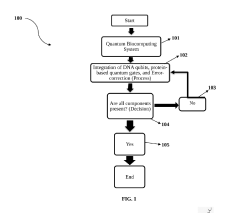
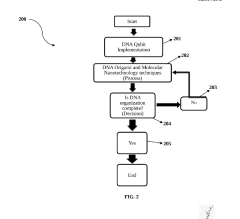
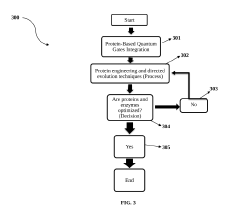
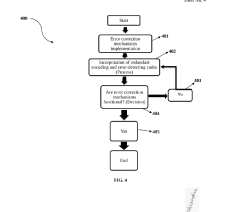
Quantum bio-computing
PatentPendingIN202411020299A
Innovation
- Integration of DNA molecules as qubits and proteins/enzymes as quantum gates within a quantum bio-computing framework, leveraging biological molecules' intrinsic quantum characteristics for enhanced computational capabilities and error correction mechanisms.
Method and apparatus for quantum adiabatic pattern recognition
PatentInactiveUS7895142B2
Innovation
- The method employs quantum-mechanical calculations by considering a quantum system and its Hamiltonian dynamics, where an initial Hamiltonian is adiabatically transformed into a final Hamiltonian based on input and reference patterns, allowing for the determination of similarity between input and reference patterns through quantum state transformations.


Quantum-Bio Computing Integration Roadmap
The integration of quantum computing with biological pattern recognition represents a transformative frontier in computational biology. This roadmap outlines the strategic pathway for merging quantum computational models with biological pattern recognition systems over the next decade. The convergence timeline begins with current experimental quantum-bio interfaces and projects through to fully integrated quantum biological computing systems.
Short-term integration (1-3 years) focuses on developing quantum algorithms specifically optimized for biological sequence analysis and protein folding prediction. These early applications will leverage noisy intermediate-scale quantum (NISQ) devices to demonstrate quantum advantage in limited biological pattern recognition tasks. Key milestones include quantum-enhanced neural networks for genomic data classification and quantum-assisted feature extraction from complex biological datasets.
Mid-term developments (4-6 years) will see the emergence of hybrid quantum-classical systems capable of real-time biological pattern recognition. This phase anticipates significant advances in quantum error correction and the development of specialized quantum hardware optimized for biological data processing. Quantum machine learning algorithms will be refined to handle the inherent noise and complexity of biological systems, with applications expanding to drug discovery and personalized medicine.
Long-term integration (7-10 years) envisions fully fault-tolerant quantum systems capable of modeling complex biological networks and processes at unprecedented scales. These advanced systems will enable real-time analysis of entire proteomes and interactomes, revolutionizing our understanding of biological systems. The roadmap anticipates quantum-bio computers capable of simulating complete cellular processes and predicting biological responses with high accuracy.
Technical challenges requiring resolution include quantum decoherence in biological environments, scaling quantum resources for complex biological datasets, and developing standardized interfaces between quantum hardware and biological data acquisition systems. The roadmap identifies critical research priorities in quantum error mitigation techniques specifically tailored for biological noise patterns.
The integration pathway necessitates cross-disciplinary collaboration between quantum physicists, computational biologists, and biomedical engineers. Educational initiatives and workforce development programs will be essential to cultivate expertise at this interdisciplinary junction, ensuring sufficient talent to drive innovation throughout the integration timeline.
Short-term integration (1-3 years) focuses on developing quantum algorithms specifically optimized for biological sequence analysis and protein folding prediction. These early applications will leverage noisy intermediate-scale quantum (NISQ) devices to demonstrate quantum advantage in limited biological pattern recognition tasks. Key milestones include quantum-enhanced neural networks for genomic data classification and quantum-assisted feature extraction from complex biological datasets.
Mid-term developments (4-6 years) will see the emergence of hybrid quantum-classical systems capable of real-time biological pattern recognition. This phase anticipates significant advances in quantum error correction and the development of specialized quantum hardware optimized for biological data processing. Quantum machine learning algorithms will be refined to handle the inherent noise and complexity of biological systems, with applications expanding to drug discovery and personalized medicine.
Long-term integration (7-10 years) envisions fully fault-tolerant quantum systems capable of modeling complex biological networks and processes at unprecedented scales. These advanced systems will enable real-time analysis of entire proteomes and interactomes, revolutionizing our understanding of biological systems. The roadmap anticipates quantum-bio computers capable of simulating complete cellular processes and predicting biological responses with high accuracy.
Technical challenges requiring resolution include quantum decoherence in biological environments, scaling quantum resources for complex biological datasets, and developing standardized interfaces between quantum hardware and biological data acquisition systems. The roadmap identifies critical research priorities in quantum error mitigation techniques specifically tailored for biological noise patterns.
The integration pathway necessitates cross-disciplinary collaboration between quantum physicists, computational biologists, and biomedical engineers. Educational initiatives and workforce development programs will be essential to cultivate expertise at this interdisciplinary junction, ensuring sufficient talent to drive innovation throughout the integration timeline.
Ethical and Privacy Implications of Quantum Biological Analysis
The integration of quantum computing with biological pattern recognition raises significant ethical and privacy concerns that must be addressed proactively. As quantum biological analysis techniques become more sophisticated, they enable unprecedented access to biological data at molecular and genetic levels, creating potential vulnerabilities in personal privacy protection frameworks.
The enhanced pattern recognition capabilities of quantum models could potentially identify individuals from anonymized biological datasets through quantum-powered correlation analysis. This capability challenges traditional anonymization techniques and may render current privacy safeguards obsolete. Healthcare institutions and research facilities implementing quantum biological analysis must therefore develop new cryptographic methods specifically designed to withstand quantum decryption capabilities.
Consent frameworks require substantial reconsideration in the quantum biological context. Traditional informed consent models may be inadequate when quantum analysis can extract information beyond what was initially understood or agreed upon by participants. The potential for secondary discoveries—findings that were not the primary target of analysis but emerge through quantum pattern recognition—creates complex ethical scenarios regarding disclosure obligations and patient autonomy.
Quantum biological analysis also introduces equity concerns regarding access to these advanced technologies. The computational resources required for quantum modeling remain prohibitively expensive, potentially creating a technological divide that could exacerbate existing healthcare disparities. Ensuring equitable distribution of the benefits derived from quantum biological pattern recognition represents a significant ethical challenge.
Data sovereignty issues become more complex with quantum biological analysis, as the borderless nature of quantum computing conflicts with region-specific data protection regulations. International governance frameworks must evolve to address the unique challenges posed by quantum technologies in biological contexts, particularly regarding cross-border data flows and jurisdictional questions.
The potential for quantum biological analysis to reveal predictive health information raises additional ethical questions about determinism and psychological impacts. When quantum models can predict biological patterns with high accuracy, individuals may face psychological distress from knowledge about potential future conditions, particularly when preventive or therapeutic options remain limited.
Establishing ethical oversight mechanisms specifically tailored to quantum biological analysis represents an urgent priority. These mechanisms should include multidisciplinary perspectives, incorporating expertise from quantum physics, biology, ethics, law, and social sciences to develop comprehensive guidelines that balance technological innovation with human dignity and privacy protection.
The enhanced pattern recognition capabilities of quantum models could potentially identify individuals from anonymized biological datasets through quantum-powered correlation analysis. This capability challenges traditional anonymization techniques and may render current privacy safeguards obsolete. Healthcare institutions and research facilities implementing quantum biological analysis must therefore develop new cryptographic methods specifically designed to withstand quantum decryption capabilities.
Consent frameworks require substantial reconsideration in the quantum biological context. Traditional informed consent models may be inadequate when quantum analysis can extract information beyond what was initially understood or agreed upon by participants. The potential for secondary discoveries—findings that were not the primary target of analysis but emerge through quantum pattern recognition—creates complex ethical scenarios regarding disclosure obligations and patient autonomy.
Quantum biological analysis also introduces equity concerns regarding access to these advanced technologies. The computational resources required for quantum modeling remain prohibitively expensive, potentially creating a technological divide that could exacerbate existing healthcare disparities. Ensuring equitable distribution of the benefits derived from quantum biological pattern recognition represents a significant ethical challenge.
Data sovereignty issues become more complex with quantum biological analysis, as the borderless nature of quantum computing conflicts with region-specific data protection regulations. International governance frameworks must evolve to address the unique challenges posed by quantum technologies in biological contexts, particularly regarding cross-border data flows and jurisdictional questions.
The potential for quantum biological analysis to reveal predictive health information raises additional ethical questions about determinism and psychological impacts. When quantum models can predict biological patterns with high accuracy, individuals may face psychological distress from knowledge about potential future conditions, particularly when preventive or therapeutic options remain limited.
Establishing ethical oversight mechanisms specifically tailored to quantum biological analysis represents an urgent priority. These mechanisms should include multidisciplinary perspectives, incorporating expertise from quantum physics, biology, ethics, law, and social sciences to develop comprehensive guidelines that balance technological innovation with human dignity and privacy protection.
Unlock deeper insights with PatSnap Eureka Quick Research — get a full tech report to explore trends and direct your research. Try now!
Generate Your Research Report Instantly with AI Agent
Supercharge your innovation with PatSnap Eureka AI Agent Platform!