Volumetric Additive Manufacturing For Aerospace Interior Components
SEP 4, 20259 MIN READ
Generate Your Research Report Instantly with AI Agent
PatSnap Eureka helps you evaluate technical feasibility & market potential.
Aerospace VAM Technology Evolution and Objectives
Volumetric Additive Manufacturing (VAM) represents a significant evolution in aerospace manufacturing technology, emerging from traditional additive manufacturing methods in the early 2000s. The technology has progressed from basic stereolithography techniques to sophisticated volumetric printing systems capable of creating complex three-dimensional structures simultaneously rather than layer-by-layer. This paradigm shift has been driven by the aerospace industry's increasing demand for lightweight, high-strength components with complex geometries that traditional manufacturing methods struggle to produce efficiently.
The evolution of VAM technology for aerospace interior components has followed a trajectory marked by several key advancements. Initially limited to prototype development, VAM has matured to enable the production of functional parts with mechanical properties suitable for aerospace applications. Material science breakthroughs have expanded the range of printable materials to include high-performance polymers, composites, and even certain metal alloys specifically engineered for aerospace environments.
Resolution capabilities have improved dramatically, from millimeter-scale features to micro-scale precision, allowing for intricate interior components with embedded functionality. Processing speeds have increased exponentially, reducing production times from days to hours or even minutes for certain components, addressing the aerospace industry's need for rapid manufacturing solutions.
The primary technological objective of aerospace VAM is to achieve a balance between manufacturing speed, component quality, and material performance. Specifically, the industry aims to develop VAM systems capable of producing certified aerospace interior components that meet stringent safety regulations while offering weight reduction of 30-50% compared to traditionally manufactured parts. This includes fire resistance, smoke toxicity, and mechanical performance under varying temperature and pressure conditions.
Another critical objective is the integration of multi-material printing capabilities to create components with gradient properties or embedded electronics, sensors, and thermal management systems. This would enable the production of "smart" interior components that contribute to aircraft monitoring and passenger experience enhancement while reducing assembly requirements and potential failure points.
Looking forward, the technology roadmap for aerospace VAM focuses on scaling production capabilities to accommodate larger interior components such as cabin dividers, overhead bins, and seating structures. Simultaneously, research efforts are directed toward improving surface finish quality to reduce or eliminate post-processing requirements, thereby shortening the overall manufacturing timeline and reducing costs associated with secondary operations.
The evolution of VAM technology for aerospace interior components has followed a trajectory marked by several key advancements. Initially limited to prototype development, VAM has matured to enable the production of functional parts with mechanical properties suitable for aerospace applications. Material science breakthroughs have expanded the range of printable materials to include high-performance polymers, composites, and even certain metal alloys specifically engineered for aerospace environments.
Resolution capabilities have improved dramatically, from millimeter-scale features to micro-scale precision, allowing for intricate interior components with embedded functionality. Processing speeds have increased exponentially, reducing production times from days to hours or even minutes for certain components, addressing the aerospace industry's need for rapid manufacturing solutions.
The primary technological objective of aerospace VAM is to achieve a balance between manufacturing speed, component quality, and material performance. Specifically, the industry aims to develop VAM systems capable of producing certified aerospace interior components that meet stringent safety regulations while offering weight reduction of 30-50% compared to traditionally manufactured parts. This includes fire resistance, smoke toxicity, and mechanical performance under varying temperature and pressure conditions.
Another critical objective is the integration of multi-material printing capabilities to create components with gradient properties or embedded electronics, sensors, and thermal management systems. This would enable the production of "smart" interior components that contribute to aircraft monitoring and passenger experience enhancement while reducing assembly requirements and potential failure points.
Looking forward, the technology roadmap for aerospace VAM focuses on scaling production capabilities to accommodate larger interior components such as cabin dividers, overhead bins, and seating structures. Simultaneously, research efforts are directed toward improving surface finish quality to reduce or eliminate post-processing requirements, thereby shortening the overall manufacturing timeline and reducing costs associated with secondary operations.
Market Analysis for Aerospace Interior AM Solutions
The aerospace interior components market for additive manufacturing solutions is experiencing significant growth, driven by the industry's increasing demand for lightweight, customizable, and cost-effective parts. Current market valuations indicate that the global aerospace AM market is projected to reach $5.2 billion by 2026, with interior components representing approximately 18% of this segment. This growth trajectory is supported by the aerospace industry's continuous pursuit of fuel efficiency through weight reduction, with AM technologies offering potential weight savings of 40-60% compared to traditional manufacturing methods.
The demand landscape is primarily shaped by commercial aircraft manufacturers and their tier-one suppliers, who are increasingly adopting AM solutions for cabin interiors. Major airlines are also emerging as direct customers, seeking customized interior elements to differentiate their passenger experience. Business jet manufacturers represent another significant market segment, valuing the ability to offer highly personalized cabin environments to their exclusive clientele.
Regional analysis reveals North America currently dominates the market with approximately 42% share, followed by Europe at 31% and Asia-Pacific at 21%. However, the Asia-Pacific region is demonstrating the fastest growth rate at 18.2% annually, driven by expanding commercial aviation fleets in China and India, and increasing manufacturing capabilities in Singapore and Japan.
Key market drivers include the push for fuel efficiency, with each kilogram of weight reduction translating to approximately $3,000 in annual fuel savings per aircraft. Additionally, the industry's focus on sustainability is accelerating adoption, as AM processes typically generate 50-70% less waste compared to traditional subtractive manufacturing methods. Supply chain resilience has emerged as a critical factor post-pandemic, with localized AM production reducing dependency on global supply networks.
Market barriers include stringent certification requirements, with aerospace interior components requiring compliance with FAA, EASA, and other regulatory standards for flammability, toxicity, and mechanical performance. The high initial investment costs for industrial-grade volumetric AM systems remain prohibitive for smaller suppliers, while material options certified for aerospace applications are still limited compared to conventional manufacturing.
Customer pain points primarily revolve around certification timelines, with new AM components typically requiring 12-18 months for full qualification. Production scalability remains challenging, particularly for larger interior components like ceiling panels and bulkheads. Post-processing requirements for surface finishing also present obstacles to wider adoption, as aerospace interiors demand high aesthetic quality alongside functional performance.
The demand landscape is primarily shaped by commercial aircraft manufacturers and their tier-one suppliers, who are increasingly adopting AM solutions for cabin interiors. Major airlines are also emerging as direct customers, seeking customized interior elements to differentiate their passenger experience. Business jet manufacturers represent another significant market segment, valuing the ability to offer highly personalized cabin environments to their exclusive clientele.
Regional analysis reveals North America currently dominates the market with approximately 42% share, followed by Europe at 31% and Asia-Pacific at 21%. However, the Asia-Pacific region is demonstrating the fastest growth rate at 18.2% annually, driven by expanding commercial aviation fleets in China and India, and increasing manufacturing capabilities in Singapore and Japan.
Key market drivers include the push for fuel efficiency, with each kilogram of weight reduction translating to approximately $3,000 in annual fuel savings per aircraft. Additionally, the industry's focus on sustainability is accelerating adoption, as AM processes typically generate 50-70% less waste compared to traditional subtractive manufacturing methods. Supply chain resilience has emerged as a critical factor post-pandemic, with localized AM production reducing dependency on global supply networks.
Market barriers include stringent certification requirements, with aerospace interior components requiring compliance with FAA, EASA, and other regulatory standards for flammability, toxicity, and mechanical performance. The high initial investment costs for industrial-grade volumetric AM systems remain prohibitive for smaller suppliers, while material options certified for aerospace applications are still limited compared to conventional manufacturing.
Customer pain points primarily revolve around certification timelines, with new AM components typically requiring 12-18 months for full qualification. Production scalability remains challenging, particularly for larger interior components like ceiling panels and bulkheads. Post-processing requirements for surface finishing also present obstacles to wider adoption, as aerospace interiors demand high aesthetic quality alongside functional performance.
Current VAM Capabilities and Technical Barriers
Volumetric Additive Manufacturing (VAM) represents a significant advancement in 3D printing technology, offering unprecedented capabilities for aerospace interior component production. Current VAM systems can produce complex geometries with high resolution (up to 50 microns) and relatively fast build speeds compared to traditional layer-by-layer approaches. The technology enables the creation of components with internal features, variable densities, and complex lattice structures that would be impossible to manufacture using conventional methods.
The material compatibility of VAM has expanded significantly, now encompassing various photopolymers, certain composites, and specialized aerospace-grade resins that meet flame retardancy requirements (FAR 25.853). These materials provide adequate mechanical properties for non-structural interior components such as air ducts, cable routing fixtures, and decorative elements. Some advanced VAM systems can also incorporate multi-material printing, allowing for functional gradation within a single component.
Despite these advancements, VAM faces several critical technical barriers for widespread aerospace application. The build volume limitations remain a significant constraint, with most systems restricted to dimensions under 300mm³, necessitating assembly of larger components from multiple printed parts. This limitation reduces the weight-saving potential that could be achieved with monolithic structures.
Material performance presents another major challenge. Current VAM-compatible materials exhibit limited temperature resistance (typically below 100°C), insufficient mechanical properties for load-bearing applications, and accelerated aging characteristics when exposed to UV radiation and humidity cycles common in aerospace environments. Additionally, the long-term durability and fatigue resistance of VAM-produced components remain inadequately characterized for aerospace certification purposes.
Process reliability and repeatability constitute significant barriers to industrial adoption. VAM systems still demonstrate part-to-part variability exceeding aerospace tolerances, with dimensional accuracy fluctuations of ±0.2mm being common. The technology also struggles with consistent material properties throughout the build volume, particularly in regions with complex geometrical features or varying cross-sectional thicknesses.
Certification and quality assurance represent perhaps the most formidable challenges. Current non-destructive testing methods are inadequately adapted for VAM components, making it difficult to verify internal structures and detect potential defects. The aerospace industry's stringent certification requirements demand comprehensive material property databases and process validation protocols that do not yet exist for VAM technologies, significantly hindering their integration into certified aerospace components.
The material compatibility of VAM has expanded significantly, now encompassing various photopolymers, certain composites, and specialized aerospace-grade resins that meet flame retardancy requirements (FAR 25.853). These materials provide adequate mechanical properties for non-structural interior components such as air ducts, cable routing fixtures, and decorative elements. Some advanced VAM systems can also incorporate multi-material printing, allowing for functional gradation within a single component.
Despite these advancements, VAM faces several critical technical barriers for widespread aerospace application. The build volume limitations remain a significant constraint, with most systems restricted to dimensions under 300mm³, necessitating assembly of larger components from multiple printed parts. This limitation reduces the weight-saving potential that could be achieved with monolithic structures.
Material performance presents another major challenge. Current VAM-compatible materials exhibit limited temperature resistance (typically below 100°C), insufficient mechanical properties for load-bearing applications, and accelerated aging characteristics when exposed to UV radiation and humidity cycles common in aerospace environments. Additionally, the long-term durability and fatigue resistance of VAM-produced components remain inadequately characterized for aerospace certification purposes.
Process reliability and repeatability constitute significant barriers to industrial adoption. VAM systems still demonstrate part-to-part variability exceeding aerospace tolerances, with dimensional accuracy fluctuations of ±0.2mm being common. The technology also struggles with consistent material properties throughout the build volume, particularly in regions with complex geometrical features or varying cross-sectional thicknesses.
Certification and quality assurance represent perhaps the most formidable challenges. Current non-destructive testing methods are inadequately adapted for VAM components, making it difficult to verify internal structures and detect potential defects. The aerospace industry's stringent certification requirements demand comprehensive material property databases and process validation protocols that do not yet exist for VAM technologies, significantly hindering their integration into certified aerospace components.
State-of-the-Art VAM Implementation Strategies
01 Volumetric additive manufacturing techniques
Volumetric additive manufacturing (VAM) involves creating 3D objects by solidifying material throughout a volume simultaneously, rather than layer-by-layer. These techniques include computed axial lithography (CAL), tomographic volumetric additive manufacturing, and holographic approaches that use projected light patterns to cure photosensitive resins. This approach enables faster production times compared to traditional layer-by-layer methods and can create complex geometries without support structures.- Light-based volumetric additive manufacturing techniques: Light-based volumetric additive manufacturing involves the use of photopolymerization to create 3D objects by selectively curing photosensitive resins throughout a volume simultaneously, rather than layer by layer. This approach uses projected light patterns or intersecting laser beams to solidify specific regions within a resin vat, enabling faster production times compared to traditional layer-by-layer methods. The technique allows for the creation of complex geometries without support structures and minimizes surface defects associated with layer interfaces.
- Materials and formulations for volumetric printing: Advanced materials and formulations play a crucial role in volumetric additive manufacturing. These include specialized photopolymer resins with tailored viscosity, curing characteristics, and optical properties that enable precise volumetric solidification. Some formulations incorporate photoinitiators that respond to specific wavelengths of light, allowing for controlled polymerization throughout the volume. Other developments include composite materials that combine polymers with functional additives to enhance mechanical properties, thermal stability, or electrical conductivity of the final printed objects.
- Computed tomography-inspired volumetric manufacturing: This approach to volumetric additive manufacturing draws inspiration from computed tomography (CT) imaging techniques. It involves projecting multiple 2D light patterns from different angles into a photosensitive resin, with each pattern contributing to the overall 3D structure. The overlapping light patterns create interference patterns that selectively cure the resin where the light intensity exceeds a threshold. This method enables the creation of complex internal structures and can significantly reduce printing times compared to conventional layer-by-layer approaches.
- Hardware systems and apparatus for volumetric manufacturing: Specialized hardware systems for volumetric additive manufacturing include advanced optical setups with digital light processing (DLP) projectors, spatial light modulators, or multi-axis projection systems. These systems often incorporate rotating build platforms or multiple synchronized light sources to achieve volumetric curing from different angles. Some designs feature temperature control mechanisms to maintain optimal resin properties during the printing process. The hardware may also include sophisticated calibration systems to ensure precise alignment of projected patterns and real-time monitoring capabilities to adjust parameters during fabrication.
- Computational methods and algorithms for volumetric printing: Advanced computational methods are essential for volumetric additive manufacturing, including algorithms that calculate optimal light patterns for complex geometries. These algorithms decompose 3D models into a series of 2D projections or light dose distributions that, when combined, produce the desired volumetric structure. Machine learning approaches are being developed to predict and compensate for optical distortions and material behavior during the curing process. Some systems employ real-time feedback mechanisms that adjust projection patterns based on in-process measurements to improve accuracy and reliability of the printed objects.
02 Materials for volumetric 3D printing
Specialized materials are essential for volumetric additive manufacturing, including photosensitive resins with specific curing properties, dual-initiator systems, and materials with controlled viscosity. These materials are designed to respond to specific light wavelengths and energy thresholds to enable precise volumetric solidification. Advanced formulations incorporate additives to control light scattering, absorption, and penetration depth, which are critical for achieving high-resolution prints throughout the entire volume.Expand Specific Solutions03 Optical systems for volumetric printing
Optical systems for volumetric additive manufacturing utilize sophisticated light projection and control mechanisms to achieve precise spatial control of photopolymerization. These systems may include digital light processing (DLP) projectors, spatial light modulators, holographic elements, or synchronized multi-beam approaches. Advanced optical configurations enable the creation of complex light patterns that can be dynamically adjusted during the printing process to control material solidification throughout the volume.Expand Specific Solutions04 Computational methods for volumetric manufacturing
Computational algorithms are crucial for volumetric additive manufacturing, including tomographic reconstruction techniques, optimization algorithms for light dose distribution, and simulation methods to predict material behavior during curing. These computational approaches enable the calculation of optimal projection patterns needed to create complex 3D geometries. Machine learning and AI techniques are increasingly being applied to improve print accuracy, optimize process parameters, and predict material behavior during the volumetric printing process.Expand Specific Solutions05 Applications and advancements in volumetric manufacturing
Volumetric additive manufacturing is finding applications in various fields including medical device fabrication, tissue engineering, microfluidics, and rapid prototyping. Recent advancements include multi-material volumetric printing, increased build volume capabilities, higher resolution printing, and integration with other manufacturing processes. The technology offers advantages such as reduced production times, elimination of support structures, and the ability to create complex internal geometries that would be difficult to achieve with conventional additive manufacturing methods.Expand Specific Solutions
Leading Aerospace AM Technology Providers
Volumetric Additive Manufacturing (VAM) for aerospace interior components is currently in a growth phase, with the market expanding as technology matures from experimental to commercial applications. The global market is estimated at $300-500 million, expected to grow significantly as adoption increases. Leading players demonstrate varying levels of technological maturity: Airbus Operations and Safran are pioneering implementation in commercial aircraft, while RTX Corp. and MTU Aero Engines focus on advanced material development. Research institutions like Fraunhofer-Gesellschaft and National Research Council of Canada are driving fundamental innovation. Specialized manufacturers such as Evolve Additive Solutions and AIM3D are developing aerospace-specific VAM solutions, with emerging competition from Chinese entities including Shanghai Aerospace Equipment Manufacturing. The ecosystem shows collaborative development patterns between OEMs, suppliers, and research organizations to overcome certification and scalability challenges.
Airbus Operations GmbH
Technical Solution: Airbus Operations has pioneered an integrated volumetric additive manufacturing approach for aerospace interior components through their "Factory of the Future" initiative. Their system combines large-format polymer printing with automated post-processing and quality assurance systems specifically designed for cabin components. Airbus has developed proprietary material formulations that meet stringent aerospace fire, smoke, and toxicity (FST) requirements while maintaining printability in volumetric processes. Their technology incorporates Digital Light Processing (DLP) with oxygen-permeable membranes to achieve continuous volumetric printing of complex geometries. This approach has enabled Airbus to reduce the weight of interior components by up to 55% compared to traditional manufacturing methods while maintaining required mechanical properties. The company has successfully implemented this technology for producing customized air ducts, seating components, and decorative interior elements with integrated functionality.
Strengths: Comprehensive integration with existing aerospace certification processes; materials specifically formulated to meet aviation regulatory requirements; proven weight reduction capabilities; established quality control systems. Weaknesses: Currently limited to specific component types and sizes; higher production costs for smaller production runs compared to traditional methods; longer development cycles for new material qualifications.
Safran SA
Technical Solution: Safran has developed an advanced volumetric additive manufacturing platform specifically for aerospace interior applications called ADDITIVE+. This system utilizes a hybrid approach combining continuous liquid interface production (CLIP) technology with proprietary material formulations designed to meet aerospace certification requirements. Safran's technology enables the production of complex, lightweight structures with embedded functionalities such as integrated wiring channels and mounting features. Their process incorporates real-time monitoring systems using machine vision and AI algorithms to ensure dimensional accuracy and material consistency throughout the build process. Safran has successfully implemented this technology for manufacturing cabin dividers, overhead bin components, and seating elements, achieving weight reductions of 30-40% compared to conventional manufacturing methods. The company has also developed specialized post-processing techniques to achieve the surface finish and aesthetic requirements necessary for visible cabin components.
Strengths: Specialized material formulations meeting aerospace fire, smoke, and toxicity requirements; proven implementation in certified aircraft components; ability to create complex geometries with embedded functionality; significant weight reduction capabilities. Weaknesses: Limited build volume compared to some competing technologies; higher material costs than conventional manufacturing; longer processing times for larger components requiring extensive post-processing.
Critical Patents in Aerospace VAM Technology
Method of volumetric additive manufacturing
PatentWO2024069272A1
Innovation
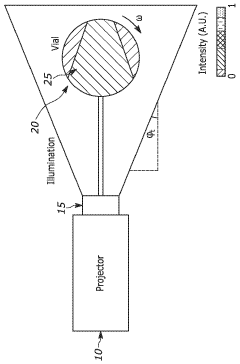
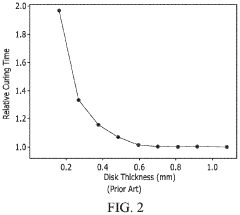
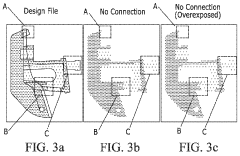
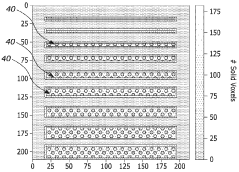
- The method involves rotating a vial of photocurable resin and projecting structured light images to cure only the shell and interior scaffolding of the object, using infilling and deconvolution to correct for diffusion effects, ensuring uniform curing of all features without over-exposure.
Additively Manufactured Component With Integral Fuel Lines Passage
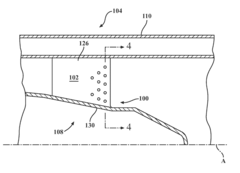
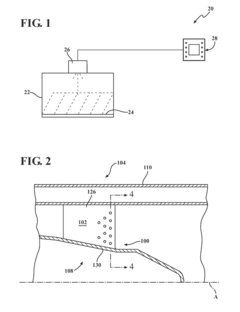
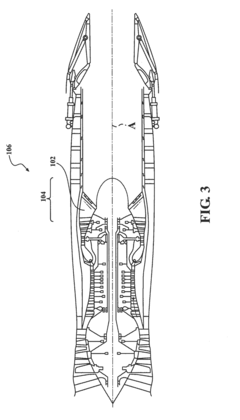
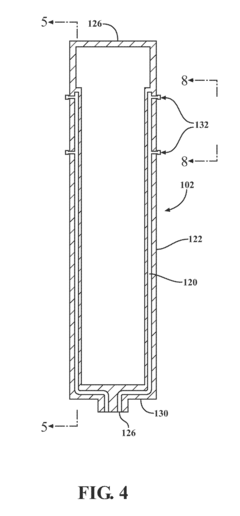
PatentActiveUS20180030842A1
Innovation
- An aerospace component with an additively manufactured augmentor vane that integrates a fuel line within the vane, eliminating the need for separate fuel tubes and seals by using internal passages and exit apertures to manage thermal growth and reduce assembly complexity.
Material Science Advancements for Aerospace VAM
Recent advancements in material science have significantly propelled the field of Volumetric Additive Manufacturing (VAM) for aerospace interior components. The development of high-performance polymers with enhanced thermal stability and flame-retardant properties has been crucial for meeting the stringent safety requirements of aerospace applications. These materials, including polyether ether ketone (PEEK), polyetherimide (PEI), and advanced carbon fiber reinforced composites, offer exceptional strength-to-weight ratios while maintaining compliance with FAA and EASA flammability standards.
Nano-engineered materials represent another breakthrough, with the incorporation of carbon nanotubes and graphene enhancing mechanical properties while reducing overall weight. These nanomaterials have demonstrated up to 40% improvement in tensile strength compared to traditional aerospace-grade polymers, without compromising the material's processability in VAM systems.
Multi-material capabilities have evolved substantially, allowing for the seamless integration of rigid structural components with flexible elements in a single manufacturing process. This advancement enables the production of complex interior components such as armrests with integrated control systems or seat structures with varying density zones for optimized comfort and weight distribution.
Self-healing materials are emerging as a promising innovation for aerospace VAM applications. These materials contain microcapsules of healing agents that are released upon damage, automatically repairing minor cracks and extending component lifespan. Early testing shows potential for reducing maintenance requirements by up to 25% for non-critical interior components.
Biodegradable and sustainable materials are gaining traction in response to increasing environmental concerns. Bio-based polymers derived from renewable resources are being modified to meet aerospace performance requirements while offering reduced environmental impact. These materials demonstrate comparable mechanical properties to petroleum-based counterparts while providing end-of-life advantages.
Surface finishing technologies have also advanced significantly, with the development of specialized coatings that can be applied during or immediately after the VAM process. These coatings provide enhanced UV resistance, antimicrobial properties, and aesthetic finishes that meet the premium standards expected in aircraft interiors.
Computational material design has accelerated development cycles through machine learning algorithms that predict material behavior under various conditions. This approach has reduced traditional material development timelines by up to 60%, allowing for rapid iteration and optimization of materials specifically tailored for aerospace VAM applications.
Nano-engineered materials represent another breakthrough, with the incorporation of carbon nanotubes and graphene enhancing mechanical properties while reducing overall weight. These nanomaterials have demonstrated up to 40% improvement in tensile strength compared to traditional aerospace-grade polymers, without compromising the material's processability in VAM systems.
Multi-material capabilities have evolved substantially, allowing for the seamless integration of rigid structural components with flexible elements in a single manufacturing process. This advancement enables the production of complex interior components such as armrests with integrated control systems or seat structures with varying density zones for optimized comfort and weight distribution.
Self-healing materials are emerging as a promising innovation for aerospace VAM applications. These materials contain microcapsules of healing agents that are released upon damage, automatically repairing minor cracks and extending component lifespan. Early testing shows potential for reducing maintenance requirements by up to 25% for non-critical interior components.
Biodegradable and sustainable materials are gaining traction in response to increasing environmental concerns. Bio-based polymers derived from renewable resources are being modified to meet aerospace performance requirements while offering reduced environmental impact. These materials demonstrate comparable mechanical properties to petroleum-based counterparts while providing end-of-life advantages.
Surface finishing technologies have also advanced significantly, with the development of specialized coatings that can be applied during or immediately after the VAM process. These coatings provide enhanced UV resistance, antimicrobial properties, and aesthetic finishes that meet the premium standards expected in aircraft interiors.
Computational material design has accelerated development cycles through machine learning algorithms that predict material behavior under various conditions. This approach has reduced traditional material development timelines by up to 60%, allowing for rapid iteration and optimization of materials specifically tailored for aerospace VAM applications.
Certification and Compliance Requirements
Aerospace interior components manufactured through Volumetric Additive Manufacturing (VAM) must adhere to stringent certification and compliance requirements established by aviation regulatory bodies worldwide. The Federal Aviation Administration (FAA) in the United States, the European Union Aviation Safety Agency (EASA), and other international authorities have developed comprehensive frameworks specifically addressing aircraft interior materials and components. These regulations primarily focus on fire safety, toxicity, smoke emission, and structural integrity under various flight conditions.
For VAM-produced aerospace interior components, fire resistance certification is paramount. Components must pass vertical burn tests (14 CFR 25.853), heat release rate tests, and smoke density evaluations. The materials used in VAM processes must demonstrate self-extinguishing properties and limited flame propagation characteristics. Recent updates to these standards have placed even greater emphasis on smoke toxicity, requiring manufacturers to ensure that VAM materials do not release harmful gases when exposed to heat or flame.
Structural certification requirements present unique challenges for VAM components. Unlike traditional manufacturing methods with established testing protocols, VAM processes create components with distinctive microstructures and potential anisotropic properties. Certification bodies now require extensive mechanical testing to validate performance under various load conditions, including compression, tension, shear, and fatigue. Additionally, components must demonstrate resistance to environmental factors such as humidity, temperature fluctuations, and pressure changes experienced during flight operations.
Material traceability and process validation form another critical aspect of certification. Manufacturers must implement robust quality management systems that document the entire production process, from raw material specifications to final inspection. For VAM specifically, this includes detailed parameters of the volumetric printing process, post-processing treatments, and non-destructive testing methodologies. The FAA's Manufacturing Inspection District Offices (MIDO) typically require demonstration of process repeatability and statistical process control before granting production approval.
Environmental compliance adds another layer of requirements. Recent regulations from both the FAA and EASA have introduced sustainability criteria that impact material selection for VAM processes. These include restrictions on certain chemicals, requirements for recyclability, and life-cycle assessment considerations. Manufacturers must now document the environmental impact of their VAM materials and processes, including energy consumption during production and end-of-life disposal options.
Emerging certification pathways specifically for additive manufacturing technologies are being developed through collaborative efforts between regulatory bodies and industry stakeholders. The FAA's Additive Manufacturing Innovation Research Alliance (AMIRA) and similar initiatives are working to establish standardized testing protocols and acceptance criteria tailored to the unique characteristics of volumetrically printed components, potentially streamlining the certification process for aerospace interior applications in the future.
For VAM-produced aerospace interior components, fire resistance certification is paramount. Components must pass vertical burn tests (14 CFR 25.853), heat release rate tests, and smoke density evaluations. The materials used in VAM processes must demonstrate self-extinguishing properties and limited flame propagation characteristics. Recent updates to these standards have placed even greater emphasis on smoke toxicity, requiring manufacturers to ensure that VAM materials do not release harmful gases when exposed to heat or flame.
Structural certification requirements present unique challenges for VAM components. Unlike traditional manufacturing methods with established testing protocols, VAM processes create components with distinctive microstructures and potential anisotropic properties. Certification bodies now require extensive mechanical testing to validate performance under various load conditions, including compression, tension, shear, and fatigue. Additionally, components must demonstrate resistance to environmental factors such as humidity, temperature fluctuations, and pressure changes experienced during flight operations.
Material traceability and process validation form another critical aspect of certification. Manufacturers must implement robust quality management systems that document the entire production process, from raw material specifications to final inspection. For VAM specifically, this includes detailed parameters of the volumetric printing process, post-processing treatments, and non-destructive testing methodologies. The FAA's Manufacturing Inspection District Offices (MIDO) typically require demonstration of process repeatability and statistical process control before granting production approval.
Environmental compliance adds another layer of requirements. Recent regulations from both the FAA and EASA have introduced sustainability criteria that impact material selection for VAM processes. These include restrictions on certain chemicals, requirements for recyclability, and life-cycle assessment considerations. Manufacturers must now document the environmental impact of their VAM materials and processes, including energy consumption during production and end-of-life disposal options.
Emerging certification pathways specifically for additive manufacturing technologies are being developed through collaborative efforts between regulatory bodies and industry stakeholders. The FAA's Additive Manufacturing Innovation Research Alliance (AMIRA) and similar initiatives are working to establish standardized testing protocols and acceptance criteria tailored to the unique characteristics of volumetrically printed components, potentially streamlining the certification process for aerospace interior applications in the future.
Unlock deeper insights with PatSnap Eureka Quick Research — get a full tech report to explore trends and direct your research. Try now!
Generate Your Research Report Instantly with AI Agent
Supercharge your innovation with PatSnap Eureka AI Agent Platform!