
Large cultural heritage picture pattern split-joint method based on characteristic
A technology of cultural heritage and image stitching, applied in image enhancement, image data processing, instruments, etc., to achieve the effect of improving efficiency
- Summary
- Abstract
- Description
- Claims
- Application Information
AI Technical Summary
Problems solved by technology
Method used
Image

Examples
Embodiment Construction
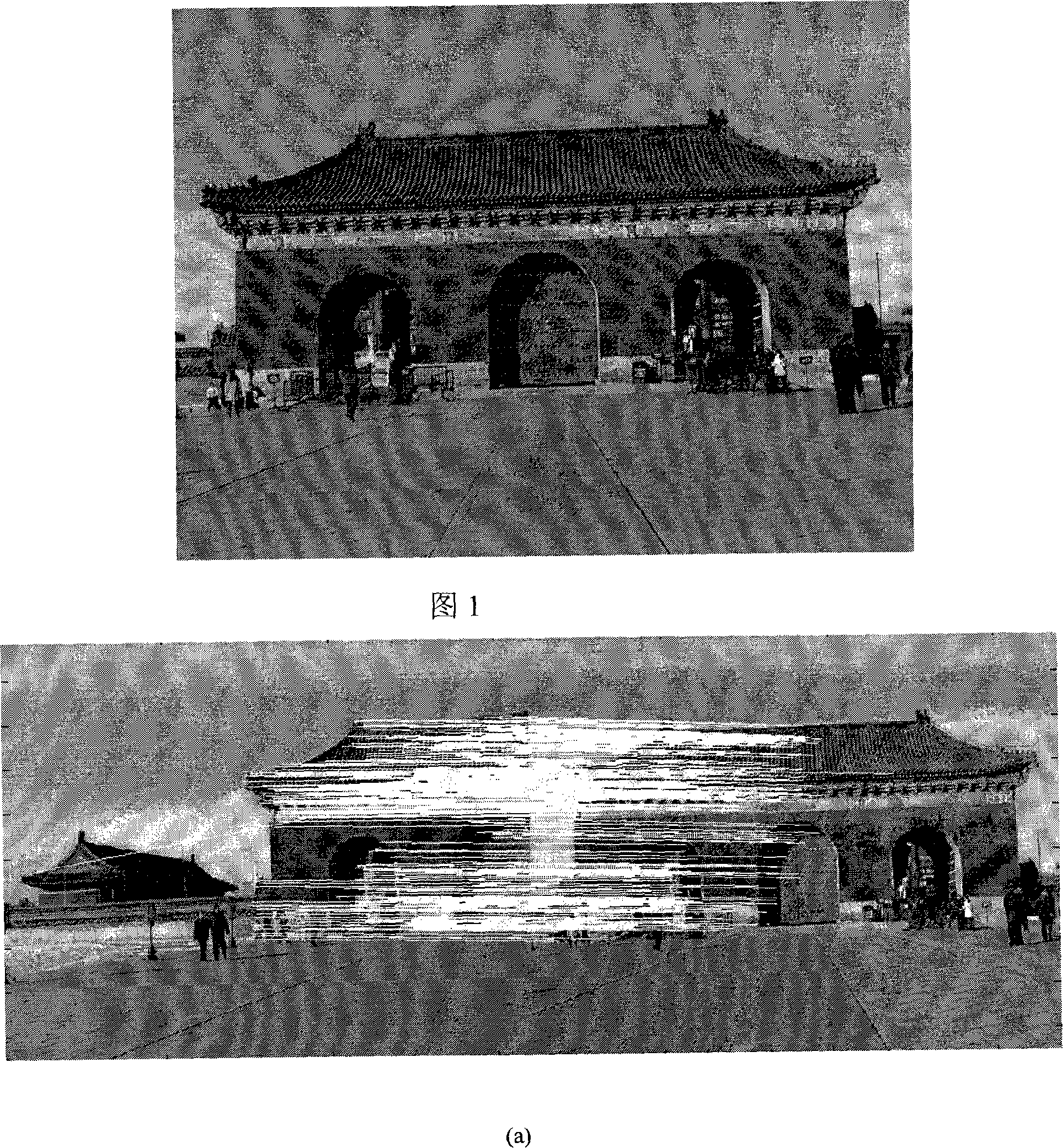
[0060] In this embodiment, at first be to read in a group of image sequences in JPG or BMP format, the input image sequence requires partial overlapping content between adjacent images, after the image data is read in from the computer, the computer will call the present invention Mentioned methods to accomplish specific splicing work.
[0061] In the specific implementation, the following steps are completed in the computer:
[0062] Step 1: Read in each image in the image sequence according to the order in which the images are arranged.
[0063] Step 2: Determine whether the user has input an image focal length value. Enter the focal length value to enter the next step, otherwise go to the fourth step.
[0064] Step 3: Perform cylindrical projection transformation on each image according to the focal length value, and project each image onto the cylindrical plane.
[0065] Step 4: Use the Harris corner detection method to extract the corner points of the object in the ima...
PUM
 Login to View More
 Abstract
Description
Claims
Application Information
 Login to View More