
Braided occlusion device having repeating expanded volume segments separated by articulation segments
A technology for medical devices and fabrics, which can be used in dilators, medical science, surgery, etc., and can solve problems such as long coil lengths
- Summary
- Abstract
- Description
- Claims
- Application Information
AI Technical Summary
Problems solved by technology
Method used
Image

Examples
Embodiment Construction
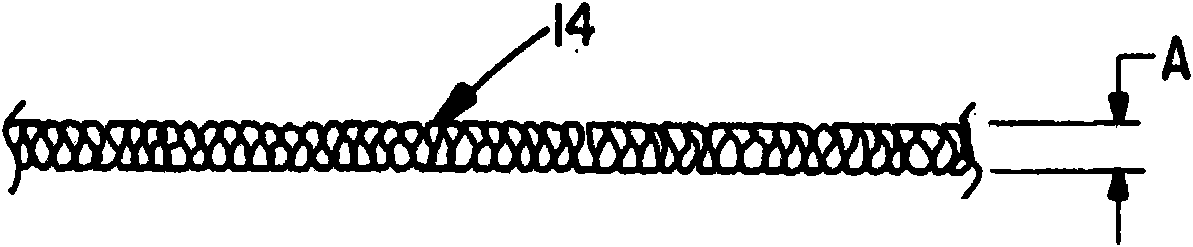
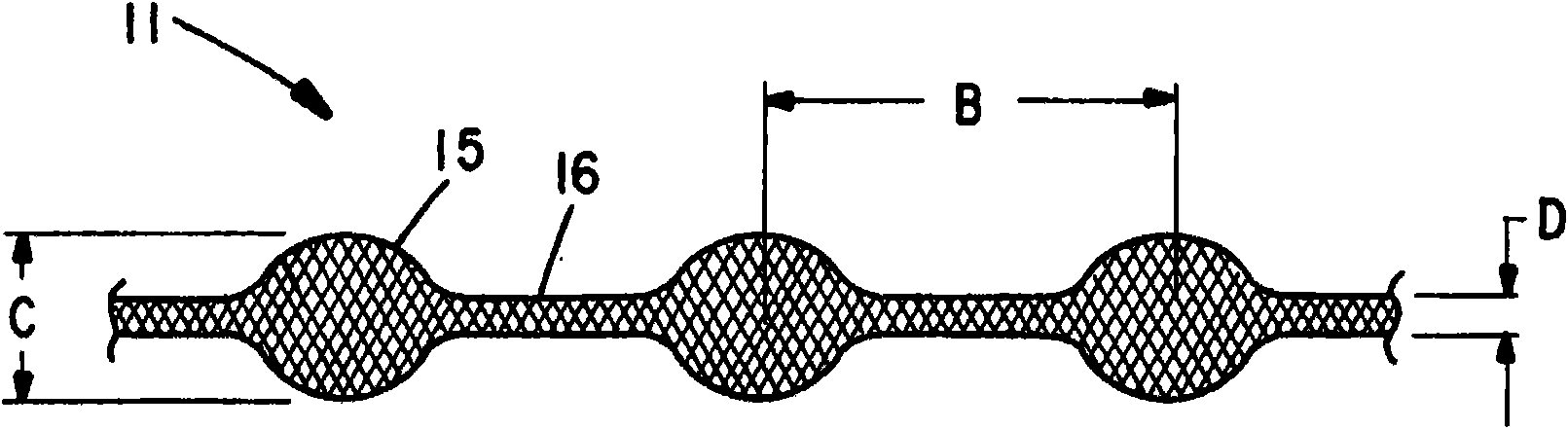
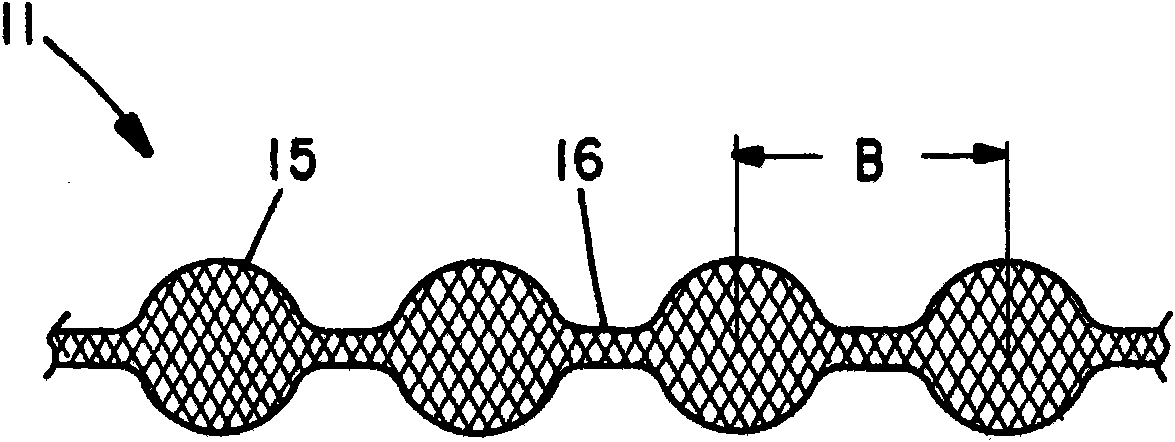
[0035] The present invention provides an improved percutaneous catheter-guided endovascular occlusion device for use in vasculature (eg, blood vessels, ducts, lumens, tissue openings, cavities, etc.) in a patient. In the fabrication of the medical device of the present invention, the metal fabric is formed from strands of multiple metal wires with a predetermined relative orientation between the strands.
[0036] The wire strands define two sets of generally parallel helical strands, one set of strands having a "pointer", ie a direction of rotation, opposite to the "pointer" of the other set of strands. This defines a generally tubular fabric, known in the fabric industry as a tubular braid. The previously mentioned Amplatz and Kotula patents describe medical devices and methods for their manufacture in detail, and thus only a general discussion is provided.
[0037] The pitch of the wire strands (i.e., the angle defined between the number of turns of the wire and the axis of...
PUM
 Login to View More
 Abstract
Description
Claims
Application Information
 Login to View More