

Spectrum detection method of cognitive radio system
A cognitive radio and spectrum detection technology, applied in transmission systems, electrical components, transmission monitoring, etc., can solve problems such as the failure of authorized user receivers to receive and demodulate normally, and achieve the effect of improving spectrum utilization
Patent Information
- Authority / Receiving Office
- CN · China
- Current Assignee / Owner
- Publication Date
- 2011-06-08
- Estimated Expiration
- Not applicable · inactive patent
Smart Images
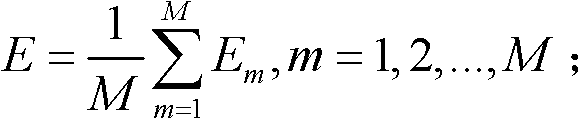
Figure 1 
Figure 2 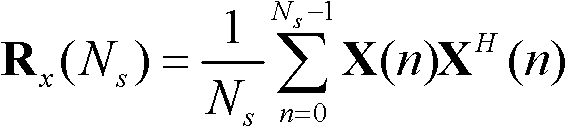
Figure 3
Abstract
Description
technical field
[0001] The invention belongs to the technical field of communication, and in particular relates to a frequency spectrum detection method used in a cognitive radio system. Background technique
[0002] With the rapid development of wireless communication technology, multiple wireless communication access methods coexist, and the number of wireless users increases sharply, which leads to increasingly tight radio spectrum resources. As a precious non-renewable resource, the radio frequency spectrum is currently authorized by the government department. Generally, a specific licensed frequency band (LFB, Licensed Frequency Band) is allocated for different communication services, which can provide good protection for the corresponding communication services. . However, once a specific frequency band is authorized and assigned to a user (authorized user), other unlicensed users (secondary users) can no longer use the frequency band, even if the licensed frequency b...
Examples
Embodiment Construction
[0025] The present invention will be further described below in conjunction with specific examples.
[0026] In order to facilitate the understanding of the embodiments, the spectrum detection based on the absolute value method of the covariance matrix is first explained: the received signal after the analog-to-digital conversion is a series of discrete data (digital signals), which are required by the signal detection algorithm The sample value of is represented by the symbol x(n), where n is a positive integer representing the nth data sample received. L consecutive data samples constitute the transpose of vector X(n), expressed as formula (1), where N s Represents the total number of data samples, and L is defined as a smoothing factor.
[0027] X(n)=[x(n) x(n-1)...x(n-L+1)] T , n=0,1,...N s -1 formula(1)
[0028] Use the obtained vector X(n) to construct the covariance matrix R x (N s ) is expressed as formula (2):
[0029] R x ...