
Method for the treatment of acute myeloid leukemia
A therapeutic composition, active ingredient technology, applied in the field of molecular medicine, capable of addressing issues such as new treatments for AML without insights, specific genes or microRNAs that have not yet been identified
Patent Information
- Authority / Receiving Office
- CN · China
- Patent Type
- Applications(China)
- Current Assignee / Owner
- Publication Date
- 2012-04-18
- Estimated Expiration
- Not applicable · inactive patent
Smart Images
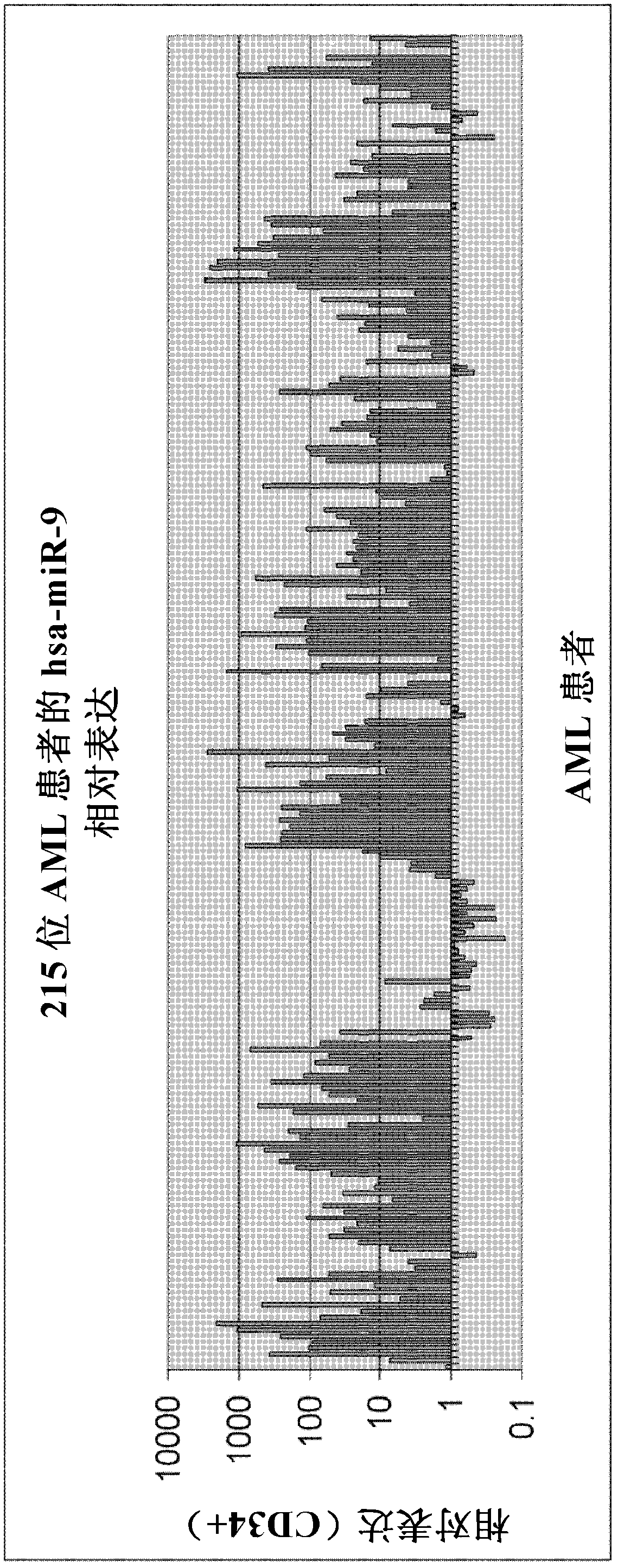
Figure 1 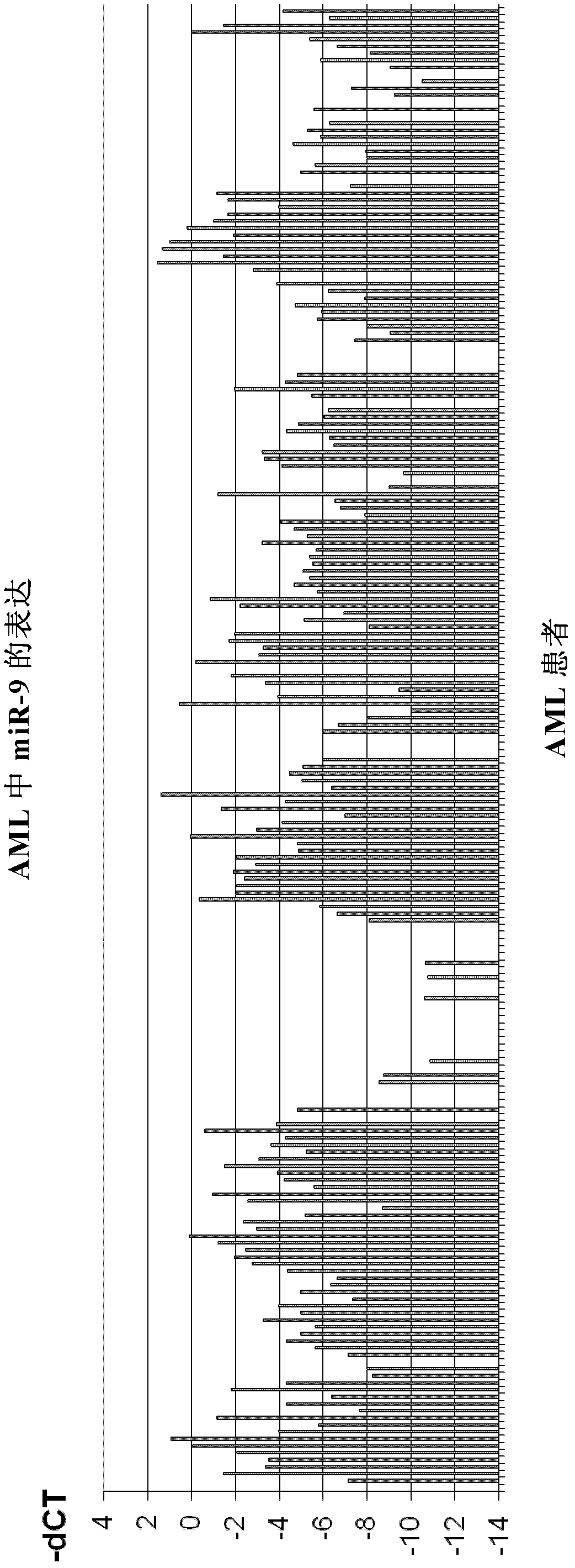
Figure 2 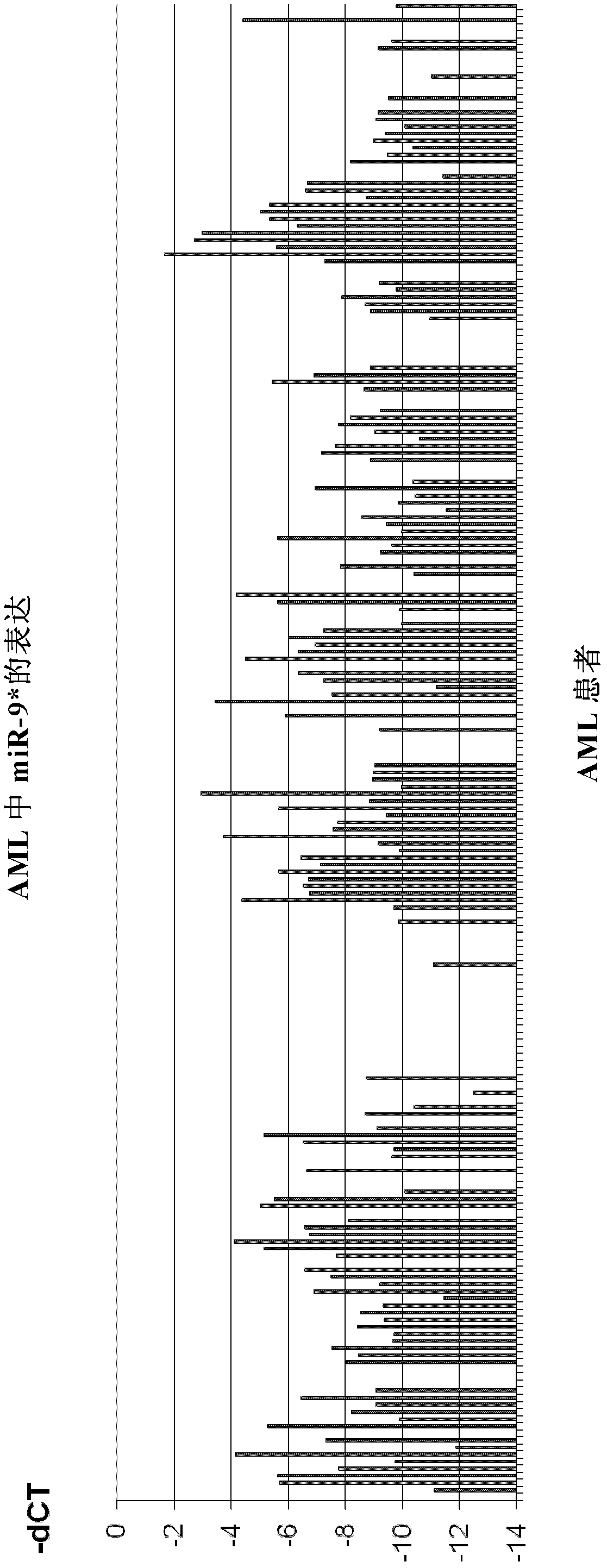
Figure 3
Abstract
Description
field of invention
[0001] The invention belongs to the field of molecular medicine and provides a method for treating acute myelogenous leukemia. These approaches are based on the observation that microRNA-9 and / or microRNA-9* (microRNA-9 / 9*) are involved in the pathogenesis of the disease, since overexpression of microRNA-9 / 9* blocks myeloid differentiation in vitro. More specifically, microRNA-9 / 9* was found to play a role in leukemic transformation in acute myeloid leukemia. Background of the invention
[0002] Acute myelogenous leukemia (AML) is a remarkably heterogeneous malignancy disease characterized by uncontrolled clonal proliferation of hematopoietic progenitor cells blocked at different developmental stages. The altered clinical biology and prognosis are mainly driven by somatic genetic aberrations such as t(15;17), t(8;21), inv(16), 11q23, 3q26 aberrations and monochromosomal karyotypes (1-3) as well as various determined by a genetic mutation. Prominent exam...
Examples
Embodiment Construction
[0030] We found that microRNA-9 / 9* plays a role in leukemic transformation in acute myeloid leukemia AML.
[0031] When used herein, the term miRNA 9 / 9* is intended to refer to microRNA 9 and / or microRNA 9*.
[0032]MicroRNAs are single-stranded RNAs of 18-25 nucleotides and are produced from precursor molecules. microRNAs are encoded in the genome and transcribed by RNA polymerase II into primary transcripts called pri-microRNAs, which are processed in the nucleus into one or more pre-microRNAs by nuclear RNase III Drosha and the double-stranded RNA-binding protein Pasha / DGCR8 microRNA (pre-microRNA) (32, 33). In the cytoplasm, another RNaseIII called Dicer further processes the pre-microRNA into a double-stranded, 23-nucleotide mature microRNA. This microRNA duplex (34) comprises a strand incorporated into the RNA-induced silencing complex (RISC) (microRNA strand) and a complementary strand (microRNA* strand), which is normally degraded.
[0033] There are several excepti...