
Information sharing mechanism-based arrival and departure flight collaborative sequencing method
A technology of information sharing and sorting method, which is applied in the field of civil aviation and can solve problems such as the interaction of flight information resources without consideration
Patent Information
- Authority / Receiving Office
- CN · China
- Patent Type
- Applications(China)
- Current Assignee / Owner
- Publication Date
- 2017-11-24
- Estimated Expiration
- Not applicable · inactive patent
Smart Images
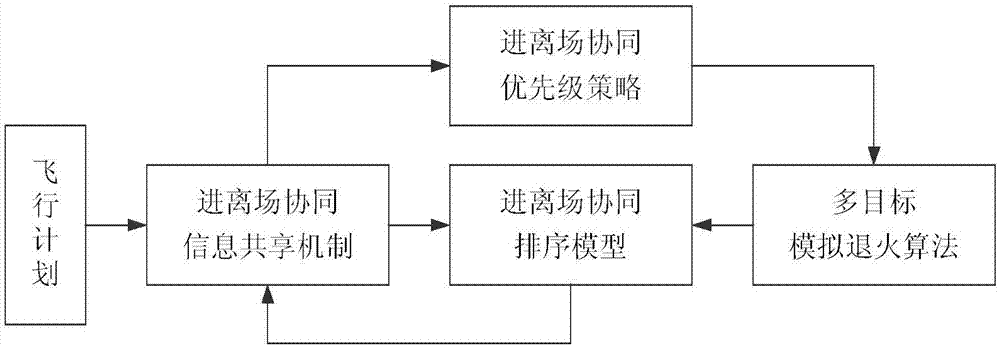
Figure 1 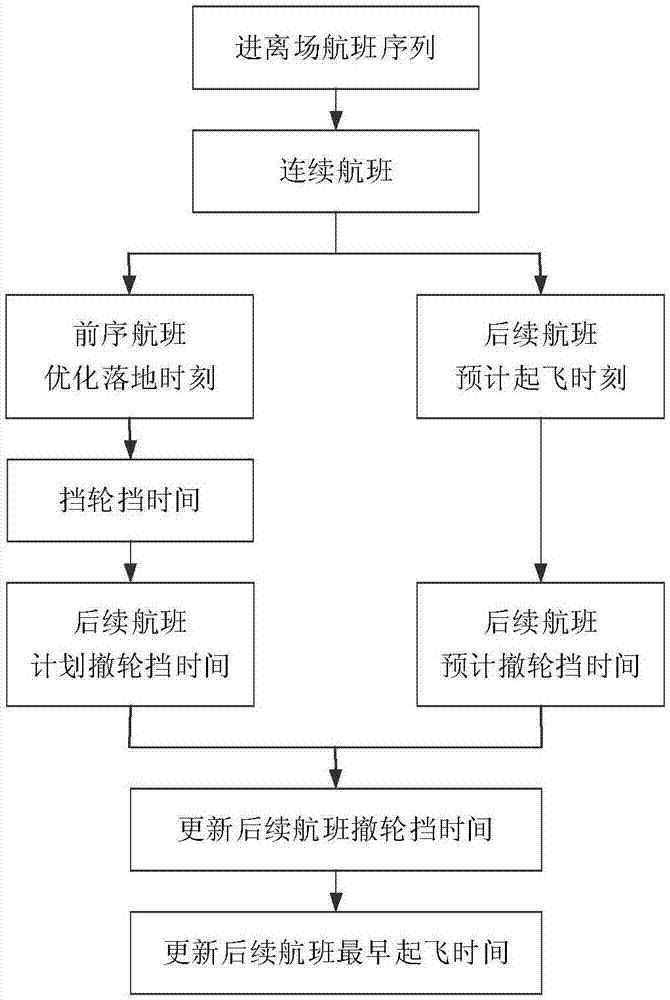
Figure 2 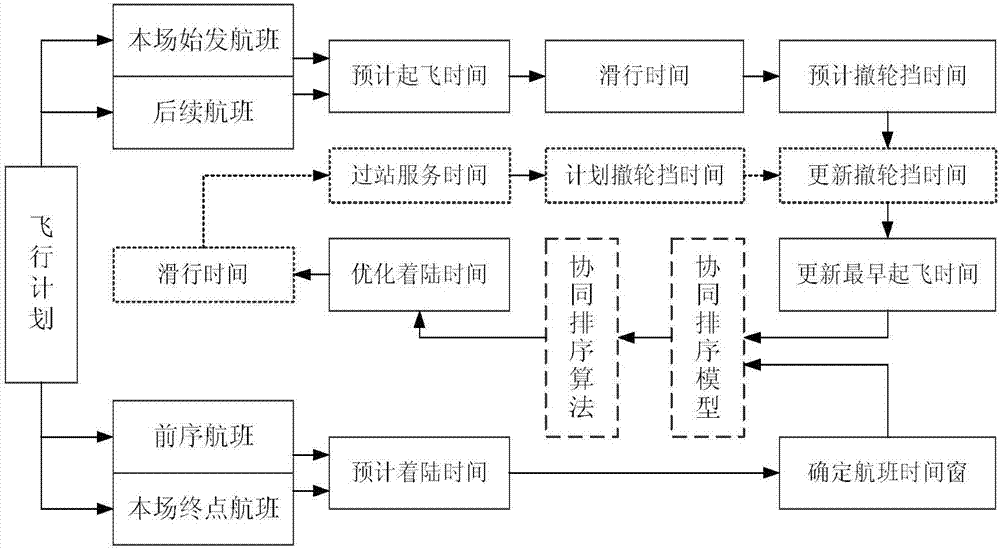
Figure 3
Abstract
Description
technical field
[0001] The invention belongs to the technical field of civil aviation, and in particular relates to a method for collaboratively sorting incoming and outgoing flights under an information sharing mechanism. Background technique
[0002] In recent years, with the continuous surge of air traffic volume, coupled with the complex airspace structure in my country, the limited available resources of civil aviation and the uneven distribution of air traffic flow, a series of problems such as airspace congestion, flow control, and large-scale flight delays in busy terminal areas have been caused. Happens frequently.
[0003] The International Civil Aviation Organization (ICAO) proposed the "Aviation System Block Upgrade" (ASBU) program based on the Global Air Traffic Management Concept of Operations (GATMOC). The Single European Sky Air Traffic Research (SESAR) program to guide the planning and implementation of a new generation of air traffic management systems. Th...
Examples
Embodiment example
[0142] Taking the operation of a large domestic airport as an example, a simulation scenario is established, and the flights taking off and landing during the busy period of a certain day are selected for collaborative sequencing, among which continuous flights account for about 25%.
[0143] As can be seen from Table 1, based on the strategy (PDMOSA) of the model and algorithm proposed by the present invention, compared with the first-come-first-served strategy (FCFS): the total delay time of arrival and departure flights has been reduced by 31.7%; the total delay of continuous flights has been reduced by 22.1% %; The optimization effect of the scheduling completion time is not obvious, mainly due to the constraint that the departure flight cannot be released in advance. Generally speaking, the model and algorithm proposed by the present invention are obviously superior to the first-come-first-serve policy.
[0144] Table 1
[0145]
[0146] Image 6 The distribution dia...