
Method and system for real-time content-adaptive transcoding of video content on mobile devices to save network bandwidth during video sharing
a mobile device and video content technology, applied in the field of real-time content adaptation transcoding of video content on mobile devices to save network bandwidth during video sharing, can solve the problems of insurmountable limitations of video payload delivery over http, rate distortion performance particularly at lower bit-rates,
Patent Information
- Authority / Receiving Office
- US · United States
- Patent Type
- Patents(United States)
- Current Assignee / Owner
- Publication Date
- 2022-07-05
Smart Images
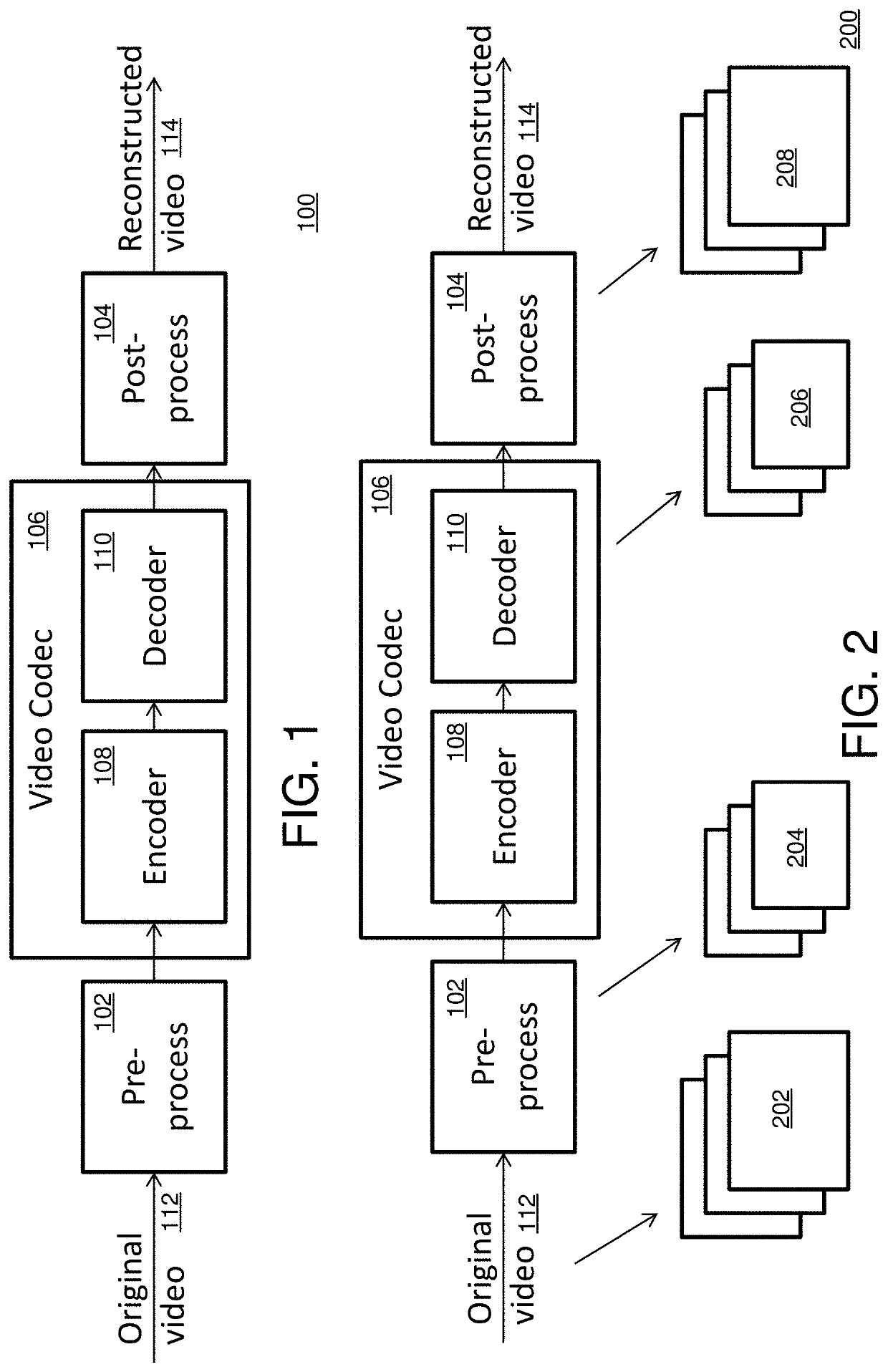
Figure 1 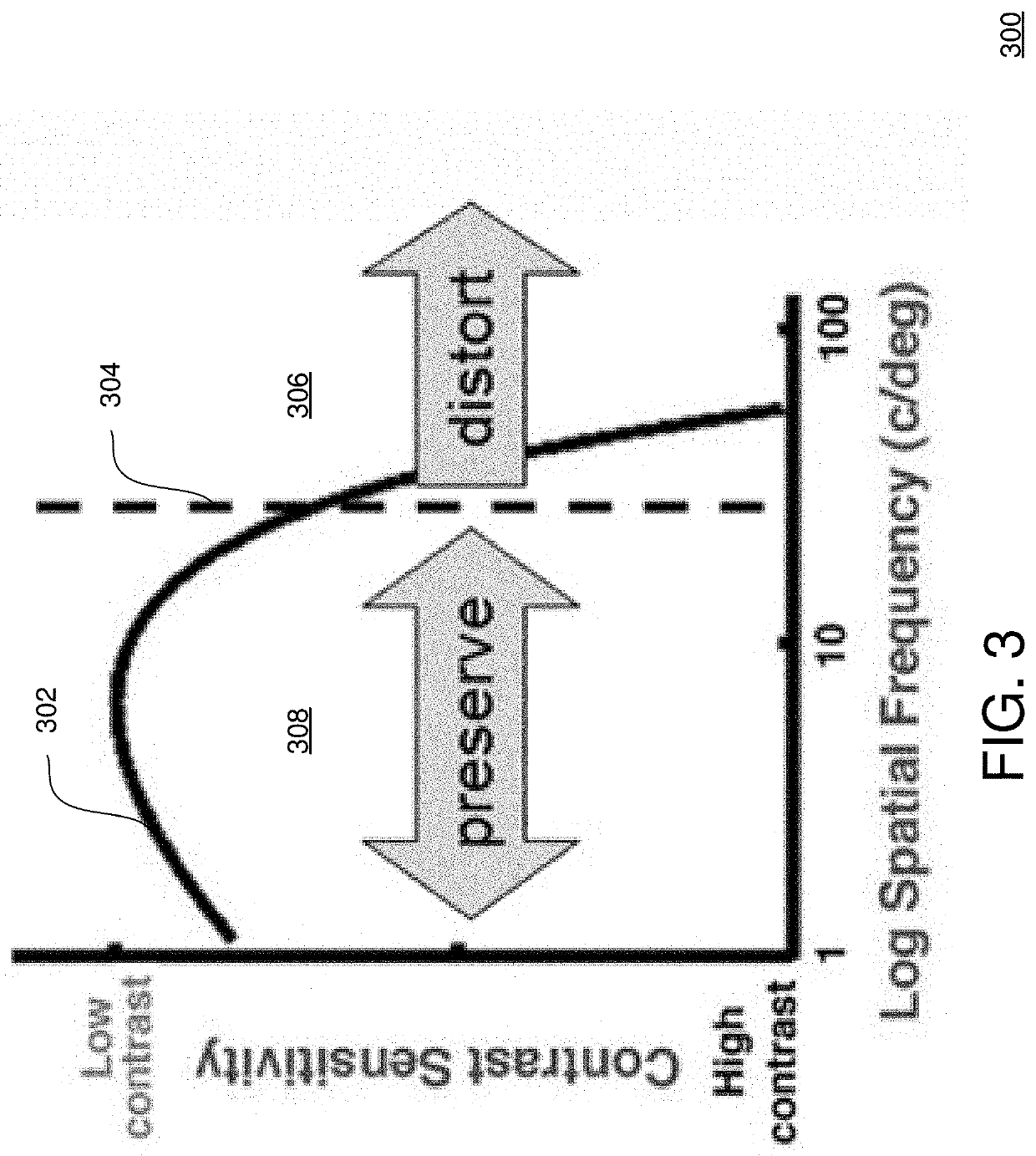
Figure 2 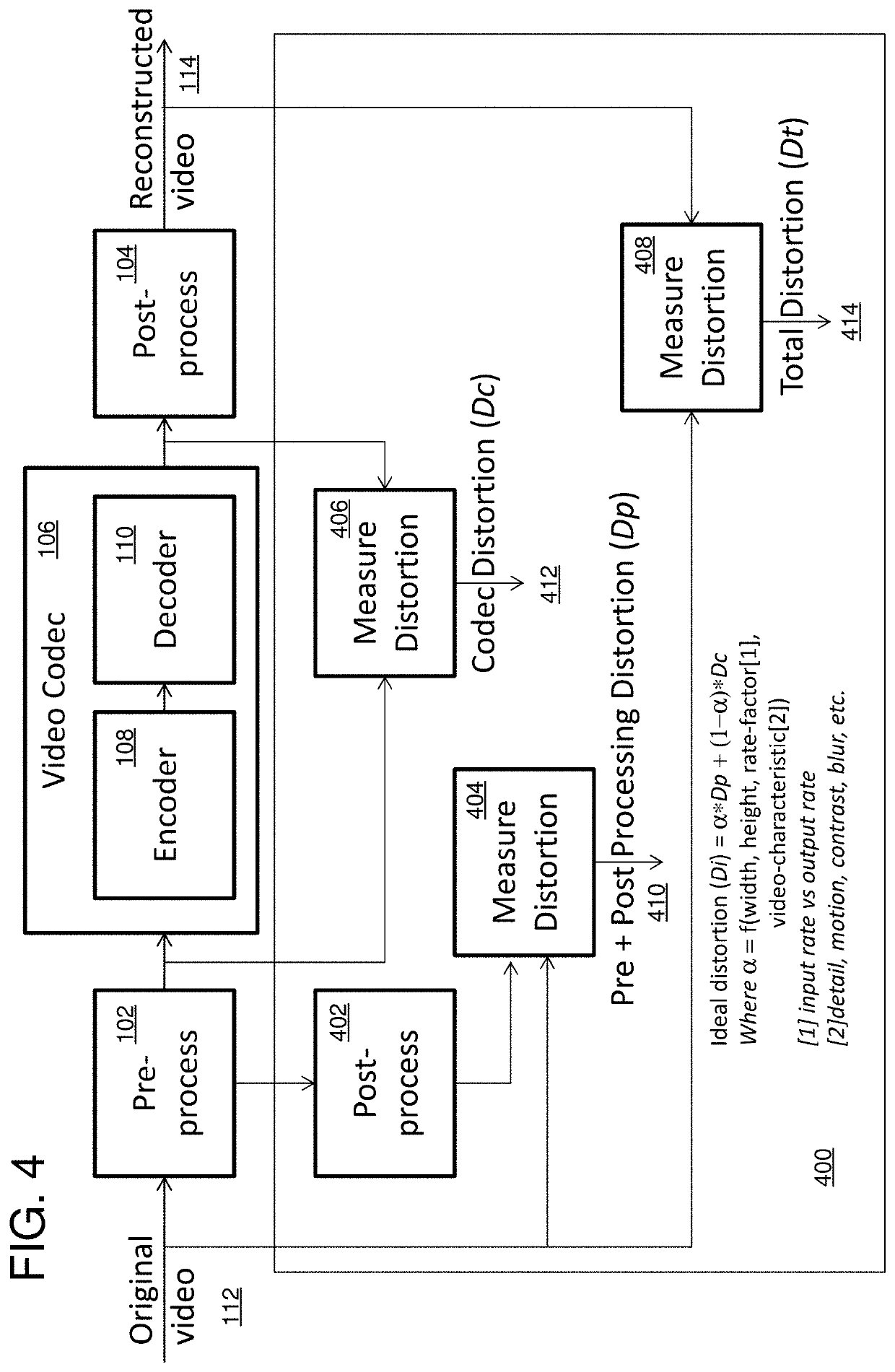
Figure 3
Abstract
Description
CROSS REFERENCE TO RELATED DOCUMENTS
[0001] The present invention is a continuation in part of U.S. patent application Ser. No. 16 / 290,554 of Bjorn Steven HORI et al., entitled “METHOD AND SYSTEM FOR VIDEO CODEC RATE-DISTORTION PERFORMANCE BY PRE AND POST-PROCESSING,” filed on 1 Mar. 2019, now allowed, which is a continuation of U.S. patent application Ser. No. 14 / 776,987 of Bjorn Steven HORI et al., entitled “METHOD AND SYSTEM FOR VIDEO CODEC RATE-DISTORTION PERFORMANCE BY PRE AND POST-PROCESSING,” filed on 15 Sep. 2015, now U.S. Pat. No. 10,230,951, which is a National Stage Entry of PCT Application Serial No. PCT / US2013 / 032303 of Bjorn Steven HORI et al., entitled “METHOD AND SYSTEM FOR IMPROVED VIDEO CODEC RATE-DISTORTION PERFORMANCE BY PRE AND POST-PROCESSING,” filed on 15 Mar. 2013, now inactive, the entire disclosures of all of which are hereby incorporated by reference herein.BACKGROUND OF THE INVENTIONField of the Invention
[0002] The present invention generally relates to syst...
Examples
Embodiment Construction
[0022]The present invention includes recognition that a video codec (COmpression-DECompression) algorithm can be used to reduce the amount of data employed to represent a given video sequence (e.g., “video”) by one of two fundamental means, including “lossless” coding techniques and “lossy” coding techniques. Lossless coding techniques allow for perfect reconstruction of the video upon decompression, but provide very limited reductions in the data employed to represent the video. Lossy coding techniques intentionally introduce distortion making a tradeoff between fidelity (e.g., trueness to the original video according to some metric) and data requirements for representation.
[0023]Such a tradeoff is made according to human-vision perceptual models, which attempt to keep distortion below the threshold of perception. Compared to lossless coding techniques, lossy coding techniques can realize very large reductions in the data employed to represent the video. Lossy video codecs in commo...