Noninvasive detection of a physiologic parameter with a probe

a physiologic parameter and probe technology, applied in the field of non-invasive detection of physiologic parameters, can solve the problems of stress and discomfort of patients, skin puncture, risk of infection, etc., and achieve the effect of non-invasive and accurate determination of physiologic parameters

US20060020179A1Inactive Publication Date: 2006-01-26EXOSTAT MEDICAL
57 Cites 155 Cited by

Patent Information

Authority / Receiving Office
US · United States
Current Assignee / Owner
Publication Date
2006-01-26
Estimated Expiration
Not applicable · inactive patent

Smart Images

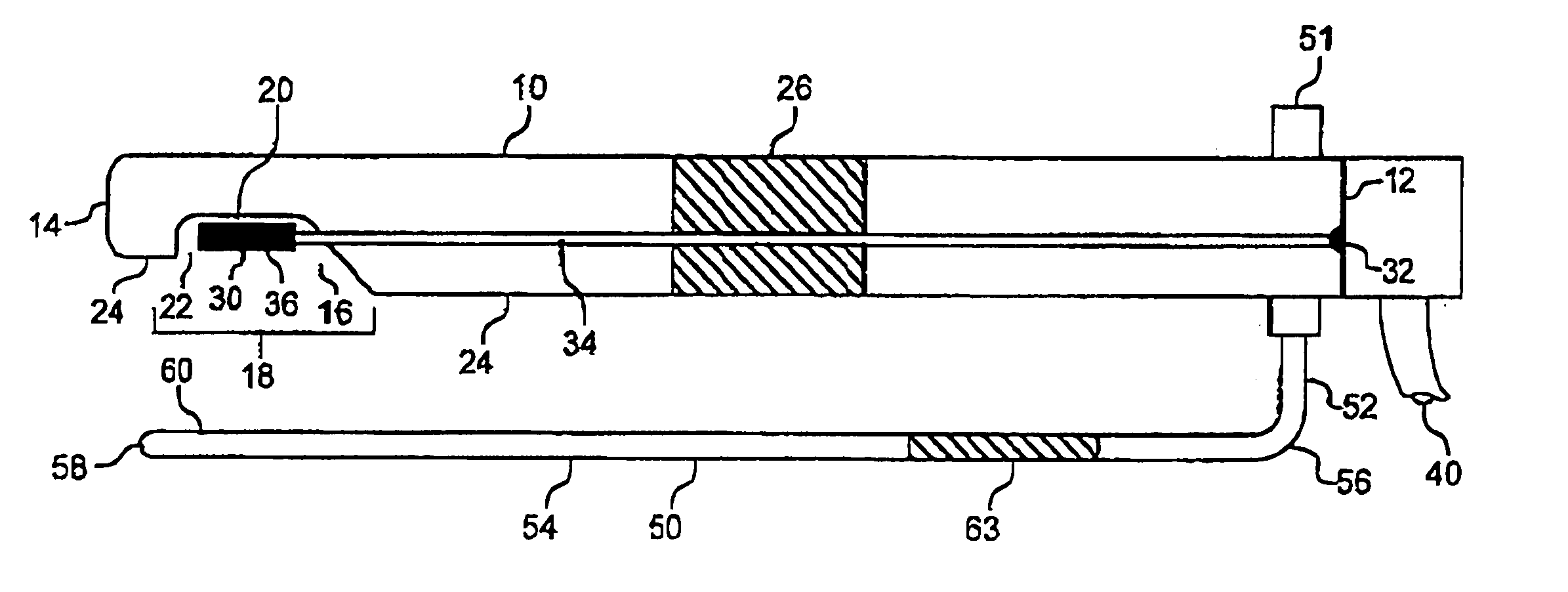
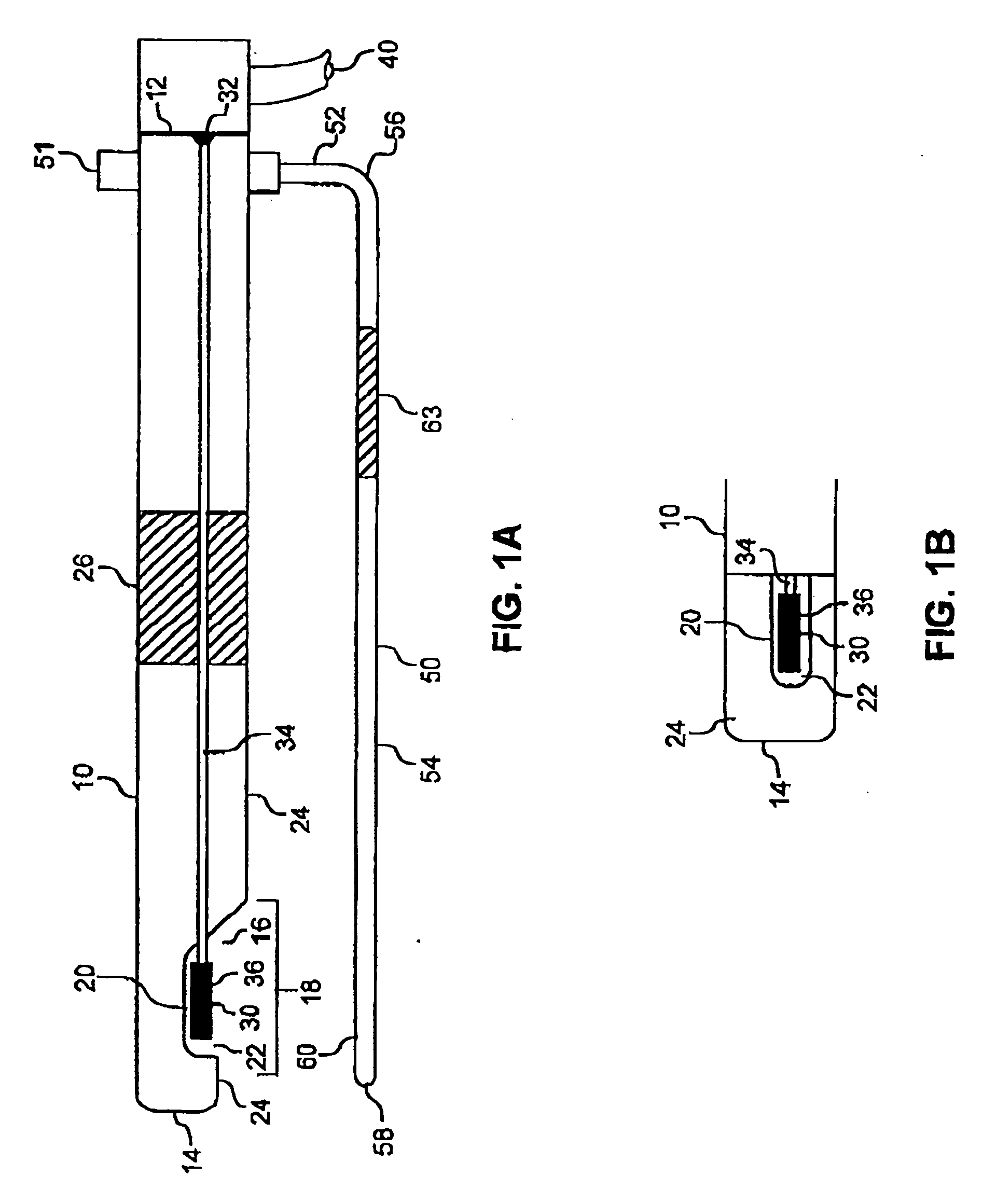
  • Figure 1
    Figure 1
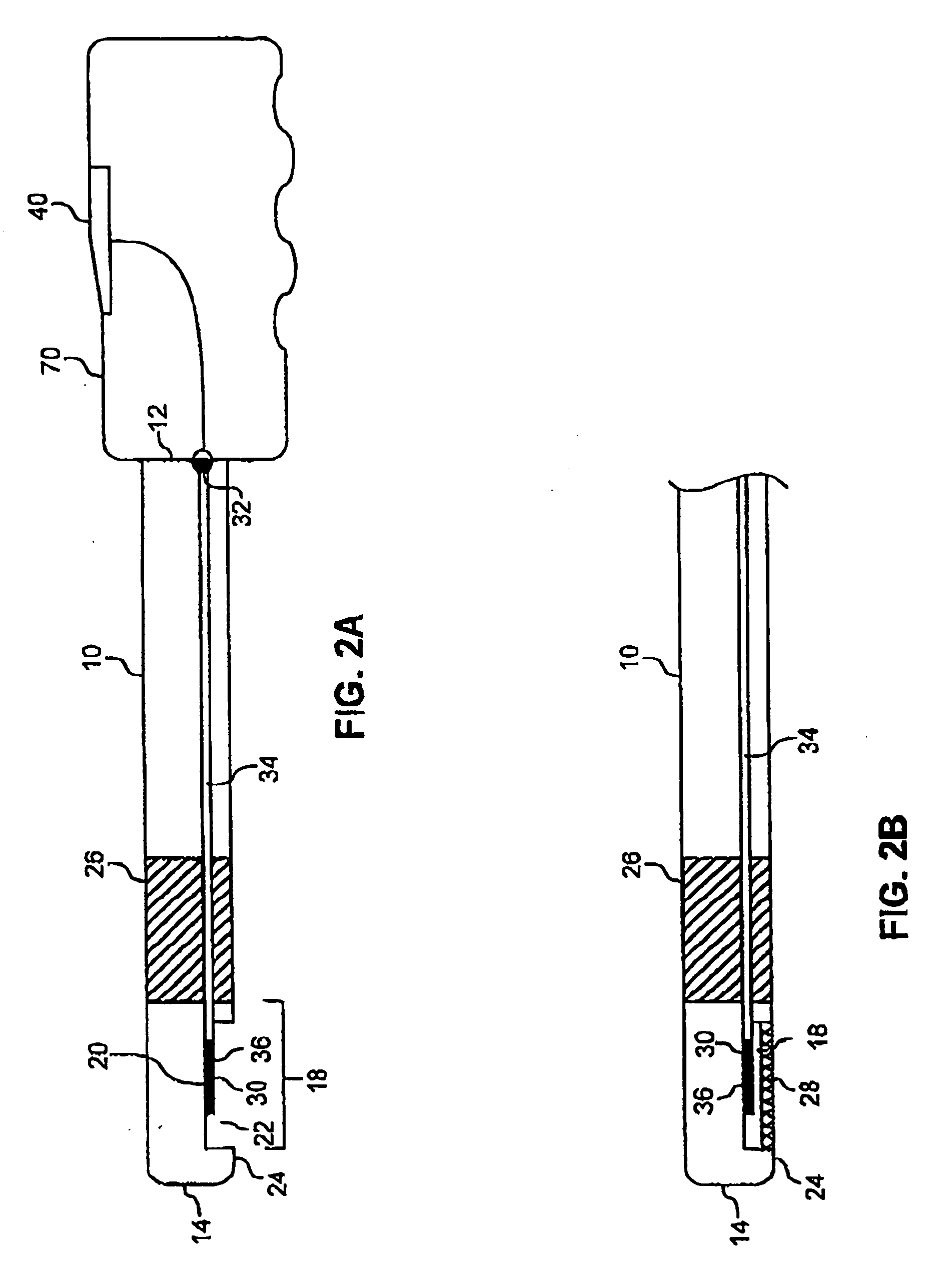
  • Figure 2
    Figure 2
  • Figure 3
    Figure 3
Patent Text Reader

Abstract

The invention provides a device for contacting a surface of a patient's body to determine a physiologic parameter in a measurement region of a tissue of the patient. The device typically comprises a sensor responsive to the physiologic parameter and a probe housing the sensor. The probe is constructed to allow the sensor to be secured at a sensing site adjacent to the measurement region, without disturbing the blood flow within the measurement region of the tissue. The device may also include a means for reducing interference in the sensing area. Preferably, the device further comprises an indicating means operably connected to the sensor for indicating an analyte quantity and / or concentration associated with the physiologic parameter.
Need to check novelty before this filing date? Find Prior Art

Description

CROSS REFERENCE TO RELATED APPLICATIONS

[0001] This application is a continuation-in-part of U.S. application Ser. No. 10 / 366,903, filed Feb. 14, 2003, now abandoned, which is a continuation-in-part of U.S. application Ser. No. 10 / 162,028, filed Jun. 3, 2002, now abandoned, the entireties of which are hereby incorporated by reference.TECHNICAL FIELD

[0002] The present invention relates generally to devices and methods for noninvasive detection of a physiologic parameter within a tissue of a patient. More particularly, the invention relates to such devices and methods that allow a probe containing at least one sensor to be placed adjacent to a surface of the tissue, without substantially disturbing blood flow in the tissue, and / or without interference from interfering fluids or radiation. BACKGROUND

[0003] There is a continuing need for improved devices and methods for determining one or more physiologic parameters of a patient. Often, such physiologic parameters are determined by de...

Examples

Embodiment Construction

Definitions and Nomenclature:

[0043] Before the inventive devices and methods are disclosed and described, it is to be understood that this invention is not limited to sensor designs, measurement techniques, or the like, as such may vary. It is also to be understood that the terminology used herein is for the purpose of describing particular embodiments only and is not intended to be limiting.

[0044] It must be noted that, as used in the specification and the appended claims, the singular forms “a,”“an,” and “the” include plural referents unless the context clearly dictates otherwise. The term “adjacent” as used herein (e.g., “adjacent to the surface”) means near or against, e.g., at a distance from the mucosal surface that allows acceptably accurate measurement of the analyte. In general, it is preferable that the probe is contacted with the surface of the tissue containing the analyte.

[0045] The term “blanch” or “blanching” as used herein refers to a condition wherein sufficient...