
Enhancing membrane stability through utilization of high molecular weight fixed carriers
Membranes with high molecular weight polymeric fixed carriers, like polyguanidine polymers, address the stability and selectivity issues of current CO2 capture technologies, enhancing CO2 separation efficiency.
Patent Information
- Application Number
- PCT/US2025/019623
- Authority / Receiving Office
- WO · WO
- Patent Type
- Applications
- Current Assignee / Owner
- Priority Date
- 2024-03-12
- Filing Date
- 2025-03-12
- Publication Date
- 2025-09-18
Smart Images
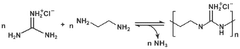
Figure IMGF000017_0001 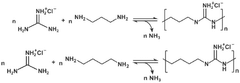
Figure IMGF000017_0002 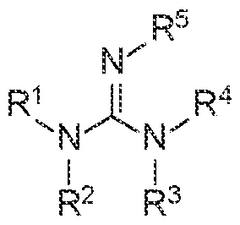
Figure IMGF000020_0001
Abstract
Description
[0001]Attorney Docket No.103361-662WO1 ENHANCING MEMBRANE STABILITY THROUGH UTILIZATION OF HIGH MOLECULAR WEIGHT FIXED CARRIERS CROSS-REFERENCE TO RELATED APPLICATIONS This application claims benefit of U.S. Provisional Application No. 63 / 564,363, filed March 12, 2024, which is hereby incorporated herein by reference in its entirety. STATEMENT REGARDING FEDERALLY SPONSORED RESEARCH OR DEVELOPMENT This invention was made with government support under grant / contract number DE- FE0031731 awarded by the Department of Energy. The government has certain rights in the invention. BACKGROUND There has been growing concern about global warming since the CO2 concentration in the atmosphere has surpassed 400 ppm in the past decade. The combustion of fossil fuels is one of the major contributors to the large amount of CO2emissions. A variety of strategies for addressing CO2emissions have been suggested. For example, membranes technologies have been suggested as a promising approach to capture CO2 from large stationary sources. Once captured, the CO2could be compressed and geologically sequestered. However, improved membranes for the separation of CO2are needed to successfully implement these solutions. SUMMARY Disclosed are membranes that comprise a support layer; and a selective polymer layer disposed (e.g., coated) on the support layer. The selective polymer layer can comprise a polymer matrix that comprises a polymeric fixed carrier. The polymeric fixed carrier can have a weight average molecular weight of least 1.5 MDa, as determined by GPC. Attorney Docket No.103361-662WO1 In some embodiments, the polymeric fixed carrier can have a weight average molecular weight of from 1.5 MDa to 30 MDa (e.g., a weight average molecular weight of from 1.5 MDa to 25 MDa, from 1.5 MDa to 20 MDa, from 1.5 MDa to 15 MDa, from 1.5 MDa to 10 MDa, from 1.5 MDa to 5 MDa, 2 MDa to 30 MDa, from 2 MDa to 25 MDa, from 2 MDa to 20 MDa, from 2 MDa to 15 MDa, from 2 MDa to 10 MDa, or from 2 MDa to 5 MDa), as determined by GPC. In some embodiments, the polymeric fixed carrier can comprise a polyguanidine polymer. In some examples, the polyguanidine polymer can be chosen from polyethylene guanidine, polytrimethylene guanidine, polytetramethylene guanidine, polypentamethylene guanidine, polyhexamethylene guanidine, polyheptamethylene guanidine, polyoctamethylene guanidine, polyethylene N-methylguanidine, polytrimethylene N- methylguanidine, polytetramethylene N-methylguanidine, polypentamethylene N- methylguanidine, polyhexamethylene N-methylguanidine, polyheptamethylene N- methylguanidine, polyoctamethylene N-methylguanidine, polyethylene N,N’- dimethylguanidine, polytrimethylene N,N’-dimethylguanidine, polytetramethylene N,N’- dimethylguanidine, polypentamethylene N,N’-dimethylguanidine, polyhexamethylene N,N’- dimethylguanidine, polyheptamethylene N,N’-dimethylguanidine, polyoctamethylene N,N’- dimethylguanidine, poly(N-vinylguanidine), poly(N-allylguanidine), poly(N- butylguanidine), poly(N-pentylguanidine), poly(N-hexylguanidine), poly(N- heptylguanidine), poly(N-octylguanidine), copolymers thereof, and blends thereof. In certain embodiments, the polyguanidine polymer can comprise polyethylene guanidine (PEG). In some embodiments, the polyguanidine polymer can be present in the selective polymer layer in an amount of from 10% to 70% by weight, based on the total dry weight of the selective polymer layer. In some embodiments, the polymeric fixed carrier can comprise an amine- containing polymer. In some examples, the amine-containing polymer is selected from the group consisting of polyvinylamine, polyallylamine, polyethyleneimine, poly-N- isopropylallylamine, poly-N-tert-butylallylamine, poly-N-l,2-dimethylpropylallylamine, poly-N-methylallylamine, poly-N,N-dimethylallylamine, poly-2-vinylpiperidine, poly-4- vinylpiperidine, polyaminostyrene, chitosan, copolymers, and blends thereof. In certain embodiments, the amine-containing polymer comprises polyvinylamine. Attorney Docket No.103361-662WO1 In some embodiments, the selective polymer layer further comprises a hydrophilic polymer. In some examples, the hydrophilic polymer can comprise a polymer selected from the group consisting of polyvinylalcohol, polyvinylacetate, polyethylene oxide, polyvinylpyrrolidone, polyacrylamine, a polyamine such as polyallylamine, polyvinyl amine, or polyethylenimine, polysiloxane, copolymers thereof, and blends thereof. Optionally, the selective polymer layer further comprises a mobile carrier dispersed within the polymer matrix. The mobile carrier can comprise a guanidine-based mobile carrier, an amine-containing mobile carrier, or a combination thereof. In some embodiments, the mobile carrier can have a molecular weight of less than 1,000 Da. In some examples, the mobile carrier can be selected from 1,1,3,3- tetramethylguanidine, piperazine-1-carboximidamide, N-methylpiperazine-1- carboximidamide, N-ethylpiperazine-1-carboximidamide, N-propylpiperazine-1- carboximidamide, N-butylpiperazine-1-carboximidamide, N-pentylpiperazine-1- carboximidamide, N-hexylpiperazine-1-carboximidamide, N-heptylpiperazine-1- carboximidamide, N-octylpiperazine-1-carboximidamide, 2-(1-piperazinyl)ethylamine sarcosinate, 2-(1-piperazinyl)ethylamine glycinate, 2-(1-piperazinyl)ethylamine aminoisobutyrate, piperazine sarcosinate, piperazine glycinate, piperazine aminoisobutyrate, lithium sarcosinate, lithium glycinate, lithium aminoisobutyrate, potassium sarcosinate, potassium glycinate, potassium aminoisobutyrate, amidine with the structure R1-(C=NH)- NR2R3where each of R1, R2, and R3groups being H or R = CnH2n+1with n ranging from 1 to 10, guanidine with the structure R1-N(R2)-(C=NH)-N R3R4 where each of R1, R2, R3, and R4groups being H or R = CnH2n+1with n ranging from 1 to 10, and combinations thereof. Optionally, the selective polymer layer further comprises a CO2-philic ether, a cross- linking agent, graphene oxide, carbon nanotubes, or a combination thereof. In some embodiments, the support layer can comprise a gas permeable polymer, such as a polymer chosen from polyamides, polyimides, polypyrrolones, polyesters, sulfone-based polymers, nitrile-based polymers, polymeric organosilicones, fluorinated polymers, polyolefins, copolymers thereof, and blends thereof. In some embodiments, the support layer can comprise a gas permeable polymer disposed on a base. The base can comprise a non-woven fabric, such as a non-woven fabric comprising fibers formed from a polyester. The membrane can be configured in a flat sheet, a spiral-wound (SW), a hollow fiber, or a plate-and-frame configuration. Attorney Docket No.103361-662WO1 In some embodiments, the membrane can be selectively permeable to an acidic gas. For example, the membrane is selectively permeable to a fluid selected from the group consisting of carbon dioxide, hydrogen sulfide, sulfur dioxide, sulfur trioxide, nitrogen oxide, hydrogen chloride, water, and combinations thereof. In some embodiments, the selective polymer layer can have a CO2:N2 selectivity of at least 50 at 57°C and 4 bar feed pressure (e.g., a CO2:N2selectivity of from 50 to 500 at 57°C and 4 bar feed pressure, from 50 to 350 at 57°C and 4 bar feed pressure, from 100 to 500 at 57°C and 4 bar feed pressure, or from 100 to 350 at 57°C and 4 bar feed pressure). Also described herein are methods for separating a first gas from a feed gas stream. These methods can comprise contacting a membrane described herein with the feed gas stream comprising the first gas under conditions effective to afford transmembrane permeation of the first gas. DESCRIPTION OF DRAWINGS Figure 1. Cross-section SEM image of TFC membrane prepared with the low MW PEGu. Figure 2. Stability of membrane prepared with low MW polyguanidine. Figure 3. Cross-section SEM image of TFC membrane prepared by the coating solution with a high viscosity of 1522 cp, which shows a distinct selective layer on top of the porous support. Figure 4. Stability of membrane prepared with high MW polyguanidine. DETAILED DESCRIPTION Definitions As used in the specification and the appended claims, the singular forms “a,” “an” and “the” include plural referents unless the context clearly dictates otherwise. Thus, for example, reference to “a pharmaceutical carrier” includes mixtures of two or more such carriers, and the like. Ranges can be expressed herein as from “about” one particular value, and / or to “about” another particular value. When such a range is expressed, another embodiment includes from the one particular value and / or to the other particular value. Similarly, when values are expressed as approximations, by use of the antecedent “about,” it will be Attorney Docket No.103361-662WO1 understood that the particular value forms another embodiment. It will be further understood that the endpoints of each of the ranges are significant both in relation to the other endpoint, and independently of the other endpoint. It is also understood that there are a number of values disclosed herein, and that each value is also herein disclosed as “about” that particular value in addition to the value itself. For example, if the value “10” is disclosed, then “about 10” is also disclosed. It is also understood that when a value is disclosed that “less than or equal to” the value, “greater than or equal to the value” and possible ranges between values are also disclosed, as appropriately understood by the skilled artisan. For example, if the value “10” is disclosed the “less than or equal to 10”as well as “greater than or equal to 10” is also disclosed. It is also understood that the throughout the application, data is provided in a number of different formats, and that this data, represents endpoints and starting points, and ranges for any combination of the data points. For example, if a particular data point “10” and a particular data point 15 are disclosed, it is understood that greater than, greater than or equal to, less than, less than or equal to, and equal to 10 and 15 are considered disclosed as well as between 10 and 15. It is also understood that each unit between two particular units are also disclosed. For example, if 10 and 15 are disclosed, then 11, 12, 13, and 14 are also disclosed. In this specification and in the claims which follow, reference will be made to a number of terms which shall be defined to have the following meanings: “Optional” or “optionally” means that the subsequently described event or circumstance may or may not occur, and that the description includes instances where said event or circumstance occurs and instances where it does not. The term “n-membered” where n is an integer typically describes the number of ring-forming atoms in a moiety where the number of ring-forming atoms is n. For example, piperidinyl is an example of a 6-membered heterocycloalkyl ring, pyrazolyl is an example of a 5-membered heteroaryl ring, pyridyl is an example of a 6-membered heteroaryl ring, and 1,2,3,4-tetrahydro-naphthalene is an example of a 10-membered cycloalkyl group. As used herein, the phrase “optionally substituted” means unsubstituted or substituted. As used herein, the term “substituted” means that a hydrogen atom is removed and replaced by a substituent. It is to be understood that substitution at a given atom is limited by valency. Attorney Docket No.103361-662WO1 Throughout the definitions, the term “Cn-m” indicates a range which includes the endpoints, wherein n and m are integers and indicate the number of carbons. Examples include C1-4, C1-6, and the like. As used herein, the term “Cn-malkyl”, employed alone or in combination with other terms, refers to a saturated hydrocarbon group that may be straight-chain or branched, having n to m carbons. Examples of alkyl moieties include, but are not limited to, chemical groups such as methyl, ethyl, n-propyl, isopropyl, n-butyl, tert-butyl, isobutyl, sec-butyl; higher homologs such as 2-methyl-1-butyl, n-pentyl, 3-pentyl, n-hexyl, 1,2,2- trimethylpropyl, and the like. In some embodiments, the alkyl group contains from 1 to 6 carbon atoms, from 1 to 4 carbon atoms, from 1 to 3 carbon atoms, or 1 to 2 carbon atoms. As used herein, “Cn-m alkenyl” refers to an alkyl group having one or more double carbon-carbon bonds and having n to m carbons. Example alkenyl groups include, but are not limited to, ethenyl, n-propenyl, isopropenyl, n-butenyl, sec-butenyl, and the like. In some embodiments, the alkenyl moiety contains 2 to 6, 2 to 4, or 2 to 3 carbon atoms. As used herein, “Cn-m alkynyl” refers to an alkyl group having one or more triple carbon-carbon bonds and having n to m carbons. Example alkynyl groups include, but are not limited to, ethynyl, propyn-1-yl, propyn-2-yl, and the like. In some embodiments, the alkynyl moiety contains 2 to 6, 2 to 4, or 2 to 3 carbon atoms. As used herein, the term “Cn-malkylene”, employed alone or in combination with other terms, refers to a divalent alkyl linking group having n to m carbons. Examples of alkylene groups include, but are not limited to, ethan-1,2-diyl, propan-1,3-diyl, propan-1,2- diyl, butan-1,4-diyl, butan-1,3-diyl, butan-1,2-diyl, 2-methyl-propan-1,3-diyl, and the like. In some embodiments, the alkylene moiety contains 2 to 6, 2 to 4, 2 to 3, 1 to 6, 1 to 4, or 1 to 2 carbon atoms. As used herein, the term “Cn-m alkoxy”, employed alone or in combination with other terms, refers to a group of formula -O-alkyl, wherein the alkyl group has n to m carbons. Example alkoxy groups include methoxy, ethoxy, propoxy (e.g., n-propoxy and isopropoxy), tert-butoxy, and the like. In some embodiments, the alkyl group has 1 to 6, 1 to 4, or 1 to 3 carbon atoms. As used herein, the term “Cn-m alkylamino” refers to a group of formula -NH(alkyl), wherein the alkyl group has n to m carbon atoms. In some embodiments, the alkyl group has 1 to 6, 1 to 4, or 1 to 3 carbon atoms. Attorney Docket No.103361-662WO1 As used herein, the term “Cn-m alkoxycarbonyl” refers to a group of formula -C(O)O-alkyl, wherein the alkyl group has n to m carbon atoms. In some embodiments, the alkyl group has 1 to 6, 1 to 4, or 1 to 3 carbon atoms. As used herein, the term “Cn-malkylcarbonyl” refers to a group of formula -C(O)- alkyl, wherein the alkyl group has n to m carbon atoms. In some embodiments, the alkyl group has 1 to 6, 1 to 4, or 1 to 3 carbon atoms. As used herein, the term “Cn-malkylcarbonylamino” refers to a group of formula -NHC(O)-alkyl, wherein the alkyl group has n to m carbon atoms. In some embodiments, the alkyl group has 1 to 6, 1 to 4, or 1 to 3 carbon atoms. As used herein, the term “Cn-malkylsulfonylamino” refers to a group of formula -NHS(O)2-alkyl, wherein the alkyl group has n to m carbon atoms. In some embodiments, the alkyl group has 1 to 6, 1 to 4, or 1 to 3 carbon atoms. As used herein, the term “aminosulfonyl” refers to a group of formula -S(O)2NH2. As used herein, the term “Cn-m alkylaminosulfonyl” refers to a group of formula -S(O)2NH(alkyl), wherein the alkyl group has n to m carbon atoms. In some embodiments, the alkyl group has 1 to 6, 1 to 4, or 1 to 3 carbon atoms. As used herein, the term “di(Cn-m alkyl)aminosulfonyl” refers to a group of formula -S(O)2N(alkyl)2, wherein each alkyl group independently has n to m carbon atoms. In some embodiments, each alkyl group has, independently, 1 to 6, 1 to 4, or 1 to 3 carbon atoms. As used herein, the term “aminosulfonylamino” refers to a group of formula - NHS(O)2NH2. As used herein, the term “Cn-malkylaminosulfonylamino” refers to a group of formula -NHS(O)2NH(alkyl), wherein the alkyl group has n to m carbon atoms. In some embodiments, the alkyl group has 1 to 6, 1 to 4, or 1 to 3 carbon atoms. As used herein, the term “di(Cn-malkyl)aminosulfonylamino” refers to a group of formula -NHS(O)2N(alkyl)2, wherein each alkyl group independently has n to m carbon atoms. In some embodiments, each alkyl group has, independently, 1 to 6, 1 to 4, or 1 to 3 carbon atoms. As used herein, the term “aminocarbonylamino”, employed alone or in combination with other terms, refers to a group of formula -NHC(O)NH2. Attorney Docket No.103361-662WO1 As used herein, the term “Cn-m alkylaminocarbonylamino” refers to a group of formula -NHC(O)NH(alkyl), wherein the alkyl group has n to m carbon atoms. In some embodiments, the alkyl group has 1 to 6, 1 to 4, or 1 to 3 carbon atoms. As used herein, the term “di(Cn-malkyl)aminocarbonylamino” refers to a group of formula -NHC(O)N(alkyl)2, wherein each alkyl group independently has n to m carbon atoms. In some embodiments, each alkyl group has, independently, 1 to 6, 1 to 4, or 1 to 3 carbon atoms. As used herein, the term “Cn-m alkylcarbamyl” refers to a group of formula -C(O)- NH(alkyl), wherein the alkyl group has n to m carbon atoms. In some embodiments, the alkyl group has 1 to 6, 1 to 4, or 1 to 3 carbon atoms. As used herein, the term “thio” refers to a group of formula -SH. As used herein, the term “Cn-m alkylsulfinyl” refers to a group of formula -S(O)- alkyl, wherein the alkyl group has n to m carbon atoms. In some embodiments, the alkyl group has 1 to 6, 1 to 4, or 1 to 3 carbon atoms. As used herein, the term “Cn-m alkylsulfonyl” refers to a group of formula -S(O)2- alkyl, wherein the alkyl group has n to m carbon atoms. In some embodiments, the alkyl group has 1 to 6, 1 to 4, or 1 to 3 carbon atoms. As used herein, the term “amino” refers to a group of formula –NH2. As used herein, the term "aryl," employed alone or in combination with other terms, refers to an aromatic hydrocarbon group, which may be monocyclic or polycyclic (e.g., having 2, 3 or 4 fused rings). The term "Cn-m aryl" refers to an aryl group having from n to m ring carbon atoms. Aryl groups include, e.g., phenyl, naphthyl, anthracenyl, phenanthrenyl, indanyl, indenyl, and the like. In some embodiments, aryl groups have from 6 to about 20 carbon atoms, from 6 to about 15 carbon atoms, or from 6 to about 10 carbon atoms. In some embodiments, the aryl group is a substituted or unsubstituted phenyl. As used herein, the term “carbamyl” to a group of formula –C(O)NH2. As used herein, the term “carbonyl”, employed alone or in combination with other terms, refers to a -C(=O)- group, which may also be written as C(O). As used herein, the term “di(Cn-m-alkyl)amino” refers to a group of formula - N(alkyl)2, wherein the two alkyl groups each has, independently, n to m carbon atoms. In some embodiments, each alkyl group independently has 1 to 6, 1 to 4, or 1 to 3 carbon atoms. Attorney Docket No.103361-662WO1 As used herein, the term “di(Cn-m-alkyl)carbamyl” refers to a group of formula – C(O)N(alkyl)2, wherein the two alkyl groups each has, independently, n to m carbon atoms. In some embodiments, each alkyl group independently has 1 to 6, 1 to 4, or 1 to 3 carbon atoms. As used herein, the term “halo” refers to F, Cl, Br, or I. In some embodiments, a halo is F, Cl, or Br. In some embodiments, a halo is F or Cl. As used herein, “Cn-mhaloalkoxy” refers to a group of formula –O-haloalkyl having n to m carbon atoms. An example haloalkoxy group is OCF3. In some embodiments, the haloalkoxy group is fluorinated only. In some embodiments, the alkyl group has 1 to 6, 1 to 4, or 1 to 3 carbon atoms. As used herein, the term “Cn-m haloalkyl”, employed alone or in combination with other terms, refers to an alkyl group having from one halogen atom to 2s+1 halogen atoms which may be the same or different, where “s” is the number of carbon atoms in the alkyl group, wherein the alkyl group has n to m carbon atoms. In some embodiments, the haloalkyl group is fluorinated only. In some embodiments, the alkyl group has 1 to 6, 1 to 4, or 1 to 3 carbon atoms. As used herein, “cycloalkyl” refers to non-aromatic cyclic hydrocarbons including cyclized alkyl and / or alkenyl groups. Cycloalkyl groups can include mono- or polycyclic (e.g., having 2, 3 or 4 fused rings) groups and spirocycles. Cycloalkyl groups can have 3, 4, 5, 6, 7, 8, 9, or 10 ring-forming carbons (C3-10). Ring-forming carbon atoms of a cycloalkyl group can be optionally substituted by oxo or sulfido (e.g., C(O) or C(S)). Cycloalkyl groups also include cycloalkylidenes. Example cycloalkyl groups include cyclopropyl, cyclobutyl, cyclopentyl, cyclohexyl, cycloheptyl, cyclopentenyl, cyclohexenyl, cyclohexadienyl, cycloheptatrienyl, norbornyl, norpinyl, norcarnyl, and the like. In some embodiments, cycloalkyl is cyclopropyl, cyclobutyl, cyclopentyl, cyclohexyl, cyclopentyl, or adamantyl. In some embodiments, the cycloalkyl has 6-10 ring-forming carbon atoms. In some embodiments, cycloalkyl is adamantyl. Also included in the definition of cycloalkyl are moieties that have one or more aromatic rings fused (i.e., having a bond in common with) to the cycloalkyl ring, for example, benzo or thienyl derivatives of cyclopentane, cyclohexane, and the like. A cycloalkyl group containing a fused aromatic ring can be attached through any ring-forming atom including a ring-forming atom of the fused aromatic ring. Attorney Docket No.103361-662WO1 As used herein, “heteroaryl” refers to a monocyclic or polycyclic aromatic heterocycle having at least one heteroatom ring member selected from sulfur, oxygen, and nitrogen. In some embodiments, the heteroaryl ring has 1, 2, 3, or 4 heteroatom ring members independently selected from nitrogen, sulfur and oxygen. In some embodiments, any ring-forming N in a heteroaryl moiety can be an N-oxide. In some embodiments, the heteroaryl has 5-10 ring atoms and 1, 2, 3 or 4 heteroatom ring members independently selected from nitrogen, sulfur and oxygen. In some embodiments, the heteroaryl has 5-6 ring atoms and 1 or 2 heteroatom ring members independently selected from nitrogen, sulfur and oxygen. In some embodiments, the heteroaryl is a five-membered or six- membered heteroaryl ring. A five-membered heteroaryl ring is a heteroaryl with a ring having five ring atoms wherein one or more (e.g., 1, 2, or 3) ring atoms are independently selected from N, O, and S. Exemplary five-membered ring heteroaryls are thienyl, furyl, pyrrolyl, imidazolyl, thiazolyl, oxazolyl, pyrazolyl, isothiazolyl, isoxazolyl, 1,2,3-triazolyl, tetrazolyl, 1,2,3-thiadiazolyl, 1,2,3-oxadiazolyl, 1,2,4-triazolyl, 1,2,4-thiadiazolyl, 1,2,4- oxadiazolyl, 1,3,4-triazolyl, 1,3,4-thiadiazolyl, and 1,3,4-oxadiazolyl. A six-membered heteroaryl ring is a heteroaryl with a ring having six ring atoms wherein one or more (e.g., 1, 2, or 3) ring atoms are independently selected from N, O, and S. Exemplary six- membered ring heteroaryls are pyridyl, pyrazinyl, pyrimidinyl, triazinyl and pyridazinyl. As used herein, “heterocycloalkyl” refers to non-aromatic monocyclic or polycyclic heterocycles having one or more ring-forming heteroatoms selected from O, N, or S. Included in heterocycloalkyl are monocyclic 4-, 5-, 6-, and 7-membered heterocycloalkyl groups. Heterocycloalkyl groups can also include spirocycles. Example heterocycloalkyl groups include pyrrolidin-2-one, 1,3-isoxazolidin-2-one, pyranyl, tetrahydropuran, oxetanyl, azetidinyl, morpholino, thiomorpholino, piperazinyl, tetrahydrofuranyl, tetrahydrothienyl, piperidinyl, pyrrolidinyl, isoxazolidinyl, isothiazolidinyl, pyrazolidinyl, oxazolidinyl, thiazolidinyl, imidazolidinyl, azepanyl, benzazapene, and the like. Ring-forming carbon atoms and heteroatoms of a heterocycloalkyl group can be optionally substituted by oxo or sulfido (e.g., C(O), S(O), C(S), or S(O)2, etc.). The heterocycloalkyl group can be attached through a ring-forming carbon atom or a ring-forming heteroatom. In some embodiments, the heterocycloalkyl group contains 0 to 3 double bonds. In some embodiments, the heterocycloalkyl group contains 0 to 2 double bonds. Also included in the definition of heterocycloalkyl are moieties that have one or more aromatic rings fused (i.e., having a bond in common with) to the cycloalkyl ring, for example, benzo or thienyl derivatives of Attorney Docket No.103361-662WO1 piperidine, morpholine, azepine, etc. A heterocycloalkyl group containing a fused aromatic ring can be attached through any ring-forming atom including a ring-forming atom of the fused aromatic ring. In some embodiments, the heterocycloalkyl has 4-10, 4-7 or 4-6 ring atoms with 1 or 2 heteroatoms independently selected from nitrogen, oxygen, or sulfur and having one or more oxidized ring members. At certain places, the definitions or embodiments refer to specific rings (e.g., an azetidine ring, a pyridine ring, etc.). Unless otherwise indicated, these rings can be attached to any ring member provided that the valency of the atom is not exceeded. For example, an azetidine ring may be attached at any position of the ring, whereas a pyridin-3-yl ring is attached at the 3-position. The term “compound” as used herein is meant to include all stereoisomers, geometric isomers, tautomers, and isotopes of the structures depicted. Compounds herein identified by name or structure as one particular tautomeric form are intended to include other tautomeric forms unless otherwise specified. Compounds provided herein also include tautomeric forms. Tautomeric forms result from the swapping of a single bond with an adjacent double bond together with the concomitant migration of a proton. Tautomeric forms include prototropic tautomers which are isomeric protonation states having the same empirical formula and total charge. Example prototropic tautomers include ketone – enol pairs, amide - imidic acid pairs, lactam – lactim pairs, enamine – imine pairs, and annular forms where a proton can occupy two or more positions of a heterocyclic system, for example, 1H- and 3H-imidazole, 1H-, 2H- and 4H- 1,2,4-triazole, 1H- and 2H- isoindole, and 1H- and 2H-pyrazole. Tautomeric forms can be in equilibrium or sterically locked into one form by appropriate substitution. In some embodiments, the compounds described herein can contain one or more asymmetric centers and thus occur as racemates and racemic mixtures, enantiomerically enriched mixtures, single enantiomers, individual diastereomers and diastereomeric mixtures (e.g., including (R)- and (S)-enantiomers, diastereomers, (D)-isomers, (L)-isomers, (+) (dextrorotatory) forms, (-) (levorotatory) forms, the racemic mixtures thereof, and other mixtures thereof). Additional asymmetric carbon atoms can be present in a substituent, such as an alkyl group. All such isomeric forms, as well as mixtures thereof, of these compounds are expressly included in the present description. The compounds described herein can also or further contain linkages wherein bond rotation is restricted about that particular linkage, e.g., restriction resulting from the presence of a ring or double bond (e.g., carbon-carbon Attorney Docket No.103361-662WO1 bonds, carbon-nitrogen bonds such as amide bonds). Accordingly, all cis / trans and E / Z isomers and rotational isomers are expressly included in the present description. Unless otherwise mentioned or indicated, the chemical designation of a compound encompasses the mixture of all possible stereochemically isomeric forms of that compound. Optical isomers can be obtained in pure form by standard procedures known to those skilled in the art, and include, but are not limited to, diastereomeric salt formation, kinetic resolution, and asymmetric synthesis. See, for example, Jacques, et al., Enantiomers, Racemates and Resolutions (Wiley Interscience, New York, 1981); Wilen, S.H., et al., Tetrahedron 33:2725 (1977); Eliel, E.L. Stereochemistry of Carbon Compounds (McGraw- Hill, NY, 1962); Wilen, S.H. Tables of Resolving Agents and Optical Resolutions p. 268 (E.L. Eliel, Ed., Univ. of Notre Dame Press, Notre Dame, IN 1972), each of which is incorporated herein by reference in their entireties. It is also understood that the compounds described herein include all possible regioisomers, and mixtures thereof, which can be obtained in pure form by standard separation procedures known to those skilled in the art, and include, but are not limited to, column chromatography, thin-layer chromatography, and high-performance liquid chromatography. Membranes The membranes described herein can comprise a support layer; and a selective polymer layer disposed (e.g., coated) on the support layer. The selective polymer layer can comprise a polymer matrix comprising a polymeric fixed carrier. The polymeric fixed carrier can have a weight average molecular weight of least 1.5 MDa, as determined by GPC. In some embodiments, the polymeric fixed carrier can have a weight average molecular weight of from 1.5 MDa to 30 MDa (e.g., a weight average molecular weight of from 1.5 MDa to 25 MDa, from 1.5 MDa to 20 MDa, from 1.5 MDa to 15 MDa, from 1.5 MDa to 10 MDa, from 1.5 MDa to 5 MDa, 2 MDa to 30 MDa, from 2 MDa to 25 MDa, from 2 MDa to 20 MDa, from 2 MDa to 15 MDa, from 2 MDa to 10 MDa, or from 2 MDa to 5 MDa), as determined by GPC. In some embodiments, the polymeric fixed carrier can comprise a polyguanidine polymer. In some embodiments, the polymeric fixed carrier can comprise an amine- containing polymer. Optionally, in some embodiments, the polymer matrix can further comprise a hydrophilic polymer. In some embodiments, the selective polymer layer can further Attorney Docket No.103361-662WO1 comprise a mobile carrier (e.g., a guanidine-based mobile carrier, an amine-based mobile carrier, or a combination thereof) dispersed within the polymer matrix. Optionally, the selective polymer later can further include a CO2-philic ether, a graphene oxide, carbon nanotubes, or a combination thereof, dispersed within the polymer matrix. Support Layer The support layer can be formed from any suitable material. The material used to form the support layer can be chosen based on the end use application of the membrane. In some embodiments, the support layer can comprise a gas permeable polymer. The gas permeable polymer can be a cross-linked polymer, a phase separated polymer, a porous condensed polymer, or a blend thereof. Examples of suitable gas permeable polymers include polyamides, polyimides, polypyrrolones, polyesters, sulfone-based polymers, nitrile-based polymers, polymeric organosilicones, fluorinated polymers, polyolefins, copolymers thereof, or blends thereof. Specific examples of polymers that can be present in the support layer include polydimethylsiloxane, polydiethylsiloxane, polydi-iso- propylsiloxane, polydiphenylsiloxane, polyethersulfone, polyphenylsulfone, polysulfone, polyacrylonitrile, polyvinylidene fluoride, polyamide, polyimide, polyetherimide, polyetheretherketone, polyphenylene oxide, polybenzimidazole, polypropylene, polyethylene, partially fluorinated, perfluorinated or sulfonated derivatives thereof, copolymers thereof, or blends thereof. In some embodiments, the gas permeable polymer can be polysulfone or polyethersulfone. If desired, the support layer can include inorganic particles to increase the mechanical strength without altering the permeability of the support layer. In certain embodiments, the support layer can comprise a gas permeable polymer disposed on a base. The base can be in any configuration configured to facilitate formation of a membrane suitable for use in a particular application. For example, the base can be a flat disk, a tube, a spiral wound, or a hollow fiber base. The base can be formed from any suitable material. In some embodiments, the layer can include a fibrous material. The fibrous material in the base can be a mesh (e.g., a metal or polymer mesh), a woven or non- woven fabric, a glass, fiberglass, a resin, a screen (e.g., a metal or polymer screen). In certain embodiments, the base can include a non-woven fabric (e.g., a non-woven fabric comprising fibers formed from a polyester). Attorney Docket No.103361-662WO1 Selective Polymer Layer The selective polymer layer can comprise a polymer matrix comprising a polymeric fixed carrier. The polymeric fixed carrier can have a weight average molecular weight of least 1.5 MDa, as determined by GPC. In some embodiments, the polymeric fixed carrier can have a weight average molecular weight of from 1.5 MDa to 30 MDa (e.g., a weight average molecular weight of from 1.5 MDa to 25 MDa, from 1.5 MDa to 20 MDa, from 1.5 MDa to 15 MDa, from 1.5 MDa to 10 MDa, from 1.5 MDa to 5 MDa, 2 MDa to 30 MDa, from 2 MDa to 25 MDa, from 2 MDa to 20 MDa, from 2 MDa to 15 MDa, from 2 MDa to 10 MDa, or from 2 MDa to 5 MDa), as determined by GPC. In some embodiments, the polymeric fixed carrier can comprise a polyguanidine polymer. In some embodiments, the polymeric fixed carrier can comprise an amine- containing polymer. Optionally, in some embodiments, the polymer matrix can further comprise a hydrophilic polymer. In some embodiments, the selective polymer layer can further comprise a mobile carrier (e.g., a guanidine-based mobile carrier, an amine-based mobile carrier, or a combination thereof) dispersed within the polymer matrix. Optionally, the selective polymer later can further include a CO2-philic ether, a graphene oxide, carbon nanotubes, or a combination thereof, dispersed within the polymer matrix. In some cases, the selective polymer layer can be a polymer matrix through which gas permeates via diffusion or facilitated diffusion. The selective polymer layer can comprise a polymer matrix having a CO2:N2 selectivity of at least 10 at 57oC and 4 bar feed pressure. For example, the polymer matrix can have a CO2:N2selectivity of at least 25 (e.g., at least 50, at least 75, at least 100, at least 125, at least 150, at least 175, at least 200, at least 225, at least 250, at least 275, at least 300, at least 325, at least 350, at least 375, at least 400, at least 425, at least 450, or at least 475) at 57oC and 4 bar feed pressure. In some embodiments, the polymer matrix can have a CO2:N2selectivity of 500 or less (e.g., 475 or less, 450 or less, 425 or less, 400 or less, 375 or less, 350 or less, 325 or less, 300 or less, 275 or less, 250 or less, 225 or less, 200 or less, 175 or less, 150 or less, 125 or less, 100 or less, 75 or less, 50 or less, or 25 or less) at 57oC and 4 bar feed pressure. In certain embodiments, the selective polymer layer can comprise a polymer matrix that has a CO2:N2 selectivity ranging from any of the minimum values described above to any of the maximum values described above. For example, in certain embodiments, the selective polymer layer can comprise a polymer matrix that has a CO2:N2 selectivity of from Attorney Docket No.103361-662WO1 10 to 500 at 57oC and 4 bar feed pressure (e.g., from 10 to 400 at 57oC and 4 bar feed pressure, from 75 to 400 at 57oC and 4 bar feed pressure, from 100 to 400 at 57oC and 4 bar feed pressure, from 10 to 350 at 57oC and 4 bar feed pressure, from 75 to 350 at 57oC and 4 bar feed pressure, from 100 to 350 at 57oC and 4 bar feed pressure, from 10 to 250 at 57oC and 4 bar feed pressure, from 75 to 250 at 57oC and 4 bar feed pressure, or from 100 to 250 at 57oC and 4 bar feed pressure). The CO2:N2selectivity of the selective polymer can be measured using standard methods for measuring gas permeance known in the art, such as those described in the examples below. Polymer Matrix In some embodiments, the polymer matrix can comprise a polymeric fixed carrier. In some embodiments, the polymeric fixed carrier can comprise an amine-containing polymer. Optionally, in some embodiments, the polymer matrix can further comprise a hydrophilic polymer. In certain embodiments, the polymer matrix can include a polyguanidine polymer and a hydrophilic polymer. In certain embodiments, the polymer matrix can include a polyguanidine polymer and an amine-containing polymer. In certain embodiments, the polymer matrix can include a polyguanidine polymer, a hydrophilic polymer, and an amine- containing polymer. The polyguanidine polymer can serve as a “fixed carrier” or a “fixed-site carrier.” The polyguanidine polymer can have any suitable molecular weight. The polyguanidine polymer can have a weight average molecular weight of least 1.5 MDa, as determined by GPC. In some embodiments, the polyguanidine polymer can have a weight average molecular weight of from 1.5 MDa to 30 MDa (e.g., a weight average molecular weight of from 1.5 MDa to 25 MDa, from 1.5 MDa to 20 MDa, from 1.5 MDa to 15 MDa, from 1.5 MDa to 10 MDa, from 1.5 MDa to 5 MDa, 2 MDa to 30 MDa, from 2 MDa to 25 MDa, from 2 MDa to 20 MDa, from 2 MDa to 15 MDa, from 2 MDa to 10 MDa, or from 2 MDa to 5 MDa), as determined by GPC. Examples of polyguanidine polymers include, but are not limited to, polyethylene guanidine, polytrimethylene guanidine, polytetramethylene guanidine, polypentamethylene guanidine, polyhexamethylene guanidine, polyheptamethylene guanidine, polyoctamethylene guanidine, polyethylene N-methylguanidine, polytrimethylene N- methylguanidine, polytetramethylene N-methylguanidine, polypentamethylene N- methylguanidine, polyhexamethylene N-methylguanidine, polyheptamethylene N- Attorney Docket No.103361-662WO1 methylguanidine, polyoctamethylene N-methylguanidine, polyethylene N,N’- dimethylguanidine, polytrimethylene N,N’-dimethylguanidine, polytetramethylene N,N’- dimethylguanidine, polypentamethylene N,N’-dimethylguanidine, polyhexamethylene N,N’- dimethylguanidine, polyheptamethylene N,N’-dimethylguanidine, polyoctamethylene N,N’- dimethylguanidine, poly(N-vinylguanidine), poly(N-allylguanidine), poly(N- butylguanidine), poly(N-pentylguanidine), poly(N-hexylguanidine), poly(N- heptylguanidine), poly(N-octylguanidine), copolymers thereof, and blends thereof. Polyethylene guanidine (PEG) can be synthesized from the polycondensation ofguanidine hydrochloride (GH) and ethylene diamine (EDA) as follows: The leaving product, ammonia (NH3), is removed from the polymer product. Similarly, polytrimethylene guanidine and polytetramethylene guanidine can be synthesized from the polycondensation of guanidine hydrochloride with 1,3-propane diamine and 1,4-butane diamine, respectively, as shown in the following reactions, respectively: Polypentamethylene guanidine, polyhexamethylene guanidine, polyheptamethylene guanidine, and polyoctamethylene guanidine can also be synthesized from the polycondensation of guanidine hydrochloride with 1,5-pentane diamine, 1,6-hexane diamine, 1,7-heptane diamine, and 1,8-octane diamine, respectively. In a similar way, polyethylene N-methylguanidine, polytrimethylene N-methylguanidine, polytetramethylene N-methylguanidine, polypentamethylene N-methylguanidine, polyhexamethylene N- methylguanidine, polyheptamethylene N-methylguanidine, and polyoctamethylene N- methylguanidine can be prepared from the polycondensation of N-methylguanidine Attorney Docket No.103361-662WO1 hydrochloride with ethylene diamine, 1,3-propane diamine, 1,4-butane diamine, 1,5-pentane diamine, 1,6-hexane diamine, 1,7-heptane diamine, and 1,8-octane diamine, respectively. Similarly, polyethylene N,N’-dimethylguanidine, polytrimethylene N,N’-dimethylguanidine, polytetramethylene N,N’-dimethylguanidine, polypentamethylene N,N’-dimethylguanidine, polyhexamethylene N,N’-dimethylguanidine, polyheptamethylene N,N’-dimethylguanidine, and polyoctamethylene N,N’-dimethylguanidine can be prepared from the polycondensation of N,N’-dimethylguanidine hydrochloride with ethylene diamine, 1,3-propane diamine, 1,4- butane diamine, 1,5-pentane diamine, 1,6-hexane diamine, 1,7-heptane diamine, and 1,8- octane diamine, respectively. The selective polymer layer can comprise any suitable amount of the polyguanidine polymer. For example, in some cases, the selective polymer layer can comprise from 10% to 90% by weight (e.g., from 10% to 70% by weight, from 10% to 50% by weight, from 20% to 50% by weight, or from 10% to 30% by weight) polyguanidine polymer, based on the total weight of the components used to form the selective polymer layer (the total dry weight of the selective polymer layer). When present, the hydrophilic polymer can have any suitable molecular weight. For example, the hydrophilic polymer can have a weight average molecular weight of from 15,000 Da to 2,000,000 Da (e.g., from 50,000 Da to 200,000 Da). In some embodiments, the hydrophilic polymer can have a weight average molecular weight of least 1.5 MDa, as determined by GPC. In some embodiments, the hydrophilic polymer can have a weight average molecular weight of from 1.5 MDa to 30 MDa (e.g., a weight average molecular weight of from 1.5 MDa to 25 MDa, from 1.5 MDa to 20 MDa, from 1.5 MDa to 15 MDa, from 1.5 MDa to 10 MDa, from 1.5 MDa to 5 MDa, 2 MDa to 30 MDa, from 2 MDa to 25 MDa, from 2 MDa to 20 MDa, from 2 MDa to 15 MDa, from 2 MDa to 10 MDa, or from 2 MDa to 5 MDa), as determined by GPC. In some embodiments, the hydrophilic polymer can include polyvinylalcohol having a weight average molecular weight of from 50,000 Da to 150,000 Da. In other embodiments, the hydrophilic polymer can be a high molecular weight hydrophilic polymer. For example, the hydrophilic polymer can have a weight average molecular weight of at least 500,000 Da (e.g., at least 700,000 Da, or at least 1,000,000 Da). The selective polymer layer can comprise any suitable amount of the hydrophilic polymer. For example, in some cases, the selective polymer layer can comprise from 10% to 90% by weight (e.g., from 10% to 50% by weight, or from 10% to 30% by weight) Attorney Docket No.103361-662WO1 hydrophilic polymer, based on the total weight of the components used to form the selective polymer layer. In some embodiments, the polymeric fixed carrier can comprise an amine- containing polymer. When present, the amine-containing polymer can include any suitable amine-containing polymer. Suitable examples of amine-containing polymers include, but are not limited to, polyvinylamine (PVAm), polyallylamine, polyethyleneimine, poly-N- isopropylallylamine, poly-N-tert-butylallylamine, poly-N-l,2-dimethylpropylallylamine, poly-N-methylallylamine, poly-N,N-dimethylallylamine, poly-2-vinylpiperidine, poly-4- vinylpiperidine, polyaminostyrene, chitosan, copolymers, and blends thereof. The amine-containing polymer can have a weight average molecular weight of least 1.5 MDa, as determined by GPC. In some embodiments, the amine-containing polymer can have a weight average molecular weight of from 1.5 MDa to 30 MDa (e.g., a weight average molecular weight of from 1.5 MDa to 25 MDa, from 1.5 MDa to 20 MDa, from 1.5 MDa to 15 MDa, from 1.5 MDa to 10 MDa, from 1.5 MDa to 5 MDa, 2 MDa to 30 MDa, from 2 MDa to 25 MDa, from 2 MDa to 20 MDa, from 2 MDa to 15 MDa, from 2 MDa to 10 MDa, or from 2 MDa to 5 MDa), as determined by GPC. In some embodiments, the amine-containing polymer can comprise polyvinylamine (e.g., polyvinylamine having a weight average molecular weight of from 1.5 MDa to 30 MDa, from 1.5 MDa to 25 MDa, from 1.5 MDa to 20 MDa, from 1.5 MDa to 15 MDa, from 1.5 MDa to 10 MDa, from 1.5 MDa to 5 MDa, 2 MDa to 30 MDa, from 2 MDa to 25 MDa, from 2 MDa to 20 MDa, from 2 MDa to 15 MDa, from 2 MDa to 10 MDa, or from 2 MDa to 5 MDa, as determined by GPC). The selective polymer layer can comprise any suitable amount of the amine- containing polymer. For example, in some cases, the selective polymer layer can comprise from 10% to 90% by weight (e.g., from 10% to 50% by weight, or from 10% to 30% by weight) amine-containing polymer, based on the total weight of the components used to form the selective polymer layer. Mobile Carriers In some embodiments, the selective polymer layer can further comprise a mobile carrier dispersed within the polymer matrix. The mobile carrier can comprise any molecule that serves as a “mobile carrier” for CO2 within the polymer matrix. In some examples, the mobile carrier can comprise a guanidine-based mobile carrier, an amine-containing mobile carrier, or a combination thereof. In some Attorney Docket No.103361-662WO1 embodiments, the mobile carrier can have a molecular weight of less than 1,000 Da (e.g., 800 Da or less, 500 or less, 300 Da or less, or 250 Da or less). In some examples, the mobile carrier can be selected from 1,1,3,3- tetramethylguanidine, piperazine-1-carboximidamide, N-methylpiperazine-1- carboximidamide, N-ethylpiperazine-1-carboximidamide, N-propylpiperazine-1- carboximidamide, N-butylpiperazine-1-carboximidamide, N-pentylpiperazine-1- carboximidamide, N-hexylpiperazine-1-carboximidamide, N-heptylpiperazine-1- carboximidamide, N-octylpiperazine-1-carboximidamide, 2-(1-piperazinyl)ethylamine sarcosinate, 2-(1-piperazinyl)ethylamine glycinate, 2-(1-piperazinyl)ethylamine aminoisobutyrate, piperazine sarcosinate, piperazine glycinate, piperazine aminoisobutyrate, lithium sarcosinate, lithium glycinate, lithium aminoisobutyrate, potassium sarcosinate, potassium glycinate, potassium aminoisobutyrate, amidine with the structure R1-(C=NH)- NR2R3where each of R1, R2, and R3groups being H or R = CnH2n+1with n ranging from 1 to 10, guanidine with the structure R1-N(R2)-(C=NH)-N R3R4 where each of R1, R2, R3, and R4 groups being H or R = CnH2n+1 with n ranging from 1 to 10, and combinations thereof. Guanidine-Based Mobile Carriers The guanidine-based mobile carrier can comprise any suitable compound comprising a guanidine moiety and having a molecular weight of less than 1,000 Da (e.g., 800 Da or less, 500 or less, 300 Da or less, or 250 Da or less). In some embodiments, the guanidine-based mobile carrier can be a water-soluble compound. In some embodiments, the guanidine-containing mobile carrier can be non-volatile at the temperatures at which the membrane will be stored or used. In some embodiments, the guanidine-based mobile carrier can be a compound defined by Formula I below Formula I wherein R1and R2are each independently selected from the group consisting of H, C1-6alkyl, C2-6 alkenyl, C2-6 alkynyl, C1-4 haloalkyl, C3-10 cycloalkyl, 6-10 membered aryl, 5-10 membered heteroaryl, and 4-10 membered heterocycloalkyl, wherein said C1-6alkyl, C2-6 Attorney Docket No.103361-662WO1 alkenyl, C2-6 alkynyl, C1-4 haloalkyl, C3-10 cycloalkyl, 6-10 membered aryl, 5-10 membered heteroaryl, and 4-10 membered heterocycloalkyl, are optionally substituted with 1, 2, 3, or 4 independently selected RAgroups, or R1and R2, together with the N atom to which they are attached, form a 4-9 membered heterocycloalkyl group or a 5-6 membered heteroaryl group, each optionally substituted with 1, 2, or 3 independently selected RAgroups; R3and R4are each independently selected from the group consisting of H, C1-6alkyl, C2-6alkenyl, C2-6alkynyl, C1-4haloalkyl, C3-10cycloalkyl, 6-10 membered aryl, 5-10 membered heteroaryl, and 4-10 membered heterocycloalkyl, wherein said C1-6 alkyl, C2-6 alkenyl, C2-6alkynyl, C1-4haloalkyl, C3-10cycloalkyl, 6-10 membered aryl, 5-10 membered heteroaryl, and 4-10 membered heterocycloalkyl, are optionally substituted with 1, 2, 3, or 4 independently selected RAgroups, or R3and R4, together with the N atom to which they are attached, form a 4-9 membered heterocycloalkyl group or a 5-6 membered heteroaryl group, each optionally substituted with 1, 2, or 3 independently selected RAgroups; R5is selected from the group consisting of H, C1-6 alkyl, C2-6 alkenyl, C2-6 alkynyl, C1-4 haloalkyl, C3-10 cycloalkyl, 6-10 membered aryl, 5-10 membered heteroaryl, and 4-10 membered heterocycloalkyl, wherein said C1-6alkyl, C2-6alkenyl, C2-6alkynyl, C1-4haloalkyl, C3-10 cycloalkyl, 6-10 membered aryl, 5-10 membered heteroaryl, and 4-10 membered heterocycloalkyl, are optionally substituted with 1, 2, 3, or 4 independently selected RAgroups; and each RAis independently selected from OH, NO2, CN, halo, C1-6alkyl, C2-6alkenyl, C2-6 alkynyl, C1-4 haloalkyl, C1-6 alkoxy, C1-6 haloalkoxy, cyano-C1-3 alkyl, HO-C1-3 alkyl, amino, C1-6alkylamino, di(C1-6alkyl)amino, thio, C1-6alkylthio, C1-6alkylsulfinyl, C1-6alkylsulfonyl, carbamyl, C1-6alkylcarbamyl, di(C1-6alkyl)carbamyl, carboxy, C1-6alkylcarbonyl, C1-6 alkoxycarbonyl, C1-6 alkylcarbonylamino, C1-6 alkylsulfonylamino, aminosulfonyl, C1-6 alkylaminosulfonyl, di(C1-6 alkyl)aminosulfonyl, aminosulfonylamino, C1-6alkylaminosulfonylamino, di(C1-6alkyl)aminosulfonylamino, aminocarbonylamino, C1-6alkylaminocarbonylamino, and di(C1-6 alkyl)aminocarbonylamino. In some embodiments, R1, R2, R3, and R4are all C1-4 alkyl (e.g., methyl). In some embodiments, R5is H. In other embodiments, R5can be C1-6alkyl optionally substituted with 1, 2, 3, or 4 independently selected RAgroups. For example, R5can be a C1-6 alkyl group substituted with an OH group, or a C1-6 alkyl group substituted with an amino group. Attorney Docket No.103361-662WO1 In some examples, the guanidine-based mobile carrier can comprise one of the following wherein n is an integer from 1 to 12, such as from 1 to 6. TMG is tetramethyguanidine, and PZC is piperazine-1-carboximidamide. Amine-Containing Mobile Carriers Suitable amine-containing mobile carriers can include small molecules comprising one or more primary amine moieties and / or one or more secondary amine moieties, such as an amino acid salt. In some embodiments, the amine-containing mobile carrier can have a molecular weight of 1,000 Da or less (e.g., 800 Da or less, 500 or less, 300 Da or less, or 250 Da or less). In some embodiments, the amine-containing mobile carrier can be non-volatile at the temperatures at which the membrane will be stored or used. For example, amine-containingmobile carrier can comprise a salt of a primary amine or a salt of a secondary amine.In some cases, the amine-containing mobile carrier can include an aminoacid salt. The amino acid salt can be a salt of any suitable amino acid. The amino acid salt may be derived, for instance, from glycine, arginine, lysine, histidine, 6-aminohexanoic acid, proline, sarcosine, methionine, or taurine. In some cases, the amino acid salt can comprise a salt of a compound defined by the formula below Wherein , independently for each occurrence in the amino acid, each of R1, R2, R3and R4is selected from one of the following Attorney Docket No.103361-662WO1 or R1 and R3, together with the atoms to which they are attached, form a five-membered heterocycle defined by the structure below when n is 1, or a six-membered heterocycle defined by the structure below when n is 2 . Poly(amino-acids), for example, polyarginine, polylysine, polyonithine, or polyhistidine may also be used to prepare the amino acid salt. In other embodiments, the amine-containing mobile carrier can be defined by a Attorney Docket No.103361-662WO1 Other suitable amine-containing mobile carriers include aminoisobutyric acid- potassium salt, aminoisobutyric acid-lithium salt, aminoisobutyric acid-piperazine salt, glycine-potassium salt, glycine-lithium salt, glycine-piperazine salt, dimethylglycine- potassium salt, dimethylglycine-lithium salt, dimethylglycine-piperazine salt, piperadine-2- carboxlic acid- potassium salt, piperadine-2-carboxlic acid-lithium salt, piperadine-2- carboxlic acid-piperazine salt, piperadine-4-carboxlic acid- potassium salt, piperadine-4- carboxlic acid-lithium salt, piperadine-4-carboxlic acid-piperazine salt, piperadine-3- carboxlic acid- potassium salt, piperadine-3-carboxlic acid-lithium salt, piperadine-3- carboxlic acid-piperazine salt, and blends thereof. Attorney Docket No.103361-662WO1 CO2-Philic Ethers Optionally, the selective polymeric layer can further include a one or more CO2- philic ethers dispersed within the polymer matrix. The CO2-philic ether can be a polymer, oligomer, or small molecule containing one or more ether linkages. Examples of CO2- philic ethers include alcohol ethers, polyalkylene alcohol ethers, polyalkylene glycols, poly(oxyalkylene)glycols, poly(oxyalkylene)glycol ethers, and ethoxylated phenol. In one embodiment, the CO2-philic ether can comprise alkyl ethoxylate (C1-C6)-(EO)X, where x = 1 – 30 and the ethoxylate is linear or branched. In some embodiments, the CO2-philic ether can comprise ethylene glycol butyl ether (EGBE), diethylene glycol monobutyl ether (DGBE), triethylene glycol monobutyl ether (TEGBE), ethylene glycol dibutyl ether (EGDE), polyethylene glycol monomethyl ether (mPEG), or any combination thereof. Graphene Oxide Optionally, the selective polymer layer can further include graphene oxide dispersed within the polymer matrix. The term “graphene” refers to a one-atom-thick planar sheet of sp2-bonded carbon atoms that are densely packed in a honeycomb crystal lattice. In one embodiment, it refers to a single-layer version of graphite. The term “graphene oxide” herein refers to functionalized graphene sheets (FGS)— the oxidized compositions of graphite. These compositions are not defined by a single stoichiometry. Rather, upon oxidation of graphite, oxygen-containing functional groups (e.g., epoxide, carboxyl, and hydroxyl groups) are introduced onto the graphite. Complete oxidation is not needed. Functionalized graphene generally refers to graphene oxide, where the atomic carbon to oxygen ratio starts at approximately 2. This ratio can be increased by reaction with components in a medium, which can comprise a polymer, a polymer monomer resin, or a solvent, and / or by the application of radiant energy. As the carbon to oxygen ratio becomes very large (e.g., approaching 20 or above), the graphene oxide chemical composition approaches that of pure graphene. The term “graphite oxide” includes “graphene oxide”, which is a morphological subset of graphite oxide in the form of planar sheets. “Graphene oxide” refers to a graphene oxide material comprising either single-layer sheets or multiple-layer sheets of graphite oxide. Additionally, in one embodiment, a graphene oxide refers to a graphene oxide material that contains at least one single layer sheet in a portion thereof and at least one multiple layer sheet in another portion thereof. Graphene oxide refers to a range of possible Attorney Docket No.103361-662WO1 compositions and stoichiometries. The carbon to oxygen ratio in graphene oxide plays a role in determining the properties of the graphene oxide, as well as any composite polymers containing the graphene oxide. The abbreviation “GO” is used herein to refer to graphene oxide, and the notation GO(m) refers to graphene oxide having a C:O ratio of approximately “m”, where m ranges from 3 to about 20, inclusive. For example, graphene oxide having a C:O ratio of between 3 and 20 is referred to as “GO(3) to GO(20)”, where m ranges from 3 to 20, e.g., m=3, 4, 5, 6, 7, 8, 9, 10, 11, 12, 13, 14, 15, 16, 17, 18, 19 or 20, including all decimal fractions of 0.1 increments in between, e.g., a range of values of 3-20 includes 3.0, 3.1, 3.2, 3.3, 3.4, 3.5, 3.6, 3.7, 3.8, 3.9, 4.0, and so on up to 20. Thus, as used herein, the term GO(m) describes all graphene oxide compositions having a C:O ratio of from 3 to about 20. For example, a GO with a C:O ratio of 6 is referred to as GO(6), and a GO with a C:O ratio of 8, is referred to as GO(8), and both fall within the definition of GO(m). As used herein, “GO(L)” refers to low C:O ratio graphene oxides having a C:O ratio of approximately “L”, wherein L is less than 3, e.g., in the range of from about 1, including 1, up to 3, and not including 3, e.g., about 1.0, 1.1, 1.2, 1.3, 1.4, 1.5, 1.6, 1.7, 1.8, 1.9, 2.0, 2.1, 2.2, 2.3, 2.4, 2.5, 2.6, 2.7, 2.8, or about 2.9. In many embodiments, a GO(L) material has a C:O ratio of approximately 2. The designations for the materials in the GO(L) group is the same as that of the GO(m) materials described above, e.g., “GO(2)” refers to graphene oxide with a C:O ratio of 2. In some embodiments, the graphene oxide can be GO(m). In some embodiments, the graphene oxide can be GO(L). In some embodiments, the graphene oxide can be nanoporous. Other Components In some embodiments, the polymer matrix can further include a cross-linking agent. Cross-linking agents suitable for use in the polymer matrix can include, but are not limited to, formaldehyde, glutaraldehyde, maleic anhydride, glyoxal, divinylsulfone, toluenediisocyanate, trimethylol melamine, terephthalatealdehyde, epichlorohydrin, vinyl acrylate, and combinations thereof. In some embodiments, the cross-linking agent can comprise formaldehyde, glutaraldehyde, or maleic anhydride. The polymer matrix can comprise any suitable amount of the cross-linking agent. For example, the polymer matrix can comprise 1 to 40 percent cross-linking agents by weight of the polymer matrix. Attorney Docket No.103361-662WO1 amine-containing polymer). in The selective polymer layer further comprises carbon nanotubes dispersed within the polymer matrix. Any suitable carbon nanotubes (prepared by any suitable method or obtained from a commercial source) can be used. The carbon nanotubes can comprise single-walled carbon nanotubes, multiwalled carbon nanotubes, or a combination thereof. In some cases, the carbon nanotubes can have an average diameter of at least 10 nm (e.g., at least 20 nm, at least 30 nm, or at least 40 nm). In some cases, the carbon nanotubes can have an average diameter of 50 nm or less (e.g., 40 nm or less, 30 nm or less, or 20 nm or less). In certain embodiments, the carbon nanotubes can have an average diameter ranging from any of the minimum values described above to any of the maximum values described above. For example, the carbon nanotubes can have an average diameter of from 10 nm to 50 nm (e.g., from 10 nm to 30 nm, or from 20 nm to 50 nm). In some cases, the carbon nanotubes can have an average length of at least 50 nm (e.g., at least 100 nm, at least 200 nm, at least 300 nm, at least 400 nm, at least 500 nm, at least 600 nm, at least 700 nm, at least 800 nm, at least 900 nm, at least 1 μm, at least 5 μm, at least 10 μm, or at least 15 μm). In some cases, the carbon nanotubes can have an average length of 20 μm or less (e.g., 15 μm or less, 10 μm or less, 5 μm or less, 1 μm or less, 900 nm or less, 800 nm or less, 700 nm or less, 600 nm or less, 500 nm or less, 400 nm or less, 300 nm or less, 200 nm or less, or 100 nm or less). In certain embodiments, the carbon nanotubes can have an average length ranging from any of the minimum values described above to any of the maximum values described above. For example, the carbon nanotubes can have an average length of from 50 nm to 20 μm (e.g., from 200 nm to 20 μm, or from 500 nm to 10 μm). Attorney Docket No.103361-662WO1 In some cases, the carbon nanotubes can comprise unfunctionalized carbon nanotubes. In other embodiments, the carbon nanotubes can comprise sidewall functionalized carbon nanotubes. Sidewall functionalized carbon nanotubes are well known in the art. Suitable sidewall functionalized carbon nanotubes can be prepared from unfunctionalized carbon nanotubes, for example, by creating defects on the sidewall by strong acid oxidation. The defects created by the oxidant can subsequently converted to more stable hydroxyl and carboxylic acid groups. The hydroxyl and carboxylic acid groups on the acid treated carbon nanotubes can then couple to reagents containing other functional groups (e.g., amine-containing reagents), thereby introducing pendant functional groups (e.g., amino groups) on the sidewalls of the carbon nanotubes. In some embodiments, the carbon nanotubes can comprise hydroxy-functionalized carbon nanotubes, carboxy- functionalized carbon nanotubes, amine-functionalized carbon nanotubes, or a combination thereof. In some embodiments, the selective polymer layer can comprise at least 0.5% (e.g., at least 1%, at least 1.5%, at least 2%, at least 2.5%, at least 3%, at least 3.5%, at least 4%, or at least 4.5%) by weight carbon nanotubes, based on the total dry weight of the selective polymer layer. In some embodiments, the selective polymer layer can comprise 5% or less (e.g., 4.5% or less, 4% or less, 3.5% or less, 3% or less, 2.5% or less, 2% or less, 1.5% or less, or 1% or less) by weight carbon nanotubes, based on the total dry weight of the selective polymer layer. The selective polymer layer can comprise an amount of carbon nanotubes ranging from any of the minimum values described above to any of the maximum values described above. For example, the selective polymer layer can comprise from 0.5% to 5% (e.g., from 1% to 3%) by weight carbon nanotubes, based on the total dry weight of the selective polymer layer. If desired, the selective polymer layer can be surface modified by, for example, chemical grafting, blending, or coating to improve the performance of the selective polymer layer. For example, hydrophobic components may be added to the selective polymer layer to alter the properties of the selective polymer layer in a manner that facilitates greater fluid selectivity. The total thickness of each layer in the membrane can be chosen such that the structure is mechanically robust, but not so thick as to impair permeability. In some embodiments, the selective polymer layer can have a thickness of from 50 nanometers to 5 Attorney Docket No.103361-662WO1 microns (e.g., from 50 nm to 2 microns, or from 100 nanometers to 750 nanometers, or from 250 nanometers to 500 nanometers). In some embodiments, the support layer can have a thickness of from 1 micron to 500 microns (e.g., from 50 to 250 microns). In some cases, the membranes disclosed herein can have a thickness of from 5 microns to 500 microns. Methods of Making Methods of making these membranes are also disclosed herein. Methods of making membranes can include depositing (e.g., coating) a selective polymer layer on a support layer to form a selective layer disposed (e.g., coated) on the support layer. Optionally, the support layer can be pretreated prior to deposition (e.g., coating) of the selective polymer layer, for example, to remove water or other adsorbed species using methods appropriate to the support and the adsorbate. Examples of absorbed species are, for example, water, alcohols, porogens, and surfactant templates. The selective polymer layer can be prepared by first forming a coating solution including the components of the polymer matrix (e.g., a polymeric fixed carrier and one or more additional components, such as a hydrophilic polymer, a mobile carrier such as a guanidine-based mobile carrier or an amine-based mobile carrier, a CO2-philic ether, graphene oxide, carbon nanotubes, a cross-linking agent, a basic compound, or a combination thereof) in a suitable solvent. One example of a suitable solvent is water. In some embodiments, the amount of water employed will be in the range of from 50% to 99%, by weight of the coating solution. The coating solution can then be used in forming the selective polymer layer. For example, the coating solution can be coated onto a support later (e.g., a nanoporous gas permeable membrane) using any suitable technique, and the solvent may be evaporated such that a nonporous membrane is formed on the substrate. Examples of suitable coating techniques include, but are not limited to, “knife coating” or “dip coating”. Knife coating includes a process in which a knife is used to draw a polymer solution across a flat substrate to form a thin film of a polymer solution of uniform thickness after which the solvent of the polymer solution is evaporated, at ambient temperatures or temperatures up to about 100°C or higher, to yield a fabricated membrane. Dip coating includes a process in which a polymer solution is contacted with a porous support. Excess solution is permitted to drain from the support, and the solvent of the polymer solution is evaporated at ambient or elevated temperatures. The membranes Attorney Docket No.103361-662WO1 disclosed can be shaped in the form of hollow fibers, tubes, films, sheets, etc. In certain embodiments, the membrane can be configured in a flat sheet, a spiral-wound, a hollow fiber, or a plate-and-frame configuration. In some embodiments, membranes can be heated at a temperature and for a time sufficient for cross-linking to occur. In one example, cross-linking temperatures in the range from 80°C to 100°C can be employed. In another example, cross-linking can occur from 1 to 72 hours. The resulting solution can be coated onto the support layer and the solvent evaporated, as discussed above. In some embodiments, a higher degree of cross-linking for the polymer matrix after solvent removal takes place at about 100°C to about 180°C, and the cross-linking occurs in from about 1 to about 72 hours. An additive may be included in the selective polymer layer before forming the selective polymer layer to increase the water retention ability of the membrane. Suitable additives include, but are not limited to, polystyrenesulfonic acid-potassium salt, polystyrenesulfonic acid-sodium salt, polystyrenesulfonic acid-lithium salt, sulfonated polyphenyleneoxides, alum, and combinations thereof. In one example, the additive comprises polystyrenesulfonic acid-potassium salt. In some embodiments, the method of making these membranes can be scaled to industrial levels. Methods of Use The membranes disclosed herein can be used for separating gaseous mixtures. For example, provided are methods for separating a first gas from a feed gas comprising the first gas and one or more additional gases (e.g., at least a second gas). The method can include contacting any of the disclosed membranes (e.g., on the side comprising the selective polymer) with the feed gas under conditions effective to afford transmembrane permeation of the first gas. In some embodiments, the method can also include withdrawing from the reverse side of the membrane a permeate containing at least the first gas, wherein the first gas is selectively removed from the gaseous stream. The permeate can comprise at least the first gas in an increased concentration relative to the feed stream. The term “permeate” refers to a portion of the feed stream which is withdrawn at the reverse or second side of the membrane, exclusive of other fluids such as a sweep gas or liquid which may be present at the second side of the membrane. Attorney Docket No.103361-662WO1 The membrane can be used to separate gases at any suitable temperature, including temperatures of 57°C or greater. For example, the membrane can be used at temperatures of from 57°C to 97°C. In some embodiments, a vacuum can be applied to the permeate face of the membrane to remove the first gas. In some embodiments, a sweep gas can be flowed across the permeate face of the membrane to remove the first gas. Any suitable sweep gas can be used. Examples of suitable sweep gases include, for example, air, steam, nitrogen, argon, helium, and combinations thereof. The first gas can include an acid gas. For example, the first gas can be carbon dioxide, hydrogen sulfide, sulfur dioxide, sulfur trioxide, nitrogen oxide, or combinations thereof. In some embodiments, the membrane can be selective to carbon dioxide versus hydrogen, nitrogen, carbon monoxide, or combinations thereof. In some embodiments, the membrane can be selective to hydrogen sulfide versus hydrogen, nitrogen, carbon monoxide, or combinations thereof. In certain embodiments, the first gas can comprise carbon dioxide and the second gas can comprise hydrogen. In certain embodiments, the first gas can comprise carbon dioxide and the second gas can comprise nitrogen. The permeance of the first gas or the acid gas can be at least 50 GPU (e.g., 75 GPU or greater, 100 GPU or greater, 150 GPU or greater, 200 GPU or greater, 250 GPU or greater, 300 GPU or greater, 350 GPU or greater, 400 GPU or greater, 450 GPU or greater, 500 GPU or greater, 550 GPU or greater, 600 GPU or greater, 650 GPU or greater, 700 GPU or greater, 750 GPU or greater, 800 GPU or greater, 850 GPU or greater, 900 GPU or greater, 950 GPU or greater, 1000 GPU or greater, 1100 GPU or greater, 1200 GPU or greater, 1300 GPU or greater, 1400 GPU or greater, 1500 GPU or greater, 1600 GPU or greater, 1700 GPU or greater, 1800 GPU or greater, 1900 GPU or greater, 2000 GPU or greater, 2100 GPU or greater, 2200 GPU or greater, 2300 GPU or greater, or 2400 GPU or greater) at 57oC and 4 bar feed pressure. The permeance of the first gas or the acid gas can be 2500 GPU or less at 57oC and 4 bar feed pressure (e.g., 2400 GPU or less, 2300 GPU or less, 2200 GPU or less, 2100 GPU or less, 2000 GPU or less, 1900 GPU or less, 1800 GPU or less, 1700 GPU or less, 1600 GPU or less, 1500 GPU or less, 1400 GPU or less, 1300 GPU or less, 1200 GPU or less, 1100 GPU or less, 1000 GPU or less, 950 GPU or less, 900 GPU or less, 850 GPU or less, 800 GPU or less, 750 GPU or less, 700 GPU or less, 650 GPU or less, 600 GPU or less, 550 GPU or less, 500 GPU or less, 450 GPU or less, 400 GPU or less, 350 GPU or Attorney Docket No.103361-662WO1 less, 300 GPU or less, 250 GPU or less, 200 GPU or less, 150 GPU or less, 100 GPU or less, or 75 GPU or less). The permeance of the first gas or the acid gas through the membrane can vary from any of the minimum values described above to any of the maximum values described above or even higher. For example, the permeance of the first gas or the acid gas can be from 50 GPU to 1500 GPU or even to 3000 GPU at 57oC and 4 bar feed pressure (e.g., from 300 GPU to 1500 GPU at 57°C, or from 500 GPU to 1500 GPU or even to 3000 GPU at 57oC and 4 bar feed pressure). The membrane can exhibit a first gas / second gas selectivity of at least 10 at 57oC and 4 bar feed pressure. In some embodiments, the membrane can exhibit a first gas / second gas selectivity of up to 500 at 57oC and 4 bar feed pressure. For example, the membrane can exhibit a first gas / second gas selectivity of 10 or greater, 25 or greater, 50 or greater, 75 or greater, 100 or greater, 125 or greater, 150 or greater, 175 or greater, 200 or greater, 225 or greater, 250 or greater, 275 or greater, 300 or greater, 325 or greater, 350 or greater, 375 or greater, 400 or greater, 425 or greater, 450 or greater, or 475 or greater at 57oC and 4 bar feed pressure. In some embodiments, the permeance and selectivity of the membrane for the first gas or the acid gas can vary at higher or lower temperatures. By way of non-limiting illustration, examples of certain embodiments of the present disclosure are given below. EXAMPLES Overview Described herein are methods for enhancing the stability of a membrane containing polyguanidine by elevating its molecular weight (MW). Within the membrane structure, polyguanidine functions as a fixed-site carrier, facilitating CO2 permeation, while a low MW amino acid salt acts as a mobile carrier, further enhancing CO2permeance and CO2 / N2selectivity. By increasing the MW of polyguanidine, the heightened entanglement of polymer chains enables the polymer matrix to better host the mobile carrier molecules, thus enhancing membrane stability. In contrast, utilizing a low MW polyguanidine results in membrane instability, as evidenced by a rapid decline in CO2 permeance within 24 hours. Background As described herein, in some embodiments, membranes exhibiting enhanced stability can be formed by incorporating a high molecular weight polymer as the fixed Attorney Docket No.103361-662WO1 carrier in the selective polymer layer. For example, in some embodiments, the selective polymer layer can comprise a fixed carrier comprising a polymer (e.g., a polyguanidine) having a molecular weight of at least 1.5 MDa (e.g., from 1.5 MDa to 5 MDa). In some embodiments, the fixed carrier (e.g., the polyguanidine) can have a molecular weight of at least 2 MDa (e.g., from 2 MDa to 5 MDa). Materials and Methods Materials. 2-(1-piperazinyl)ethylamine (PZEA, 99%), sarcosine (Sar, 98%), piperazine-1-carboximidamide, ethylenediamine (EDA, >=99%), and deuterium oxide (D2O, 99.9 atom % D) were purchased from Sigma-Aldrich (Milwaukee, WI). Guanidine hydrochloride (GH, 99+%) was acquired from TCI America (Portland, OR). Strong base anion exchange resin (Purolite®A600OH) was donated by Purolite Corp. (Bala Cynwyd, PA). All the chemicals were used as received without further purification. For gas permeation measurements, pre-purified CO2and argon were purchased from Praxair Inc. (Danbury, CT). Synthesis of Polyethylene Guanidine. Polyethylene guanidine (PEGu) was synthesized by the polycondensation of guanidine hydrochloride (GH) and EDA under a dry nitrogen atmosphere. Before the synthesis, a 50 mL three-neck round-bottom reaction flask connected to a distillation apparatus was dried by heating via immersion in an oil bath at 100°C for an hour. After cooling to room temperature, 55 mmol EDA and 50 mmol GH were consecutively added into the reaction flask and stirred for 10 min. In order to initiate the reaction, the oil bath temperature was raised to 120°C at 1 atm in 35 min. Subsequently, the stirring strength was increased from the medium to the maximum level in 20 min. After cooling, the polycondensation process was continued by reducing the reaction pressure to 10 torr. Under the vacuum, the oil bath temperature was slowly raised to 220°C in 60 min. After being maintained at 220°C for 10 min, the oil bath temperature was raised to 240°C in 10 min and maintained at 240°C for another 10 min to finish the polymerization. Finally, the reaction system was cooled to room temperature, and the vacuum was released before the polymer product was collected. The PEGu product was ion-exchanged by using Purolite®A600OH anion-exchange resin to remove the hydrochloride before further use. Coating Solution and Membrane Preparation. The aminoacid salt mobile carriers were synthesized by reacting the base, PZEA, with the aminoacid, Sar. The Attorney Docket No.103361-662WO1 stoichiometric amount of Sar was added in a 24 wt.% PZEA aqueous solution under vigorous mixing. The solution was mixed at room temperature for 2 h before use. The mobile carrier solutions, including the aminoacid salt, and the fixed-site carriers of PVAm and polyethylene guanidine (PEGu) were mixed to form the coating solution. After centrifugation at 8,000 × g for 3 min to remove any air bubbles and / or particulates, the coating solution was coated on a nanoporous polyethersulfone (PES) substrate by a GARDCO adjustable micrometer film applicator (Paul N. Gardner Company, Pompano Beach, FL) with a controlled gap setting. The PES substrate was synthesized in house with a surface average pore size of 35 nm [1]. The membrane was dried in a fume hood at room temperature for at least 6 h before testing. Gas Permeation Measurements The transport properties of the composite membrane were measured by using a gas permeation apparatus [2-8]. The synthesized membrane was loaded into a stainless-steel rectangular permeation cell with an effective area of 2.7 cm2inside a temperature-controlled oven (Bemco Inc. Simi Valley, CA). The membrane was supported by a sintered stainless- steel plate with an average pore size of 100 μm. A 100-sccm dry feed gas containing 20% CO2 and 80% N2 was used. The mixed gas was achieved by mixing the two gas streams of CO2 and N2 controlled by two mass flow controllers, respectively. The feed gas was fully saturated with water vapor by bubbling through 100 mL water in a 500-mL stainless-steel humidifier (Swagelok, Westerville, OH) packed with 60 vol.% Raschig rings. The humidifier temperature was controlled at 57°C, which is the typical flue gas temperature leaving the flue gas desulfurization (FGD) unit. However, a higher temperature, e.g., 77oC, may also be used. The feed pressure was controlled at 1–5 atm (abs) by a near-ambient pressure regulator. The outlet gas was sent to an Agilent 6890N gas chromatography (GC, Agilent Technologies, Palo Alto, CA) for composition analysis after the moisture was knocked out by a condenser at room temperature. The GC was equipped with thermal conductivity detectors and a SUPELCO Carboxen®1004 micropacked GC column (Sigma- Aldrich, St. Louis, MO). The permeate side of the permeation cell was connected to an Ebara MD1 vacuum diaphragm pump (Ebara Technologies, Inc., Sacramento, CA). The permeate pressure was controlled precisely at 0.1–0.9 atm by a vacuum regulator (VC, Alicat Scientific, Inc., Tucson, AZ). Before the permeate stream entered the vacuum pump, it passed through a 1- L stainless-steel water knockout vessel that was cooled by a chiller (Fisher Scientific, Attorney Docket No.103361-662WO1 Hampton, NH) at 0°C to remove the moisture. A 30-sccm dry argon was used to carry the vacuum pump discharge to the GC for composition analysis Comparative Example: Membrane Prepared with Low-Molecular-Weight PEGu. In this comparative scenario, a PEGu with a molecular weight (MW) of 970,000 Da was employed as the only polymer matrix for membrane fabrication. A coating solution was prepared by dissolving 8.8 wt.% PEGu, 10.0 wt.% PZEA-Sar, and 1.2 wt.% PVAm in an aqueous solution, resulting in a total solid content of 20 wt.%. The coating solution exhibited a high viscosity of 1079 cp, which was sufficient for thin-film composite (TFC) membrane synthesis. As shown in the cross-sectional image acquired by scanning electron microscopy (SEM) (Figure 1), the TFC membrane had a distinct selective layer with a thickness of 202 nm. The membrane detailed above was subjected to testing at a temperature of 77°C under a feed pressure of 4 atm and a vacuum pressure of 0.4 atm. Initially, the membrane exhibited a CO2 permeance of 3424 GPU along with a high CO2 / N2 selectivity of 198. However, subsequent observations revealed a rapid decline in CO2 permeance, yielding a significantly reduced value of 1762 GPU, accompanied by a diminished CO2 / N2selectivity of 77, as indicated in Figure 2 Example 1 - Membrane Prepared with High-Molecular-Weight PEGu. In this example, efforts were made to enhance the membrane stability. A PEGu with an elevated MW of 2,090,000 Da was employed to augment the polymer chain entanglement. A coating solution was prepared by dissolving 6.6 wt.% PEGu, 7.5 wt.% PZEA-Sar, and 0.9 wt.% PVAm in an aqueous solution, resulting in a total solid content of 15 wt.%. These measures culminated in the achievement of a notable viscosity of 1522 cp for the resultant coating solution. The TFC membrane prepared from this coating solution possessed a distinct and defect-free selective layer as shown in the cross-section SEM image in Figure 3. The membranes described above underwent testing at 77°C under a feed pressure of 4 atm and a vacuum pressure of 0.4 atm. The membrane initially exhibited a high CO2 permeance of 4272 GPU and a good CO2 / N2selectivity of 165, which were significantly higher than those in the comparative example. More importantly, the membrane exhibited a much improved stability as demonstrated in Figure 4. As seen, at the end of the 24-h testing, no sign of performance degradation was observed. This improvement was Attorney Docket No.103361-662WO1 attributed to the heightened entanglement of polymer chains, which enabled the polymer matrix to better host the mobile carrier molecules, thus enhancing membrane stability. References [1] R. Pang, K.K. Chen, Y. Han, W.S.W. Ho, Highly permeable polyethersulfone substrates with bicontinuous structure for composite membranes in CO2 / N2 separation, J. Membr. Sci., 612 (2020), 118443. [2] W.S.W. Ho, K.K. Sirkar, Membrane Handbook, Chapman & Hall, New York, 1992, Kluwer Academic Publishers, Boston, reprint edition, 2001. [3] Y. Chen, B. Wang, L. Zhao, P. Dutta, W.S.W. Ho, New Pebax® / zeolite Y composite membranes for CO2capture from flue gas, J. Membr. Sci., 495 (2015) 415–423. [4] Y. Han, D. Wu, W.S.W. Ho, Simultaneous effects of temperature and vacuum and feed pressures on facilitated transport membrane for CO2 / N2 separation, J. Membr. Sci., 573 (2019) 476–484. [5] Y. Han, D. Wu, W.S.W. Ho, Nanotube-reinforced facilitated transport membrane for CO2 / N2 separation with vacuum operation, J. Membr. Sci., 567 (2018) 261–271. [6] Y. Chen, W.S.W. Ho, High-molecular-weight polyvinylamine / piperazine glycinate membranes for CO2 capture from flue gas, J. Membr. Sci., 514 (2016) 376–384. [7] Y. Chen, L. Zhao, B. Wang, P. Dutta, W.S.W. Ho, Amine-containing polymer / zeolite Y composite membranes for CO2 / N2separation, J. Membr. Sci., 497 (2016) 21–28. [8] Z. Tong, W.S.W. Ho, New sterically hindered polyvinylamine membranes for CO2 separation and capture, J. Membr. Sci., 543 (2017) 202–211. The compositions, systems, and methods of the appended claims are not limited in scope by the specific compositions, systems, and methods described herein, which are intended as illustrations of a few aspects of the claims. Any compositions, systems, and methods that are functionally equivalent are intended to fall within the scope of the claims. Various modifications of the compositions, systems, and methods in addition to those shown and described herein are intended to fall within the scope of the appended claims. Further, while only certain representative compositions, systems, and method steps disclosed herein are specifically described, other combinations of the compositions, systems, and method steps also are intended to fall within the scope of the appended claims, even if not specifically recited. Thus, a combination of steps, elements, components, or Attorney Docket No.103361-662WO1 constituents may be explicitly mentioned herein or less, however, other combinations of steps, elements, components, and constituents are included, even though not explicitly stated. The term “comprising” and variations thereof as used herein is used synonymously with the term “including” and variations thereof and are open, non-limiting terms. Although the terms “comprising” and “including” have been used herein to describe various embodiments, the terms “consisting essentially of” and “consisting of” can be used in place of “comprising” and “including” to provide for more specific embodiments of the invention and are also disclosed. Other than where noted, all numbers expressing geometries, dimensions, and so forth used in the specification and claims are to be understood at the very least, and not as an attempt to limit the application of the doctrine of equivalents to the scope of the claims, to be construed in light of the number of significant digits and ordinary rounding approaches. Unless defined otherwise, all technical and scientific terms used herein have the same meanings as commonly understood by one of skill in the art to which the disclosed invention belongs. Publications cited herein and the materials for which they are cited are specifically incorporated by reference.
Claims
Attorney Docket No.103361-662WO1 WHAT IS CLAIMED IS:
1. A membrane comprising: a support layer; and a selective polymer layer disposed on the support layer; wherein the selective polymer layer comprises a polymer matrix comprising a polymeric fixed carrier; and wherein the polymeric fixed carrier has a weight average molecular weight of least 1.5 MDa, as determined by GPC.
2. The membrane of claim 1, wherein the polymeric fixed carrier has a weight average molecular weight of from 1.5 MDa to 30 MDa (e.g., a weight average molecular weight of from 1.5 MDa to 25 MDa, from 1.5 MDa to 20 MDa, from 1.5 MDa to 15 MDa, from 1.5 MDa to 10 MDa, from 1.5 MDa to 5 MDa, 2 MDa to 30 MDa, from 2 MDa to 25 MDa, from 2 MDa to 20 MDa, from 2 MDa to 15 MDa, from 2 MDa to 10 MDa, or from 2 MDa to 5 MDa), as determined by GPC.
3. The membrane of any one of claims 1-2, wherein the polymeric fixed carrier comprises a polyguanidine polymer.
4. The membrane of claim 3, wherein the polyguanidine polymer is chosen from polyethylene guanidine, polytrimethylene guanidine, polytetramethylene guanidine, polypentamethylene guanidine, polyhexamethylene guanidine, polyheptamethylene guanidine, polyoctamethylene guanidine, polyethylene N-methylguanidine, polytrimethylene N-methylguanidine, polytetramethylene N-methylguanidine, polypentamethylene N-methylguanidine, polyhexamethylene N-methylguanidine, polyheptamethylene N-methylguanidine, polyoctamethylene N-methylguanidine, polyethylene N,N’-dimethylguanidine, polytrimethylene N,N’-dimethylguanidine, polytetramethylene N,N’-dimethylguanidine, polypentamethylene N,N’-dimethylguanidine, polyhexamethylene N,N’-dimethylguanidine, polyheptamethylene N,N’-dimethylguanidine, polyoctamethylene N,N’-dimethylguanidine, poly(N-vinylguanidine), poly(N- allylguanidine), poly(N-butylguanidine), poly(N-pentylguanidine), poly(N-hexylguanidine), poly(N-heptylguanidine), poly(N-octylguanidine), copolymers thereof, and blends thereof.Attorney Docket No.103361-662WO1 5. The membrane of any of claims 3-4, wherein the polyguanidine polymer comprises polyethylene guanidine (PEG).
6. The membrane of any of claims 3-5, wherein the polyguanidine polymer is present in the selective polymer layer in an amount of from 10% to 70% by weight, based on the total dry weight of the selective polymer layer.
7. The membrane of any one of claims 1-2, wherein the polymeric fixed carrier comprises an amine-containing polymer.
8. The membrane of claim 7, wherein the amine-containing polymer is selected from the group consisting of polyvinylamine, polyallylamine, polyethyleneimine, poly-N- isopropylallylamine, poly-N-tert-butylallylamine, poly-N-l,2-dimethylpropylallylamine, poly-N-methylallylamine, poly-N,N-dimethylallylamine, poly-2-vinylpiperidine, poly-4- vinylpiperidine, polyaminostyrene, chitosan, copolymers, and blends thereof.
9. The membrane of claim 8, wherein the amine-containing polymer comprises polyvinylamine.
10. The membrane of any one of claims 1-9, wherein the polymer matrix further comprises a hydrophilic polymer.
11. The membrane of claim 10, wherein the hydrophilic polymer comprises a polymer selected from the group consisting of polyvinylalcohol, polyvinylacetate, polyethylene oxide, polyvinylpyrrolidone, polyacrylamine, a polyamine such as polyallylamine, polyvinyl amine, or polyethylenimine, polysiloxane, copolymers thereof, and blends thereof.
12. The membrane of any of claims 1-11, wherein the selective polymer layer further comprises a mobile carrier dispersed within the polymer matrix.
13. The membrane of claim 12, wherein the mobile carrier comprises a guanidine-based mobile carrier, an amine-containing mobile carrier, or a combination thereof.Attorney Docket No.103361-662WO1 14. The membrane of any of claims 12-13, wherein the mobile carrier has a molecular weight of less than 1,000 Da.
15. The membrane of any of claims 12-14, wherein the guanidine-based mobile carrier comprises a compound defined by Formula I belowFormula I wherein R1and R2are each independently selected from the group consisting of H, C1-6 alkyl, C2-6 alkenyl, C2-6 alkynyl, C1-4 haloalkyl, C3-10 cycloalkyl, 6-10 membered aryl, 5-10 membered heteroaryl, and 4-10 membered heterocycloalkyl, wherein said C1-6alkyl, C2-6alkenyl, C2-6 alkynyl, C1-4 haloalkyl, C3-10 cycloalkyl, 6-10 membered aryl, 5-10 membered heteroaryl, and 4-10 membered heterocycloalkyl, are optionally substituted with 1, 2, 3, or 4 independently selected RAgroups, or R1and R2, together with the N atom to which they are attached, form a 4-9 membered heterocycloalkyl group or a 5-6 membered heteroaryl group, each optionally substituted with 1, 2, or 3 independently selected RAgroups; R3and R4are each independently selected from the group consisting of H, C1-6alkyl, C2-6alkenyl, C2-6alkynyl, C1-4haloalkyl, C3-10cycloalkyl, 6-10 membered aryl, 5-10 membered heteroaryl, and 4-10 membered heterocycloalkyl, wherein said C1-6 alkyl, C2-6 alkenyl, C2-6 alkynyl, C1-4 haloalkyl, C3-10 cycloalkyl, 6-10 membered aryl, 5-10 membered heteroaryl, and 4-10 membered heterocycloalkyl, are optionally substituted with 1, 2, 3, or 4 independently selected RAgroups, or R3and R4, together with the N atom to which they are attached, form a 4-9 membered heterocycloalkyl group or a 5-6 membered heteroaryl group, each optionally substituted with 1, 2, or 3 independently selected RAgroups; R5is selected from the group consisting of H, C1-6 alkyl, C2-6 alkenyl, C2-6 alkynyl, C1-4 haloalkyl, C3-10 cycloalkyl, 6-10 membered aryl, 5-10 membered heteroaryl, and 4-10 membered heterocycloalkyl, wherein said C1-6alkyl, C2-6alkenyl, C2-6alkynyl, C1-4haloalkyl, C3-10cycloalkyl, 6-10 membered aryl, 5-10 membered heteroaryl, and 4-10 membered heterocycloalkyl, are optionally substituted with 1, 2, 3, or 4 independently selected RAgroups; andAttorney Docket No.103361-662WO1 each RAis independently selected from OH, NO2, CN, halo, C1-6 alkyl, C2-6 alkenyl, C2-6 alkynyl, C1-4 haloalkyl, C1-6 alkoxy, C1-6 haloalkoxy, cyano-C1-3 alkyl, HO-C1-3 alkyl, amino, C1-6alkylamino, di(C1-6alkyl)amino, thio, C1-6alkylthio, C1-6alkylsulfinyl, C1-6alkylsulfonyl, carbamyl, C1-6alkylcarbamyl, di(C1-6alkyl)carbamyl, carboxy, C1-6alkylcarbonyl, C1-6 alkoxycarbonyl, C1-6 alkylcarbonylamino, C1-6 alkylsulfonylamino, aminosulfonyl, C1-6alkylaminosulfonyl, di(C1-6alkyl)aminosulfonyl, aminosulfonylamino, C1-6alkylaminosulfonylamino, di(C1-6alkyl)aminosulfonylamino, aminocarbonylamino, C1-6alkylaminocarbonylamino, and di(C1-6 alkyl)aminocarbonylamino.
16. The membrane of claim 15, wherein R1, R2, R3, and R4are all C1-4alkyl.
17. The membrane of claim 15, wherein R1, R2, R3, and R4are all methyl.
18. The membrane of any of claims 15-17, wherein R5is H.
19. The membrane of any of claims 15-17, wherein R5is C1-6alkyl optionally substituted with 1, 2, 3, or 4 independently selected RAgroups.
20. The membrane of claim 19, wherein R5is C1-6alkyl substituted with an OH group.
21. The membrane of claim 19, wherein R5is C1-6 alkyl substituted with an amino group.
22. The membrane of any of claims 13-21, wherein the guanidine-based mobile carrier comprises one of the followingAttorney Docket No.103361-662WO1wherein n is an integer from 1 to 12, such as from 1 to 6, TMG is tetramethyguanidine, and PZC is piperazine-1-carboximidamide.
23. The membrane of any of claims 13-22, wherein the guanidine-based mobile carrier is selected from a group comprising tetramethylguanidine, piperazine-1-carboximidamide, or a combination thereof.
24. The membrane of any of claims 13-23, wherein the amine-containing mobile carrier comprises a salt of a primary amine or a salt of a secondary amine.
25. The membrane of any of claims 13-24, wherein the amine-containing mobile carrier compound comprises a salt defined by a general formula belowwherein R1, R2, R3, and R4are hydrogen or hydrocarbon groups having from 1 to 4 carbon atoms, n is an integer ranging from 0 to 4, and Am+is a cation having a valence of 1 to 3, and m is an integer equal to the valence of the cation.
26. The membrane of any of claims 13-25, wherein the amine-containing mobile carrier comprises a salt selected from the group consisting of aminoisobutyric acid-potassium salt, aminoisobutyric acid-lithium salt, aminoisobutyric acid-piperazine salt, glycine-potassium salt, glycine-lithium salt, glycine-piperazine salt, dimethylglycine- potassium salt,Attorney Docket No.103361-662WO1 dimethylglycine-lithium salt, dimethylglycine-piperazine salt, piperadine-2-carboxlic acid- potassium salt, piperadine-2-carboxlic acid-lithium salt, piperadine-2-carboxlic acid- piperazine salt, piperadine-4-carboxlic acid- potassium salt, piperadine-4-carboxlic acid- lithium salt, piperadine-4-carboxlic acid-piperazine salt, piperadine-3-carboxlic acid- potassium salt, piperadine-3-carboxlic acid-lithium salt, piperadine-3-carboxlic acid- piperazine salt, and blends thereof 27. The membrane of any of claims 13-26, wherein the amine-containing mobile carrier comprises an amino acid salt.
28. The membrane of claim 27, wherein the amino acid salt is defined by the formula belowwherein, independently for each occurrence in the amino acid, each of R1, R2, R3 and R4 is selected from one of the followingAttorney Docket No.103361-662WO1or R1 and R3, together with the atoms to which they are attached, form a five-membered heterocycle defined by the structure below when n is 1, or a six-membered heterocycle defined by the structure below when n is 2.
29. The membrane of any of claims 27-28, wherein the amino acid salt comprises a glycinate salt, a sarcosinate salt, or an aminoisobutyrate salt.
30. The membrane of any of claims 1-29, wherein the selective polymer layer further comprises a CO2-philic ether.
31. The membrane of claim 30, wherein the CO2-philic ether is chosen from an alcohol ether, a polyalkylene alcohol ether, a polyalkylene glycol, a poly(oxyalkylene)glycol, a poly(oxyalkylene)glycol ether, an ethoxylated phenol, and combinations thereof.
32. The membrane of claim 31, wherein the CO2-philic ether is an alkyl ethoxylate (C1- C6)-(EO)X, where x = 1 – 30 and the ethoxylate is linear or branched.
33. The membrane of claim 32, wherein the CO2-philic ether is chosen from ethylene glycol butyl ether (EGBE), diethylene glycol monobutyl ether (DGBE), triethylene glycol monobutyl ether (TEGBE), ethylene glycol dibutyl ether (EGDE), polyethylene glycol monomethyl ether (mPEG), poly(ethylene glycol) dimethyl ether, or any combination thereof 34. The membrane of any of claims 1-33, wherein the selective polymer layer further comprises a cross-linking agent.Attorney Docket No.103361-662WO1 35. The membrane of claim 34, wherein the cross-linking agent comprises a compound selected from the group consisting of formaldehyde, glutaraldehyde, maleic anhydride, glyoxal, divinylsulfone, toluenediisocyanate, trimethylol melamine, terephthalatealdehyde, epichlorohydrin, vinyl acrylate, and combinations thereof.
36. The membrane of any of claims 1-35, wherein the selective polymer layer further comprises graphene oxide dispersed within the polymer matrix.
37. The membrane of claim 36, wherein the graphene oxide has a carbon to oxygen ratio of from 3 to 20.
38. The membrane of any of claims 36-37, wherein the graphene oxide has a carbon to oxygen ratio of from 1 to 3.
39. The membrane of any of claims 36-38, wherein the selective polymer layer comprises from 0.01% to 5% by weight graphene oxide, based on the total dry weight of the selective polymer layer.
40. The membrane of any of claims 36-39, wherein the graphene oxide is nanoporous.
41. The membrane of any of claims 1-40, wherein the selective polymer layer further comprises carbon nanotubes dispersed within the polymer matrix.
42. The membrane of any of claims 1-41, wherein the support layer comprises a gas permeable polymer.
43. The membrane of claim 42, wherein the gas permeable polymer comprises a polymer chosen from polyamides, polyimides, polypyrrolones, polyesters, sulfone-based polymers, nitrile-based polymers, polymeric organosilicones, fluorinated polymers, polyolefins, copolymers thereof, and blends thereof.
44. The membrane of claim 43, wherein the gas permeable polymer comprises polyethersulfone or polysulfone.Attorney Docket No.103361-662WO1 45. The membrane of any of claims 1-44, wherein the support layer comprises a gas permeable polymer disposed on a base.
46. The membrane of claim 45, wherein the base comprises a non-woven fabric.
47. The membrane of claim 46, wherein the non-woven fabric comprises fibers formed from a polyester.
48. The membrane of any of claims 1-47, wherein the membrane is configured in a flat sheet, a spiral-wound, a hollow fiber, or a plate-and-frame configuration.
49. The membrane of any one of claims 1-48, wherein the membrane is selectively permeable to an acidic gas.
50. The membrane of any one of claims 1-49, wherein the membrane is selectively permeable to a fluid selected from the group consisting of carbon dioxide, hydrogen sulfide, sulfur dioxide, sulfur trioxide, nitrogen oxide, hydrogen chloride, water, and combinations thereof.
51. The membrane of any of claims 1-50, wherein the selective polymer layer has a CO2:N2 selectivity of at least 50 at 57°C and 4 bar feed pressure.
52. The membrane of any of claims 1-51, wherein the selective polymer layer has a CO2:N2 selectivity of from 50 to 500 at 57°C and 4 bar feed pressure, from 50 to 350 at 57°C and 4 bar feed pressure, from 100 to 500 at 57°C and 4 bar feed pressure, or from 100 to 350 at 57°C and 4 bar feed pressure.
53. A method for separating a first gas from a feed gas stream, the method comprising contacting a membrane defined by any of claims 1-52 with the feed gas stream comprising the first gas under conditions effective to afford transmembrane permeation of the first gas.Attorney Docket No.103361-662WO1 54. The method of claim 53, wherein the feed gas comprises hydrogen, carbon dioxide, hydrogen sulfide, hydrogen chloride, carbon monoxide, nitrogen, methane, steam, sulfur oxides, nitrogen oxides, or combinations thereof.
55. The method of any of claims 53-54, wherein the first gas is chosen from carbon dioxide, hydrogen sulfide, hydrogen chloride, and combinations thereof.
56. The method of any of claims 53-55, wherein the feed gas comprises a second gas selected from the group consisting of nitrogen, hydrogen, carbon monoxide, and combinations thereof, and wherein the membrane exhibits a first gas / second gas selectivity of from 50 to 500 at 57°C and 4 bar feed pressure.
57. A method of making a membrane comprising depositing a selective polymer layer on a support layer, wherein the selective polymer layer comprises a polymer matrix comprising a polymeric fixed carrier; wherein the polymeric fixed carrier has a weight average molecular weight of least 1.5 MDa, as determined by GPC.
Citation Information
Patent Citations
Polyvinylamine membrane with hydrophilic and hydrophobic functional groups as well as preparation method and application of polyvinylamine membrane
CN112808022A
Membranes for gas separation
US20200398229A1
Guanidine-containing membranes and methods of using thereof
US20220305436A1
Polyguanidine-containing membranes and methods of using thereof
WO2024059033A2