
Laying spreading method for composite material
A composite material and layering technology, applied in special data processing applications, instruments, electrical digital data processing, etc., can solve problems such as low efficiency, poor dimensional accuracy, and low material utilization.
Patent Information
- Authority / Receiving Office
- CN · China
- Current Assignee / Owner
- Publication Date
- 2013-01-09
- Estimated Expiration
- Not applicable · inactive patent
Smart Images
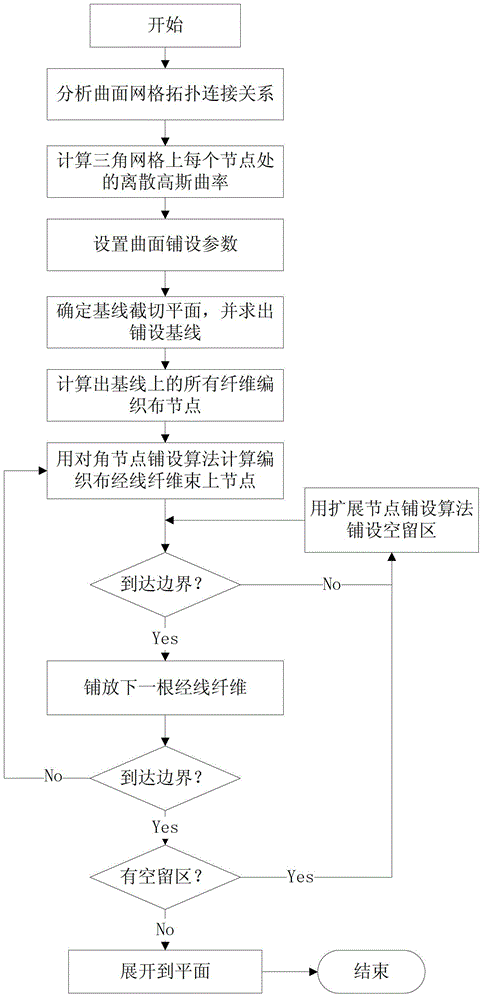
Figure 1 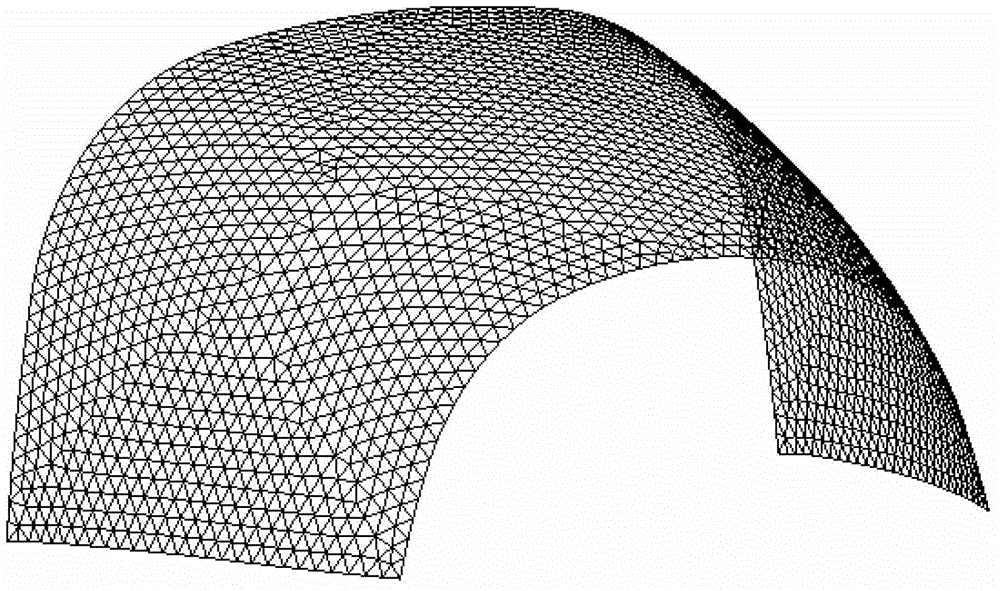
Figure 2 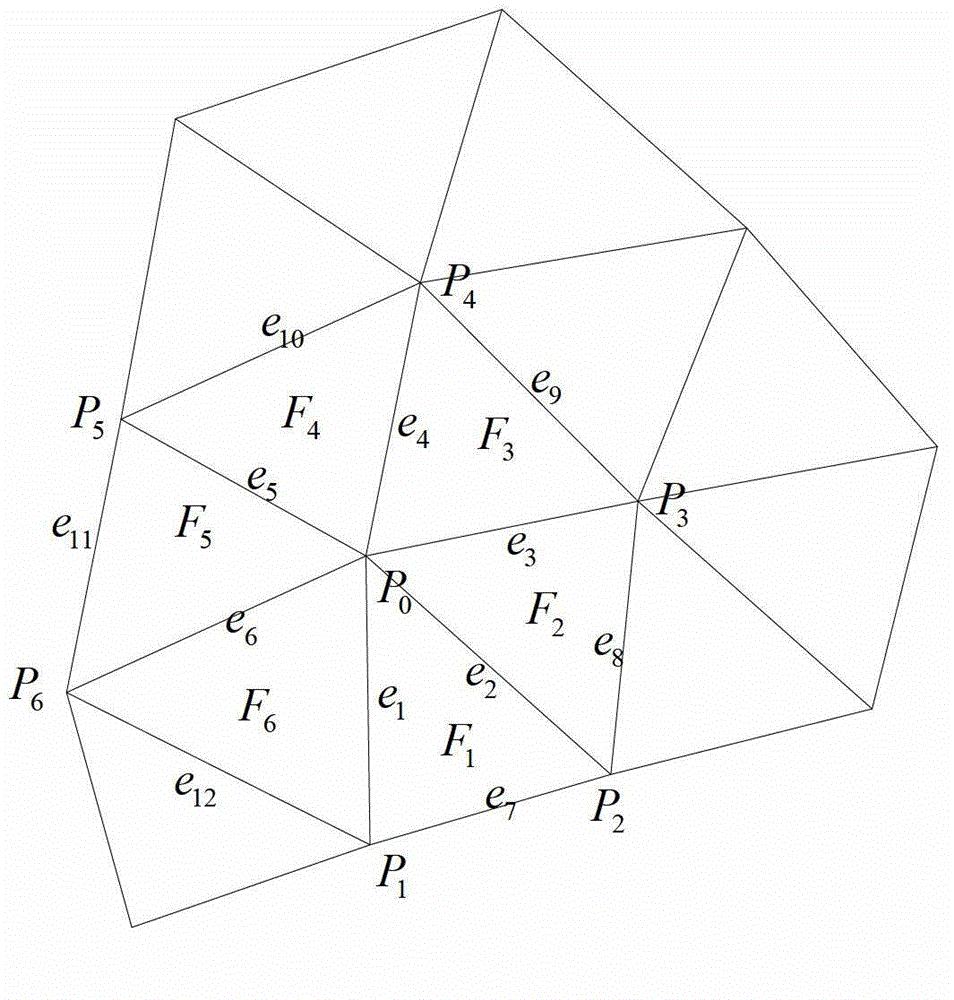
Figure 3
Abstract
Description
technical field
[0001] The invention relates to a digital lay-up unfolding method for weaving composite materials, which is used in the field of digital manufacturing of composite materials, and obtains a two-dimensional unfolded blank according to the three-dimensional curved surface of a composite material part. Background technique
[0002] Composite material complex surface unfolding method is a key link in the digital design and manufacture of composite materials. By unfolding the complex surface, the precise blank shape of the composite material layup can be obtained, the feasibility of the composite material layup design can be analyzed, and it can be directly used in CNC blanking realizes digital design and manufacturing of composite materials. When laying and blanking traditional composite materials, simple parts can be cut according to size. For complex shapes, blanking templates need to be made first, and unidirectional tapes or fabrics are cut according to the te...
Examples
Embodiment Construction
[0033] Now in conjunction with embodiment, accompanying drawing, the present invention will be further described:
[0034] The surface to be unfolded is approximately represented by 3840 triangles connected by 2012 nodes (such as image 3 ), the composite material to be laid on the curved surface is a plain weave cloth, and the distance between any two warp fibers or weft fibers is 1mm. direction.
[0035] According to the present invention, its implementation process is as follows:
[0036] 1) Analyze the topological connection relationship of the triangular mesh, and the number of edges N can be obtained by Euler's theorem e =N p +N F -2=5850, such as Figure 4 , the triangle connection relationship of the mesh surface can be further analyzed to obtain the following topological connection relationship among nodes, edges and triangles:
[0037] a. Point P 0 The edge set Eset 0 {e 1 ,e 2 ,e 3 ,e 4 ,e 5 ,e 6}, ..., point P 2012 Edge set Eset 2011 {...};
[00...