
Voice-controlled television and method for improving voice receiving effect of voice-controlled television
A voice receiving and TV technology, applied in the field of TV, can solve problems such as poor voice command recognition ability, achieve the effect of improving efficiency, improving voice receiving effect, and improving quality
Patent Information
- Authority / Receiving Office
- CN · China
- Current Assignee / Owner
- Publication Date
- 2013-01-30
- Estimated Expiration
- Not applicable · inactive patent
Smart Images
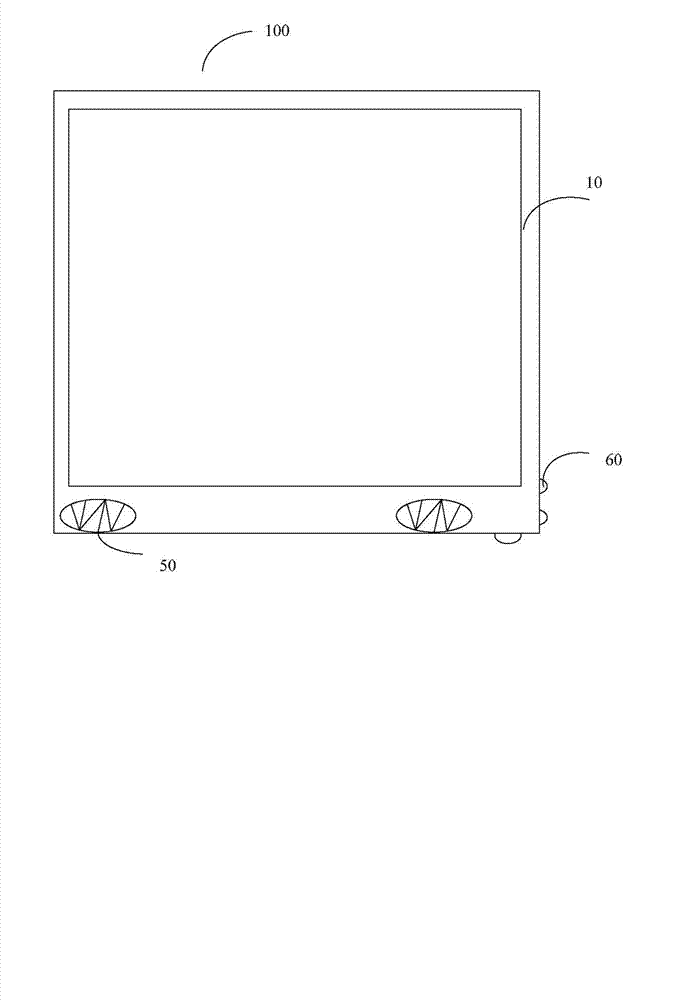
Figure 1 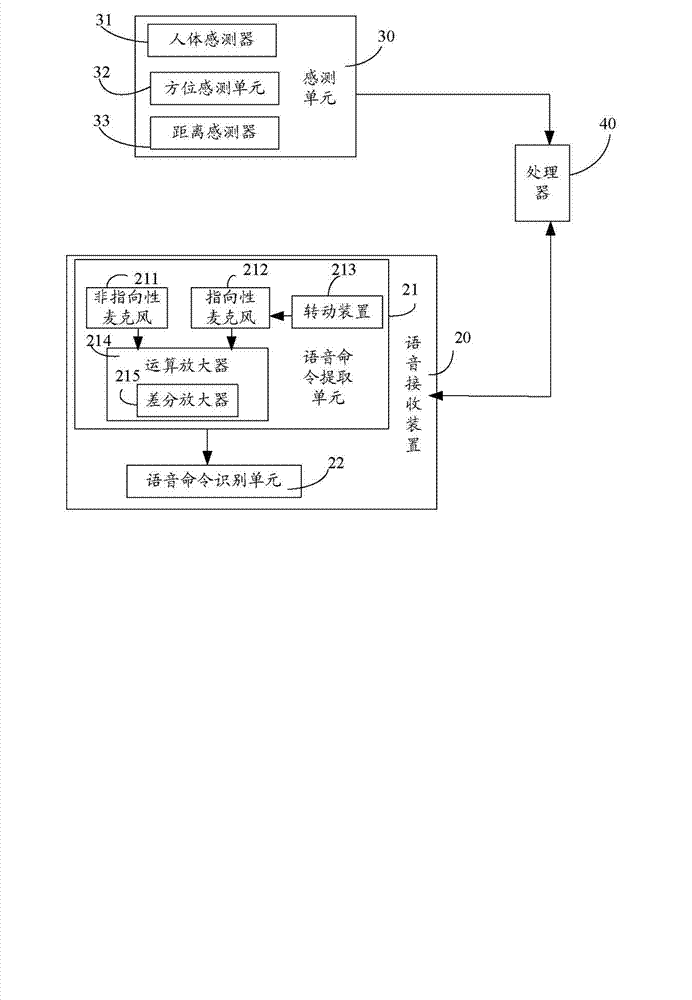
Figure 2 
Figure 3
Abstract
Description
technical field
[0001] The invention relates to the technical field of televisions, in particular to a voice-activated television and a method for improving voice reception effect. Background technique
[0002] In recent years, it has become a trend to apply voice control technology to TV sets, and TV sets equipped with voice control are becoming more and more popular. At present, there are mainly two types of voice-activated TVs on the market. One is to install a sound receiving device such as a microphone on the TV body, and the other is to install a sound receiving device such as a microphone on a remote control of the TV. If the sound receiving device is installed on the remote controller, when the remote controller is lost or cannot be found, the voice control function of the TV cannot be normally activated. When the sound receiving device is installed on the TV body, the user often has a certain distance from the TV when using the TV. Affected by this distance, the vo...
Examples
Embodiment Construction
[0018] see figure 1 , which is a schematic diagram of the voice-activated television 100 in an embodiment of the present invention. The TV body 10 of the voice-activated TV 100 is provided with a voice receiving device for receiving user voice commands, a speaker 50 and a plurality of buttons 60, such as volume keys, channel keys, power-on keys, and the like.
[0019] see figure 2 , which is a functional block diagram of the voice-activated television 100 in an embodiment of the present invention. The voice-activated television 100 includes a voice receiving device 20 , a sensing unit 30 and a processor 40 connected to the voice receiving device 20 and the sensing unit 30 .
[0020] The sensing unit 30 is used for sensing whether there is a user within a preset distance range from the voice-activated TV 100, and when sensing that there is a user within the preset distance range from the voice-activated TV 100, the sensing unit 30 is also used for sensing the orientation of...