
Method for detecting gibberellin in food using cyclodextrin and fluorescence resonance energy transfer technology
A fluorescence resonance energy, technical detection technology, applied in the direction of fluorescence/phosphorescence, material excitation analysis, etc., to achieve accurate, convenient and fast detection, and improve sensitivity and selectivity.
Patent Information
- Authority / Receiving Office
- CN · China
- Patent Type
- Patents(China)
- Current Assignee / Owner
- Publication Date
- 2015-12-30
Smart Images
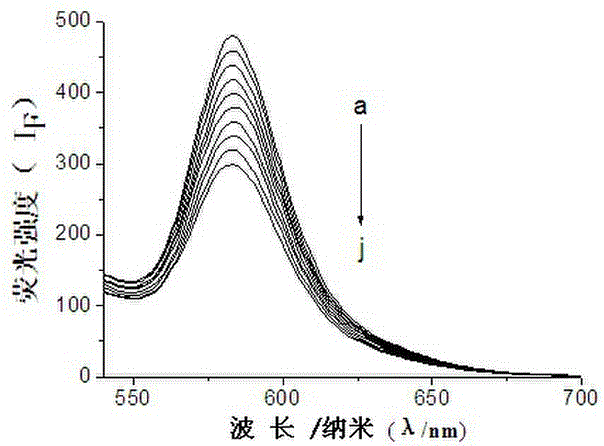
Figure 1 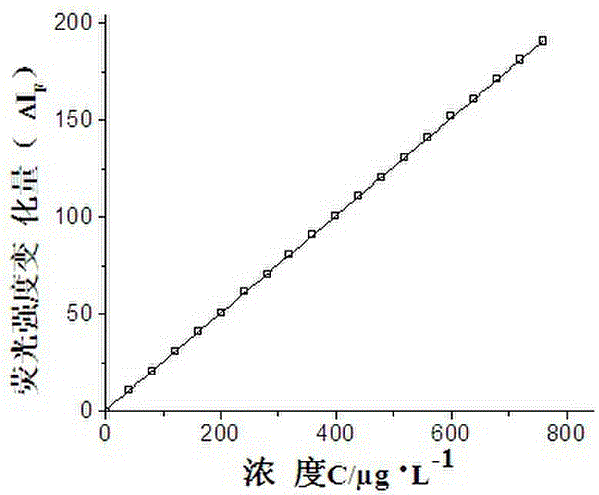
Figure 2
Abstract
Description
technical field
[0001] The invention relates to a method for rapidly detecting trace gibberellin in food by using the inclusion effect of cyclodextrin and fluorescence resonance energy transfer technology. Background technique
[0002] Gibberellins are a class of plant hormones that exist widely and are mainly used to promote the growth of agricultural products. There are more than 100 types of gibberellin, among which gibberellin GA3 is the most common. Some studies have found that the metabolism of gibberellin residues in the human body is not complete, which can cause diseases. Countries such as Europe and the United States have established relevant standards for the residues of gibberellin GA3. At present, there are mainly high-performance liquid chromatography, immunoassay, and electrochemical methods for gibberellin detection at home and abroad. Although the above methods have high sensitivity, the reaction conditions are harsh, the instruments are expensive, and the...
Examples
Embodiment Construction
[0015] 1. Detection method:
[0016] Add 100 microliters of 1.0×10 to each of ten 10ml colorimetric tubes -5 mol / L riboflavin solution, 120 microliters 1.0×10 -4 mol / liter of butylrhodamine B solution, 1 ml of 1.0×10 -3 mol / L of β-cyclodextrin solution and 20 microliters of 0.1 g / L polyvinyl alcohol solution, and then add 40, 120, 200, 280, 360, 440, 520 , 600, 680, and 760 ng / mL gibberellin solutions, respectively, with disodium hydrogen phosphate (0.2 mol / L)-citric acid (0.1 mol / L) buffer solution of pH=6.6 to adjust the volume to the mark, and react 3 Minutes later, the fluorescence intensity was detected with a RF-5301PC fluorescence photometer, the excitation wavelength was 360 nm, and the excitation and emission slit widths were both 5 nm.
[0017] 2. Drawing of working curve:
[0018] Add 100 microliters of 1.0×10 to each of ten 10ml colorimetric tubes -5 mol / L riboflavin solution, 120 microliters 1.0×10 -4 mol / liter of butylrhodamine B solution, 1 ml of 1.0×10 -...