
Active user set maintenance method and system based on time wheel and page behavior
An active user, time wheel technology, applied in image communication, selective content distribution, electrical components, etc., can solve the problems of system congestion, large number of connections, and many one-shottimers, etc., to improve real-time performance, high work efficiency, Flexible effect
Patent Information
- Authority / Receiving Office
- CN · China
- Patent Type
- Patents(China)
- Current Assignee / Owner
- Publication Date
- 2019-04-23
Smart Images
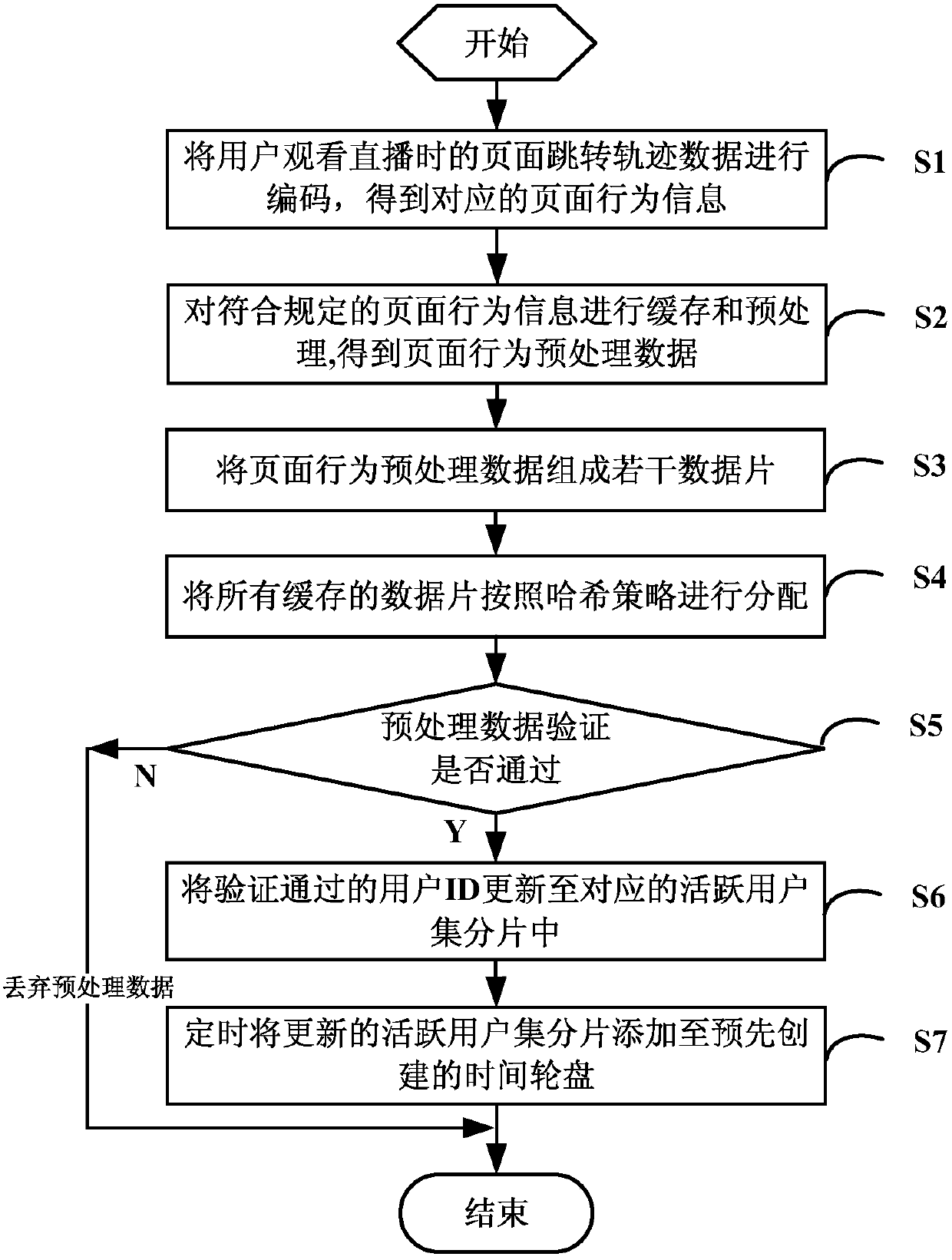
Figure 1 
Figure 2 
Figure 3
Abstract
Description
technical field
[0001] The invention relates to the technical field of maintaining active user sets in live video broadcasting, in particular to a method and system for maintaining active user sets based on time roulette and page behavior. Background technique
[0002] With the rapid development of Internet technology, more and more users can use terminals such as computers and mobile phones to watch online live video broadcasts through the Internet. Online video live broadcast refers to live video live broadcast service using Internet network resources. Through live video shooting and synchronous release to the network, users can see real-time on-site conditions on the network at the same time.
[0003] In the business scenario of a live video website, many hosts in a live broadcast room need to interact only with active users watching the current live broadcast room or users who are active on the website when launching interactive activities or special events on the websit...
Examples
Embodiment Construction
[0030] The present invention will be described in further detail below in conjunction with the accompanying drawings and embodiments.
[0031] see figure 1 As shown, the active user set maintenance method based on the time wheel and page behavior in the embodiment of the present invention includes the following steps:
[0032] S1: The terminal device used by each user encodes the page jump track data when the user watches the live broadcast, obtains the corresponding page behavior information, and transfers to S2.
[0033] The source of the page jump track data when the user watches the live broadcast in S1 is: the user will jump between multiple web pages while watching the live broadcast. Each page has a page ID, and each page ID will be recorded in the user When jumping, record the track of the page jump; the IDs of all the pages viewed by the user, and the ID sequence spliced according to the order of viewing are the user's page jump track data in S1. The upper limit o...