
Novel planting method capable of saving cost and enhancing effectiveness for lotus roots
A new method and technology of lotus root, applied in the field of lotus root planting, can solve the problems of reducing the relative yield of commercial lotus root, high labor cost, rising labor price, etc., to improve the quality of lotus root, low labor cost and long land occupation. Effect
Patent Information
- Authority / Receiving Office
- CN · China
- Patent Type
- Applications(China)
- Current Assignee / Owner
- Publication Date
- 2018-10-23
- Estimated Expiration
- Not applicable · inactive patent
Smart Images

Figure 1 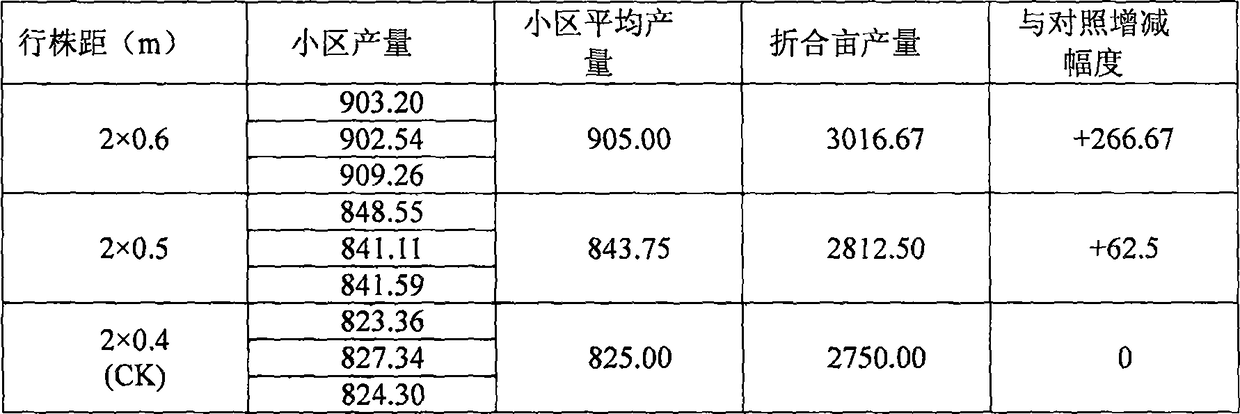
Figure 2 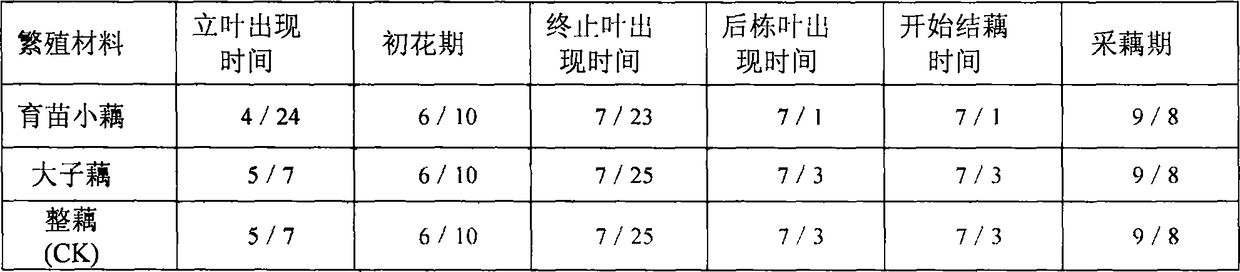
Figure 3
Abstract
Description
technical field
[0001] The invention belongs to the technical field of lotus root planting, and in particular relates to a lotus root planting method. Background technique
[0002] Lotus root (Nelumbo nucifera Gaertn) is a perennial aquatic herbaceous plant of Nymphaeaceae. It is one of the characteristic aquatic vegetables widely cultivated in China and one of the important foreign exchange earning vegetables for export.
[0003] Lotus root is the aquatic vegetable with the largest cultivation area in China. It is suitable for planting in paddy fields, ponds, and lakes. It is mainly distributed in the three major river basins of the Yangtze River, Pearl River, and Yellow River. Mainly in the province, the production of lotus root is the most widely planted, and the national planting area is 200,000 hm 2 above. Its products are high-carbohydrate and low-fat foods, except for protein (0.94-2.4%), starch (8.4-22.7%), vitamin C (2.59-35.0mg·100g -1 ), vitamin B 2 , Vitamin ...
Examples
Embodiment 1
[0050] The cultivation of lotus root in Hanzhong has a long history and is very suitable for the climate and environmental characteristics of Hanzhong. It is one of the advantageous and characteristic industries in Hanzhong. Hanzhong is rich in water resources and has a large area of paddy fields, which provide unique natural conditions for lotus root production and are one of the important channels for farmers to increase their income. However, in recent years, the benefits of lotus root planting in Hanzhong have declined significantly. The main reasons are as follows: first, lotus root is asexually propagated, and the amount of seed used is large, and the cost of planting lotus root is high; second, the prices of production materials such as land, labor, fertilizers, and pesticides have risen rapidly; The third is that some lotus root fields have been cropped continuously for many years, and the diseases are serious; the fourth is that the cultivated varieties are single an...