
Solar cell panel
A technology of solar panels and solar cells, applied in circuits, electrical components, photovoltaic power generation, etc., can solve the problems of high cost of conductive adhesive films, complicated processing, increased processing costs and time
Patent Information
- Authority / Receiving Office
- CN · China
- Patent Type
- Applications(China)
- Current Assignee / Owner
- Publication Date
- 2018-10-26
Smart Images
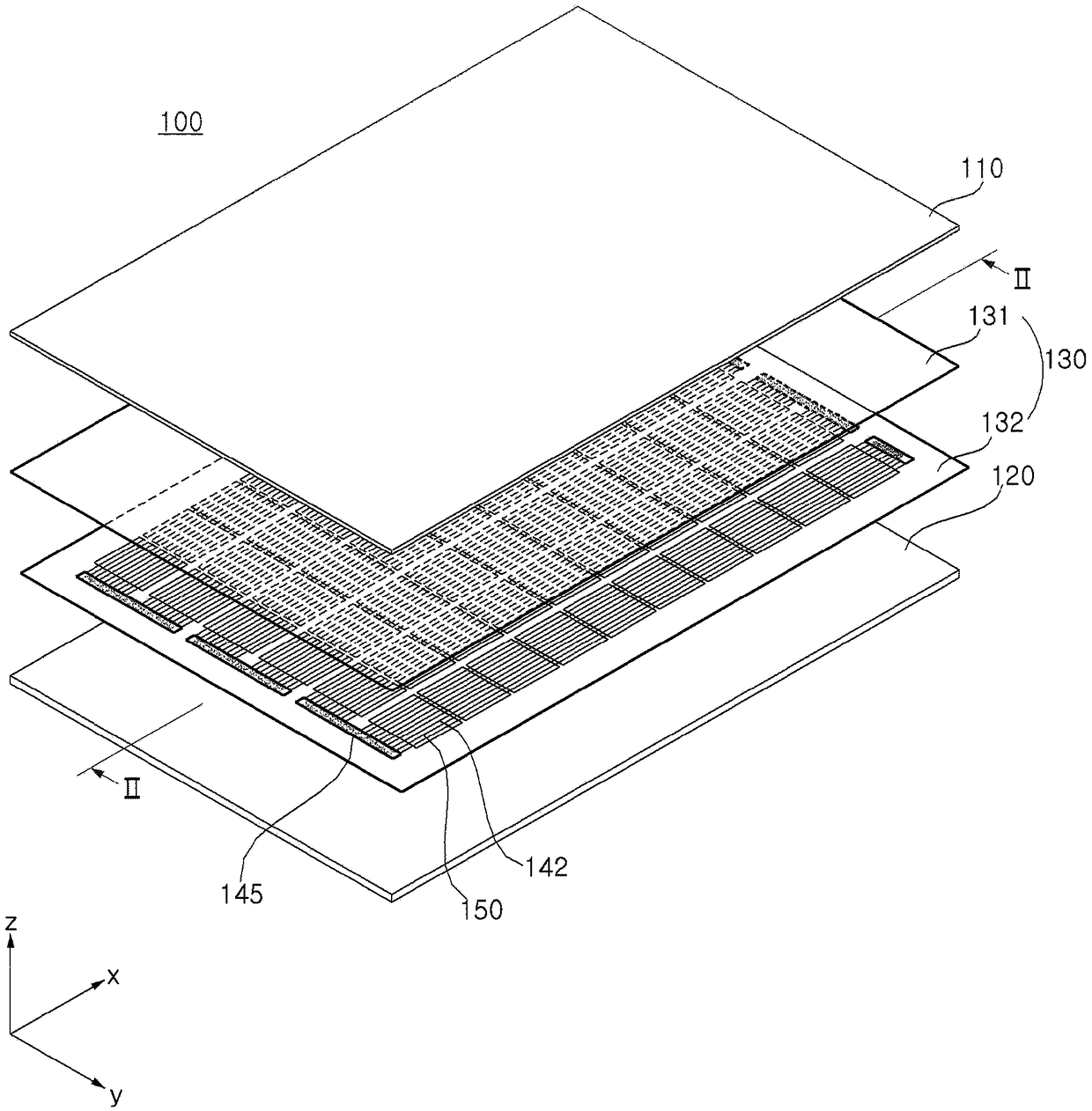
Figure 1 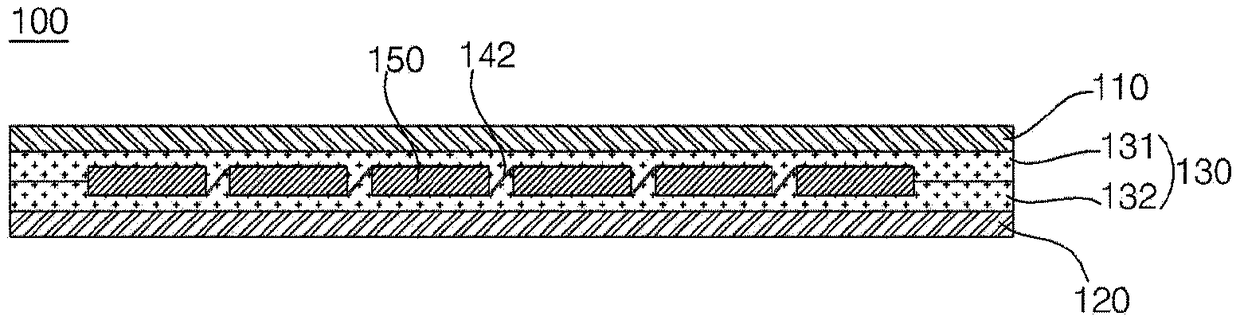
Figure 2 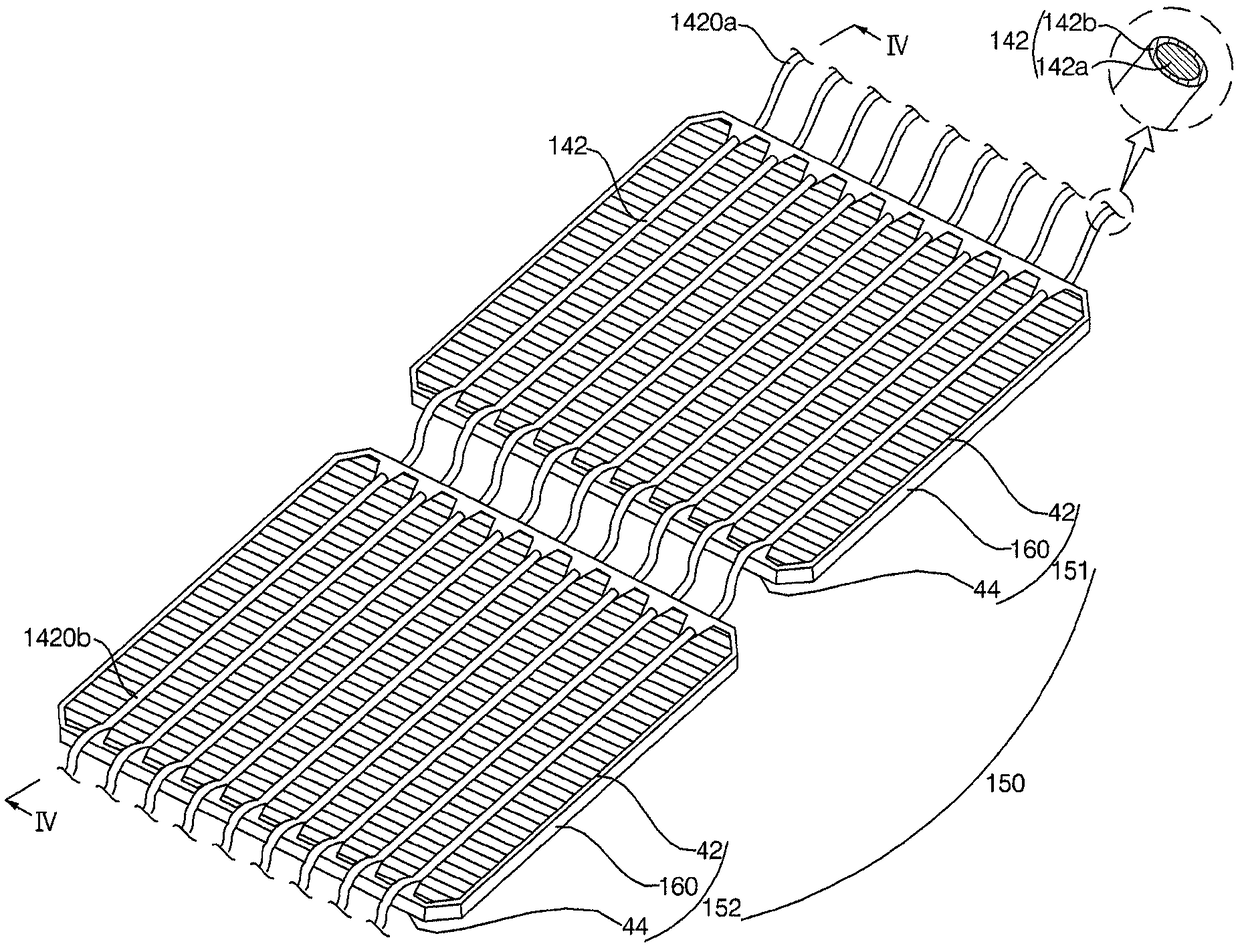
Figure 3
Abstract
Description
technical field
[0001] Embodiments of the present invention relate to solar cell panels, and more particularly, to solar cell panels including solar cells electrically connected to each other. Background technique
[0002] Recently, as existing energy sources such as oil and coal are exhausted, interest in alternative energy sources has increased. In particular, solar cells have attracted attention as next-generation cells capable of converting solar energy into electrical energy.
[0003] A plurality of solar cells are connected in series or in parallel through a plurality of ribbons, and then encapsulated by an encapsulation process to protect them, thereby forming a solar panel.
[0004] Typically, solar cells are attached using tapes having a width of about 1.5 mm. Then, since the width of the tape is so large, a shading loss occurs. For this reason, the number of ribbons used for solar cells should be reduced. For example, the number of bands may be three. Therefor...
Examples
experiment example 1
[0151] The metal electrode layer is formed by applying a low-temperature paste and heat-treating it. Low-temperature pastes include metal particles, cross-linked resins, hardeners, and solvents. The metal particles include spherical particles having a size of 0.1 to 5 um and flake-shaped particles having a long width of 2 to 10 um and a thickness of 0.2 to 5 um. In this case, relative to 100% by weight of metal particles, 80% by weight of spherical particles is included and 20% by weight of flake-shaped particles is included. The crosslinking resin is an epoxy resin, the hardener is an amine hardener, and the solvent is butyl carbitol acetate. With respect to 100% by weight of the sum of the metal particles and the cross-linked resin, 80% by weight of the metal particles, 20% by weight of the cross-linked resin, 2% by weight of the hardener, and 10% by weight solvent.
[0152] The lead wires are attached on the metal electrode layer by a wiring process that applies heat and...
experiment example 2
[0154] The pull-out strength was measured by the same method as in Experimental Example 1, except that the lead wire including the second solder layer of SnBi instead of the first solder layer was attached by the wiring process.
experiment example 3
[0156] The pull-out strength was measured by the same method as in Experimental Example 1, except that the lead wires of the third solder layer including SnIn instead of the first solder layer were attached by wiring processing.