
A kind of organic porous polymer and its preparation and application
A porous polymer, organic technology, applied in the field of porous structure polymer organic electroluminescent materials, can solve the problems of wasting time, low efficiency, increasing experimental cost, etc. Effect
Patent Information
- Authority / Receiving Office
- CN · China
- Patent Type
- Patents(China)
- Current Assignee / Owner
- Publication Date
- 2022-06-21
Smart Images
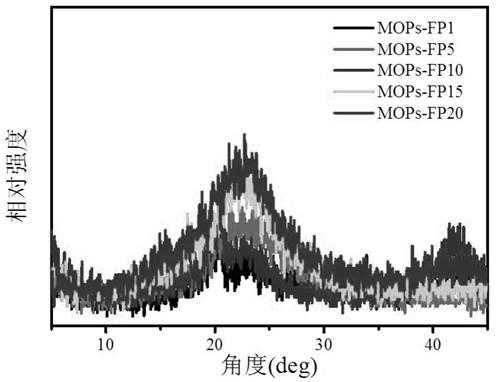
Figure 1 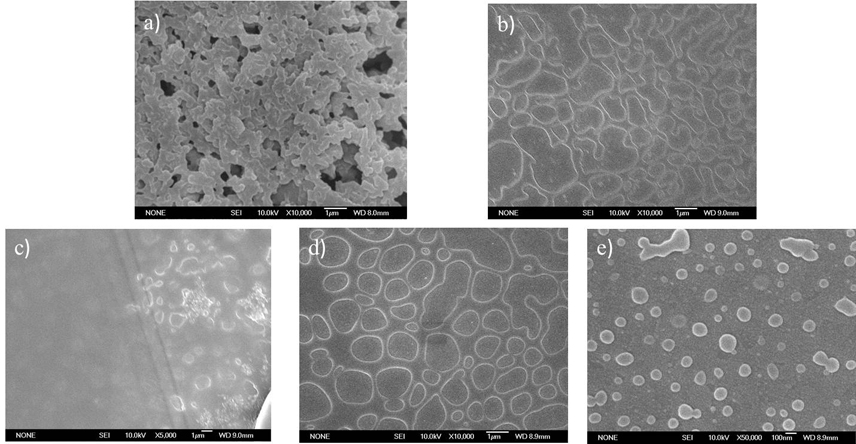
Figure 2 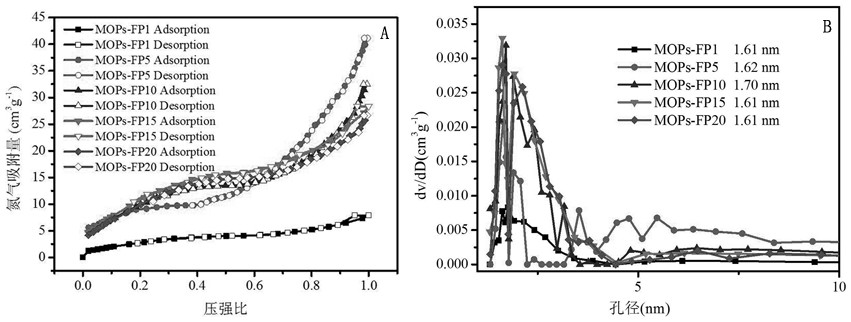
Figure 3
Abstract
Description
technical field
[0001] The invention belongs to the technical field of organic electroluminescence materials, and relates to a polymer organic electroluminescence material with a porous structure, in particular to a porous structure polymerized polymer with pyrene and 9,9-dioctylfluorene as building monomers Organic electroluminescent material, and preparation method of the organic electroluminescent material. Background technique
[0002] "Energy saving and low consumption" has become the theme of social development. Organic light-emitting devices (OLED) have the advantages of all-solid-state, high brightness, self-luminous, wide viewing angle, and thin thickness, and have been widely accepted by researchers. focus on. Among them, organic electroluminescent polymer materials and devices have the characteristics of simple process, easy realization of large-screen display and flexible display, etc., which have aroused great interest of researchers, and a series of in-depth s...
Examples
Embodiment 1
[0051] Example 1: Synthesis of an organic porous polymer whose building monomer 1,3,6,8-tetra-substituted pyrene accounts for 1% of the total molar amount of the polymer.
[0052] 1), the synthesis of 1,3,6,8-tetrabromopyrene.
[0053]
[0054] In a 250ml three-necked flask, add 3.26g (10mmol) of pyrene, vacuumize through N 2 3 times each to fully exhaust the air in the flask. 50 ml of THF was added, stirred and mixed at room temperature for 30 min, and 0.6 g (25 mmol) of NaH was added to the flask in 5 times, with an interval of 15 min between each addition. Vacuum again and pass N 2 , dissolve 1.70g (4mmol) of pentatetrabromide in 20ml of THF, slowly drop it into a three-necked flask through an atmospheric separatory funnel within 30min, heat it to 50°C for 6h, then heat it up to 75°C to continue the reaction for 24h.
[0055] After the reaction, the mixed solution was rotary evaporated to remove THF, water was added, and CH 2 Cl 2 Extract 3 times, collect CH 2 Cl ...
Embodiment 2
[0063] Example 2: Synthesis of an organic porous polymer in which the building monomer 1,3,6,8-tetra-substituted pyrene accounts for 5% of the total molar amount of the polymer.
[0064] Weigh M1 0.23g (0.42mmol), M2 0.34g (0.53mmol), M3 0.0259g (0.05mmol), mix them into a 250ml three-necked flask, and pass N 2 3 times each to exhaust the air in the flask. Add 30 ml of toluene (water removed in advance) into the three-necked flask, and stir for 10 min. Weigh 5.0g K 2 CO 3 Dissolve in 15ml water, measure 1ml Aliquant 336 phase transfer catalyst and dissolve it in 5ml anhydrous toluene, respectively in N 2 Add to the three-necked flask under the protection, vacuumize through N 2 1 time each. 0.05 g of tetrakis(triphenylphosphine) palladium catalyst was weighed into a three-necked flask, heated to 100° C., and the reaction was stopped after refluxing for 3 days.
[0065] The reaction solution was cooled to room temperature, water was added, extracted with toluene, the extra...
Embodiment 3
[0067] Example 3: Synthesis of an organic porous polymer in which the building monomer 1,3,6,8-tetra-substituted pyrene accounts for 10% of the total molar amount of the polymer.
[0068] Weigh M1 0.19g (0.35mmol), M2 0.35g (0.55mmol), M3 0.0518g (0.1mmol), mix them into a 250ml three-necked flask, and pass N 2 3 times each to exhaust the air in the flask. Add 30 ml of toluene (water removed in advance) into the three-necked flask, and stir for 10 min. Weigh 5.0g K 2 CO 3 Dissolve in 15ml water, measure 1ml Aliquant 336 phase transfer catalyst and dissolve it in 5ml anhydrous toluene, respectively in N 2 Add to the three-necked flask under the protection, vacuumize through N 2 1 time each. 0.05 g of tetrakis(triphenylphosphine) palladium catalyst was weighed into a three-necked flask, heated to 100° C., and the reaction was stopped after refluxing for 3 days.
[0069] The reaction solution was cooled to room temperature, water was added, extracted with toluene, the extra...