
Unconstrained face recognition method based on weighted block tensor sparse graph mapping
A face recognition, non-constrained technology, applied in the field of face recognition, can solve the problems of difficult, unknown, and complex data distribution in pre-defined neighbor graphs, and achieve the effect of being conducive to accurate recognition and improving accuracy.
Patent Information
- Authority / Receiving Office
- CN · China
- Current Assignee / Owner
- Publication Date
- 2020-10-16
Smart Images
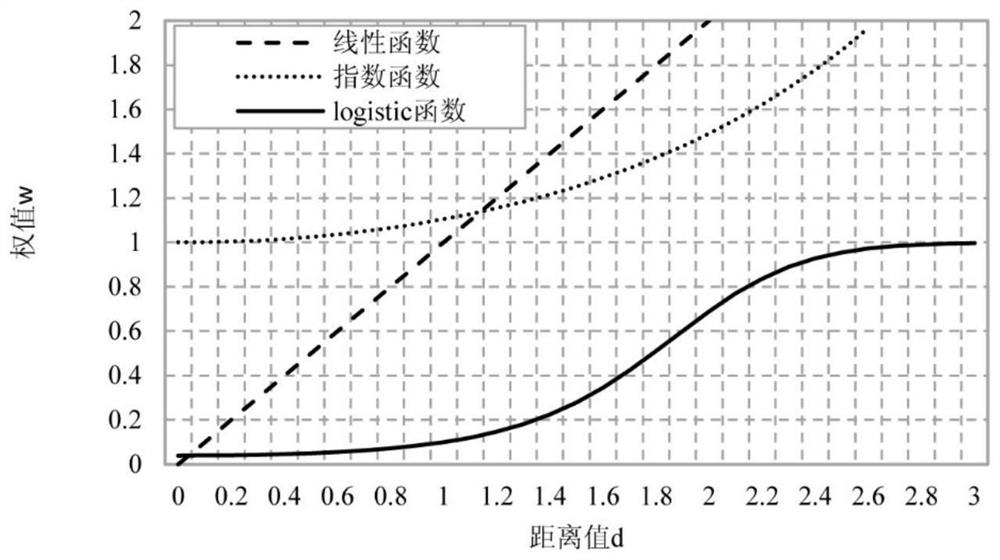
Figure 1 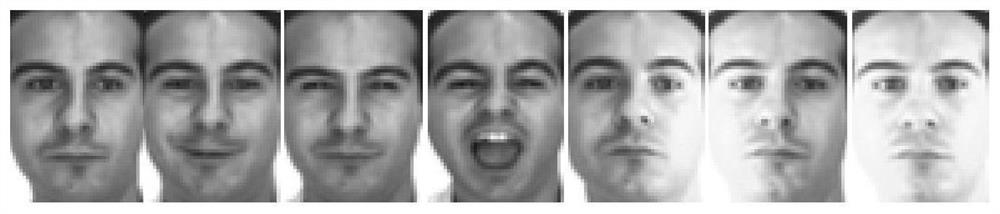
Figure 2 
Figure 3
Abstract
Description
technical field
[0001] The present invention relates to the technical field of face recognition methods, in particular to the technical field of unconstrained face recognition methods based on weighted block tensor sparse graph mapping. Background technique
[0002] With the rapid development of mobile Internet, electronic sensing technology, and machine learning theory, real-time collection of face images for identity authentication, video surveillance and human-computer interaction has become an important application of artificial intelligence in actual work and life. Due to the mixed interference of various factors such as illumination, posture, expression, occlusion, age, and resolution, the face data collected in the real environment leads to the diversity of face images and a highly complex nonlinear distribution in high-dimensional space. . Therefore, how to effectively reduce the dimensionality of high-dimensional massive unconstrained face data is particularly impo...
Examples
Embodiment Construction
[0020] The present invention is based on the unconstrained face recognition method of weighted block tensor sparse graph mapping, combines sparse representation, block tensor representation and multi-dimensional projection technology, and proposes a new weighted block tensor sparse graph mapping (Weighted Block Tensor Sparse Graph Embedding, WBTSGE) algorithm. First, the original sample image is divided into B blocks, each image block is represented by a second-order tensor, category labels are introduced, and a block tensor dictionary (Block TensorDictionary, BTD) with super-complete supervision is constructed; secondly, block samples are solved under regular constraints On the basis of the sparse reconstruction coefficient of the same class, the intra-class compactness constraints and weight constraints are added to enhance the neighbor relationship between the same block samples, and the distance weights are used to further characterize the intra-class differences between th...