
Application of Korean medicine prescription in preparation of medicines, health care products or foods for improving chronic fatty liver
A prescription and medical technology, applied in the field of application of Korean medicine prescriptions in the preparation of medicines, health products or food for improving chronic fatty liver
Patent Information
- Authority / Receiving Office
- CN · China
- Patent Type
- Applications(China)
- Current Assignee / Owner
- Publication Date
- 2021-03-09
Smart Images
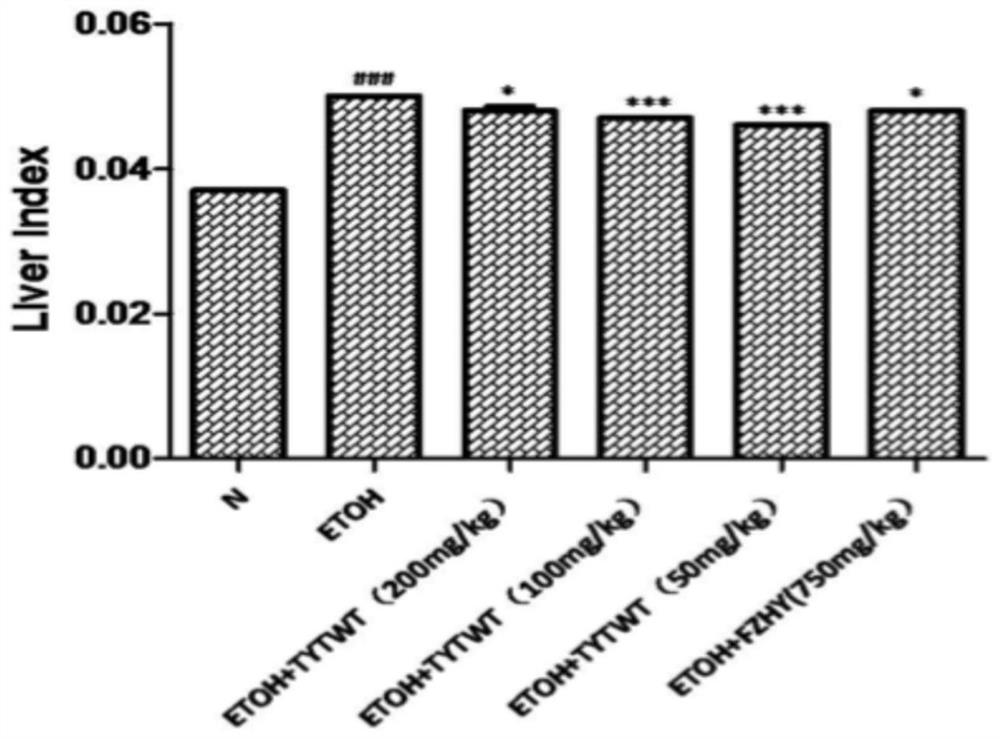
Figure 1 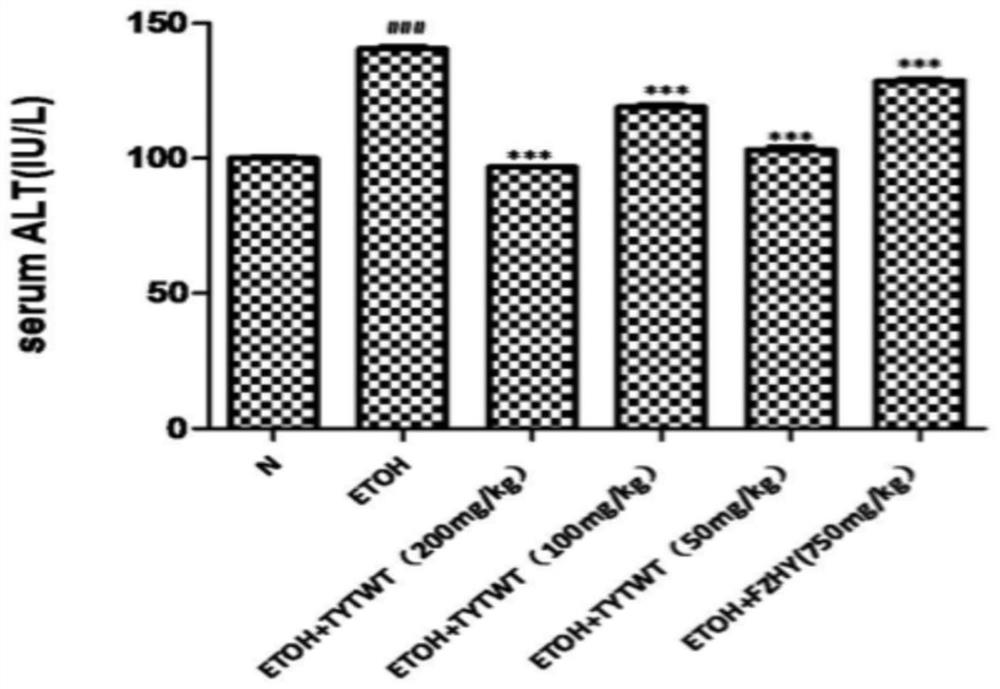
Figure 2 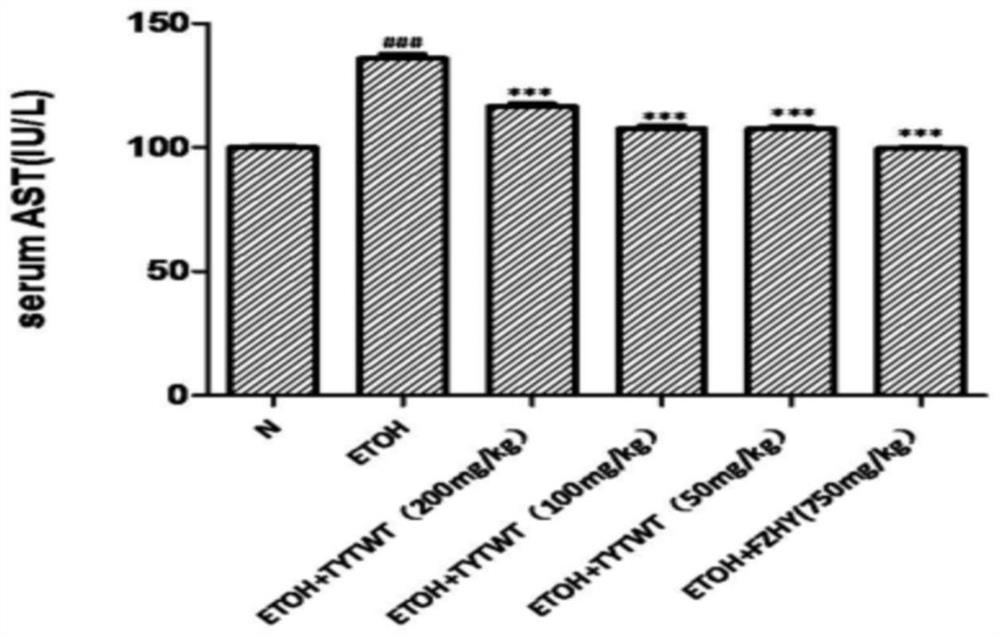
Figure 3
Abstract
Description
technical field
[0001] The invention relates to a Korean medicine prescription and its application in the preparation of medicines, health care products or food for improving chronic fatty liver. Background technique
[0002] At present, liver disease has been listed as one of the important diseases causing death by the World Health Organization. More than 500,000 people die of liver disease every year in my country. The total number of patients with liver disease in my country accounts for about 10% of the total population, which has exceeded 200 million, and this number is still expanding. Liver cell damage caused by various factors can be manifested as: hepatic fatty degeneration, cholestasis, liver fibrosis, liver necrosis, liver cirrhosis, and liver cancer. In recent years, there have been more and more liver cell injuries caused by various reasons. Common liver injuries include: chemical liver injury, drug-induced liver injury, non-alcoholic liver injury and alcohol...
Examples
Embodiment 1
[0038] Establishment of alcoholic fatty liver animal model: C57BL / 6 mice were randomly divided into control feed group, alcohol feeding plus alcohol gavage group (hereinafter referred to as alcohol group), alcohol feeding plus alcohol gavage plus Taiyin Tiaowei Decoction large, medium and Small-dose group and alcohol feeding plus alcohol gavage plus Fuzhenghuayu positive control group. The administration components were Taiyin Tiaowei Decoction large, medium and small dose groups (50, 100 and 200 mg / kg) and the positive control group Fuzheng Huayu (750 mg / kg). The establishment process of the model is as follows: the normal group is given the control liquid feed, and the alcohol group and the treatment group are given the liquid alcohol feed 5 days after the liquid control feed is given, and the concentration of the alcohol feed is gradually increased from 1% to 5%, and from 1% to 4%. Each concentration of alcoholic diet was given for two days, followed by 5% liquid alcoholic ...
Embodiment 2
[0043] Establishment of non-alcoholic fatty liver animal model: C57BL / 6J mice were divided into normal control diet group, high-fat diet group, high-fat diet plus Taiyin Tiaowei Decoction large, medium and small dose groups, and high-fat diet plus Fuzheng Huayu decoction group positive control group. The model group was given 60% high-fat obesity model feed for 12 consecutive weeks, and the normal group was given control feed. The administration components were Taiyin Tiaowei Decoction large, medium and small dose groups (50, 100 and 200 mg / kg) and the positive control group Fuzheng Huayu (750 mg / kg). Drugs were administered once a day according to the requirements of each group, and body weight and food intake were recorded once a day after administration. On the last day, blood was collected from all mice by heart puncture, and the liver was dissected and separated. After the blood was centrifuged at 3000rpm, the serum was collected. The lobe of the liver was submerged in ...