
Optimization method of ue mobile timing advance based on 5gnr
A technology of timing advance and optimization method, applied in the field of UE mobile timing advance optimization based on 5GNR, can solve the problems of unconsidered and inter-symbol interference interference, and achieve the effect of reducing ISI interference
Patent Information
- Authority / Receiving Office
- CN · China
- Patent Type
- Patents(China)
- Current Assignee / Owner
- Publication Date
- 2022-03-15
Smart Images
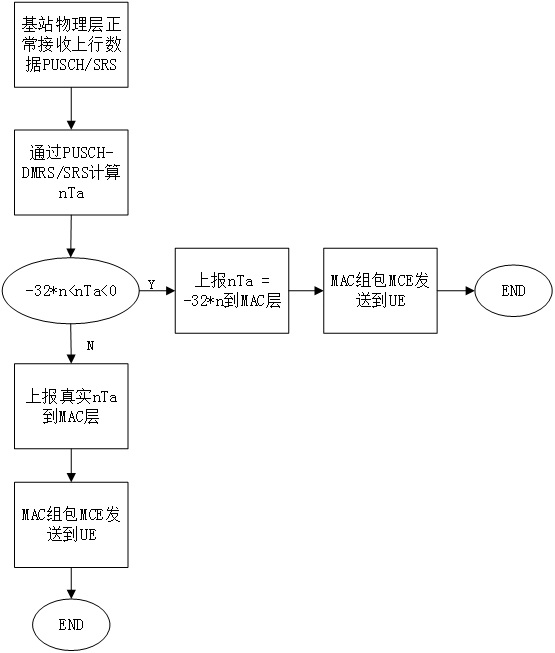
Figure 1 
Figure 2 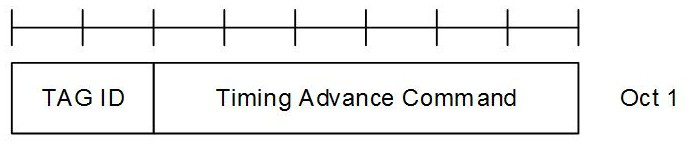
Figure 3
Abstract
Description
technical field
[0001] The present invention relates to the field of 5G network communication, in particular to a method for optimizing UE mobile timing advance based on 5G NR. Background technique
[0002] 5G mobile networks Like earlier 2G, 3G and 4G mobile networks, 5G networks are digital cellular networks in which a provider's covered service area is divided into many small geographic areas called cells. Analog signals representing sound and images are digitized in the phone, converted by an analog-to-digital converter and transmitted as a bit stream. As with existing cell phones, when a user travels from cell to cell, their mobile device will automatically "switch" to the antenna in the new cell.
[0003] The main advantage of 5G networks is that the data transfer rate is much higher than previous cellular networks, up to 10Gbit / s, which is faster than current wired Internet and 100 times faster than previous 4G LTE cellular networks. Another advantage is lower netwo...
Examples
Embodiment 1
[0052] In this example, if figure 1 As shown, a method for optimizing UE mobile timing advance based on 5G NR includes the following steps:
[0053] Step 1: The physical layer of the base station normally receives the uplink data PUSCH DMRS or SRS signal;
[0054] Step 2: According to the PUSCH DMRS or SRS signal received by the physical layer of the base station, use the physical layer algorithm to calculate the nTa time delay value;
[0055] Step 3: judge the nTa delay value according to the preset reporting conditions, and if the reporting conditions are met, the physical layer of the base station will report TA0 to L2;
[0056] Step 4: L2 calculates the TA value of the delay required by the UE according to the reported TA0, and sends the TA value to the UE through the PDSCH, and the UE adjusts the advance amount of the uplink signal according to the TA value.
[0057] Specifically, step 2 specifically includes: according to the PUSCH DMRS or SRS signal received by the ph...
Embodiment 2
[0070] In this embodiment, on the basis of the method steps provided in Embodiment 1, the UE mobile timing advance optimization process includes:
[0071] (1) Calculate the nTa delay value (the unit is Tc, which is also equivalent to the sampling interval value) through the PUSCH DMRS or SRS signal, which reflects the relative delay of the UE signal received by the current cell.
[0072] (2) If the calculated delay value nTa is negative and nTa>-32*n, then report it directly to L2 as TA0=-32*n, where n is an integer. Example: If nTa = -60, then take n as 2, and report to L2 as nTa=-64
[0073] (3) After receiving TA0 reported by the physical layer, L2 calculates that the UE needs to delay by 2 TAs, then fill in 30 for the MCE6bit value of TA, and send it to the UE through the PDSCH, so that the UE can advance the uplink signal Adjustment.
[0074] The adjustment process of the advance amount specifically includes: the UE sends the data in advance or later according to the TA...
Embodiment 3
[0076] In this embodiment, another situation in which the method in Embodiment 1 is specifically used for judging the delay value is disclosed, and the specific implementation steps for adjusting the advance amount are as follows:
[0077] 1. After the UE accesses the cell, the physical layer of the base station normally processes PUSCH data / SRS data. Through the characteristics of PUSCH-DMRS / SRS, the physical layer algorithm is used to estimate the arrival time difference nTa from the UE to the base station, where the unit of nTa represents a sample point interval;
[0078] 2. The physical layer further calculates the nTa value reported to the MAC according to the UE time delay calculated by the DMRS. At this time, the calculated current time delay value nTa is negative and less than -32*n, and then reports the nTa value to the MAC. is the real delay value;
[0079] 3. The MAC layer receives the nTa reported by the physical layer, performs MAC CE grouping, and sends it to th...