
Surgical robot system for stereotactic surgery and method for controlling stereotactic surgery robot
a robot and stereotactic surgery technology, applied in the field of stereotactic surgery surgical robot system, can solve the problems of affecting the surgical accuracy, affecting the patient's convenience and the operator's workability, and further amplifying errors, so as to improve patient convenience and operator's workability, improve surgical accuracy, and simplify the control method
Patent Information
- Authority / Receiving Office
- US · United States
- Patent Type
- Patents(United States)
- Current Assignee / Owner
- Publication Date
- 2020-02-04
Smart Images
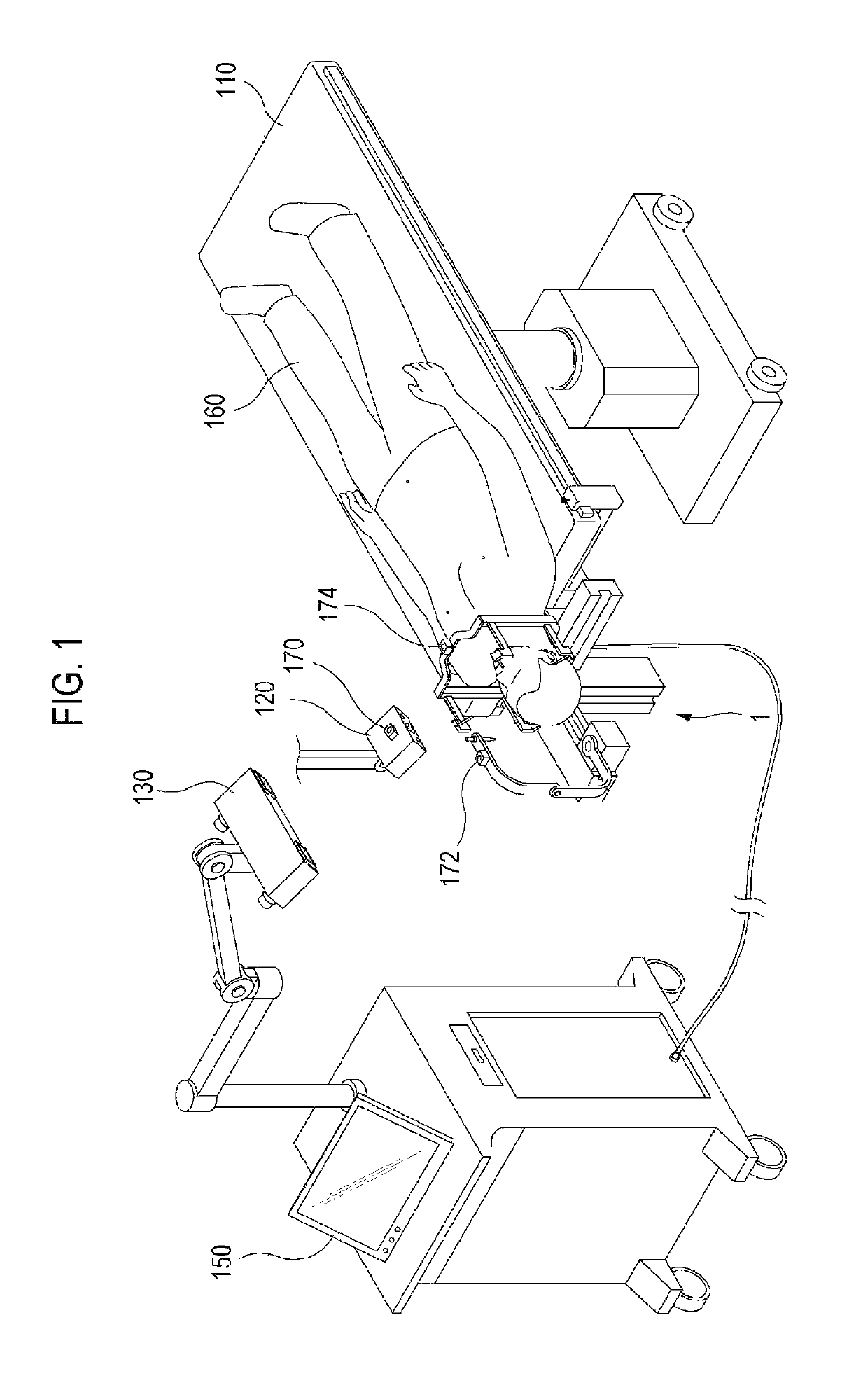
Figure 1 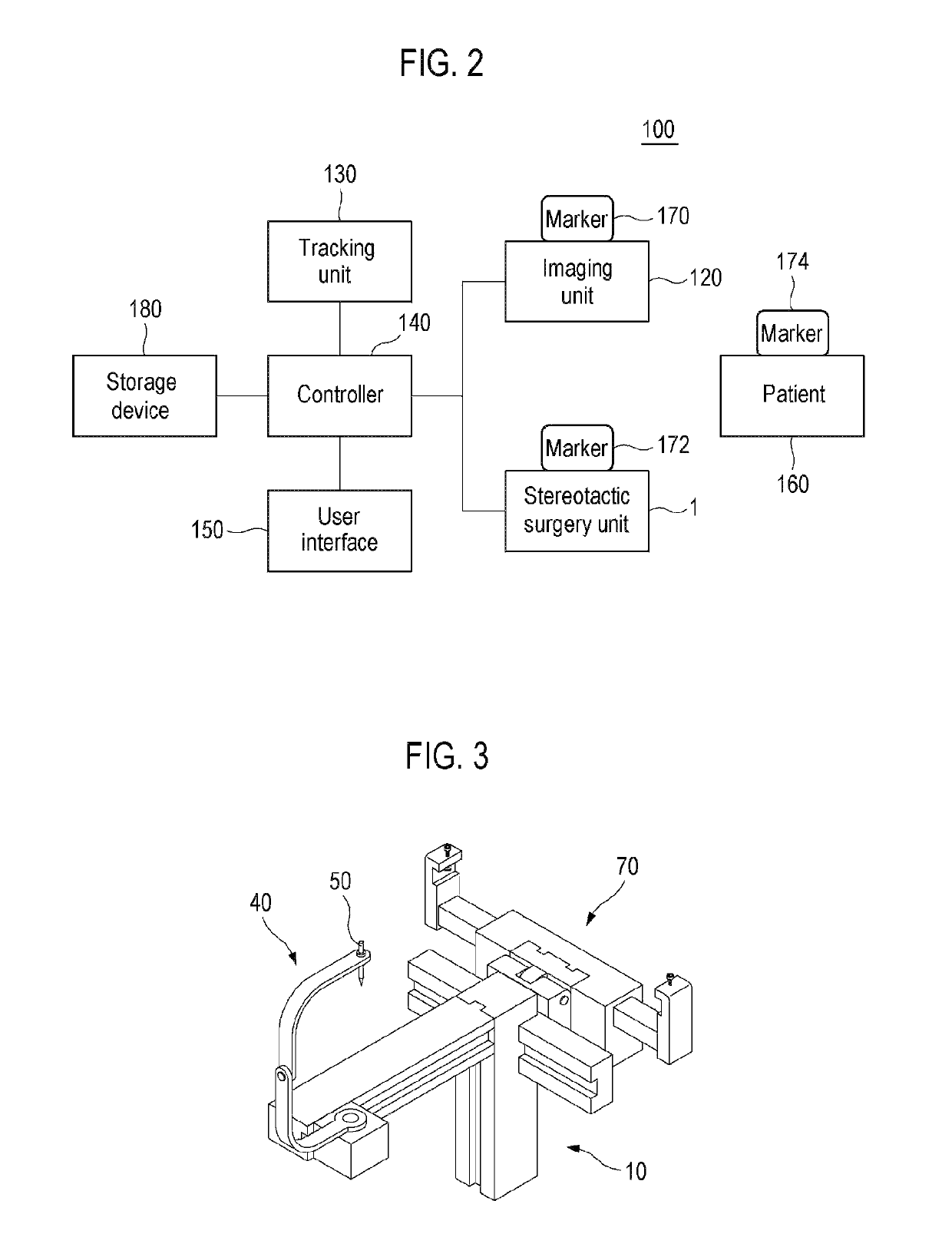
Figure 2 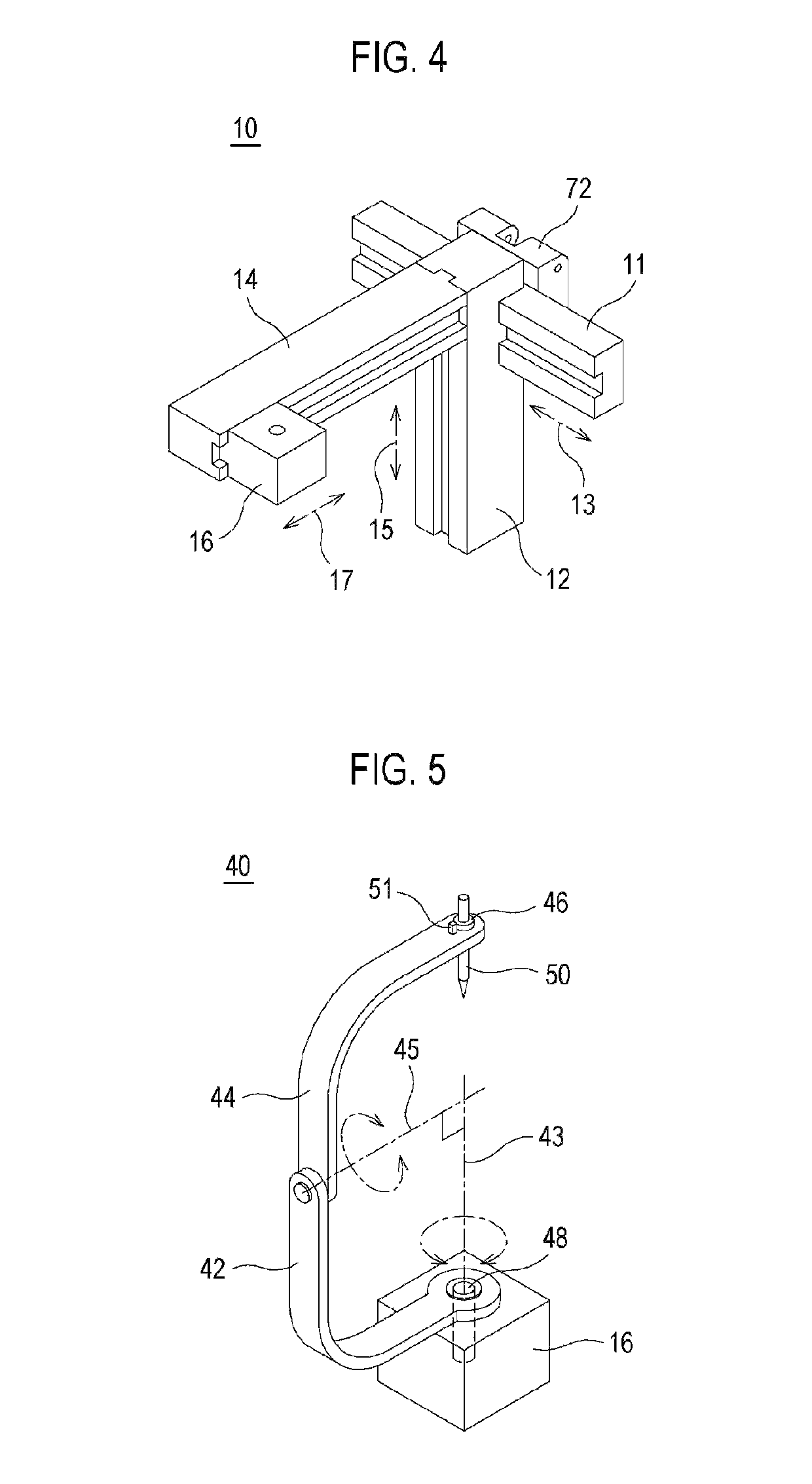
Figure 3
Abstract
Description
CROSS-REFERENCE TO RELATED APPLICATIONS
[0001] The present application claims priority from Korean Patent Application No. 10-2016-0103717 filed on Aug. 16, 2016, the entire subject matter of which is incorporated herein by reference.TECHNICAL FIELD
[0002] The present disclosure relates to a surgical robot system for stereotactic surgery, and further relates to a method for controlling a stereotactic surgery robot.
[0003] The present disclosure is derived from research conducted as a part of the Robot Industry Fusion Core Technology Development Project of the Ministry of Trade, Industry and Energy. [Project No. 10062800, Project Title: Development of Practical Technology of Medical Imaging based Brain Surgery Robot System through Clinical Trial]BACKGROUND ART
[0004] Various stereotactic surgery instruments have been known. For example, Leksell Frame is used as a manual stereotactic surgery instrument for brain surgery. Leksell Frame has a structure in which a user is able to manually move th...
Examples
Embodiment Construction
[0051]Embodiments of the present disclosure, which will be described below, are only examples that are illustrated for the purpose of explaining the present disclosure. The embodiments of the present disclosure may be conducted in various manners, and the present disclosure is not construed to be limited to the embodiments described below or to the detailed description of the embodiments.
[0052]The term “unit” that is used in the present embodiments refers to a software element and a hardware element, such as FPGA (field-programmable gate array) or ASIC (application specific integrated circuit). However, the “unit” is not limited to hardware and software. The “unit” may be configured to be in a storage medium that can be addressed, and may be configured to reproduce one or more processors. Accordingly, as an example, the “unit” includes elements, such as software elements, object-oriented software elements, class elements, or task elements, processors, functions, attributes, procedur...