
Method and system for tempering capillaries without sealing them
a technology of tempering capillaries and sealing methods, applied in the direction of material analysis, measurement devices, instruments, etc., can solve the problems of significant disadvantages of sealing methods, inability to measure at increased temperatures over a longer time period, and disturbance of currents in liquids, etc., to achieve small volume, good defined volume, and small volume
Patent Information
- Authority / Receiving Office
- US · United States
- Current Assignee / Owner
- Publication Date
- 2020-04-14
Smart Images
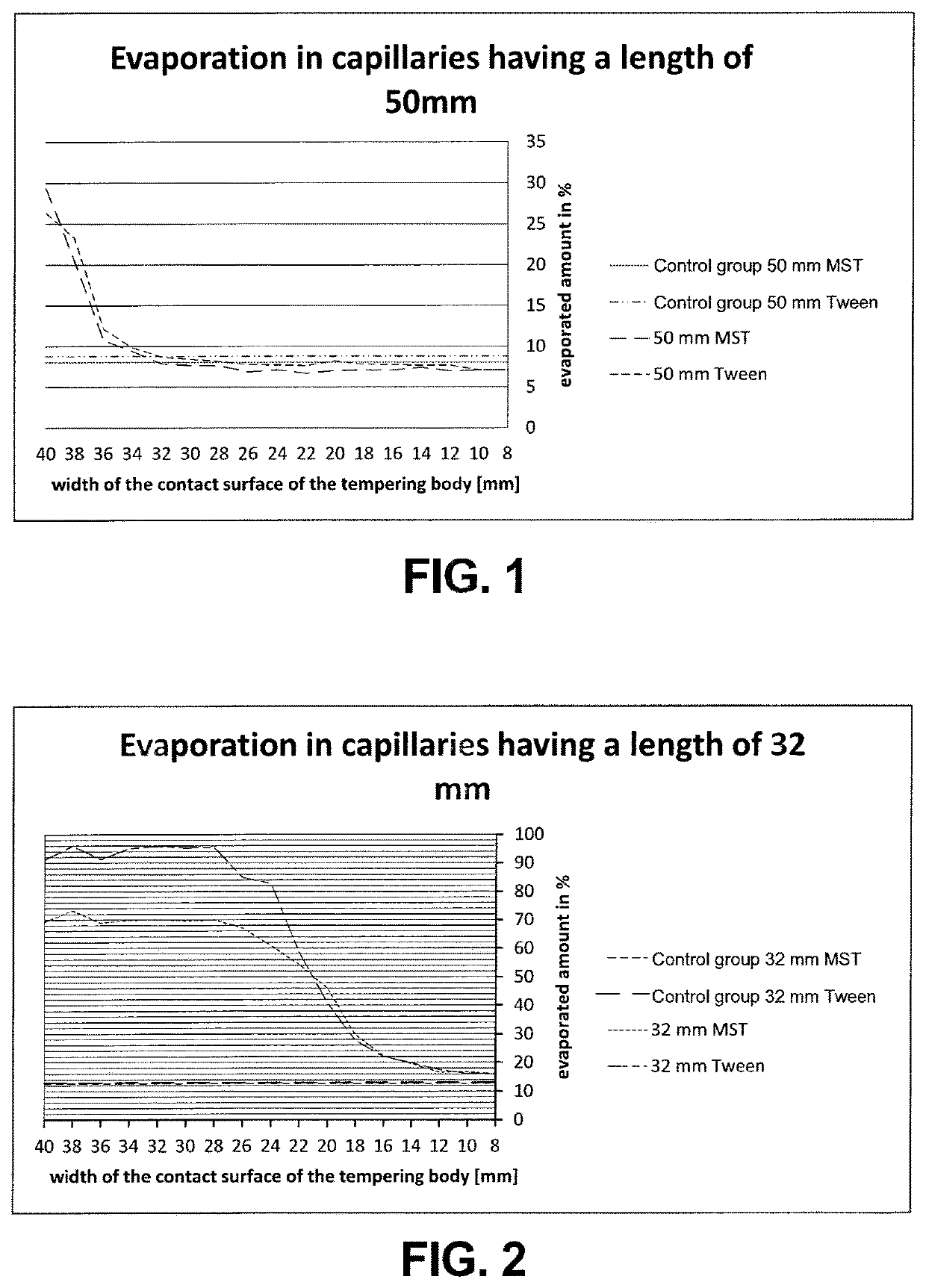
Figure 1 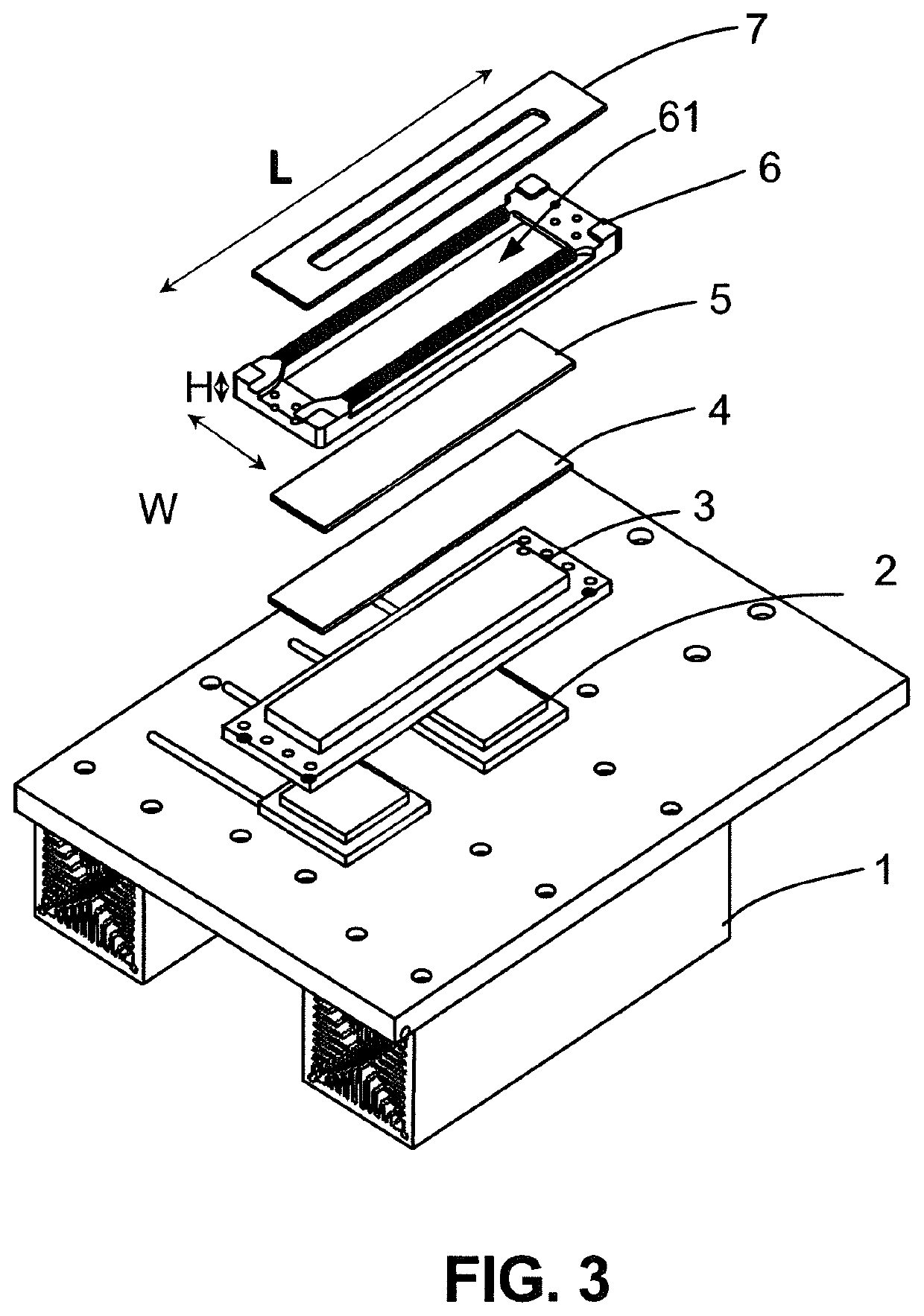
Figure 2 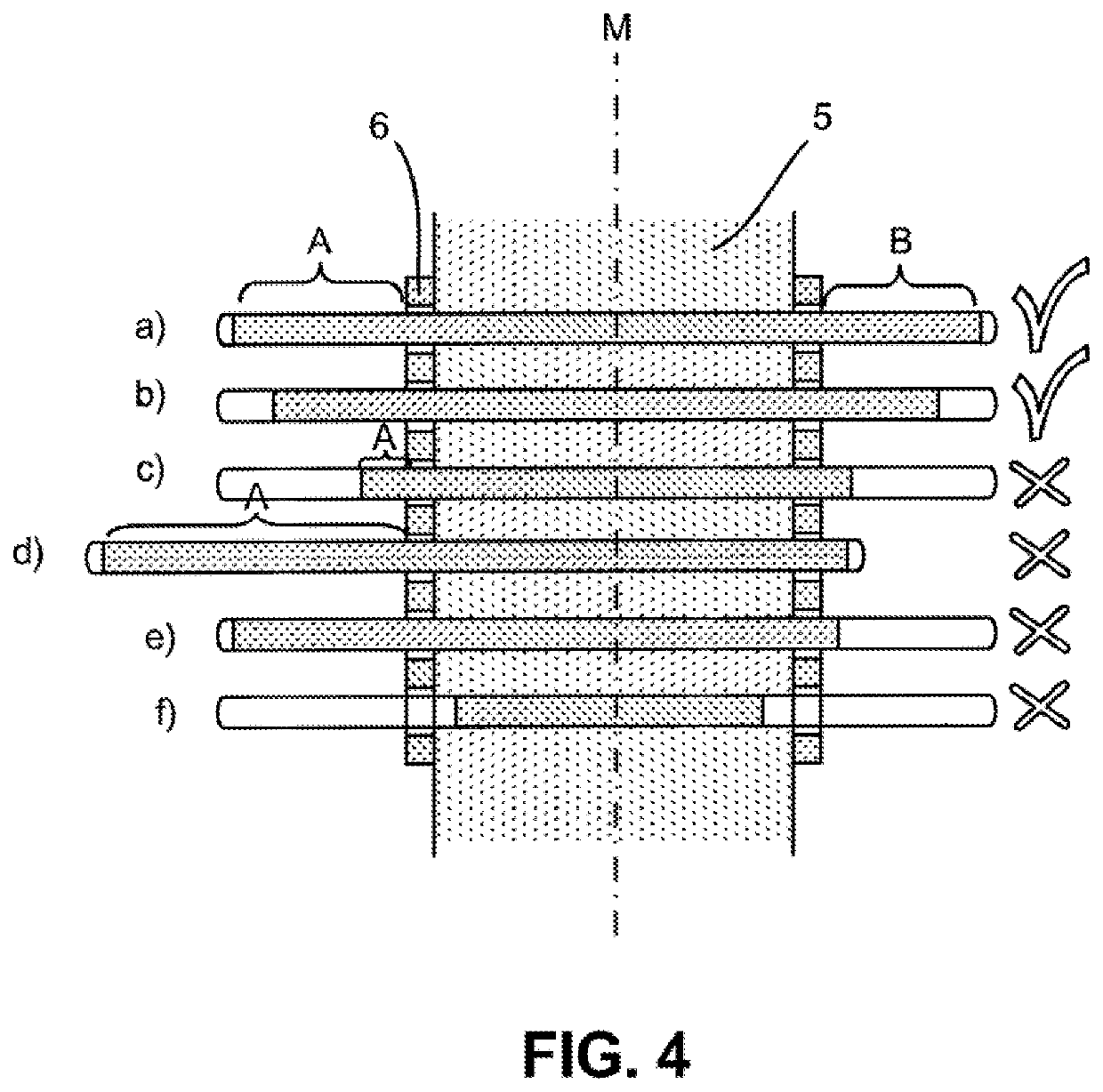
Figure 3
Abstract
Description
CROSS-REFERENCE TO RELATED APPLICATION
[0001] This Application is a Section 371 National Stage Application of International Application No. PCT / EP2015 / 079459, filed 11 Dec. 2015 and published as WO 2016 / 092086 A1 on 16 Jun. 2016, in German, the contents of which are hereby incorporated by reference in their entirety.FIELD
[0002] The invention generally relates to a system and a method for tempering capillaries which are filled with samples to be examined. In particular, the invention relates to a method for tempering capillaries for optical measurements of tempered samples dependent on the temperature. Preferably, the optical measurement is conducted in the UV range based on fluorescence characteristics of the samples to be measured. Furthermore, the invention relates to a system by means of which the inventive method may easily and efficiently be carried out. One essential advantage of the invention is that there is no need to seal the capillaries for tempering and optical measurement ...
Examples
Embodiment Construction
[0061]The invention generally relates to a system and method for tempering a capillary, preferably several capillaries at the same time, which are filled with samples to be examined According to the invention, the capillaries are made of glass. Preferably, the capillaries are made of a material having a similar, not considerably less and / or not very / considerably higher thermal conductivity than the fluid in the capillaries. Glass is preferred also because it has a similar thermal conductivity as an aqueous solution. It is particularly preferred since the heat is transferred to the solution by means of glass, i.e. in case the thermal conductivity of the capillary material is too low, the solution in the capillaries is tempered not correctly and / or not fast enough. In case the thermal conductivity is too high, the heat is transported towards the ends of the capillary and then again leads to an increased evaporation. In the following, the thermal capacities of some materials are listed...