
Systems, devices, and methods for treating a pulmonary disease with ultrasound energy
a technology of ultrasound energy and pulmonary disease, applied in the field of pulmonary disease treatment, can solve the problems of adverse effects on the size of the population, adverse effects on the performance of the lungs, health-related costs,
Patent Information
- Authority / Receiving Office
- US · United States
- Patent Type
- Patents(United States)
- Current Assignee / Owner
- Publication Date
- 2022-09-20
Smart Images
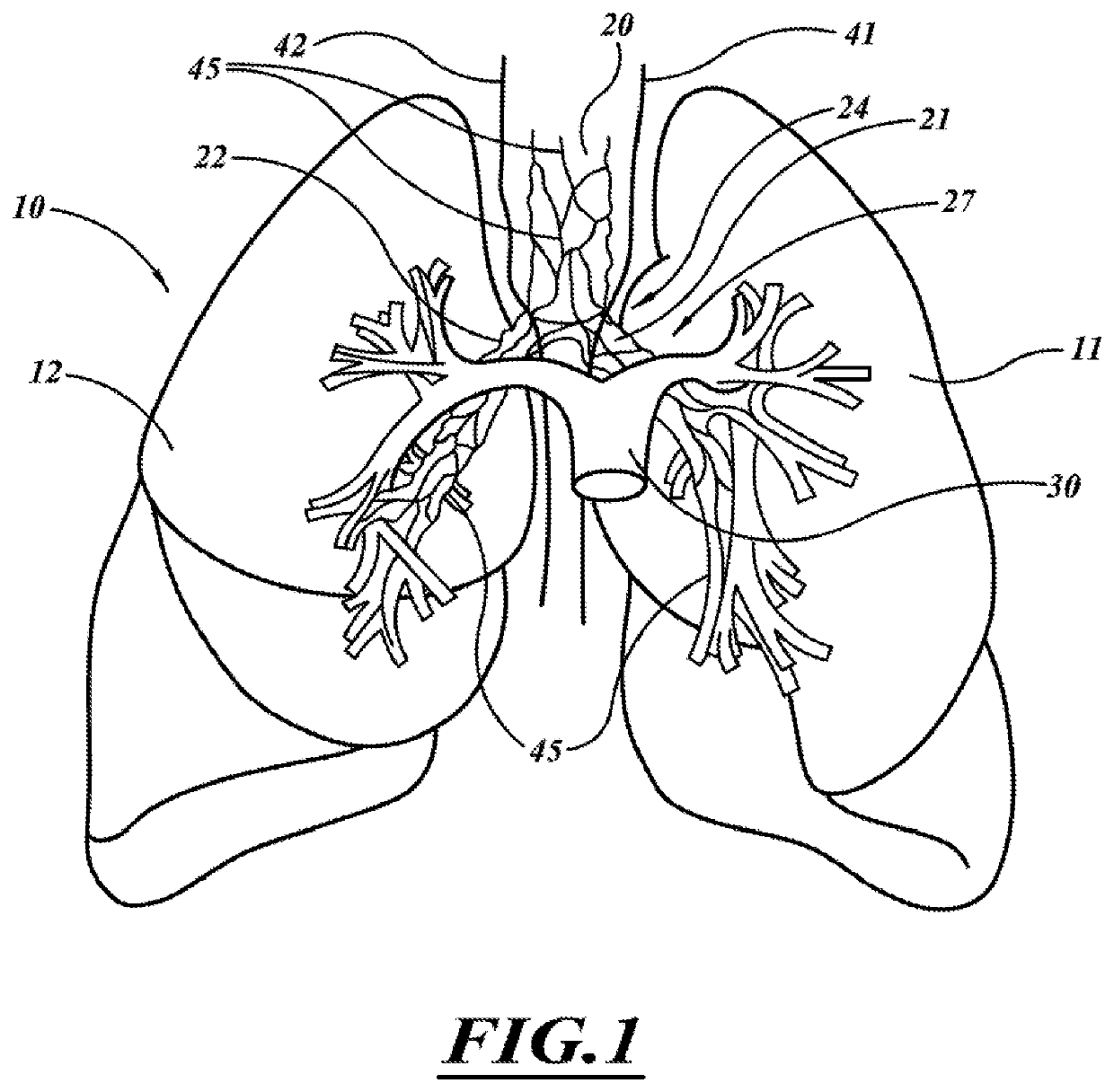
Figure 1 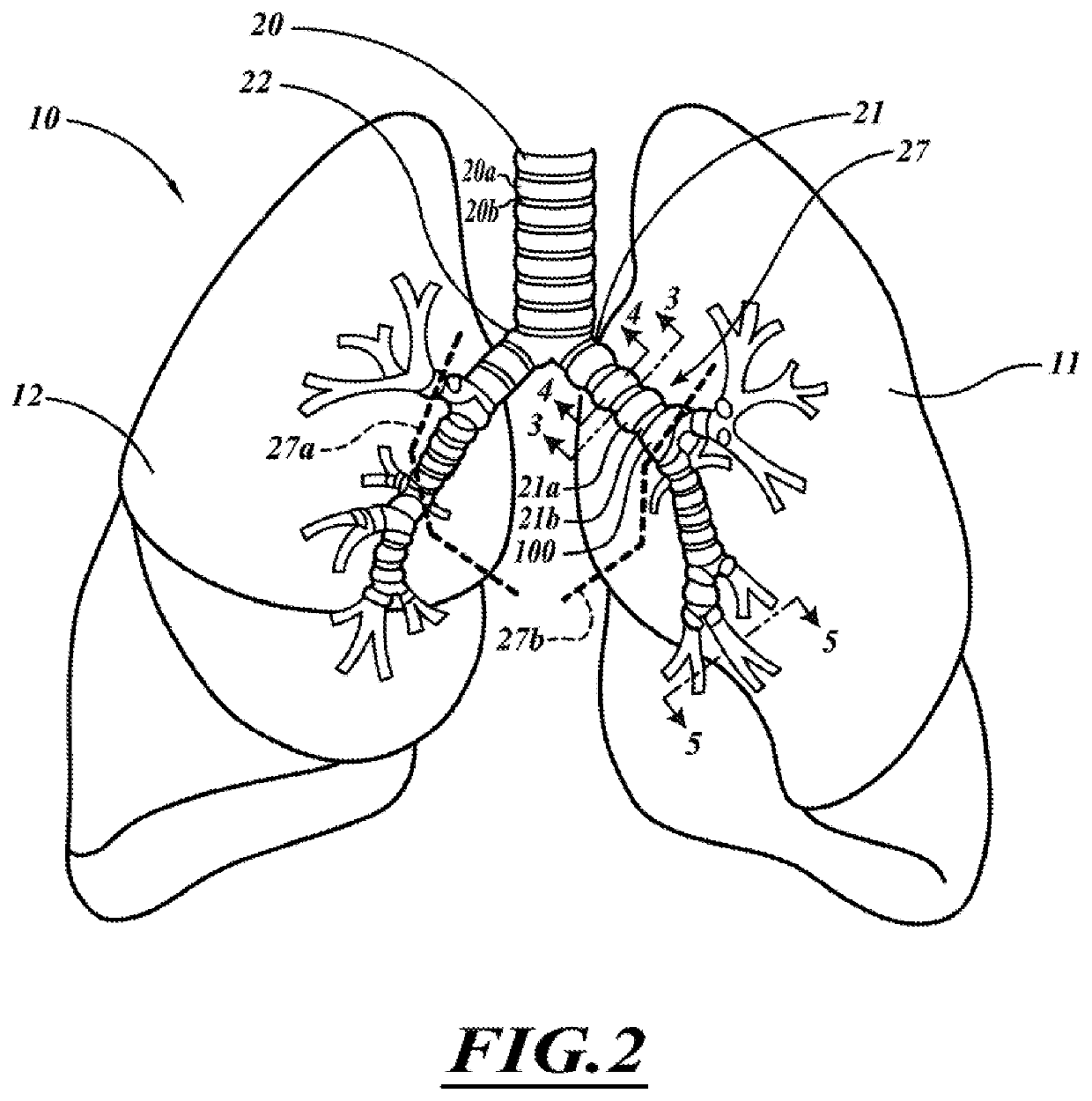
Figure 2 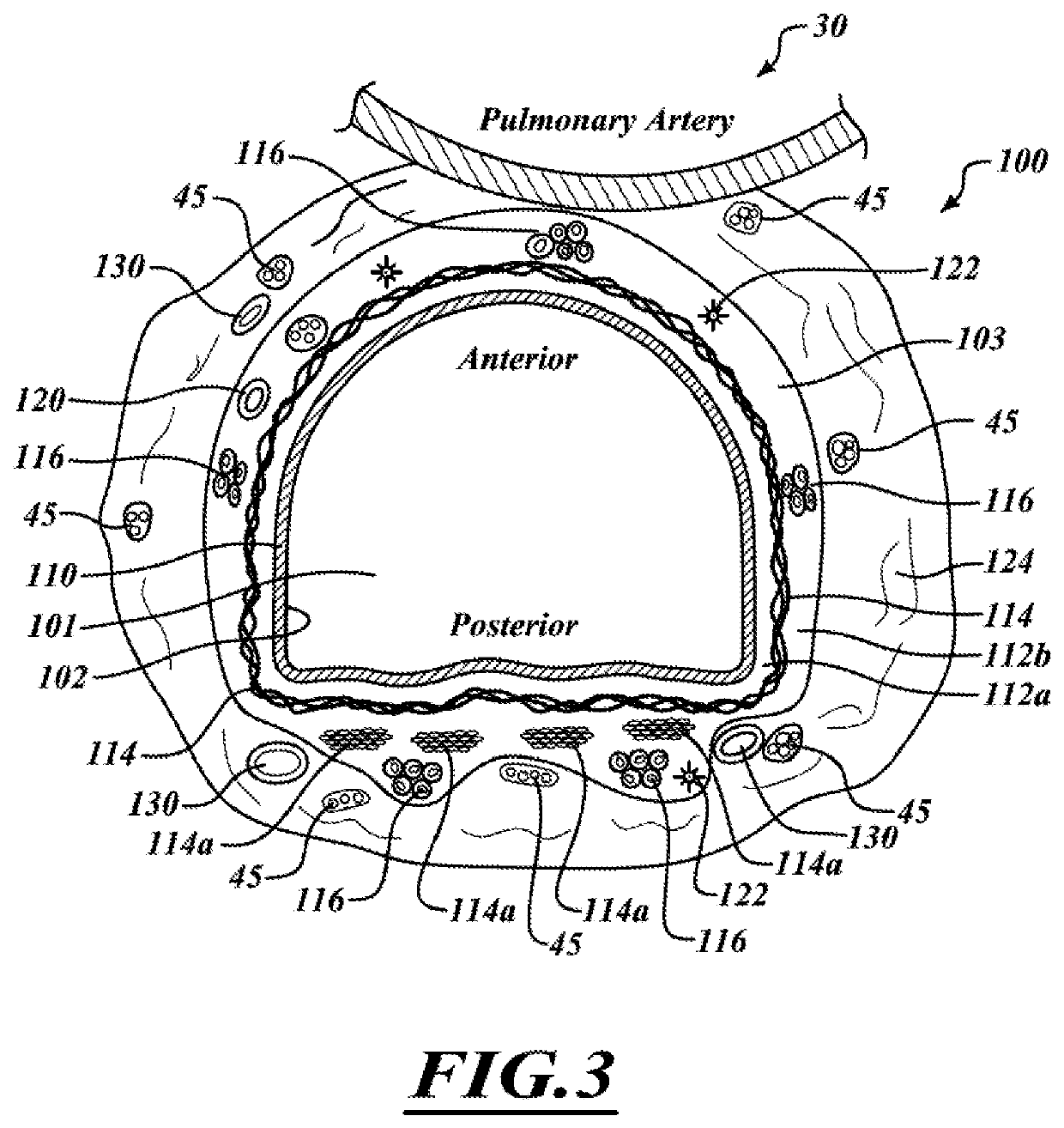
Figure 3
Abstract
Description
RELATED APPLICATIONS
[0001] The present application is a National Phase entry of PCI Application No. PCT / US2014 / 055384, filed September 2014, which claims the benefit of U.S. Provisional Application No. 61 / 876,925 filed Sep. 12, 2013, and entitled “Systems, Devices, and Methods for Treating Pulmonary Disease with Ultrasound Energy” said applications being herein incorporated in their entireties by reference.TECHNICAL FIELD
[0002] The present disclosure generally relates to treatment of pulmonary diseases, and more particularly to systems, devices, and methods for treating a pulmonary disease with ultrasound energy.BACKGROUND
[0003] Pulmonary diseases may cause a wide range of problems that adversely affect performance of the lungs. Pulmonary diseases, such as asthma and chronic obstructive pulmonary disease (“COPD”), may lead to increased airflow resistance in the lungs. Mortality, health-related costs, and the size of the population having adverse effects due to pulmonary diseases are al...
Examples
Embodiment Construction
[0095]FIGS. 1-6 provide an overview of human lung function and the role the nervous system can play in a diseased lung. FIGS. 7-8 provide an overview of an example treatment applied to the pulmonary system according to one aspect of the present disclosure. FIGS. 9-10 provide an overview of the effects of the treatment illustrated in FIGS. 7-8. FIGS. 11-34 illustrate further example aspects of the present disclosure.
[0096]FIG. 1 illustrates human lungs 10 having a left lung 11 and a right lung 12. A trachea 20 extends downwardly from the nose and mouth and divides into a left main bronchus 21 and a right main bronchus 22. The left main bronchus 21 and right main bronchus 22 each branch to form lobar, segmental bronchi, and sub-segmental bronchi, which have successively smaller diameters and shorter lengths in the outward direction (i.e., the distal direction). A main pulmonary artery 30 originates at a right ventricle of the heart and passes in front of a lung root 24. At the lung ro...