
Method and apparatus for injecting sighs during the administration of continuous positive airway pressure therapy
Patent Information
- Authority / Receiving Office
- US · United States
- Current Assignee / Owner
- Publication Date
- 2003-01-02
- Estimated Expiration
- Not applicable · inactive patent
Smart Images
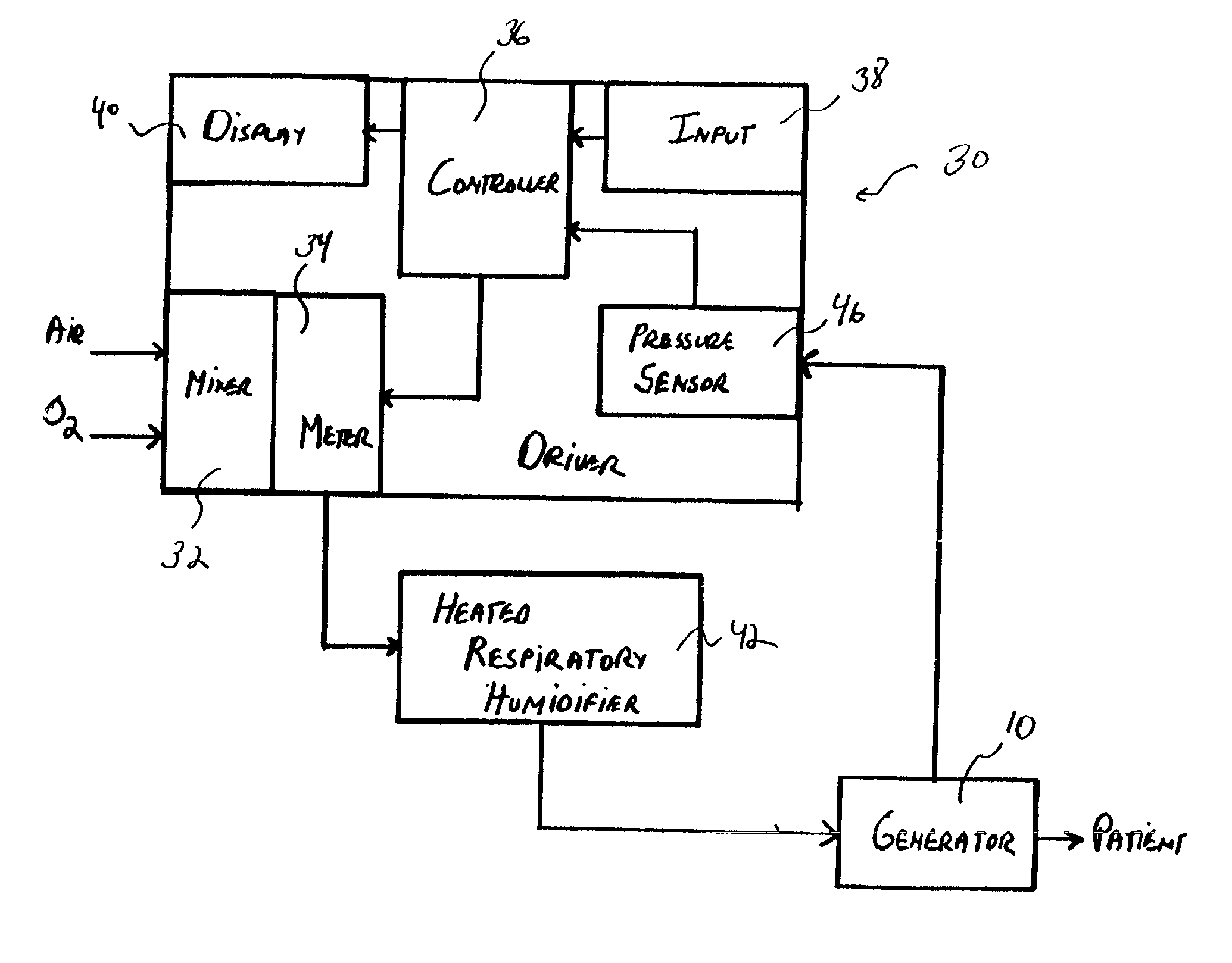
Figure 1 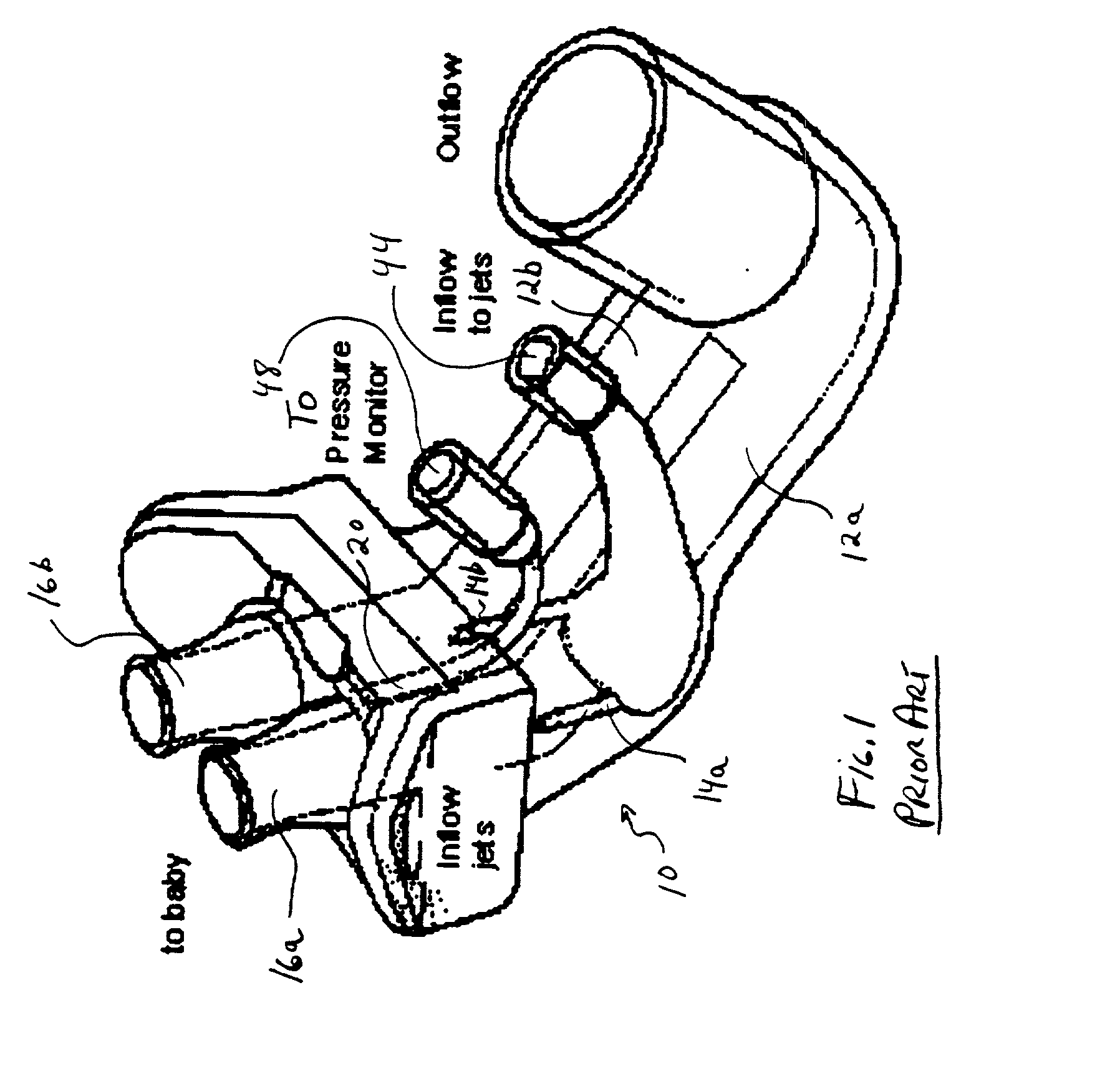
Figure 2 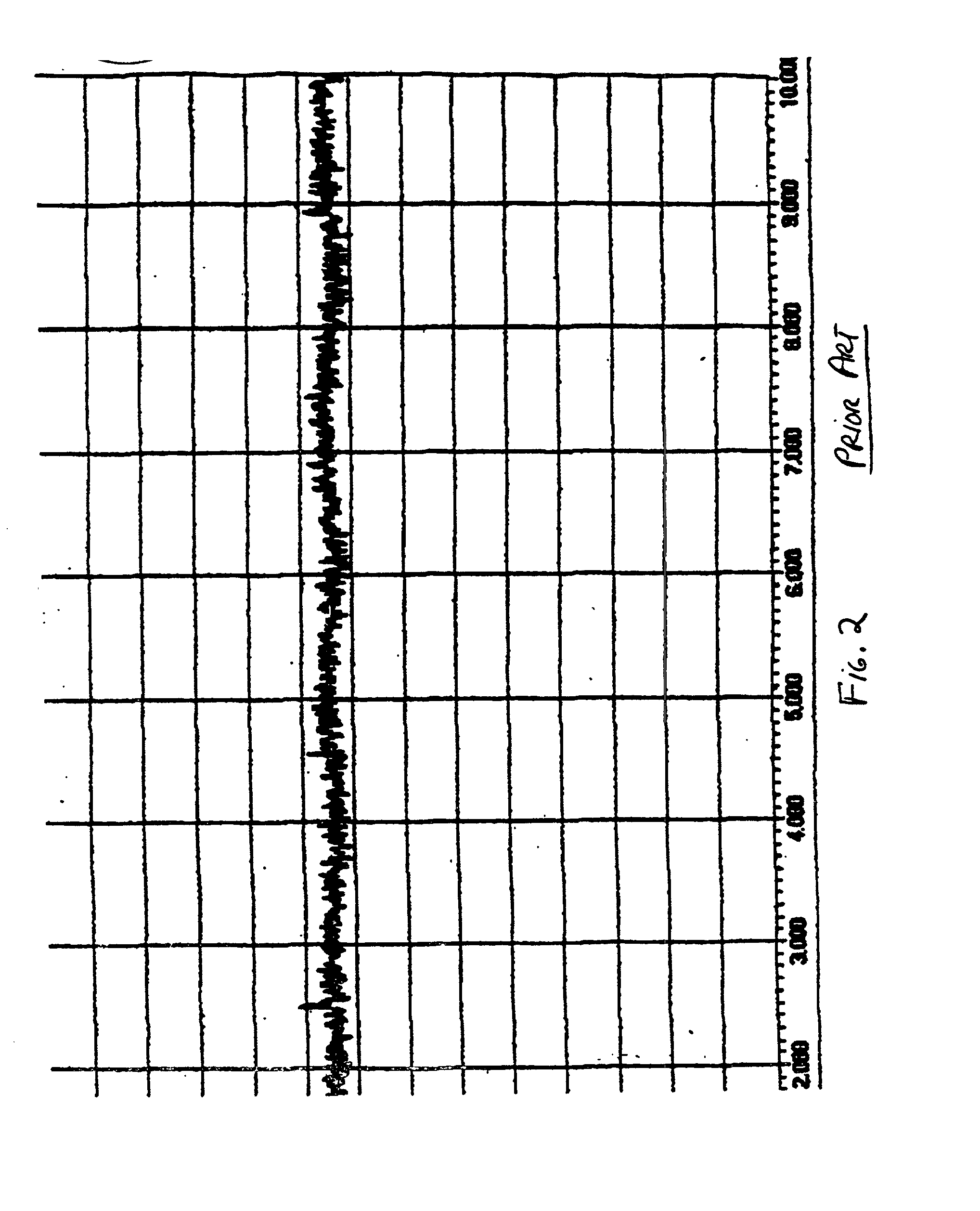
Figure 3
Abstract
Description
[0001] The present invention generally relates to methods and devices used to improve gas exchange during spontaneous breathing when the patient's ability to breath is impaired, and more particularly, to methods and equipment used for the administration of continuous positive airway pressure (CPAP) therapy.
[0002] For sick babies, the early hours of life are usually characterized by the need for respiratory or circulatory support. Premature babies are especially likely to have respiratory problems because their lungs have not had enough time to develop before birth. Such respiratory problems can include decreased pulmonary compliance, decreased functional residual capacity (FRC) and airway closure. Treatment of newborns requiring respiratory support is typically done in an intensive care environment.
[0003] Historically, in many countries, the initial treatment method prescribed for infants with respiratory problems is intubation and mechanical ventilation. Intubation involves placing...
Examples
Embodiment Construction
[0036] A test of the invention was performed on a 1,003 gram newborn that was born eleven weeks prematurely and was three days old when placed on the system. The newborn had received NCPAP since birth, was given no surfactant and was down to an NCPAP pressure of 2.5 cm of water with an inspired oxygen concentration of 21% (equivalent to room air). The newborn's respiratory rate at the NCPAP pressure of 2.5 cm of water was 55 per minute and oxygen level by non-invasive saturation measurement was 98%. The newborn was placed on a sigh rate of 10 per minute, i.e., 10 sighs were injected into the NCPAP per minute. After one hour the respiratory rate slowed to 47 per minute while the oxygen level remained normal at 99%. This slowing of the newborn's spontaneous respiratory rate indicates that the injection of sighs provided additional off loading of the ventilatory work, thereby decreasing the ventilatory work that the newborn had to do on its own. The sigh rate was then changed to 20 per...