
System and method for dividing data into predominantly fixed-sized chunks so that duplicate data chunks may be identified
a data and chunk technology, applied in the field of dividing data into chunks, can solve the problems of duplicate data, inability to handle the case of data being inserted in, or removed from the middle of a data stream, and common data duplication, so as to reduce the cost of transmitting data, reduce the cost of storage, and maximize data storage efficiency
Patent Information
- Authority / Receiving Office
- US · United States
- Patent Type
- Applications(United States)
- Current Assignee / Owner
- Publication Date
- 2005-04-28
- Estimated Expiration
- Not applicable · inactive patent
Smart Images
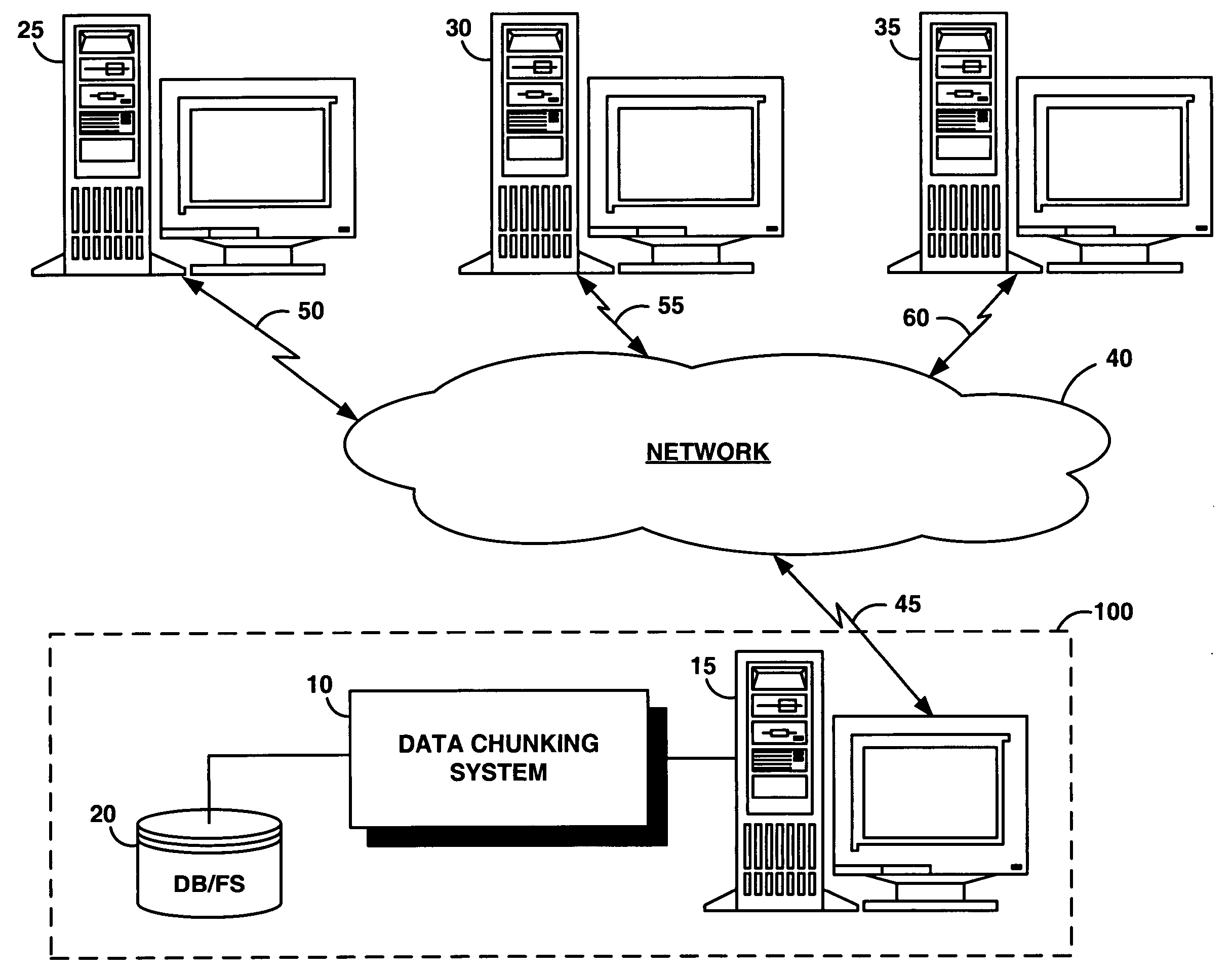
Figure 1 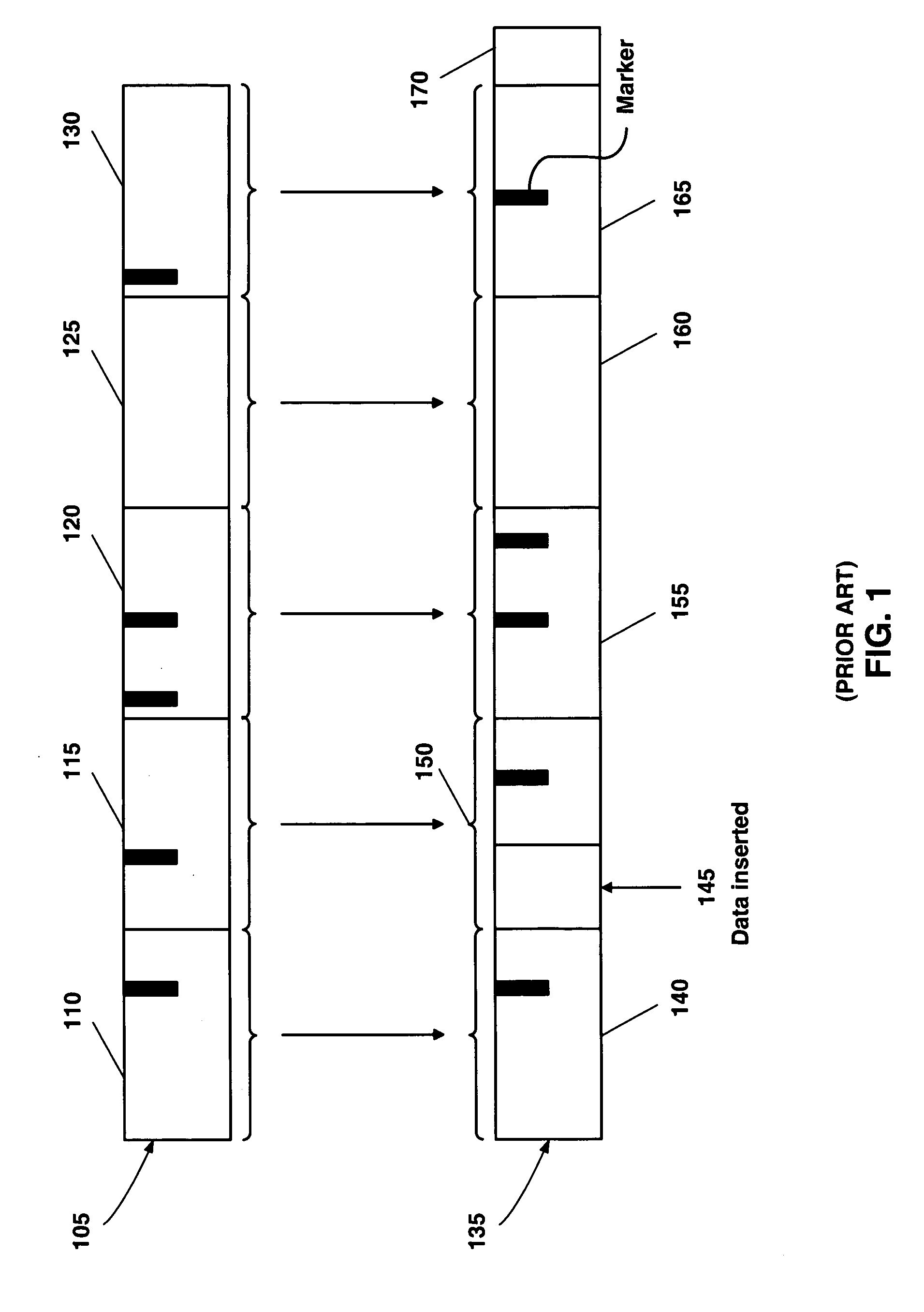
Figure 2 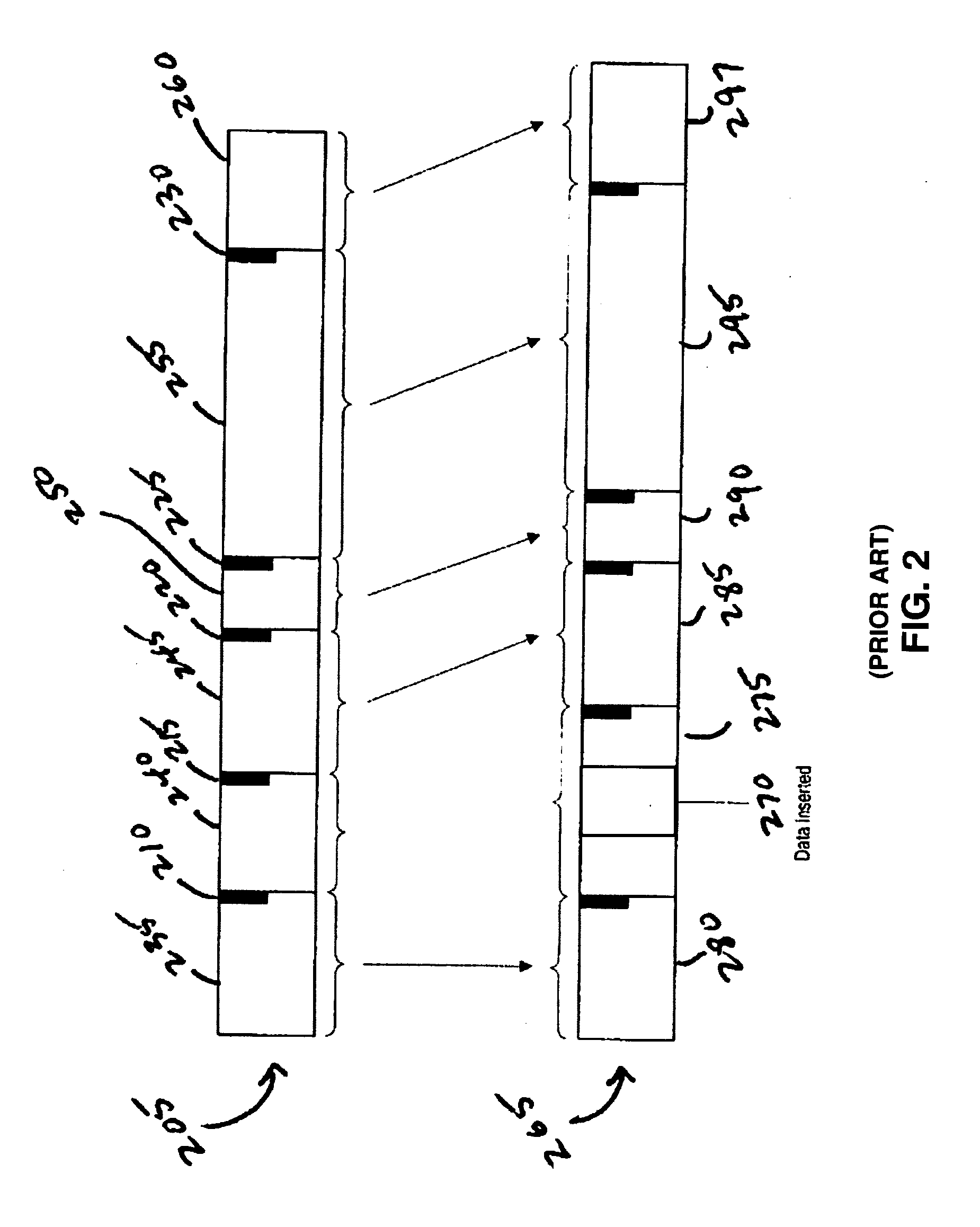
Figure 3
Abstract
Description
FIELD OF THE INVENTION
[0001] The present invention generally relates to a method for dividing data into chunks so as to detect redundant data chunks. More specifically, this invention pertains to a method for dividing data that produces chunks of a predominantly uniform fixed size while identifying a large percentage of duplicate data. BACKGROUND OF THE INVENTION
[0002] Data duplication is a common problem. As an example, numerous computer users have the same applications installed on their computers. In addition, when emails and attachments are forwarded, different users end up storing copies of the same emails and attachments. As computing and storage become more centralized, servers increasingly store the same data for many different users or organizations.
[0003] Furthermore, many different applications such as data archival require the servers to maintain multiple copies of largely identical data. If the duplicate information can be identified and eliminated, the cost of stori...
Examples
Embodiment Construction
[0032] The following definitions and explanations provide background information pertaining to the technical field of the present invention, and are intended to facilitate the understanding of the present invention without limiting its scope:
[0033] Chunk: A unit of data.
[0034] Markers: Specific patterns in data used to divide the data into chunks. A marker may be as simple as a full stop or a period. For example, each full stop in the data defines a chunk boundary. If periods are used as markers, the data is chunked into sentences.
[0035] Fingerprint: A short tag for a larger object. Fingerprint has the property that if two fingerprints are different, then the corresponding objects are certainly different, and if two objects are different, then the probability for them to have the same fingerprint is very small.
[0036] Rabin's Fingerprint: A fingerprint computed by A(t) mod P(t) where A(t) is the polynomial associated with the sequence of bits in the object and P(t) is an irreduci...