
Arrangement and method for metering target material for the generation of short-wavelength electromagnetic radiation
a technology of electromagnetic radiation and target material, which is applied in the direction of x-ray tube electrodes, x-ray tubes with very high current, radiation therapy, etc., can solve the problems of increased debris emission, increased debris, and unwanted gas burden in the vacuum chamber, so as to reduce the gas burden in the interaction chamber and the generation of debris
Patent Information
- Authority / Receiving Office
- US · United States
- Current Assignee / Owner
- Publication Date
- 2006-01-26
- Estimated Expiration
- Not applicable · inactive patent
Smart Images
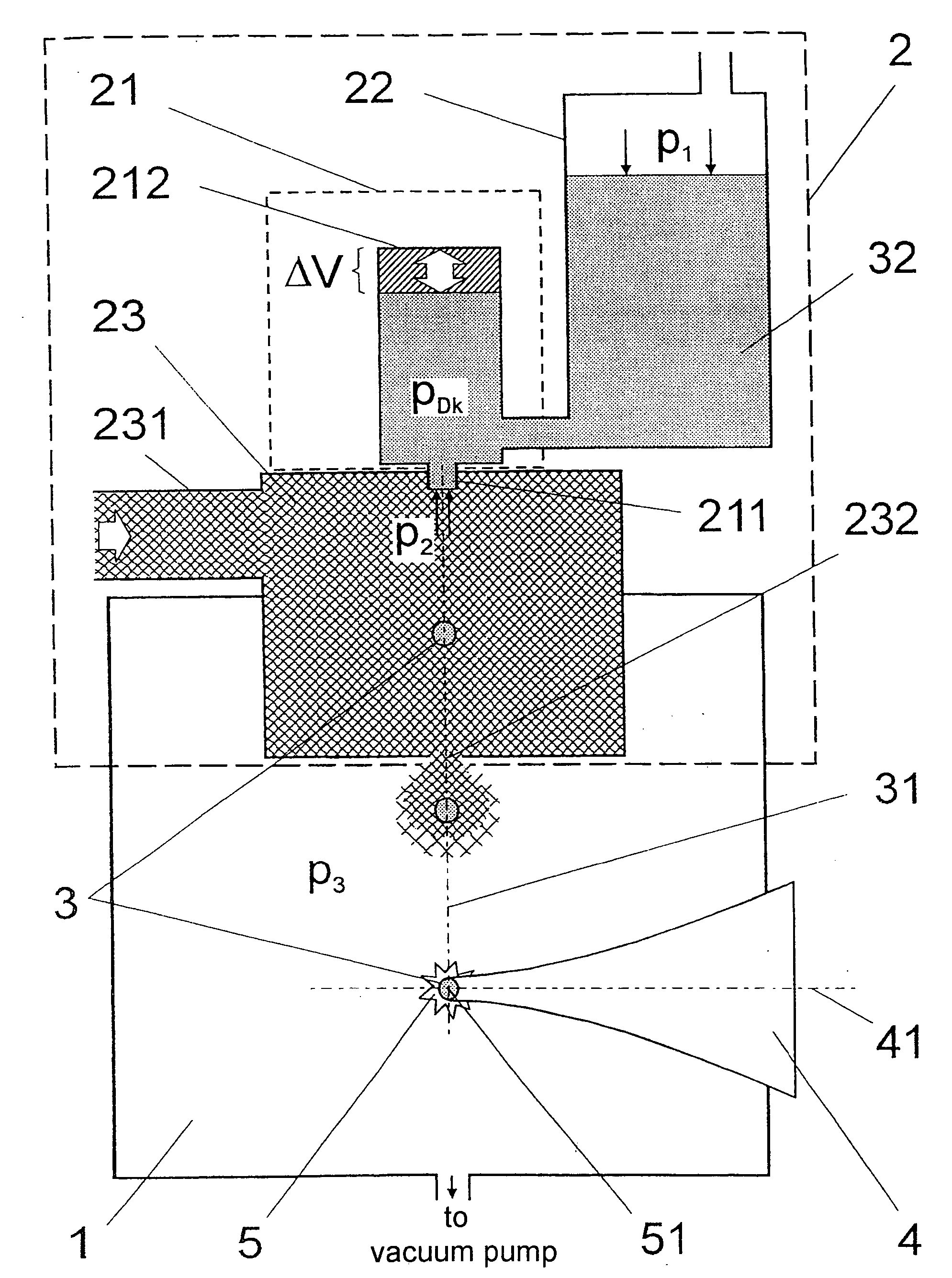
Figure 1 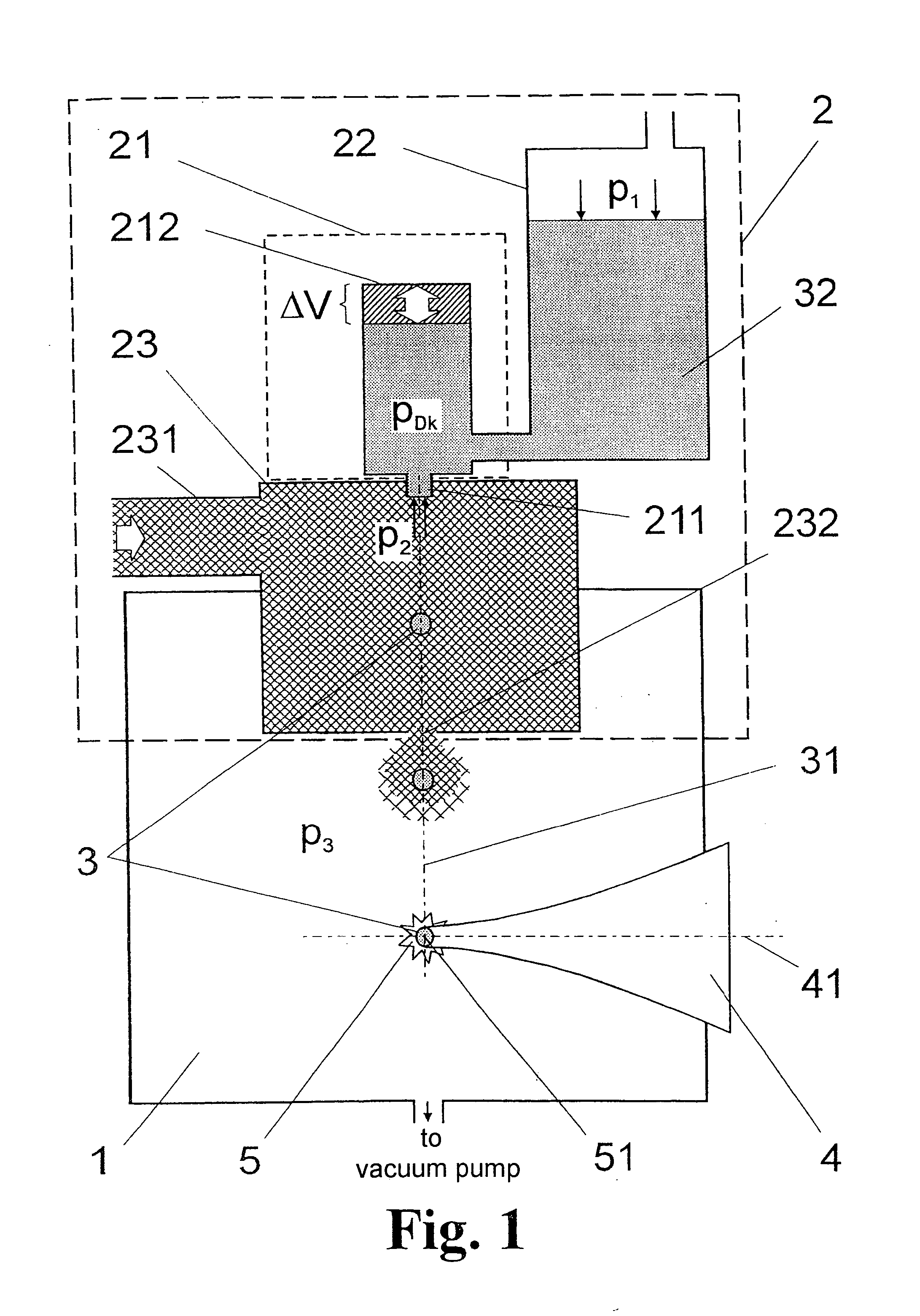
Figure 2 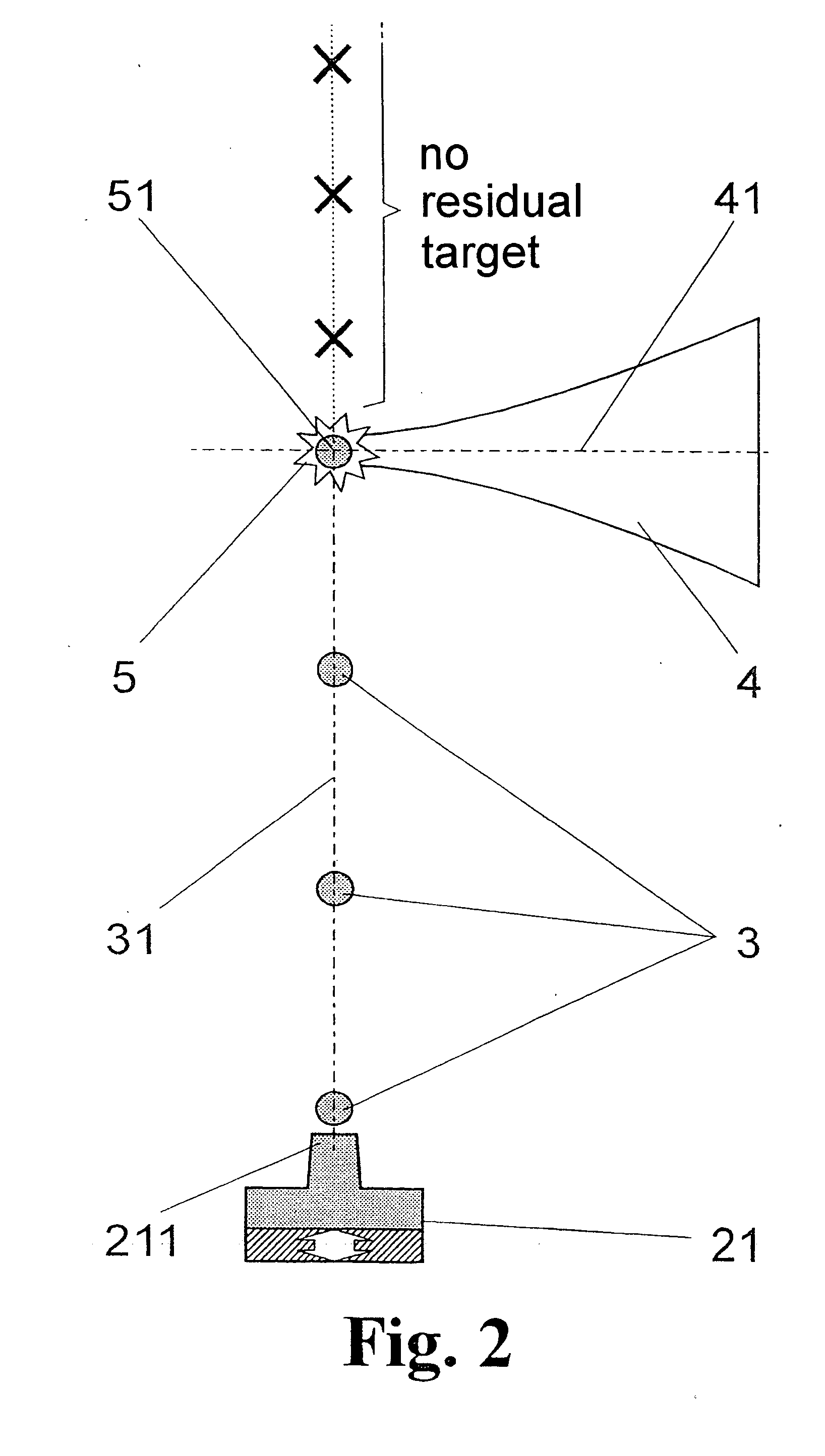
Figure 3
Abstract
Description
CROSS-REFERENCE TO RELATED APPLICATIONS
[0001] This application claims priority of German Application No. 10 2004 036 441.9, filed Jul. 23, 2004, the complete disclosure of which is hereby incorporated by reference. BACKGROUND OF THE INVENTION
[0002] a) Field of the Invention
[0003] The invention is directed to an arrangement and a method for metering target material for the generation of short-wavelength electromagnetic radiation from an energy beam induced plasma. It is applied in particular in EUV radiation sources for projection lithography in semiconductor chip fabrication.
[0004] b) Description to the Related Art
[0005] Reproducible mass-limited targets for pulsed energy input for plasma generation have gained acceptance, above all in radiation sources for projection lithography, because they minimize unwanted particle emission (debris) compared to other types of targets. An ideal mass-limited target is characterized in that the particle number in the focus of the energy beam ...
Examples
Embodiment Construction
[0049]FIG. 1 is a schematic view showing a portion of a radiation source for generating short-wavelength electromagnetic radiation based on a plasma induced by the input of energy. The drawing shows an interaction chamber 1 in which individual targets 3 are prepared along a target path 31 by a target generator 2. The target path 31 is intersected by the axis 41 of an energy beam 4 at an interaction point 51, wherein a plasma 5 emitting the desired radiation is generated by the energy beam 4 impinging on a respective individual target 3.
[0050] The target generator 2 comprises an injection device 21 with a nozzle 211 and a nozzle chamber 212 which is able to cause a temporary change in volume ΔV and, therefore, a change in pressure of the nozzle chamber pressure PDk. The principle is similar to that of conventional inkjet nozzles and will be described in more detail (FIG. 3 and FIG. 4) in the following. Further, the injection device 21 of the nozzle chamber 212 is connected to a rese...