

Optimized placement policy for solid state storage devices
a technology of solid-state storage and placement policy, which is applied in the field of computer data storage systems, can solve the problems of slow access time, reliability problems, and mechanical hard drives suffering in certain areas
Patent Information
- Authority / Receiving Office
- US · United States
- Patent Type
- Applications(United States)
- Current Assignee / Owner
- Publication Date
- 2007-12-13
- Estimated Expiration
- Not applicable · inactive patent
Smart Images
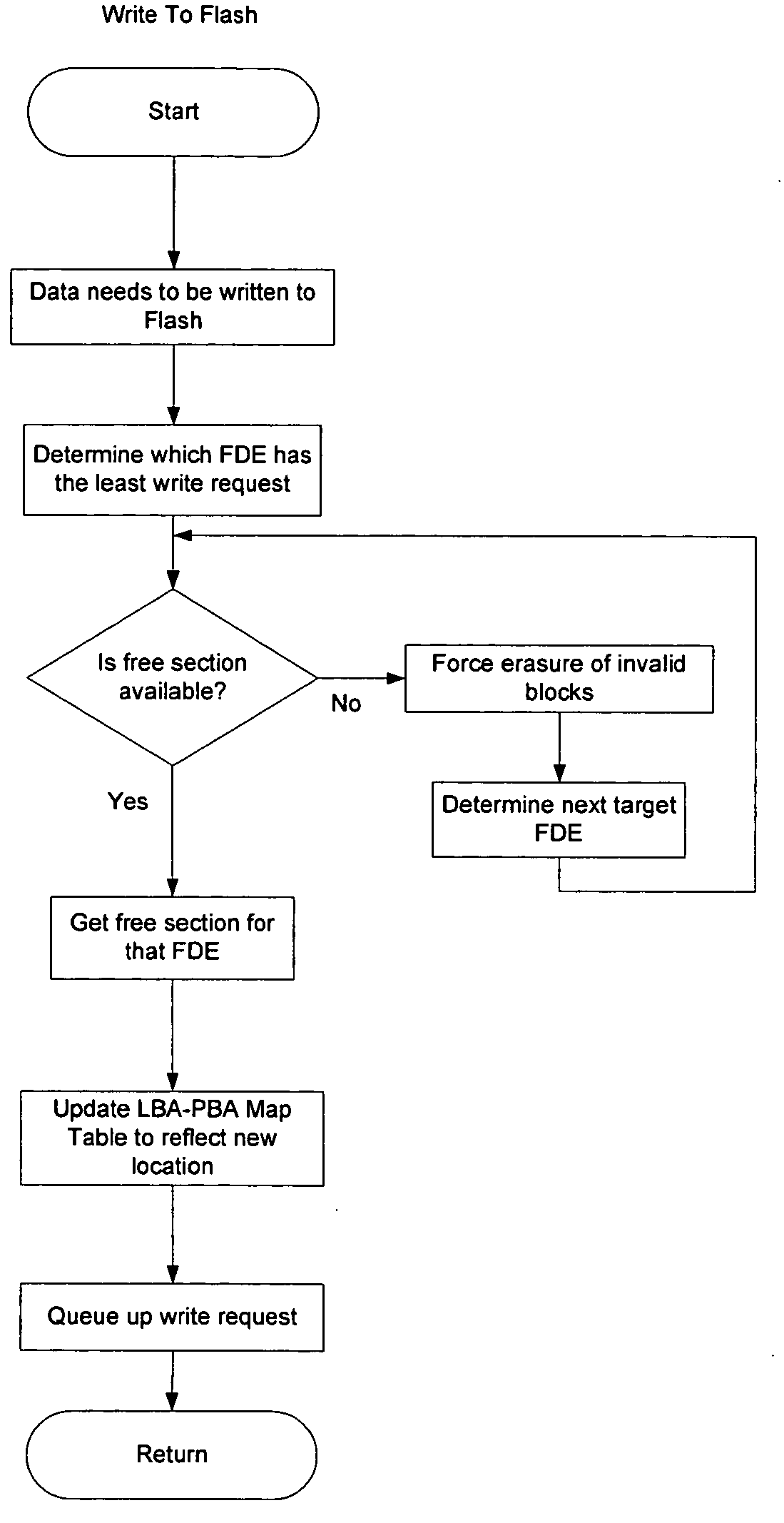
Figure 1 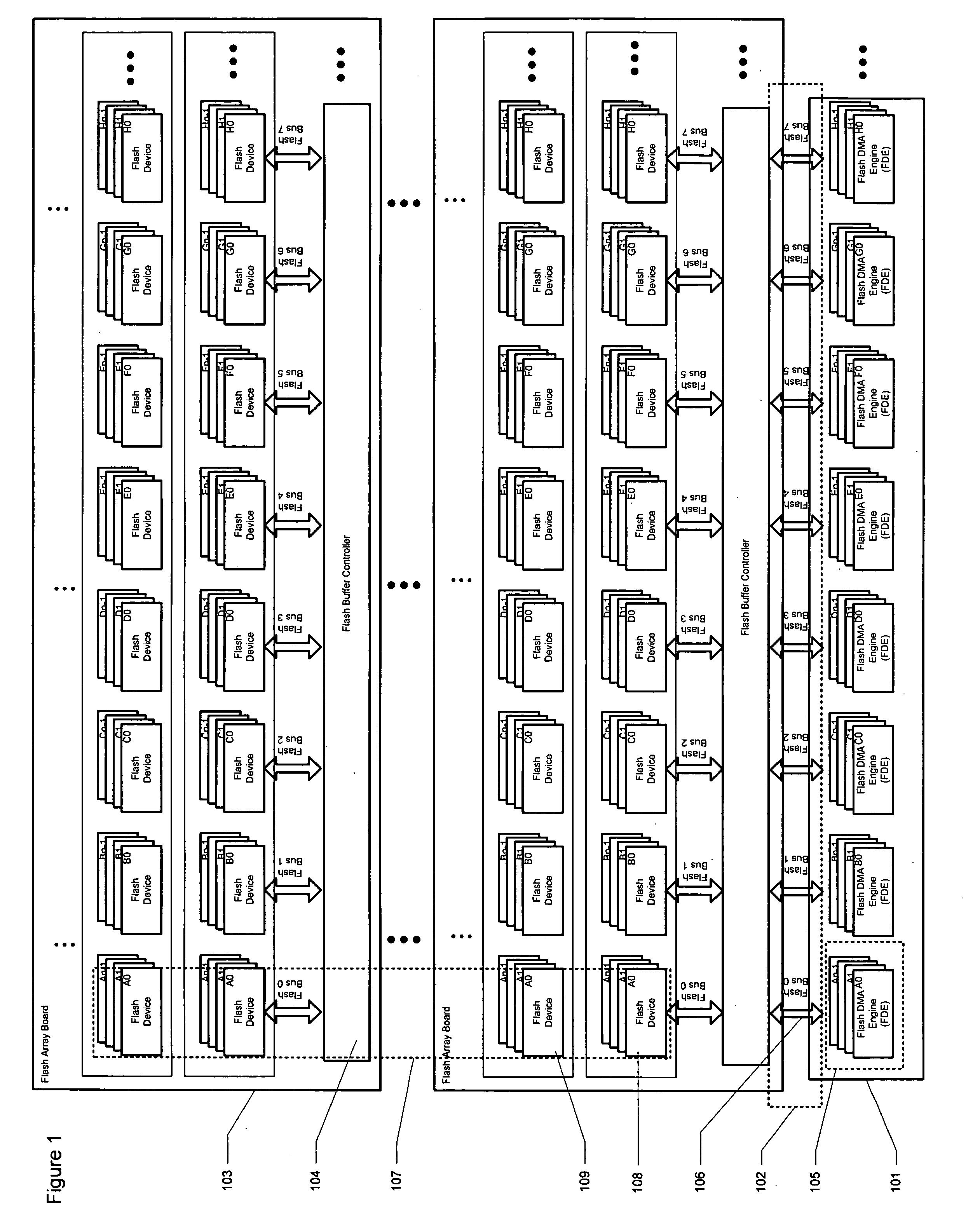
Figure 2 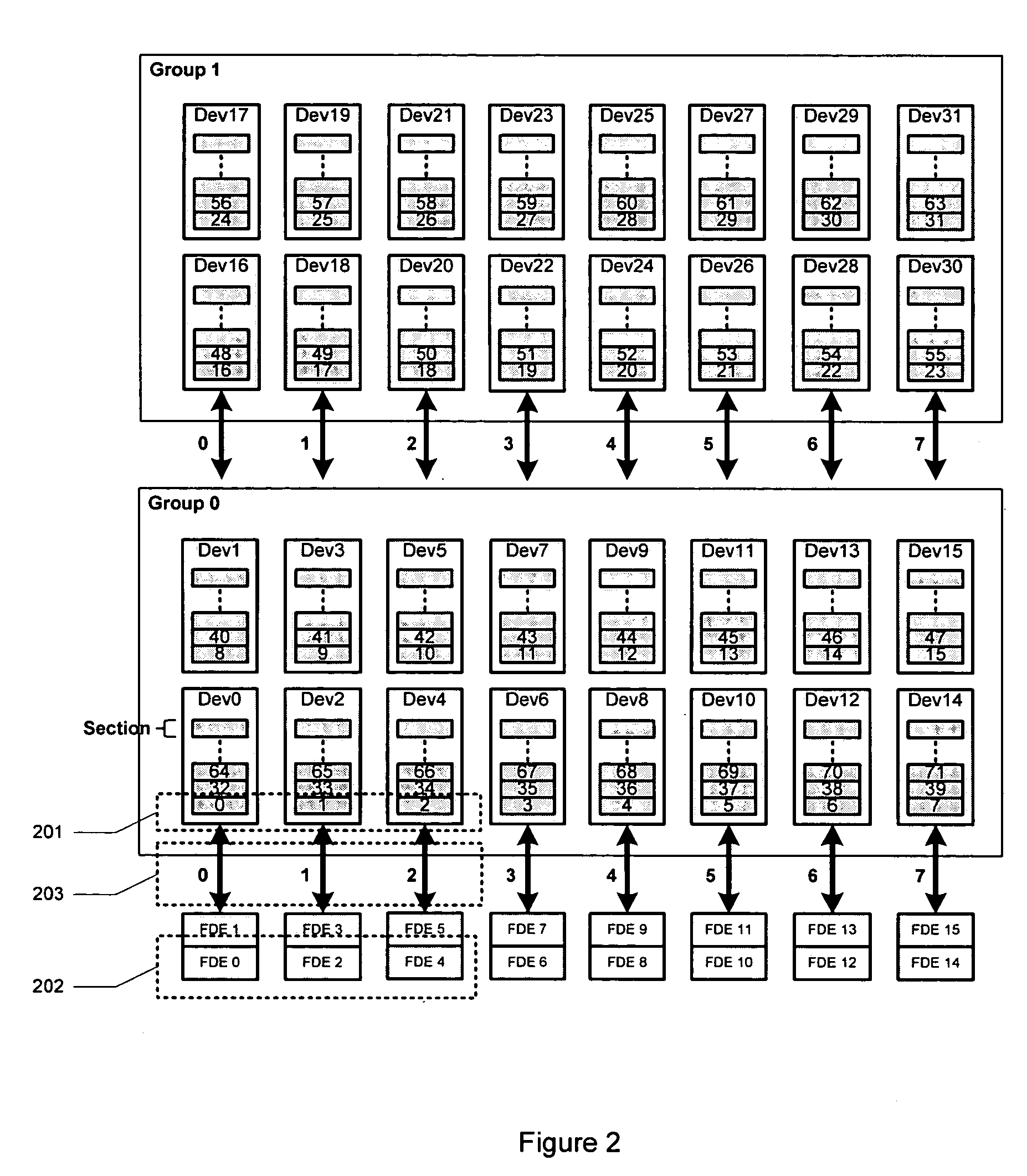
Figure 3
Abstract
Description
BACKGROUND
[0001] 1. Field
[0002] The present invention relates to computer data storage systems. More particularly, the present invention relates to a system and method of mapping all logical addresses from a host system to physical addresses of data storage devices for improving host computer data access performance.
[0003] 2. Description of Related Art
[0004] As flash devices are getting cheaper, solid state based hard drives are getting more popular as replacement for traditional mechanical hard drives. Mechanical hard drives suffer in areas unseen in flash memory based drives due to its many moving parts (electrical motor, spindle shaft, read / write head, and a magnetic rotating disk). This leads to reliability problems especially when exposed to vibration and shock. Not only that, it also causes slow access time when fetching data from different areas of mechanical drive.
[0005] Since flash memory based drives typically have no moving parts, it can easily withstand harsh environmental co...
Examples
Embodiment Construction
[0025]FIG. 1 shows an exemplary architecture that accommodates a very large number of flash arrays to achieve large capacities according to an embodiment of the present invention. The system comprises a number of Flash DMA Engines (FDEs) 101. A Flash DMA Engine (FDE) is basically an intelligent DMA controller that facilitates high speed data transfers to / from a group of flash memory devices. The system also contains a set of Flash Buses 102, which is a bus interface used by the FDE to connect to the flash memory devices. To increase capacity, a number of expansion boards 103 can be added. An expansion board is essentially a memory board that consists of a pool of flash memory devices for additional storage and a Flash Buffer Controller 104 for communication to the Flash DMA Engine. The Flash Buffer Controller is a controller that drives the Flash Bus and translates the command signals from the FDEs into native flash commands that can be understood by the target flash chip. The numbe...