
Effluent treatment process
a technology of effluent treatment and treatment process, which is applied in the direction of water treatment parameter control, specific water treatment objectives, cation exchangers, etc., can solve the problems of high phosphate content of treated effluent, chemical oxygen demands, and connection to a centralised effluent, so as to reduce the overall cost of handling the effluent, reduce the risk to the environment, and remove phosphate. high
Patent Information
- Authority / Receiving Office
- US · United States
- Patent Type
- Applications(United States)
- Current Assignee / Owner
- Publication Date
- 2010-02-11
- Estimated Expiration
- Not applicable · inactive patent
Smart Images
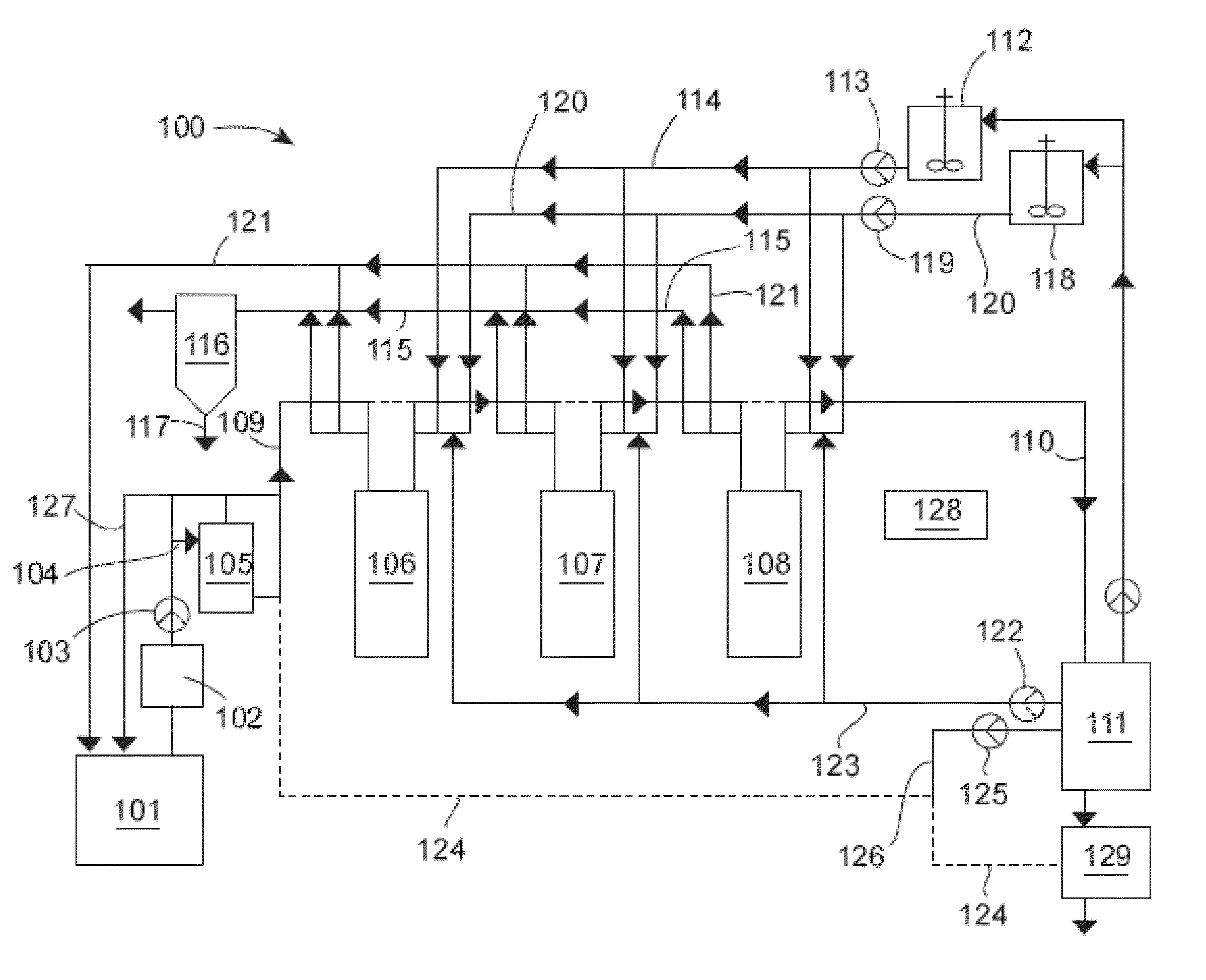
Figure 1 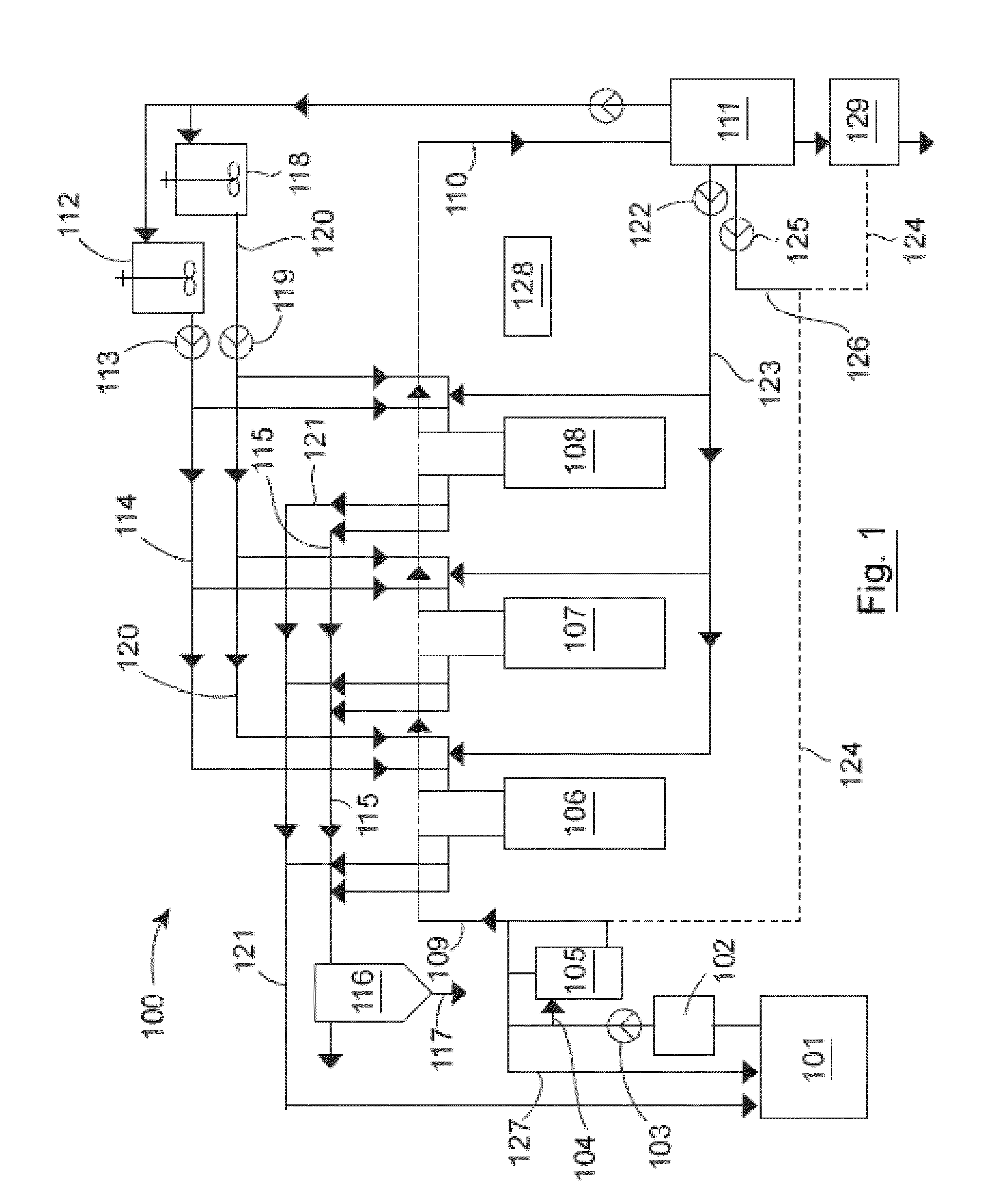
Figure 2 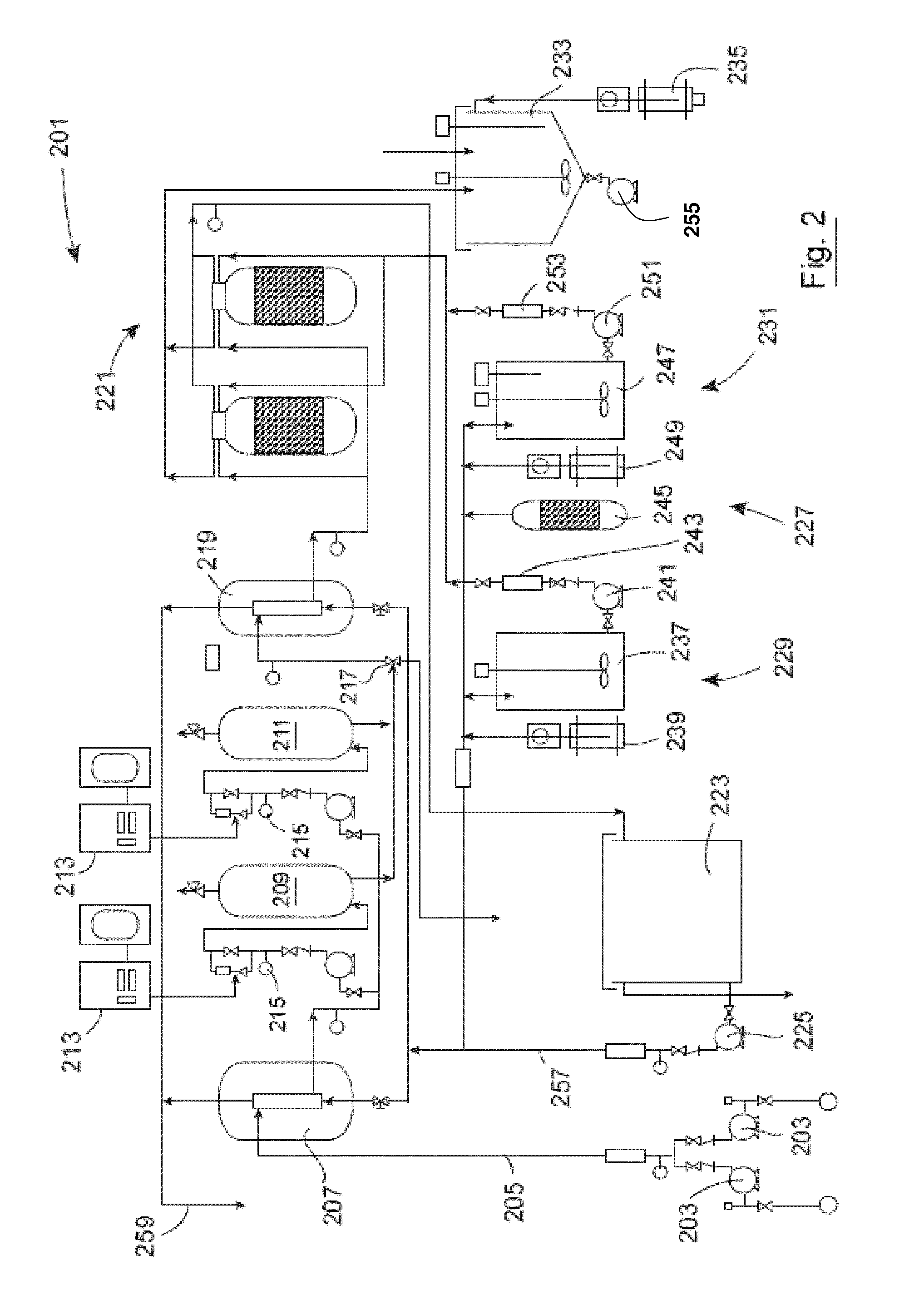
Figure 3
Abstract
Description
INTRODUCTION
[0001] This invention relates to an effluent treatment process and an assembly for carrying out the effluent treatment process. More particularly, the present invention relates to an effluent treatment process and assembly for carrying out that process on final effluent that has already undergone prior treatment preferably in a biological effluent treatment plant. In particular, the invention is particularly designed to remove phosphorus from treated effluent to a level less than 0.02 mg / Litre.
[0002] Throughout the following description, it should be understood that the term “phosphate” can refer to either a composition comprising phosphorus or to the chemical element phosphorus itself, and, that any reference to “phosphate” should be interpreted as such.
[0003] A significant challenge facing local authorities is to ensure that adequate effluent treatment facilities are provided for both new and existing housing developments in remote areas where connection to a centralised ...
Examples
Embodiment Construction
[0061]The invention will now be more clearly understood from the following description of some embodiments thereof given by way of example only, in which:
[0062]FIG. 1 is a diagrammatic representation of a first effluent treatment process assembly according to the present invention; and,
[0063]FIG. 2 is a diagrammatic representation of a second effluent treatment process according to the present invention.
[0064]Referring to FIG. 1, there is shown an effluent treatment assembly, indicated generally by the reference numeral 100, comprising a waste water treatment plant 101 from which partially treated sewage coming is collected in a sump 102. The partially treated sewage is delivered by a pump 103, at a pre-determined rate, through a conduit 104 to a primary filter 105. The effluent may be analysed, to determine flow rate, pH level, turbidity and phosphate content en route to the primary filter 105 or directly subsequent to the primary filter 105. If the effluent does not meet the requi...