
Sequencing of variable speed compressors in a chilled liquid cooling system for improved energy efficiency
a variable speed compressor and chilled liquid cooling technology, applied in adaptive control, lighting and heating apparatus, instruments, etc., can solve problems such as damage to compressor elements and inefficient operation, and achieve the effect of reducing capacity, reducing overall compressor efficiency, and achieving overall system capacity
Patent Information
- Authority / Receiving Office
- US · United States
- Patent Type
- Applications(United States)
- Current Assignee / Owner
- Publication Date
- 2010-08-05
Smart Images
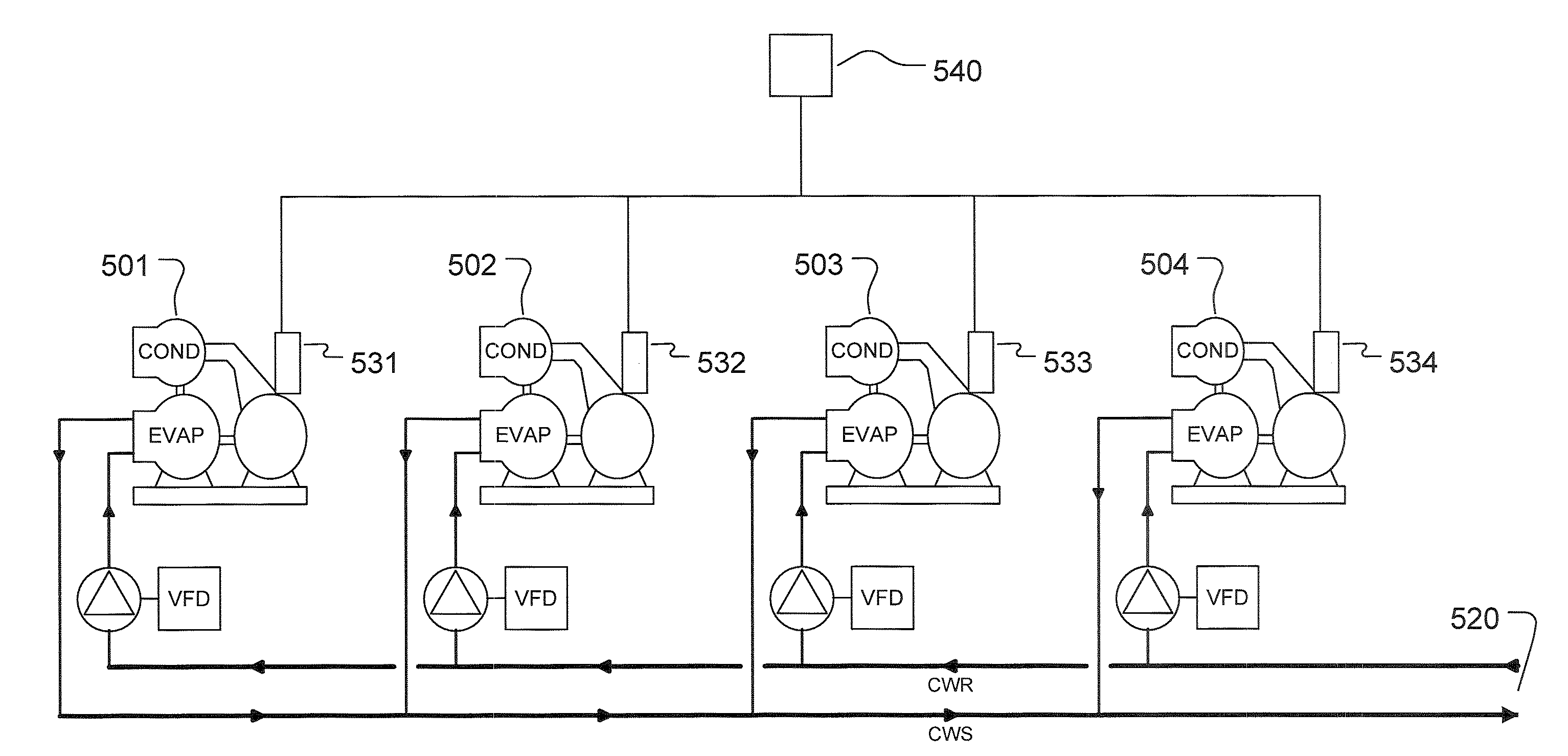
Figure 1 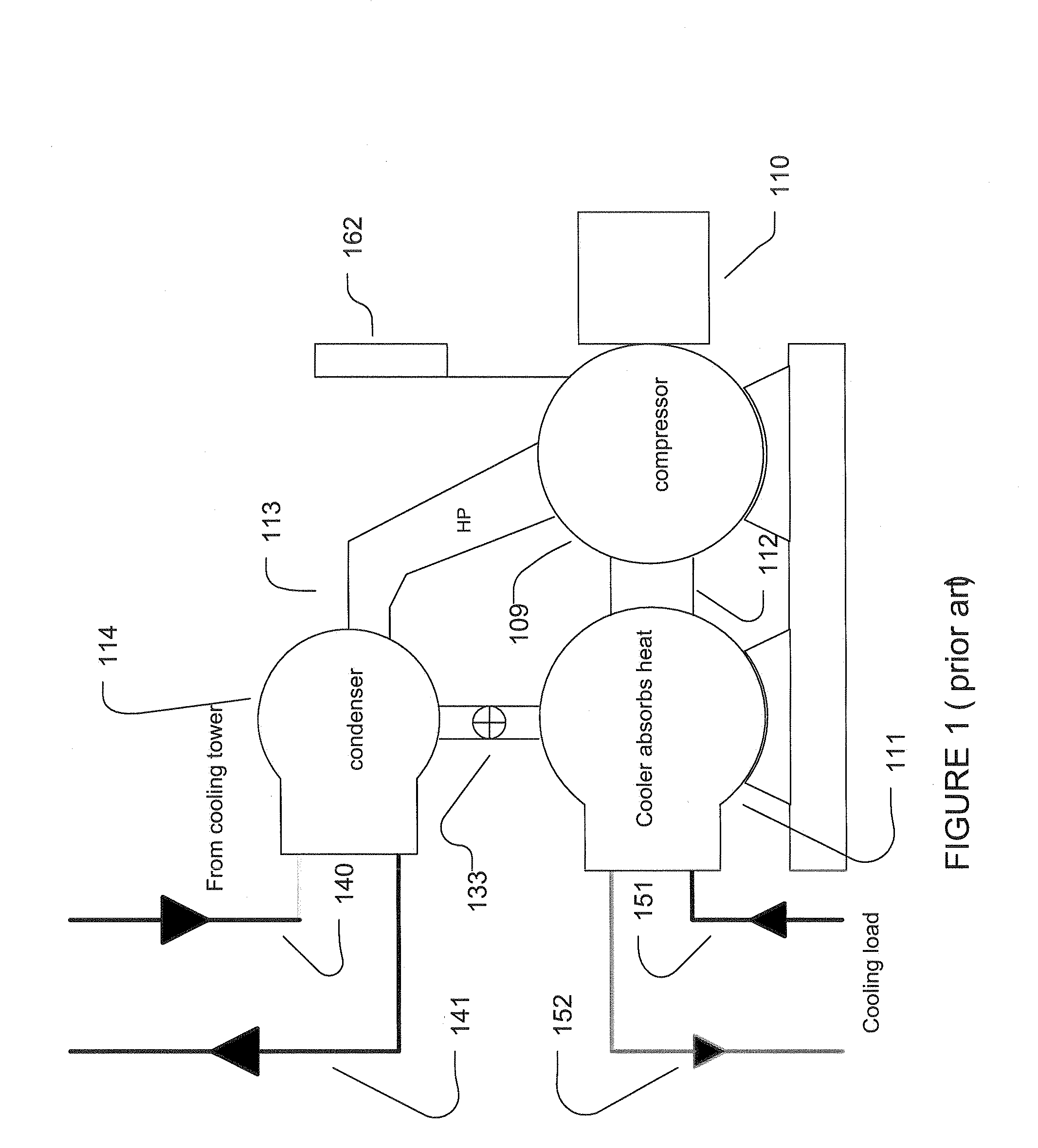
Figure 2 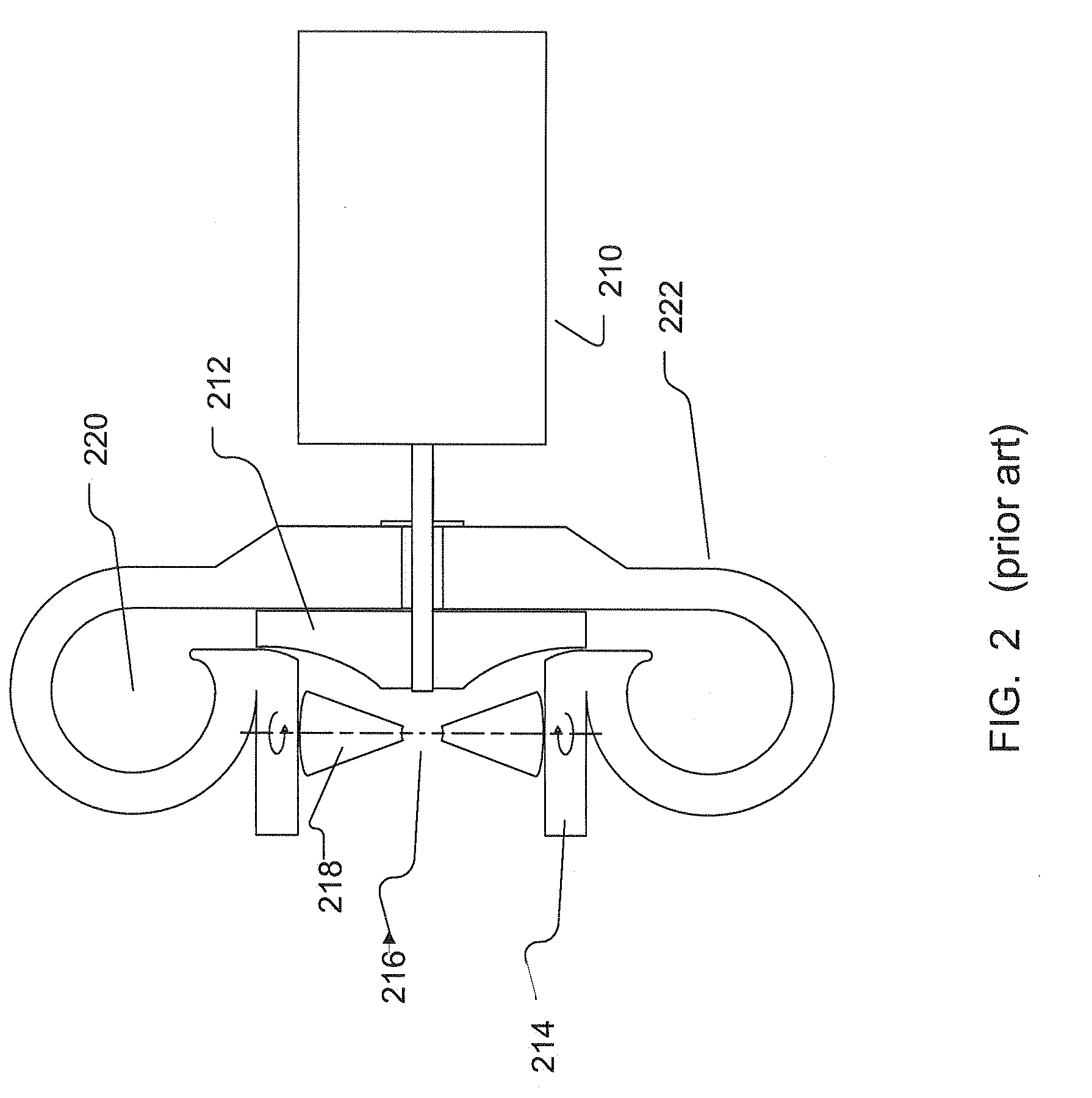
Figure 3
Abstract
Description
TECHNICAL FIELD
[0001] This invention pertains to the field of heating, ventilation and air-conditioning (“HVAC”) systems and, more specifically, pertains to improved strategies, especially automated or software-implemented methods, for sequencing parallel equipment such as centrifugal chillers, pumps and fans in order to improve the overall operating efficiency of HVAC systems that incorporate such equipment.BACKGROUND
[0002] Chilled water plants are employed to provide cooling for building comfort loads and for industrial process loads and are a major user of electrical power. Chilled water plants generally employ multiple chillers, and some chillers employ multiple compressors. This permits equipment to be staged to meet the changing loads, which usually vary from very low loading up to as much as 100% of plant capacity, depending on design and operating environment. Multiple chillers also permit designs that incorporate fail safe operation with backup available in case of a failure ...
Examples
Embodiment Construction
[0019]Because chillers that provide chilled water for comfort conditioning or process cooling are normally subject to very wide variations in cooling loads, the ability to adjust capacity of individual chillers along with a method of sequencing chillers or compressors on and off line is employed to accommodate load changes and achieve efficient plant operation. In prior art, the control of the capacity of each individual chiller is accomplished by internal chiller or compressor controls that maintain a predetermined temperature of the chilled water leaving the unit.
[0020]The control of the number of chillers or compressors on line is dynamically accomplished by separate control algorithms, generally based on the loading or power draw of the online compressors. See my U.S. Pat. No. 6,185,946 in which sequencing is based on comparing current point of operation to the curve of optimal efficiency, called the natural curve, of the device. Other methods are known, but these known methods ...