
Method of detecting a frame synchronization pattern or unique word in a received digital signal
a technology of frame synchronization and received signals, applied in the field of communication systems, can solve the problems of high probability of false detection, and high frequency of false alarms, and achieve the effect of enhancing the recognition of a frame synchronization pattern or unique word of a received signal
Patent Information
- Authority / Receiving Office
- US · United States
- Patent Type
- Applications(United States)
- Current Assignee / Owner
- Publication Date
- 2011-01-13
Smart Images
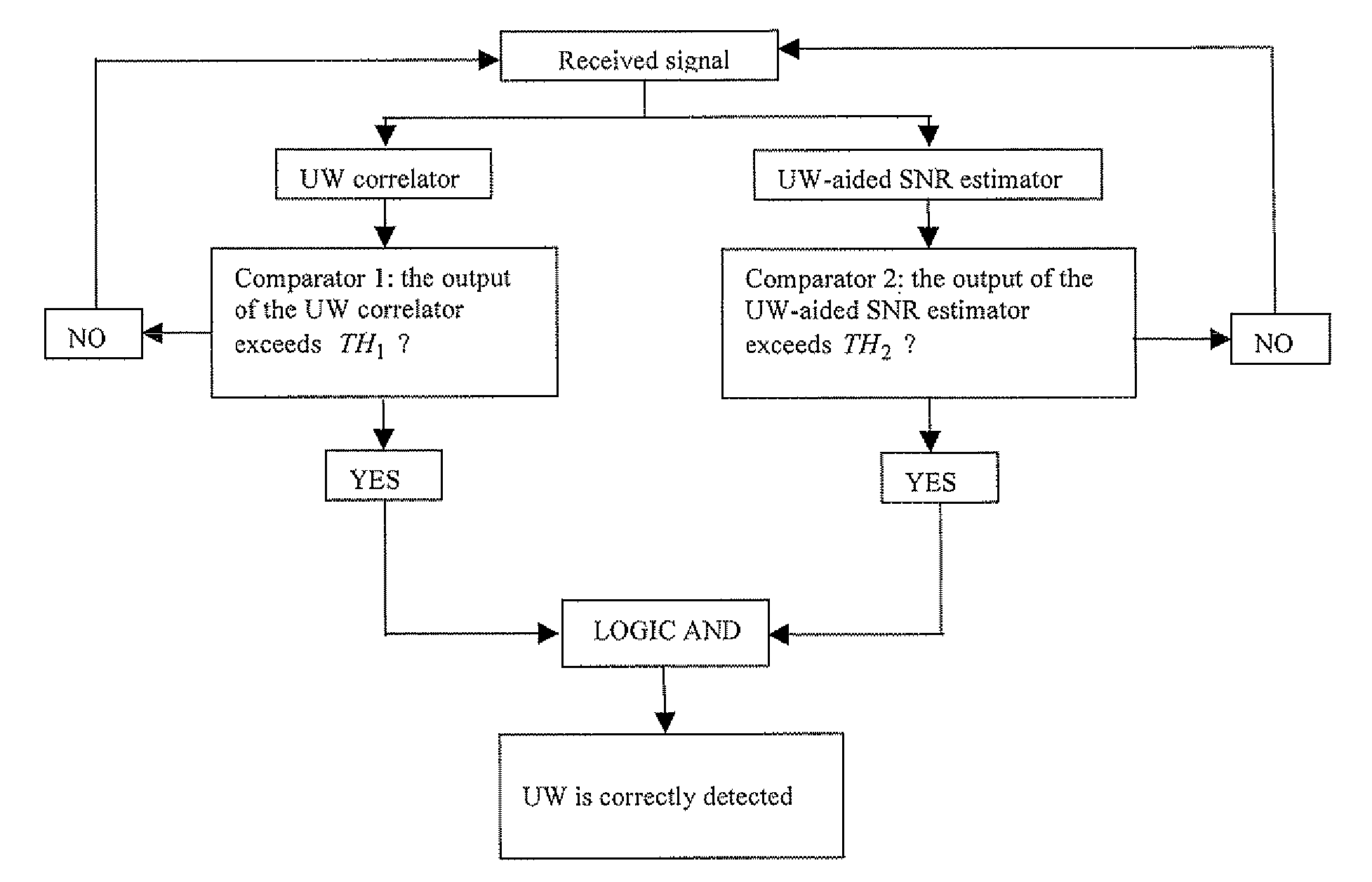
Figure 1 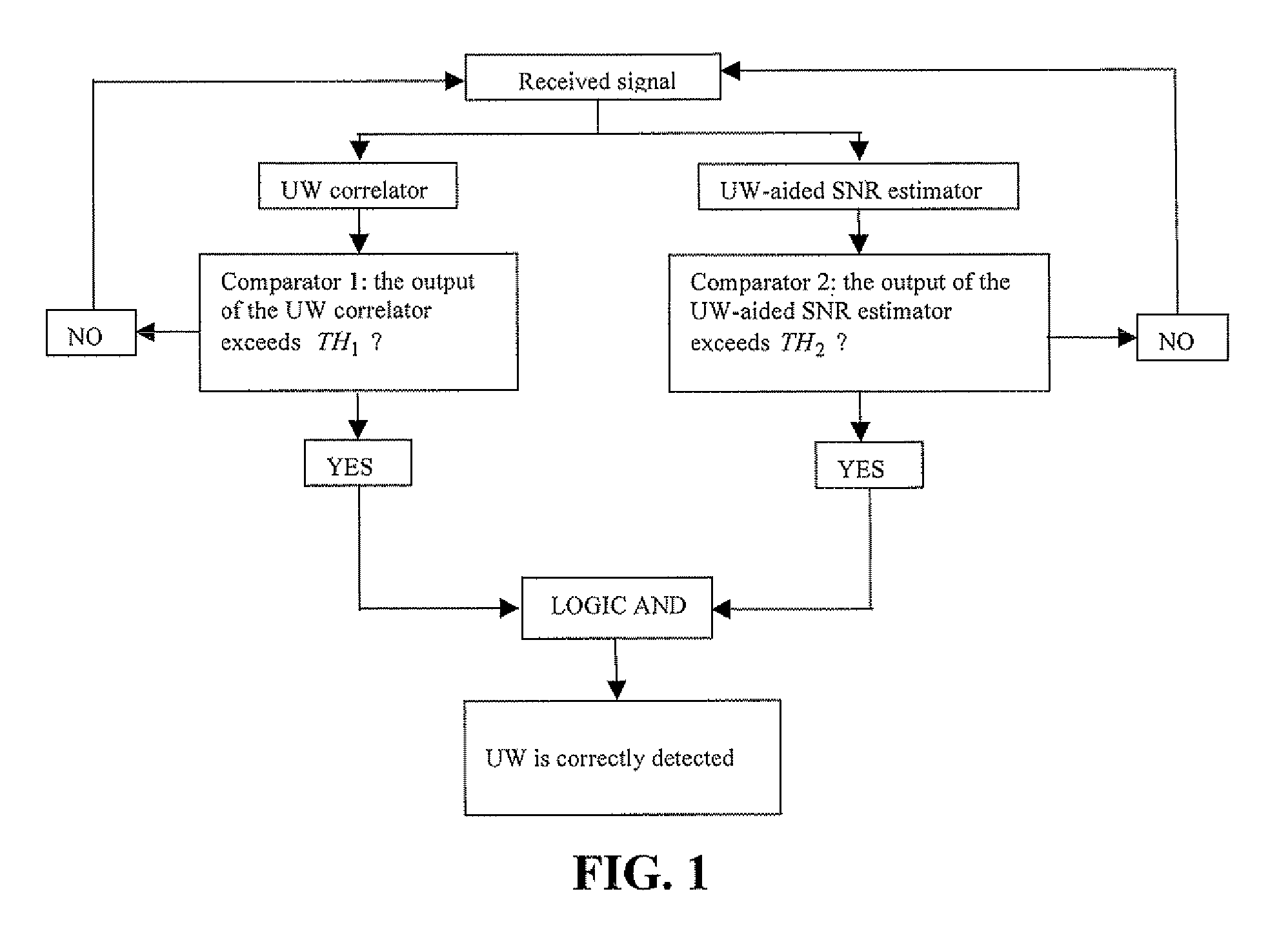
Figure 2 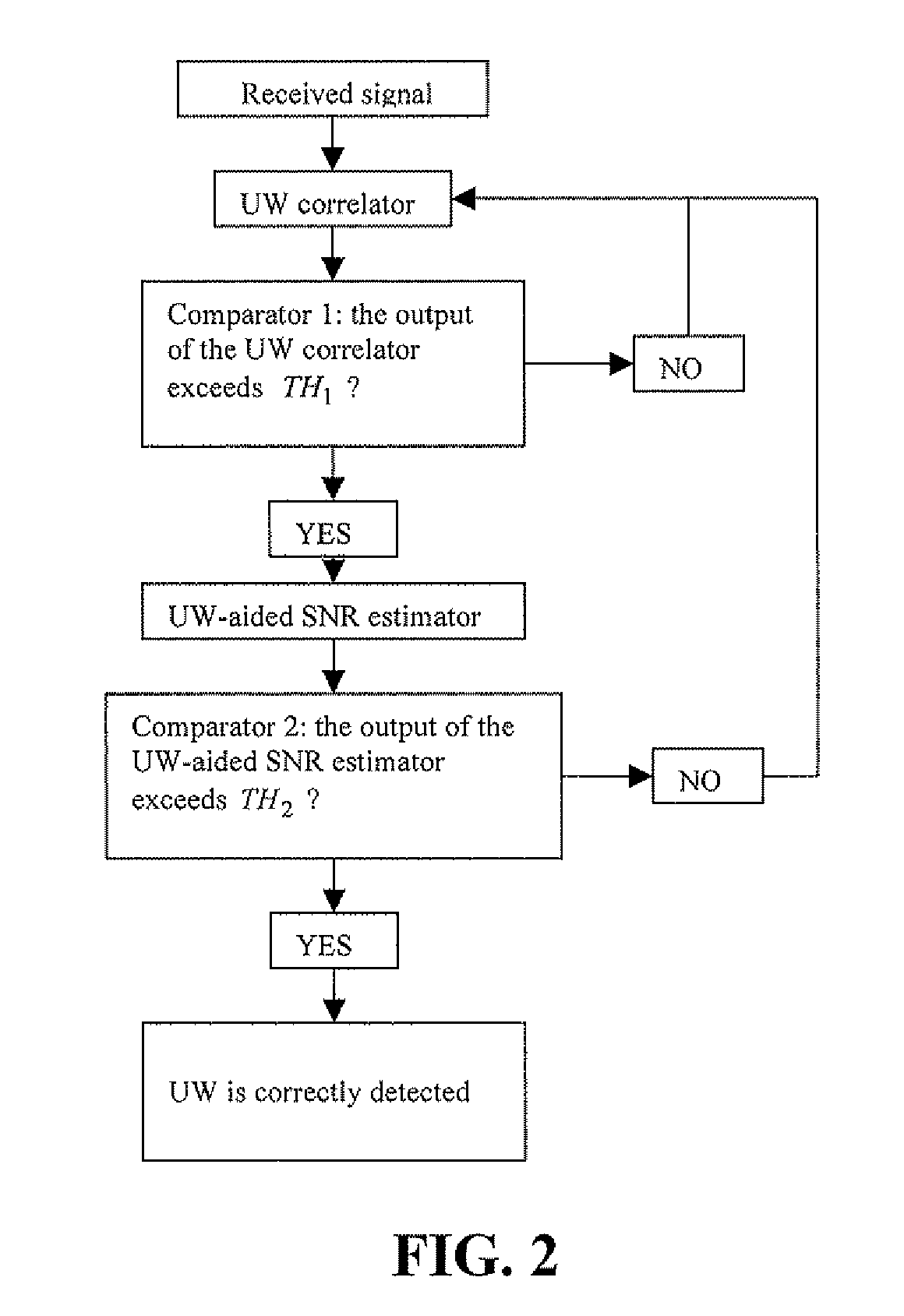
Figure 3
Abstract
Description
FIELD OF THE INVENTION
[0001] The invention relates to communication systems, and, more particularly, to a method of detecting a frame synchronization pattern or unique word in a received signal.BACKGROUND OF THE INVENTION
[0002] Throughout this document the term “frame” will denote the sequence of symbols that includes the useful part of the transmitted data. To correctly demodulate a received signal, a receiver must recognize the beginning of the useful part. Typically, the transmitter inserts before the data bits two pre-determined bit-sequences referred as “preamble” and “unique word” (UW). The preamble sequence is mainly used for symbol, clock synchronization or carrier recovery purposes, while the UW is used to obtain frame synchronization.
[0003] Recognition or detection of a known sequence of bits contained in the received stream is generally carried out via a correlator. Typically, the correlator is hard input based, although also soft input based correlator approaches exist. In ...
Examples
Embodiment Construction
[0017]A typical requisite in the realization of modern communication systems is to guarantee a certain quality of service (QoS). For example, the QoS could include providing, for a given information bit rate, a certain bit error rate (BER) in the presence of some channel and noise conditions. The block of a communication transceiver that most commonly is implemented to monitor the quality of the communication line is the signal to noise ratio (SNR) estimator. SNR estimations may be used at the transmitter side to choose an appropriate modulation (for example by selecting among binary phase shift keying BPSK, quadrature phase shift keying QPSK or quadrature amplitude modulation QAM constellations), a suitable coding method (if more than one encoding procedure is supported) and code rate to achieve the prescribed QoS. The SNR estimators may be subdivided into two categories: “data-aided” estimators and “non data-aided” estimators: the former operate on a known sequence, the latter act...