
Electric highway system
a technology of electric highways and electric cables, applied in the direction of cables installed in underground tubes, rail devices, instruments, etc., can solve the problems of increasing the cost of construction, increasing the time consumption, and not being able to meet the needs of high-speed operations, so as to achieve the effect of easy detection and repair and convenient repair
Patent Information
- Authority / Receiving Office
- US · United States
- Current Assignee / Owner
- Publication Date
- 2011-04-28
- Estimated Expiration
- Not applicable · inactive patent
Smart Images
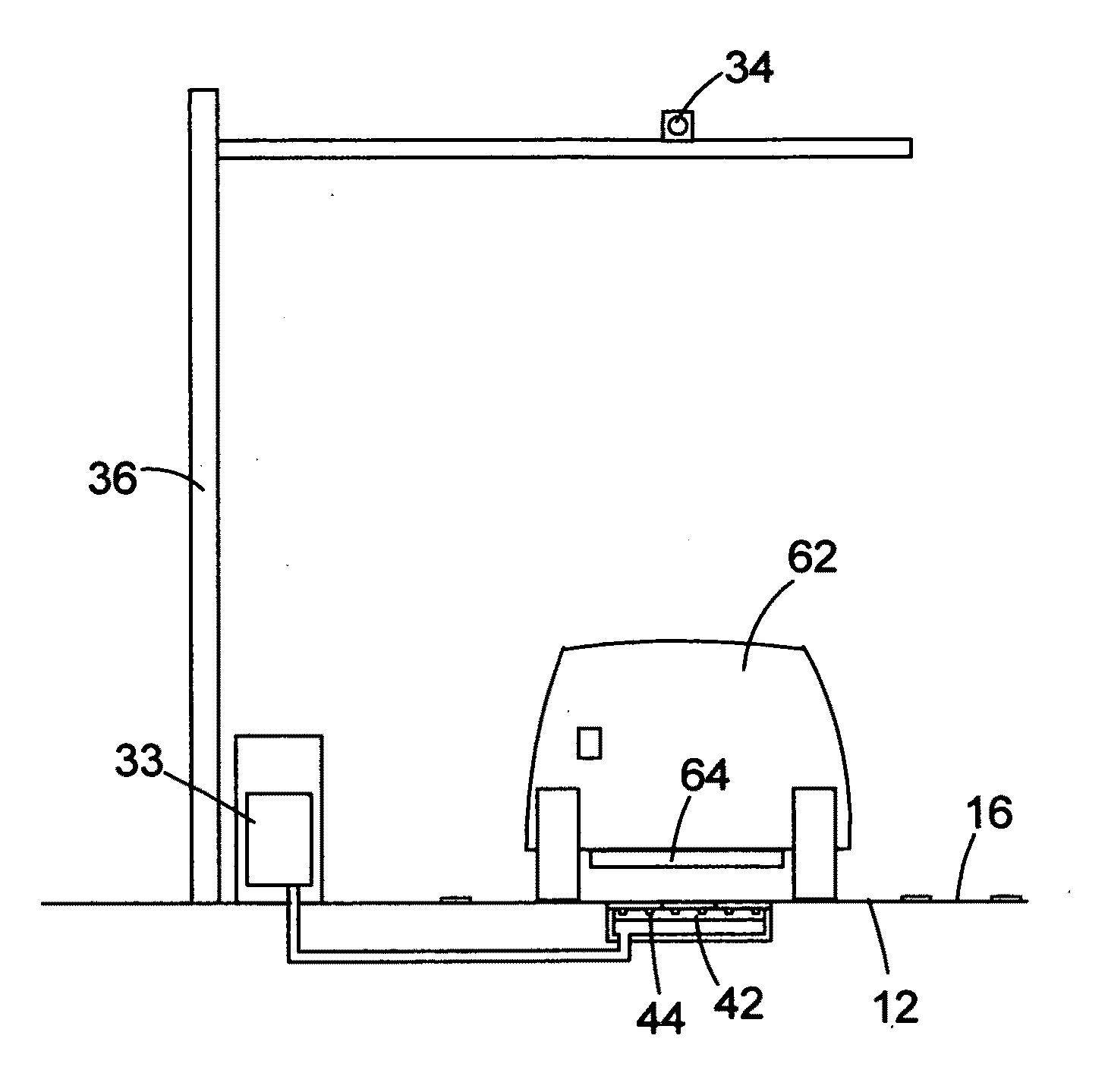
Figure 1 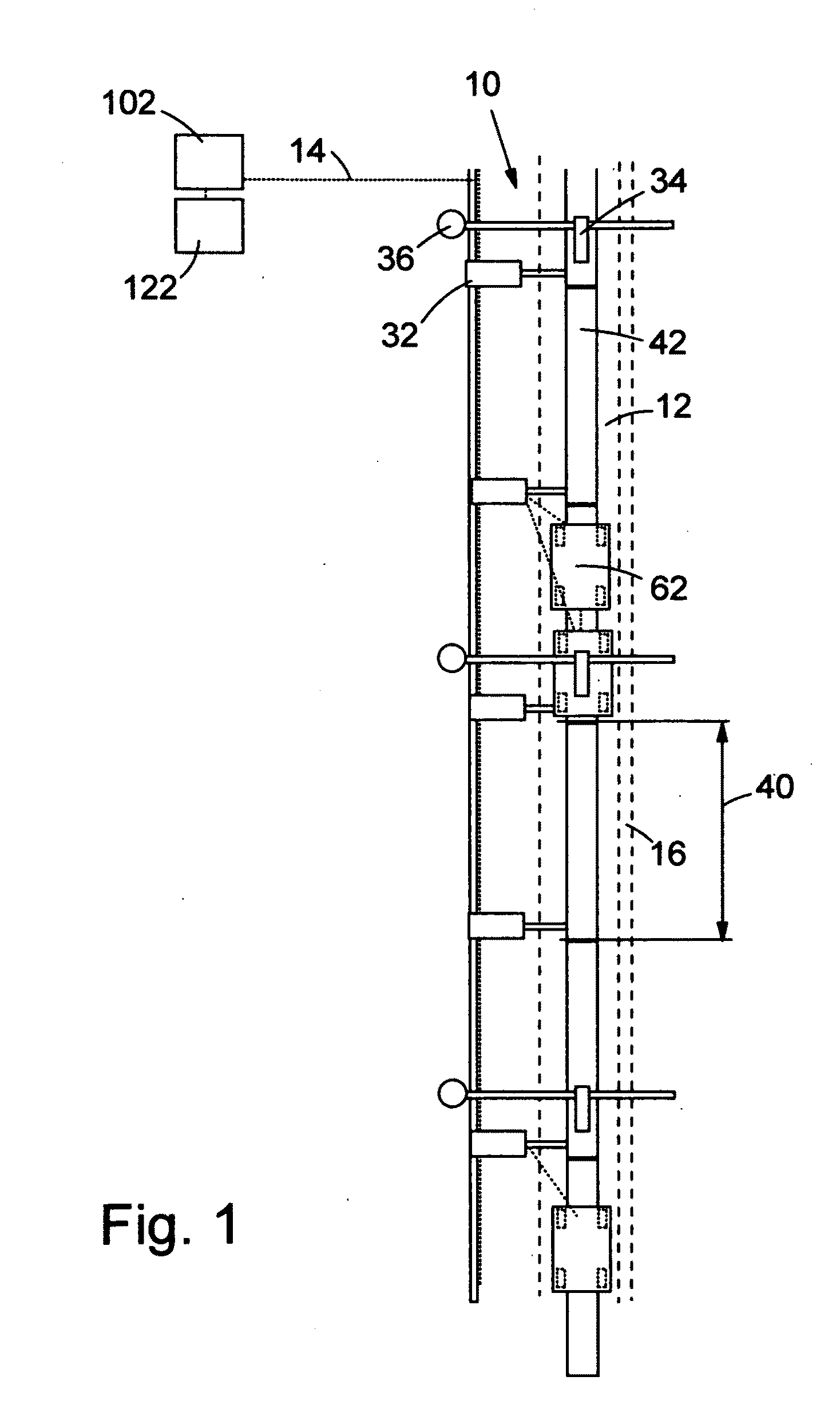
Figure 2 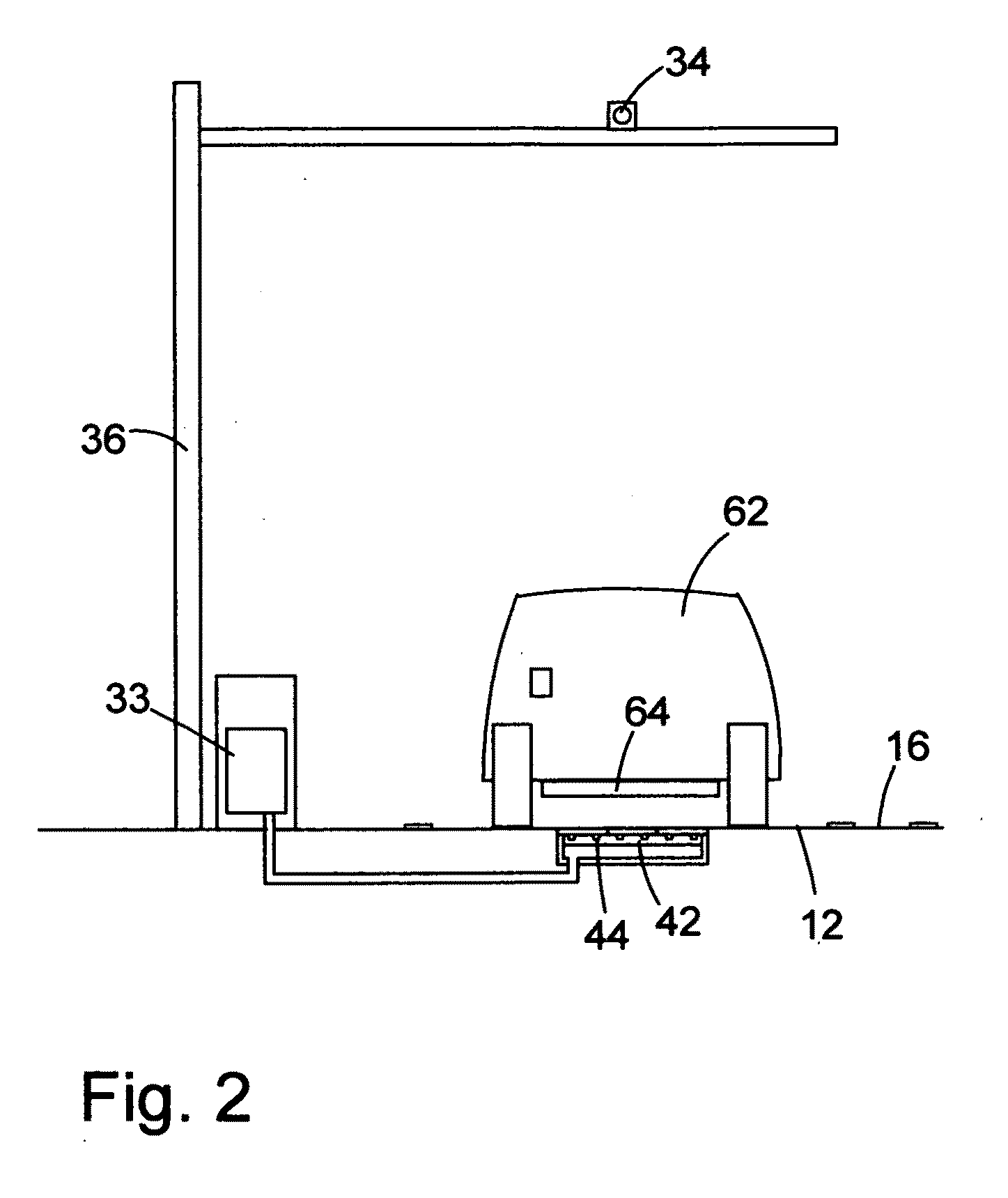
Figure 3
Abstract
Description
FIELD OF THE INVENTION
[0001] This invention relates generally to an electric highway system.BACKGROUND OF THE INVENTION
[0002] Electric power has been used to energize vehicles running on the highway for a long time as seen in the trolley bus on the city street. The trolley bus is quiet, does not emit exhaust gas, and its current collection (or power transfer) method that uses the current collector poles and the overhead wires is very energy efficient. This current collection method, however, is neither designed for high speed operations nor applicable to the ordinary automobile.
[0003] The electrified highway that does not use direct electrical conductive connection was tested in 1990 by the PATH (California Partners for Advanced Transit and Highways) administered at the Institute of Transportation Studies of the University of California at Berkeley in collaboration with Caltrans of the State of California. In the PATH experiment, electric power was supplied to the test vehicle (an elec...
Examples
embodiment
Preferred Embodiment
[0026]As shown in FIGS. 1 and 2, the preferred embodiment of the electric highway system of present invention includes a roadside subsystem 10; a centralized system operation monitoring center 102 and an account processing center 122 that may be located in the same facility as the system operation monitoring center; a communication network 14 that connects the roadside subsystem, the system operation monitoring center, and the account processing center and the roadside subsystem; at least one electrified lane 12 that may be separated by a non-elevated divider strip 16 from other non-electrified lanes; at least one power source such as a feeder station, and power cables that connect the power source and the roadside subsystem.
[0027]The roadside subsystem 10 includes a plurality of roadside conductor assemblies 42 disposed longitudinally serially in the electrified lane, each of which conductor assemblies includes at least one roadside conductor 44; a plurality of ...
embodiment a
Alternative Embodiment A
[0051]In this embodiment, the manually driven ordinary vehicle that is not designed to use the electrified lane in the preferred embodiment is allowed to travel on the electrified lane. The longitudinal position control of the vehicle equipped with automated operation but that happens to follow a manually operated vehicle will have to rely on the distance / speed meter during the car following mode operation.
embodiment b
Alternative Embodiment B
[0052]This alternative embodiment is generally identical to the preferred embodiment except that in this embodiment, coupling and decoupling of vehicles is done only at coupling / decoupling terminals. As shown in FIG. 10, the coupling / decoupling terminal 190 comprises at least one run-through electrified lane 12B in which coupled vehicles and single vehicles travel without stopping at the coupling / decoupling terminal; at least one coupling / decoupling lane for each coupler-height category vehicle (a coupling / decoupling lane for the car 191, a coupling / decoupling lane for the SUV etc. 192, and a coupling / decoupling lane for the large truck 193 in the three-category coupler system); and at least one lane for non-couplable vehicles 194; and at least one conventional traffic lane 195 in the coupling decoupling segments that are extensions of the main line lanes (as shown in FIG. 10), or that connected to on / off ramps to the coupling / decoupling terminal (not shown)....