
Method and system for issuing, aggregating and redeeming merchant rewards
a merchant reward and reward technology, applied in the field of loyalty or reward programs, can solve the problems of not helping to build brand loyalty, unable to implement their own loyalty reward programs, and users facing an extremely difficult if not practically impossible task of manually coordinating all of their rewards, so as to increase the number of cardholders, increase the cost of setup and administration, and increase the effect of revenues
Patent Information
- Authority / Receiving Office
- US · United States
- Patent Type
- Applications(United States)
- Current Assignee / Owner
- Publication Date
- 2014-08-28
- Estimated Expiration
- Not applicable · inactive patent
Smart Images
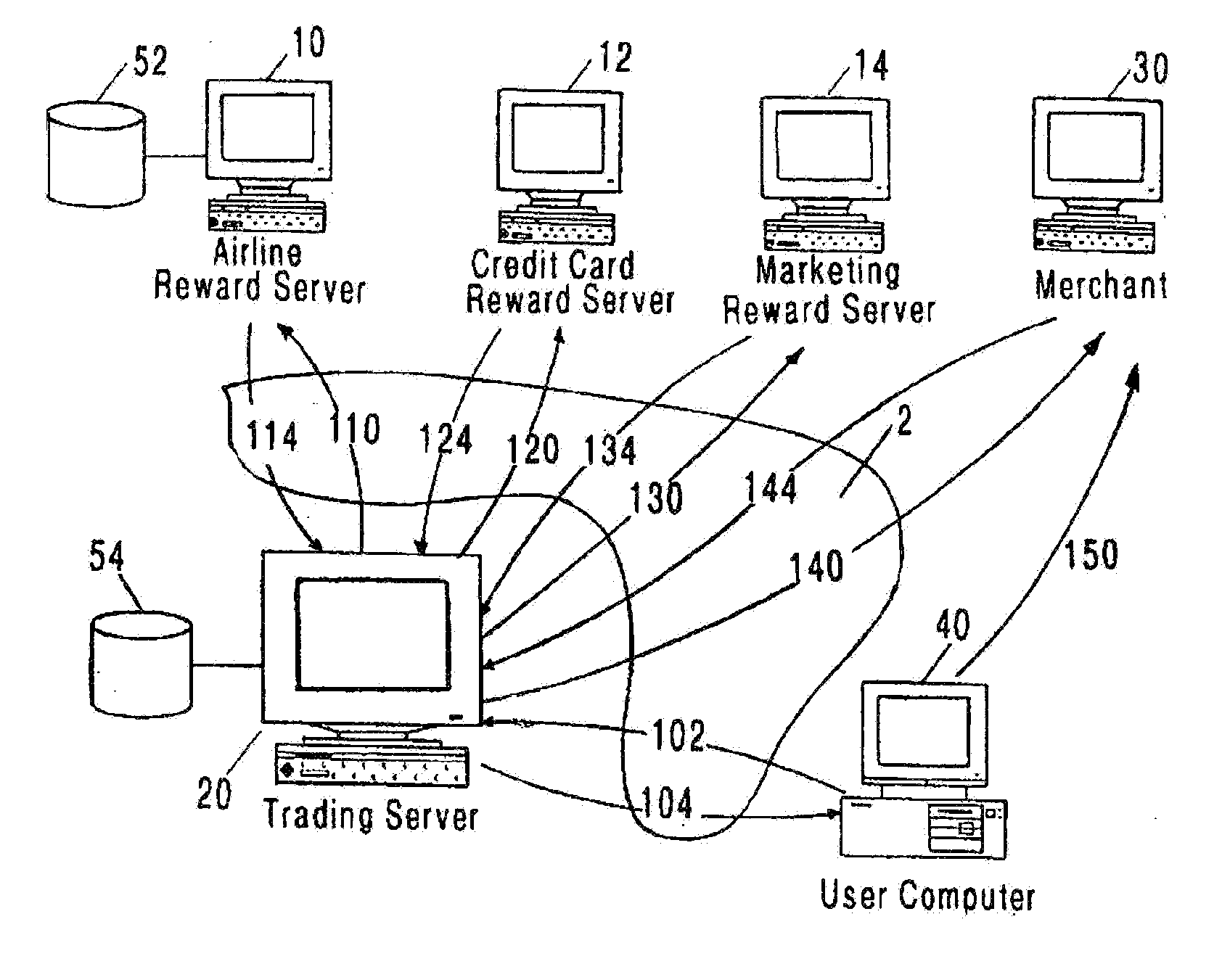
Figure 1 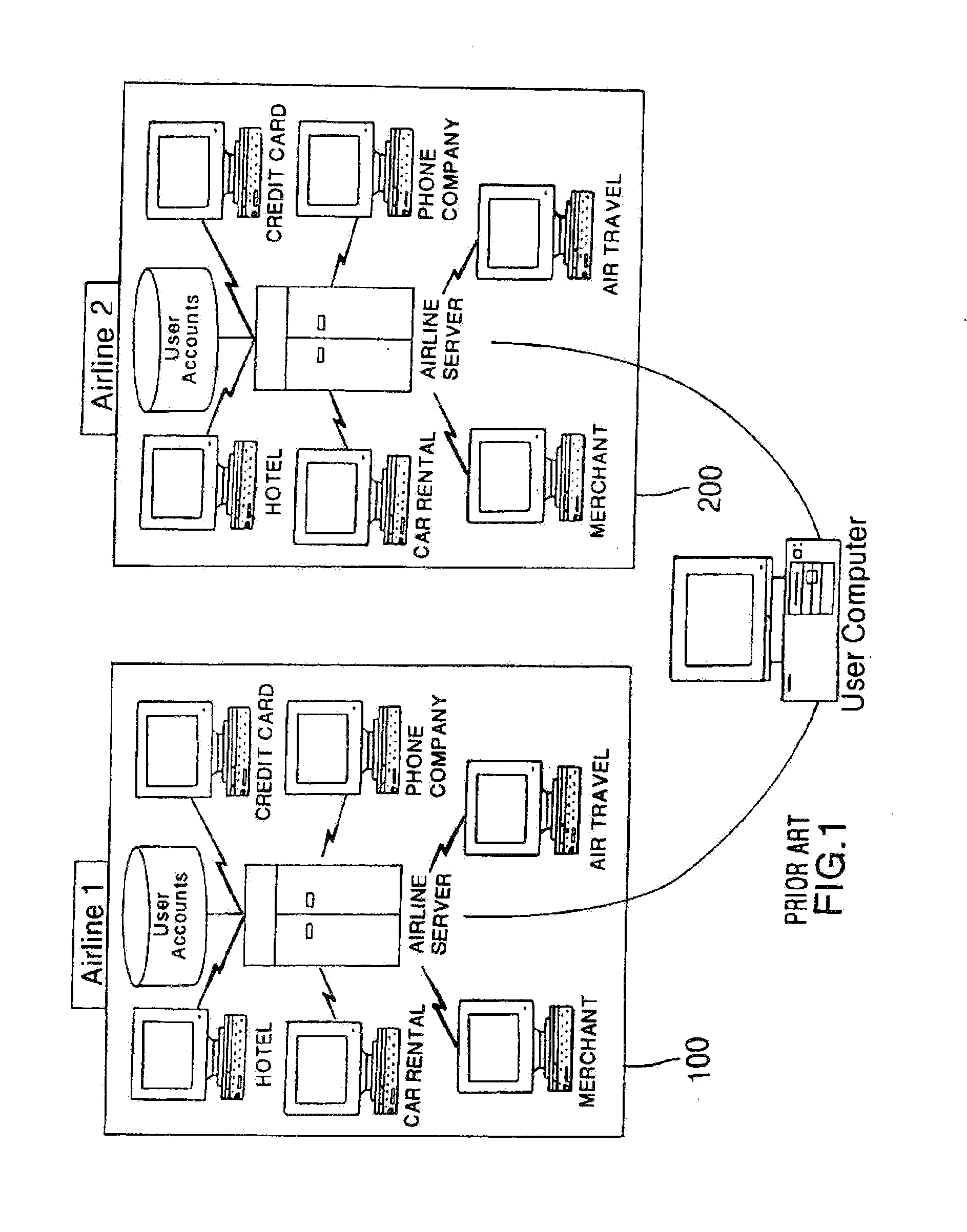
Figure 2 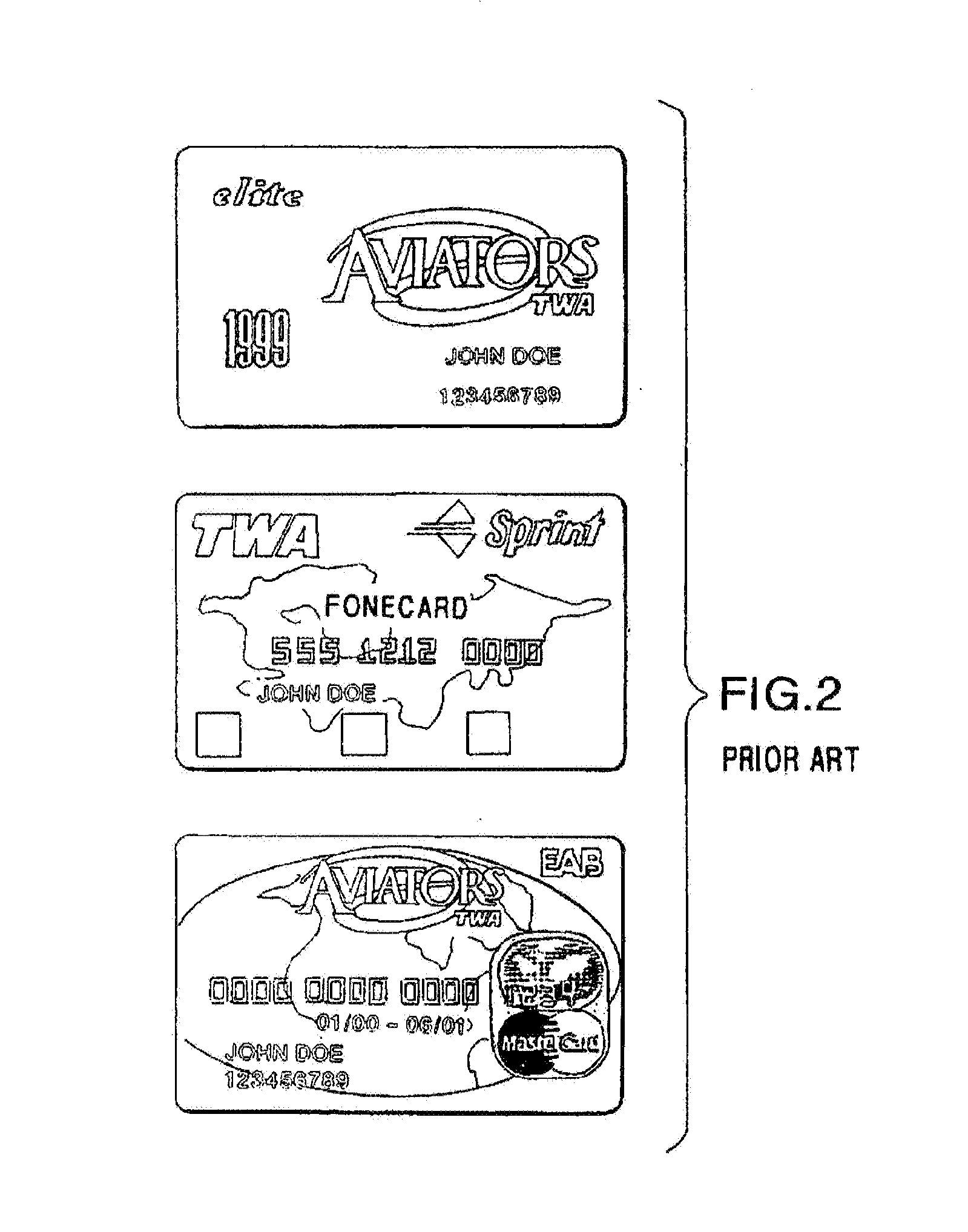
Figure 3
Abstract
Description
BACKGROUND OF THE INVENTION
[0001] This invention relates to loyalty or reward programs, and in particular to such programs that allow merchants to provide rewards such as reward points to users wherein the merchants utilize the pre-existing infrastructure of a network such as a credit card network for awarding rewards, maintaining account information of users, aggregating rewards from various merchant-based reward accounts, and redeeming such rewards for products and services selected by the users.
[0002] In the prior art, in order to attract and retain business customers, airlines, hotels, car rental companies, chain retailers, telecom providers, etc. have historically introduced frequent use programs that offer awards of loyalty or reward points (e.g. frequent flyer miles) or other such incentives schemes based on the distance traveled or purchases made by that customer. Competition has forced airlines to modify the manner in which mileage was acquired to include travel related purch...
Examples
first embodiment
Reward Accounts at Issuing Bank
[0059]The first embodiment of the invention, in which the reward points database(s) is / are located at one or more issuing bank computers, will now be described. The maintaining of these merchant-awarded loyalty points may be undertaken by storing user and merchant account information in a database associated with the issuing bank as shown in FIG. 13. Thus, FIG. 13 illustrates a simple database format wherein each merchant and user associated with that merchant has a record in the database which indicates how many points are in the account, as well as other optional information (such as par value of points, restriction on use, etc.) The format of the storage of the information is unimportant and may take many forms as well known in the art of relational and other types of databases. A simple transaction log may keep information on each transaction processed; this log may be easily modified to include reward point information as well. Thus, there may be ...
second embodiment
Reward Accounts at Acquiring Bank
[0073]The second embodiment of the invention, in which the reward points database(s) is / are located at one or more acquiring bank computers associated with one or more acquiring banks, will now be described as shown generally in FIG. 15. In this embodiment, the acquiring bank may set up the accounts with each merchant as desired. That is, an acquiring bank such as MBNA may agree with a merchant such as BEST BUY that every time a user purchases an item at BEST BUY, MBNA will allow for a reward point account to be opened and increased for that particular user and for BEST BUY transactions only. In one case, there may be a requirement that a specific instruction be sent from BEST BUY to MBNA (typically as part of the credit card transaction) in order for points to be awarded. Thus, there would be an instruction from BEST BUY to MBNA that User A should have 150 points added to his BEST BUY account managed by MBNA because he made a $150 purchase transacti...
third embodiment
Reward Accounts at Central Reward Server
[0082]The third embodiment of the invention, in which the reward points database(s) is / are located at one or more central reward server computers, will now be described as shown in FIG. 17. That is, a centralized functionality may be used, such as a credit card network administrator or operator, to perform the functions of the present invention. In this case, the merchant computers and / or the acquiring bank computers would communicate via the network (or via an external network such as the Internet) with the central reward server to instruct the central reward server to store reward points, redeem reward points, and aggregate reward points, in the same manner as with the issuing bank computer and the acquiring bank computer described above. By centralizing the reward point account functions, advantages may be realized such as scalability, economies of scale, etc.
[0083]For example, as shown in FIGS. 12 and 17, a central reward server may reside...