
Image capturing system
Patent Information
- Authority / Receiving Office
- US · United States
- Current Assignee / Owner
- Publication Date
- 2014-09-11
Smart Images
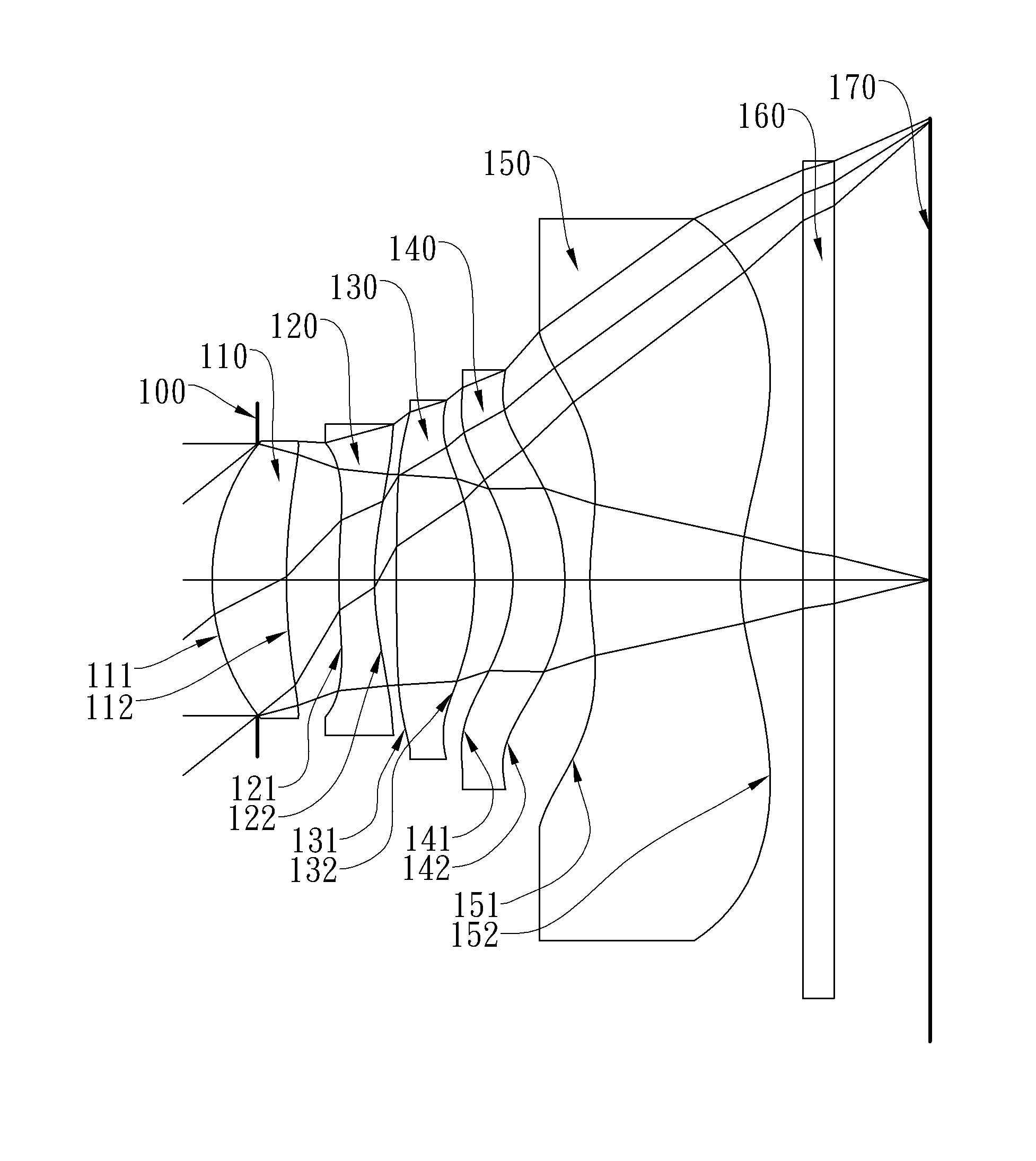
Figure 1 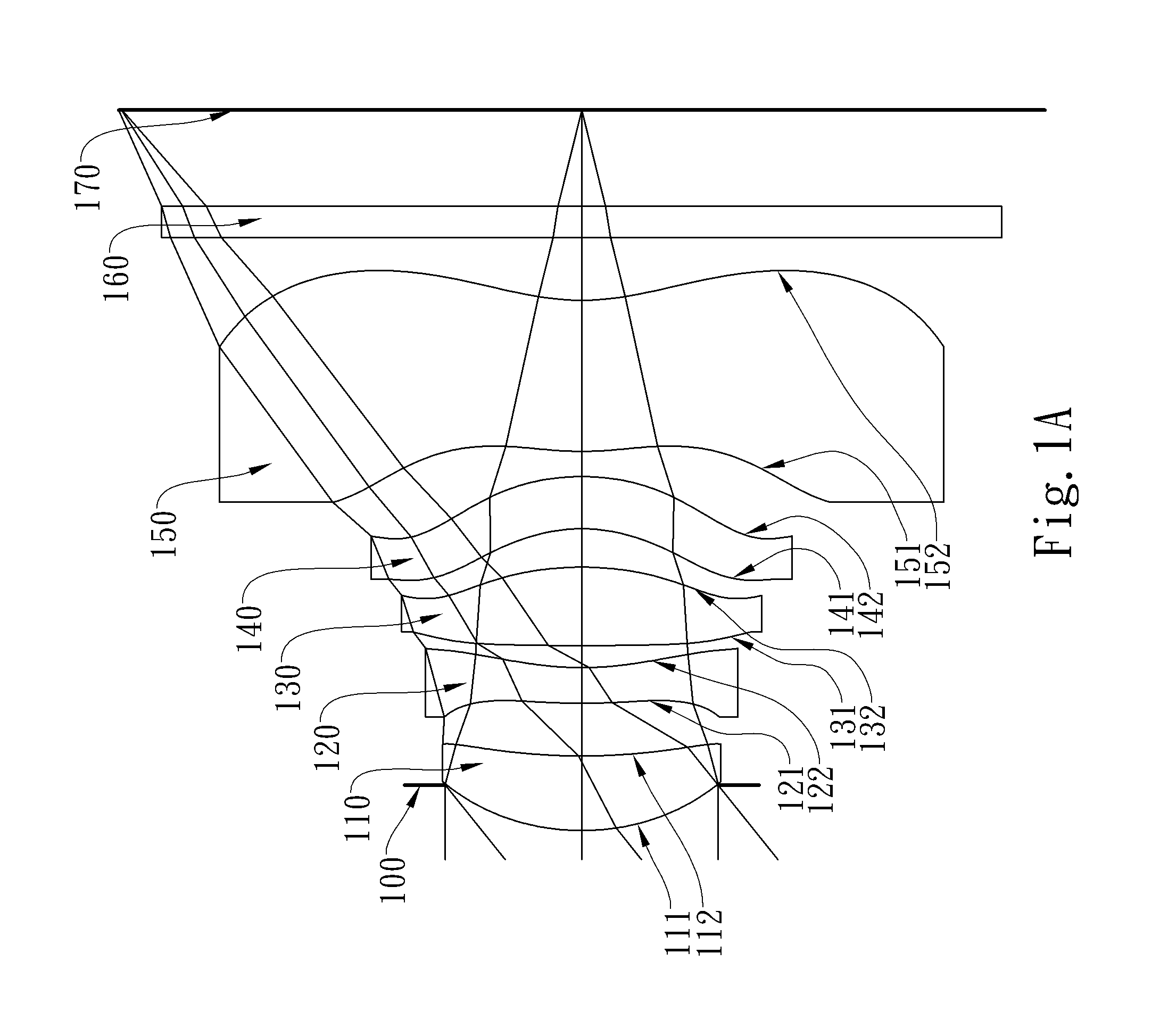
Figure 2 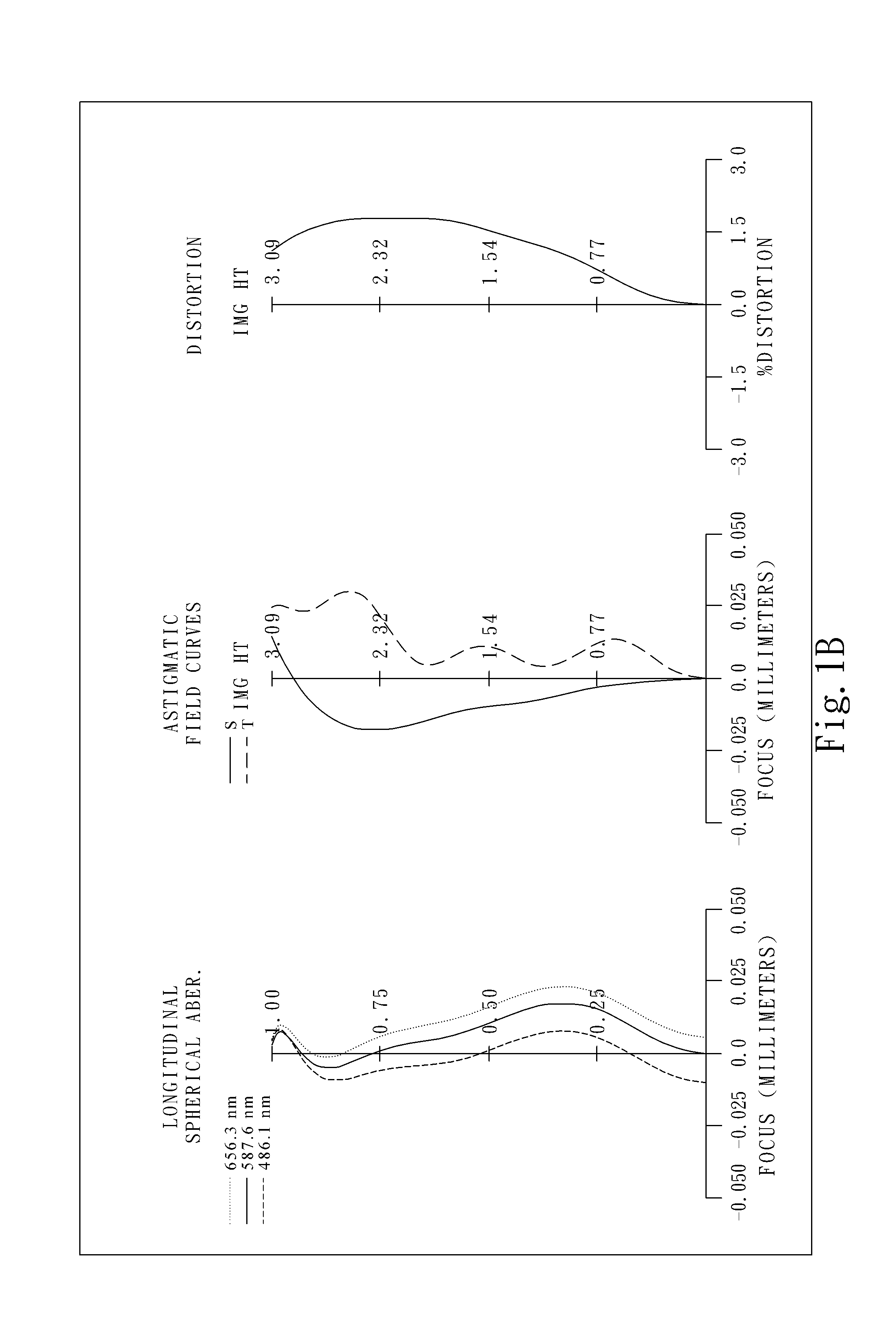
Figure 3
Abstract
Description
RELATED APPLICATIONS
[0001] The application claims priority to Taiwan Application Serial Number TW 102107602, filed on Mar. 5, 2013, which is herein incorporated by reference.BACKGROUND
[0002] 1. Technical Field
[0003] The present disclosure relates to an image capturing system. More particularly, the present disclosure relates to a compact image capturing system applicable to electronic products.
[0004] 2. Description of Related Art
[0005] In recent years, with the rapid development of consumer electronics, there is an ever increasing need to keep the products as compact as possible, and accordingly, the internal product components are required to have their size minimized so as to make the whole product more compact and portable. Also, as the advanced semiconductor manufacturing technologies have allowed the pixel size of sensors to be reduced and compact optical lens systems have gradually evolved toward the field of higher megapixels, there is an increasing demand for compact optical lens...
Examples
1st embodiment
[0053]FIG. 1A is a schematic view of an image capturing system according to the 1st embodiment of the present disclosure. FIG. 1B shows spherical aberration curves, astigmatic field curves and a distortion curve of the image capturing system according to the 1st embodiment. In FIG. 1A, the image capturing system includes, in order from an object side to an image side, an aperture stop 100, a first lens element 110, a second lens element 120, a third lens element 130, a fourth lens element 140, a fifth lens element 150, an IR-cut filter 160 and an image plane 170, wherein the image capturing system has a total of five lens elements (110-150) with refractive power.
[0054]The first lens element 110 with positive refractive power has a convex object-side surface 111 at a paraxial region and a concave image-side surface 112 at a paraxial region, and is made of plastic material. The object-side surface 111 and the image-side surface 112 of the first lens element 110 are aspheric.
[0055]The ...
2nd embodiment
[0079]FIG. 2A is a schematic view of an image capturing system according to the 2nd embodiment of the present disclosure. FIG. 2B shows spherical aberration curves, astigmatic field curves and a distortion curve of the image capturing system according to the 2nd embodiment. In FIG. 2A, the image capturing system includes, in order from an object side to an image side, an aperture stop 200, a first lens element 210, a second lens element 220, a third lens element 230, a fourth lens element 240, a fifth lens element 250, an IR-cut filter 260 and an image plane 270, wherein the image capturing system has a total of five lens elements (210-250) with refractive power.
[0080]The first lens element 210 with positive refractive power has a convex object-side surface 211 at a paraxial region and a concave image-side surface 212 at a paraxial region, and is made of plastic material. The object-side surface 211 and the image-side surface 212 of the first lens element 210 are aspheric.
[0081]The ...
3rd embodiment
[0088]FIG. 3A is a schematic view of an image capturing system according to the 3rd embodiment of the present disclosure. FIG. 3B shows spherical aberration curves, astigmatic field curves and a distortion curve of the image capturing system according to the 3rd embodiment. In FIG. 3A, the image capturing system includes, in order from an object side to an image side, an aperture stop 300, a first lens element 310, a second lens element 320, a third lens element 330, a fourth lens element 340, a fifth lens element 350, an IR-cut filter 360 and an image plane 370, wherein the image capturing system has a total of five lens elements (310-350) with refractive power.
[0089]The first lens element 310 with positive refractive power has a convex object-side surface 311 at a paraxial region and a concave image-side surface 312 at a paraxial region, and is made of plastic material. The object-side surface 311 and the image-side surface 312 of the first lens element 310 are aspheric.
[0090]The ...