
Saquinavir-no for immunomodulation
a technology of saquinavir and immunomodulation, which is applied in the field of saquinavir for immunomodulation, can solve the problems of limited application of saq
Patent Information
- Authority / Receiving Office
- US · United States
- Current Assignee / Owner
- Publication Date
- 2015-10-08
- Estimated Expiration
- Not applicable · inactive patent
Smart Images
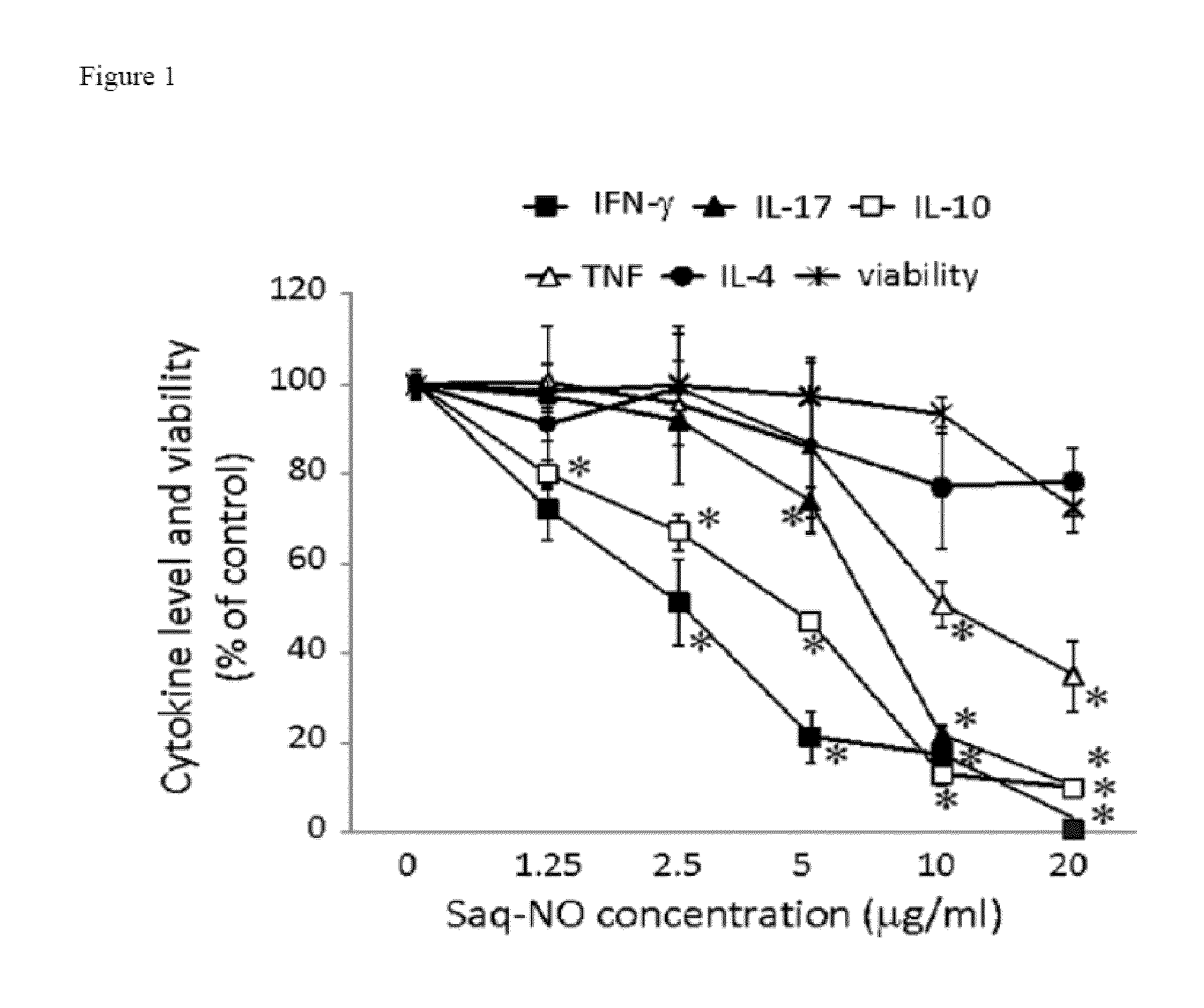
Figure 1 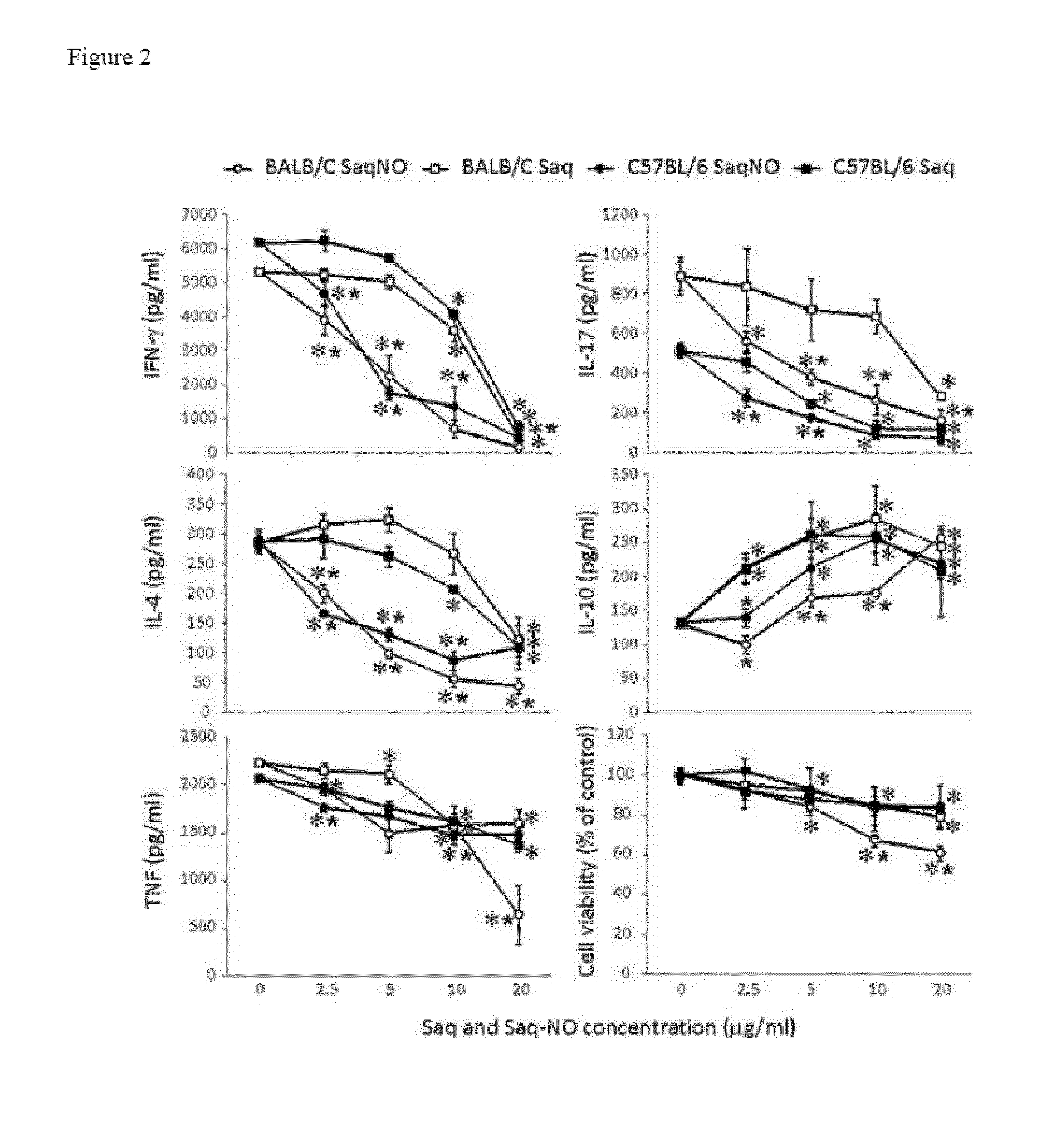
Figure 2 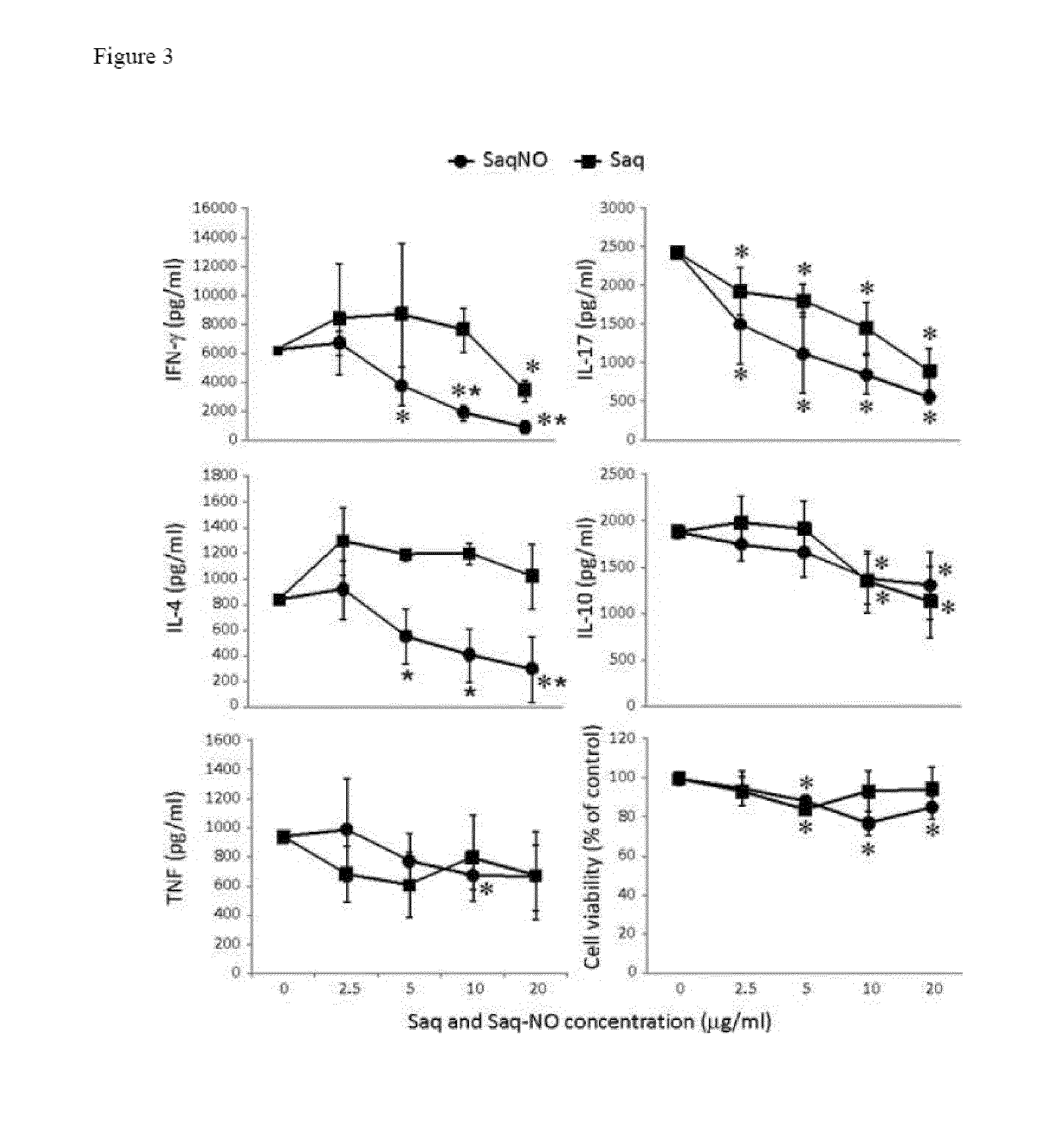
Figure 3
Abstract
Description
[0001] The invention refers to the nitric ester of saquinavir for use in the treatment of diseases caused by disorders of the immune system.BACKGROUND OF THE INVENTION
[0002] Saquinavir (((2S)—N-[(2S,3R)-4-[(3S)-3-(tert-butylcarbamoyl)-decahydroisoquinolin-2-iy]-3-hydroxy-1-phenylbutan-2-il]-2-(quinolin-2-ylformamido)butanediamide), abbreviated as Saq, is a human immunodeficiency virus (HIV) protease inhibitor and it is routinely used as a constituent of Highly Active Anti-Retroviral Therapy (HAART). Besides its potent anti-retroviral effects, this drug also potently affects tumor cells (Toschi et al., 2011). Still, application of Saq is limited due to its toxicity (Flexner, 1998), and it was an idea of reducing side effects while pertaining anti-cancer properties of Saq that initiated generation of nitric oxide (NO)-modified version of the drug, Saquinavir-NO (Saq-NO). This agent is produced by covalent attachment of NO to the parental drug (Maksimovic-Ivanic et al., 2009 and WO 2010 / ...
Examples
Embodiment Construction
[0003]It has now been found that the nitric ester of Saquinavir having formula I,
[0004]hereinafter designated as NO-saquinavir, Saq-NO or OX-1001, has interesting immunomodulatory properties, potently modulating the production of various cytokines in polyclonally-activated and antigen stimulated T cells. Saq-NO is able to modulate production of Th1, Th2, pro- and anti-inflammatory cytokines. Its effect is equally potent in polyclonally-stimulated mixed populations of immune cells (SPC and LNC) or purified T cells (CD4+ cells) and in antigen-stimulated T cells (encephalitogenic MBP-specific cells). It should be mentioned that the immunomodulatory properties of Saq have been studied upon in vitro and ex vivo conditions using peripheral blood mononuclear cells of healthy individuals (Delmonte, 2007) and spleen cells of mice previously treated with Saq (Pacifici et al., 1997) and conflicting results had been obtained. Out of the 3 cytokines studied, e.g. IL-2, IFN-gamma and TNF-alpha, i...