
Method for self-adaptively demodulating quasi-orthogonal signals, demodulation unit and radio signal receiver
a quasi-orthogonal signal and demodulation unit technology, applied in the field of radio communication, can solve problems such as rare situations, inability to observe problems, and inability to optimally operate the receiver, and achieve the effect of minimizing consumption and good performan
Patent Information
- Authority / Receiving Office
- US · United States
- Patent Type
- Applications(United States)
- Current Assignee / Owner
- Publication Date
- 2015-12-24
Smart Images
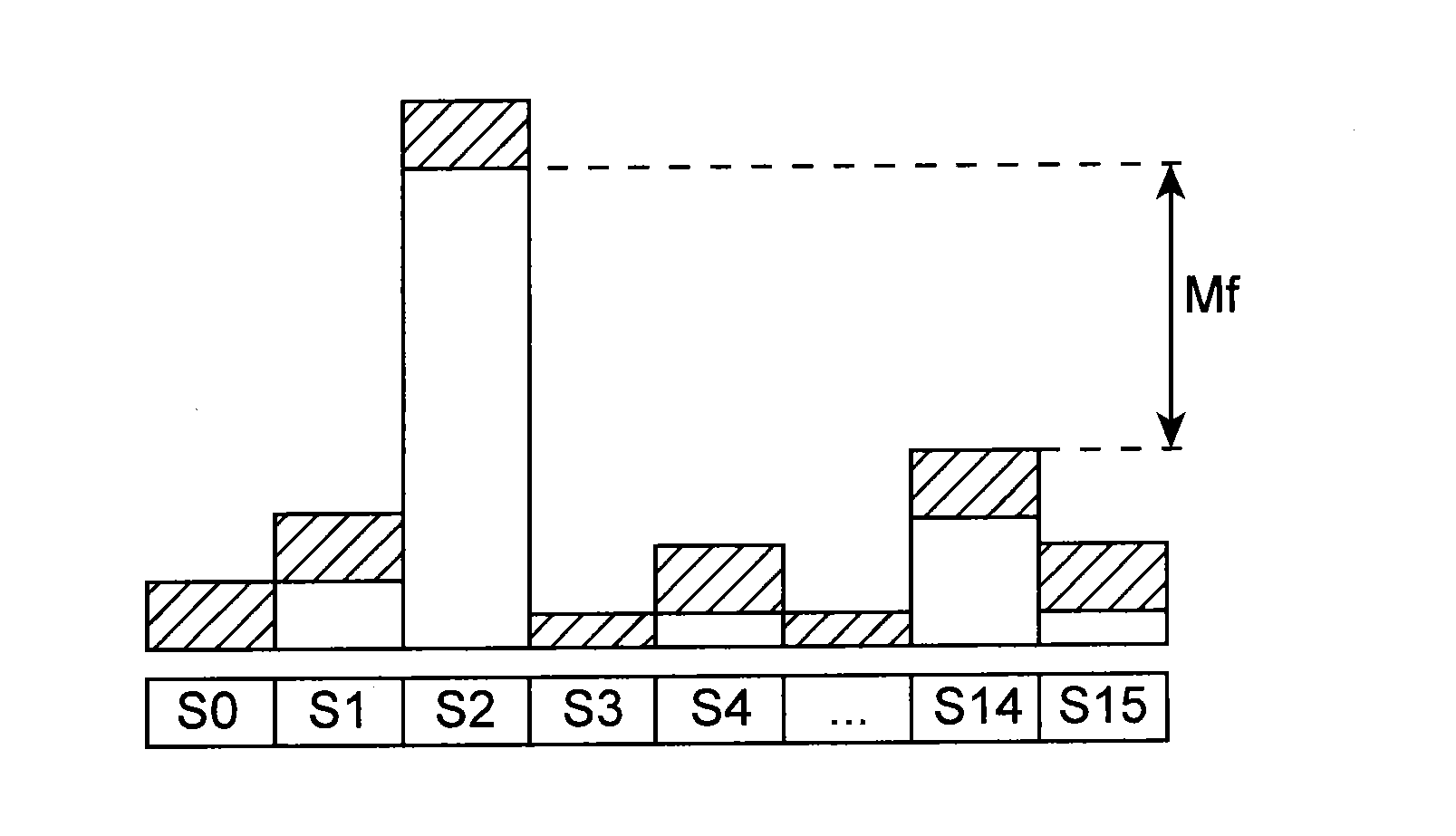
Figure 1 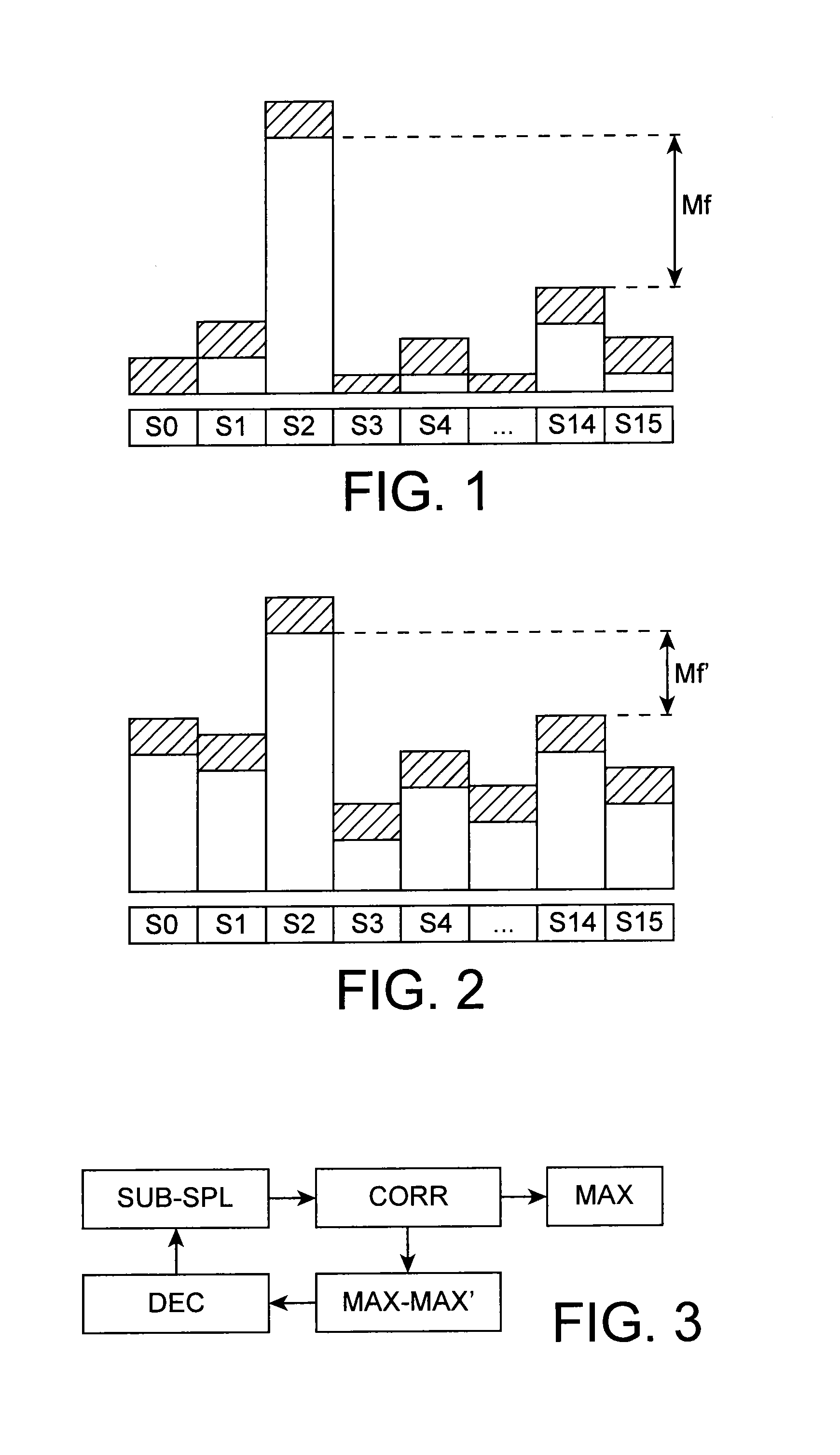
Figure 2 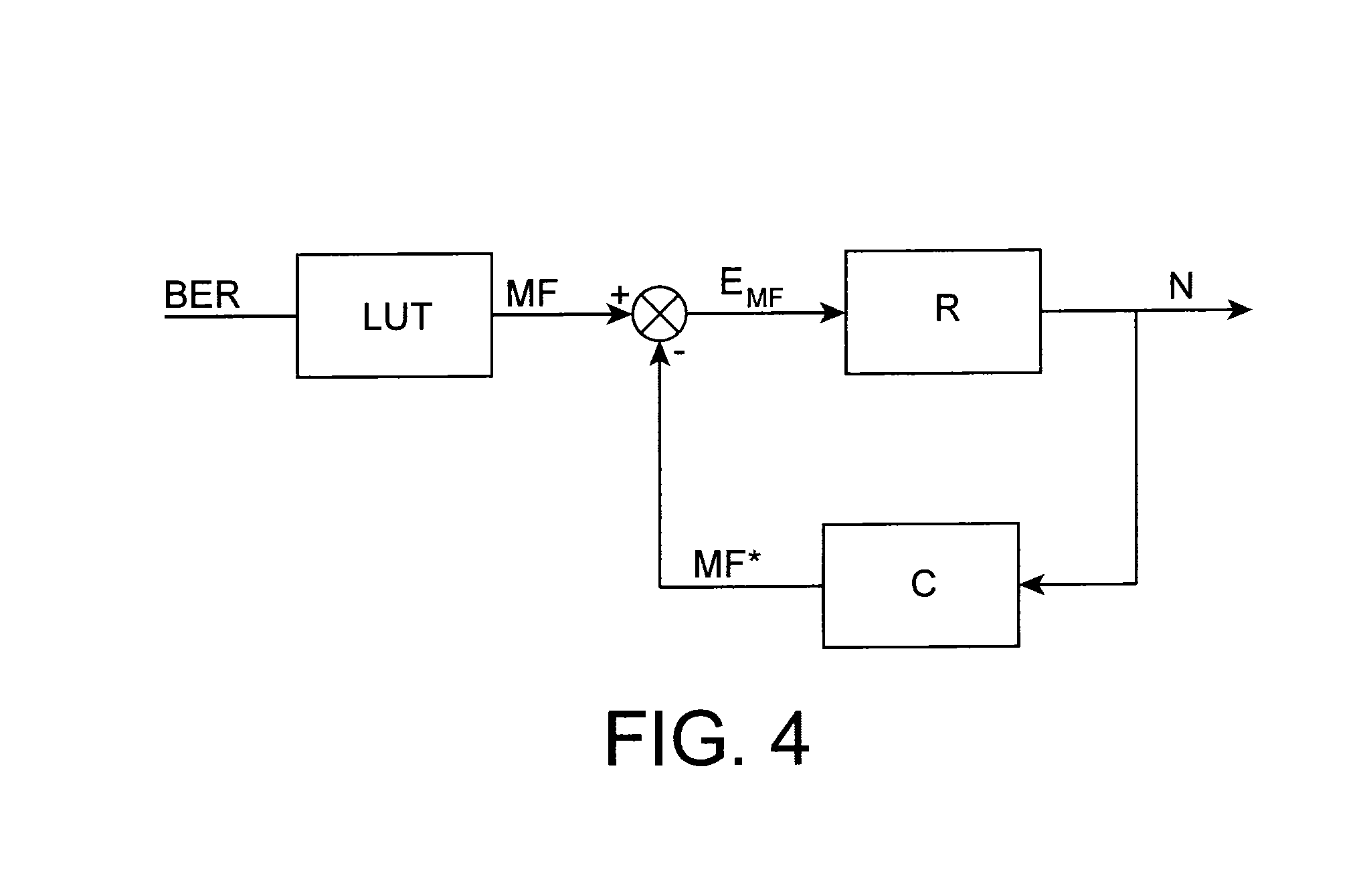
Figure 3
Abstract
Description
TECHNICAL FIELD
[0001] The field of the invention is that of radio communications, and more particularly that of the demodulation of radio signals modulated according to the direct sequence spread spectrum technique.STATE OF PRIOR ART
[0002] IEEE 802.15.4 standard, which defines in particular the physical layer of the low consumption protocol ZigBee intended to be used in the ISM (“Industrial, Scientific, and Medical”) band at 2 450 MHz, is based on the direct sequence spread spectrum to transmit data, which is coupled with an O-QPSK (“Offset Quadrature Phase Shift Keying”) type phase digital modulation.
[0003] The information to be transmitted is initially in the form of a stream of binary data (bits). These bits are grouped together by 4 which induces 16 possible combinations, that is 16 data symbols. Each of these symbols is then spread onto 32 “chips” (modulation bits) by a spectrum spreading sequence of its own and enables the symbol thus modulated to be differentiated from the other...
Examples
Embodiment Construction
[0031]The invention relates to a method for decoding a data symbol carried by a signal received by a receiver of a communication system. The invention also extends to a demodulation unit of a receiver for a communication system configured to enable this decoding method to be implemented.
[0032]Within the scope of the invention, the data symbol received by the receiver is modulated by a spread code sequence selected from a plurality of spread code sequences being quasi-orthogonal to each other to differentiate the symbol from other data symbols. It is received in the form of a set of modulation bits.
[0033]The invention is applicable in particular, but non-exclusively, to a direct sequence spread spectrum (DSSS), meeting IEE 802.15.4™-2011 standard. In particular, the invention is not limited to the O-QPSK modulation recommended by this standard, its principle remaining valid whatever the transmission type provided that an orthogonality between the spreading sequences enables them to b...