
Payment processing based on vehicle remote identification
Patent Information
- Authority / Receiving Office
- US · United States
- Current Assignee / Owner
- Publication Date
- 2016-09-15
- Estimated Expiration
- Not applicable · inactive patent
Smart Images
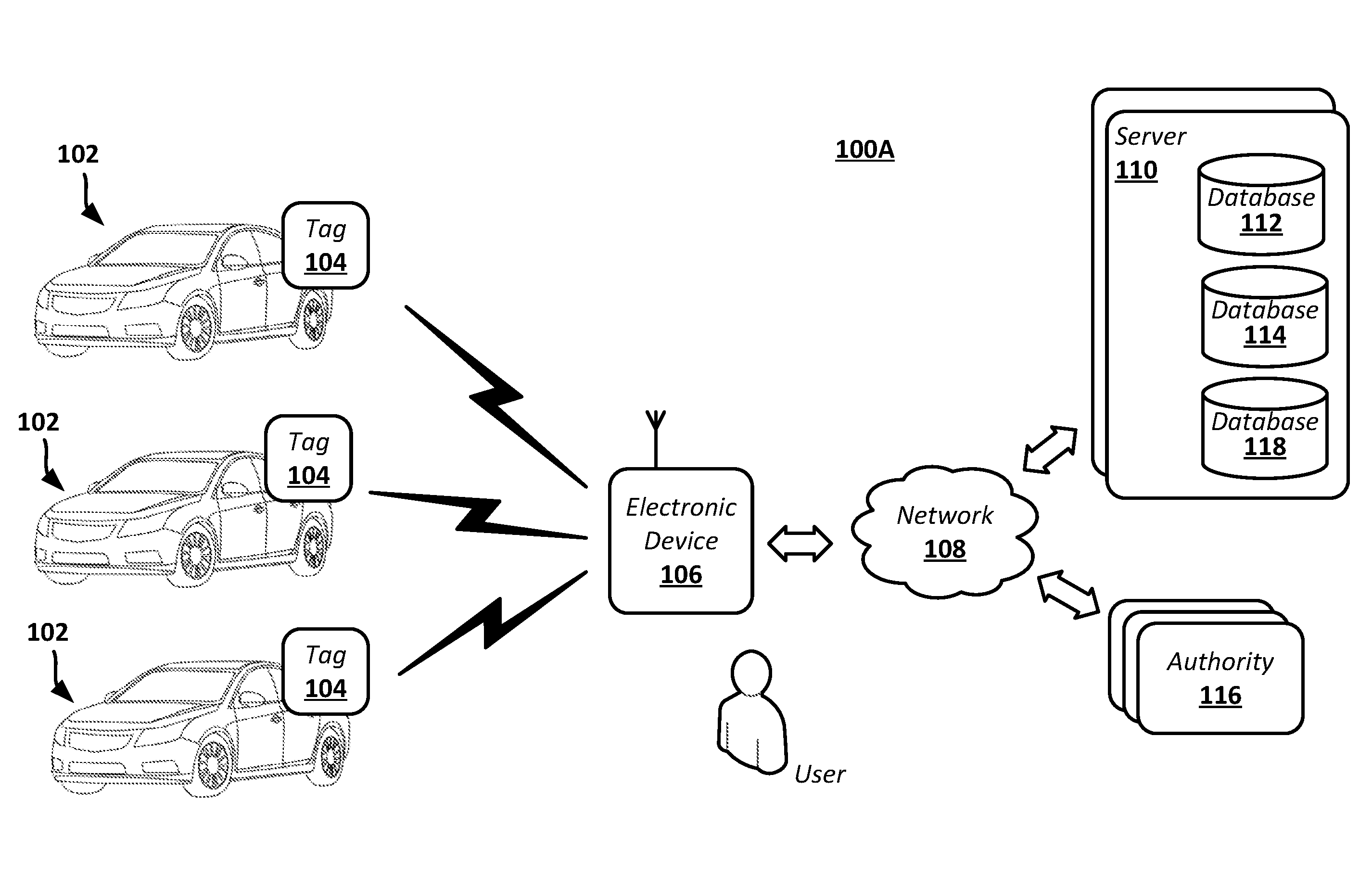
Figure 1 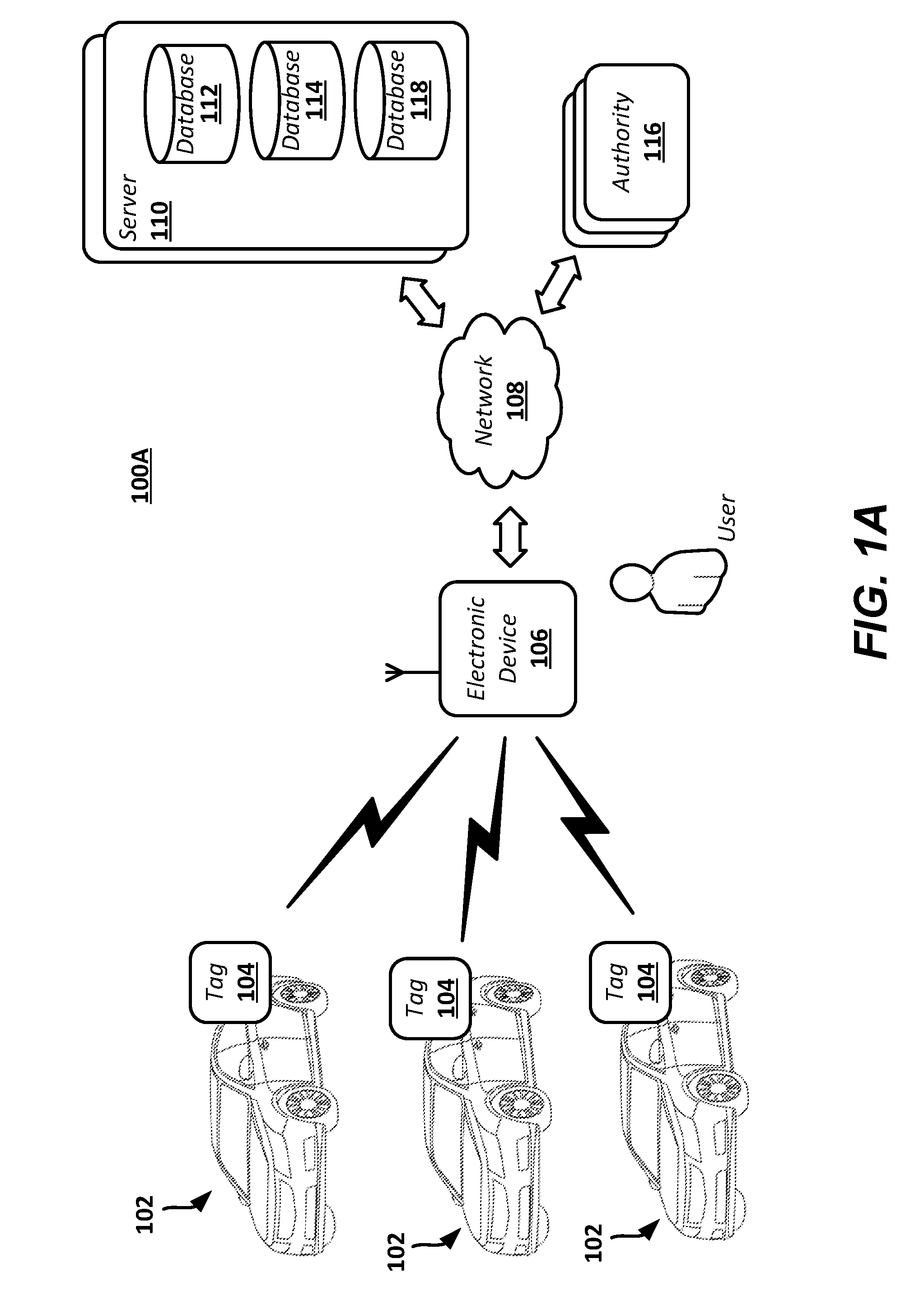
Figure 2 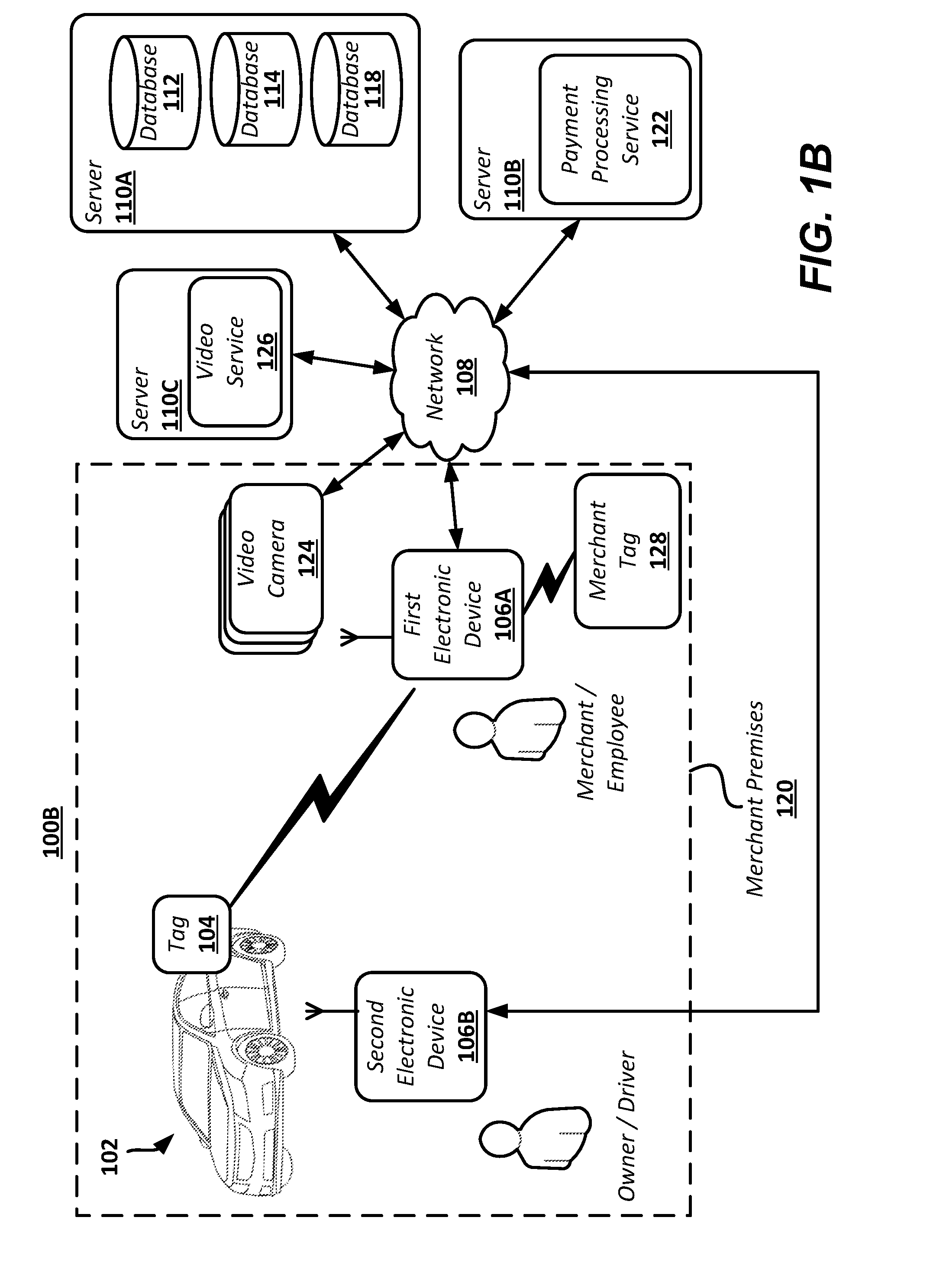
Figure 3
Abstract
Description
CROSS-REFERENCE TO RELATED APPLICATIONS
[0001] This application is a Continuation-in-Part application of U.S. utility, non-provisional patent application Ser. No. 14 / 172,025 filed Feb. 4, 2014, entitled “Remote Identification of Vehicle Status” and U.S. utility, non-provisional patent application Ser. No. 14 / 258,584 filed Apr. 22, 2014, entitled “Parking and Tollgate Payment Processing Based on Vehicle Remote Identification,” which are incorporated herein by reference in their entirety for all purposes.TECHNICAL FIELD
[0002] This disclosure relates generally to vehicle identification and, more specifically, to the wireless technology for remote identifying of vehicles and processing payments for goods or services based on the result of remote identification.DESCRIPTION OF RELATED ART
[0003] The approaches described in this section could be pursued, but are not necessarily approaches that have been previously conceived or pursued. Therefore, unless otherwise indicated herein, the approache...
Examples
Embodiment Construction
[0031]The following detailed description includes references to the accompanying drawings, which form a part of the detailed description. The drawings show illustrations in accordance with example embodiments. These example embodiments, which are also referred to herein as “examples,” are described in enough detail to enable those skilled in the art to practice the present subject matter. The embodiments can be combined, other embodiments can be utilized, or structural, logical, and electrical changes can be made without departing from the scope of what is claimed. The following detailed description is therefore not to be taken in a limiting sense, and the scope is defined by the appended claims and their equivalents. In this document, the terms “a” and “an” are used, as is common in patent documents, to include one or more than one. In this document, the term “or” is used to refer to a nonexclusive “or,” such that “A or B” includes “A but not B,”“B but not A,” and “A and B,” unless...