
User Equipment That Autonomously Selects Between Full and Half Duplex Operations
a user equipment and half-duplex technology, applied in the field of wireless communication, can solve the problems of limited battery and/or power capacity, limited link budget, reduced capabilities relative to a “normal device", etc., and achieve the effect of facilitating a half-duplex mode, greater sensitivity, and more power
Patent Information
- Authority / Receiving Office
- US · United States
- Current Assignee / Owner
- Publication Date
- 2018-01-25
Smart Images
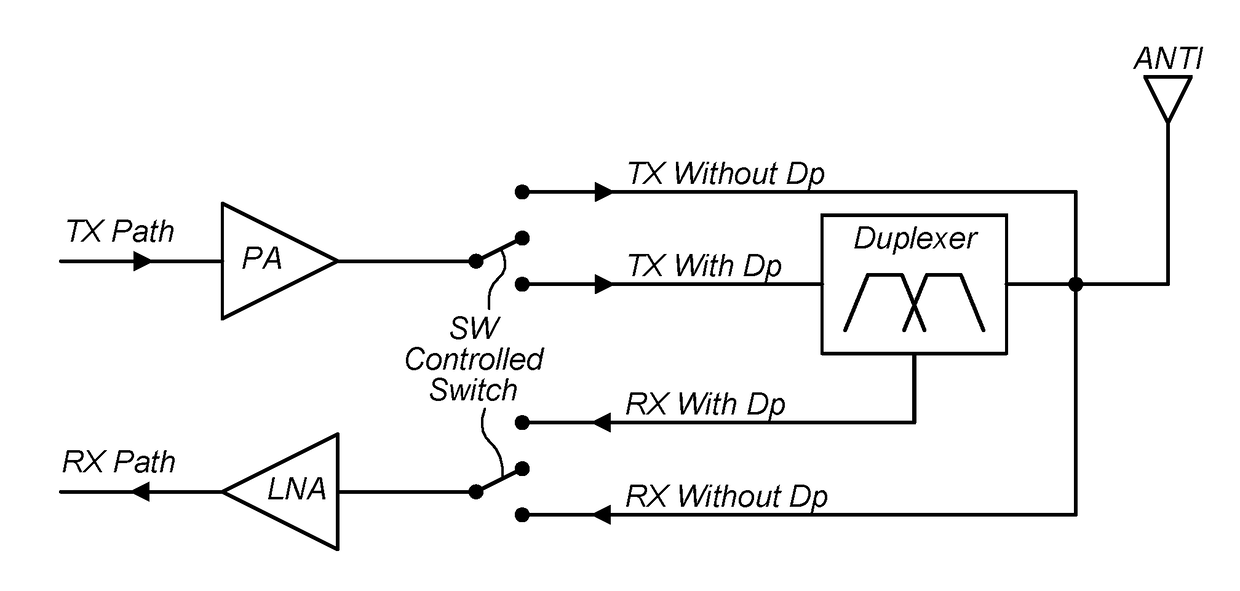
Figure 1 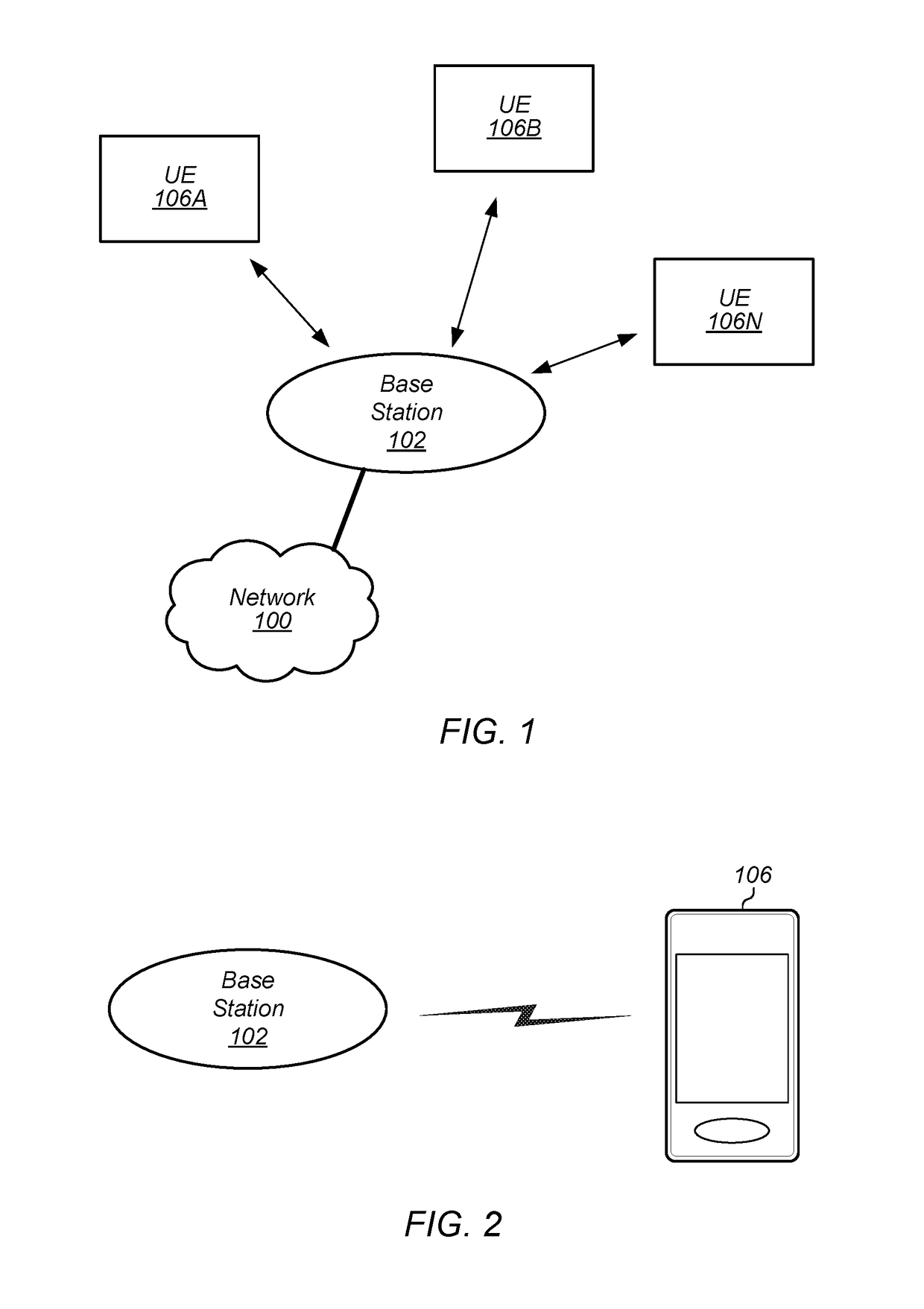
Figure 2 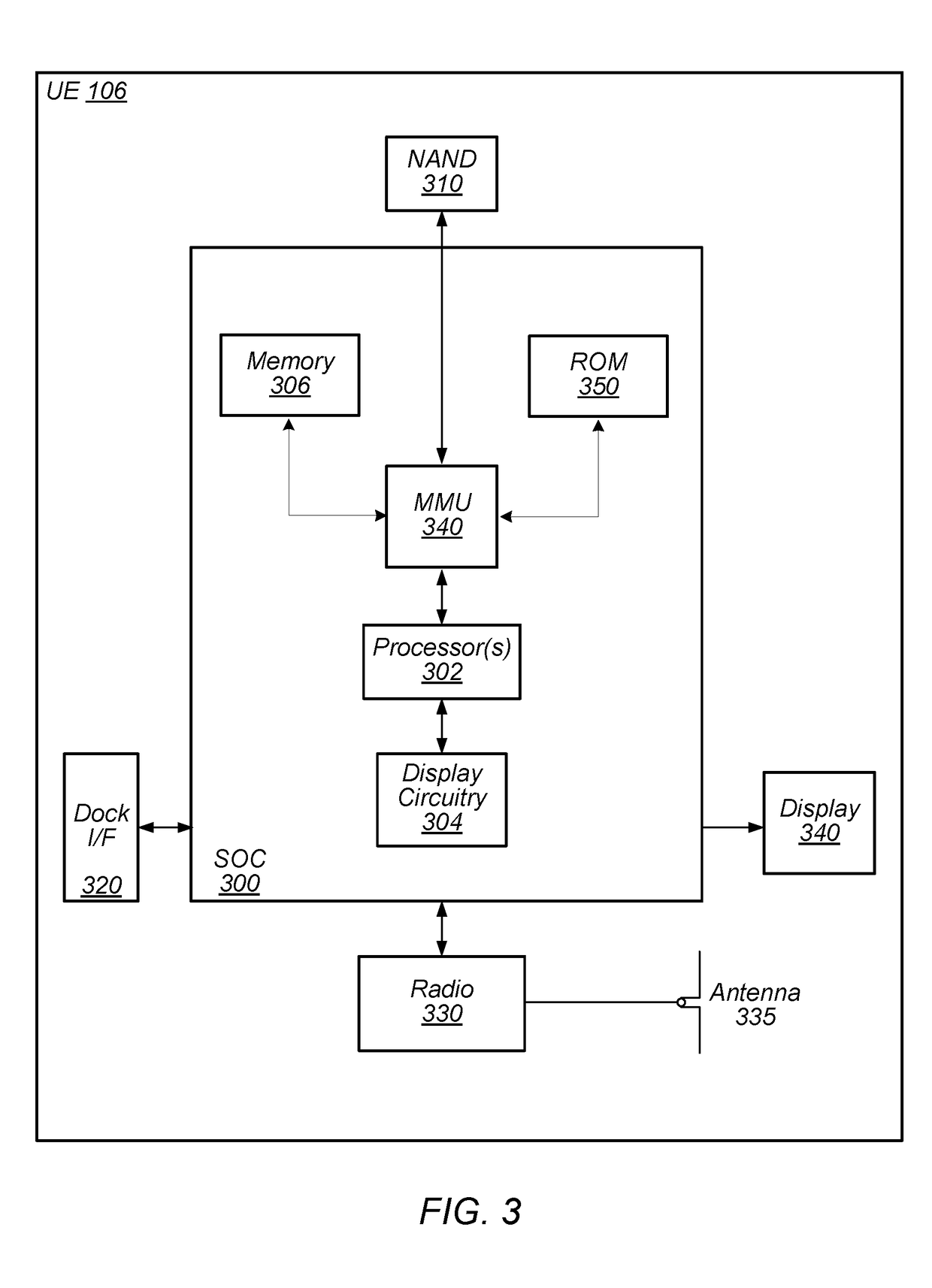
Figure 3
Abstract
Description
PRIORITY CLAIM
[0001] This application claims benefit of priority to Application No. 62 / 365,958 titled “User Equipment That Autonomously Selects Between Full and Half Duplex Operations”, filed on Jul. 22, 2016, which is hereby incorporated by reference as though fully and completely set forth herein.FIELD
[0002] The present application relates to wireless communication, and more particularly, to a user equipment (UE) that autonomously selects between full and half-duplex operations in a radio access technology such as FDD-LTE.DESCRIPTION OF THE RELATED ART
[0003] Wireless communication systems are rapidly growing in usage. Additionally, there exist numerous different wireless communication technologies and standards. Some examples of wireless communication standards include GSM, UMTS (WCDMA, TDS-CDMA), LTE, LTE Advanced (LTE-A), HSPA, 3GPP2 CDMA2000 (e.g., 1×RTT, 1×EV-DO, HRPD, eHRPD), IEEE 802.11 (WLAN or Wi-Fi), IEEE 802.16 (WiMAX), Bluetooth, etc.
[0004] A device that is link budget limi...
Examples
Embodiment Construction
Acronyms
[0020]Various acronyms are used throughout the present application. Definitions of the most prominently used acronyms that may appear throughout the present application are provided below:
[0021]UE: User Equipment
[0022]BS: Base Station
[0023]DL: Downlink (from BS to UE)
[0024]UL: Uplink (from UE to BS)
[0025]FDD: Frequency Division Duplexing
[0026]TDD: Time Division Duplexing
[0027]GSM: Global System for Mobile Communication
[0028]LTE: Long Term Evolution
[0029]TX: Transmission
[0030]RX: Reception
[0031]UMTS: Universal Mobile Telecommunication System
[0032]LAN: Local Area Network
[0033]WLAN: Wireless LAN
[0034]RAT: Radio Access Technology
Terminology
[0035]The following is a glossary of terms used in this disclosure:
[0036]Memory Medium—Any of various types of non-transitory memory devices or storage devices. The term “memory medium” is intended to include an installation medium, e.g., a CD-ROM, floppy disks, or tape device; a computer system memory or random access memory such as DRAM, DDR...