
Three-dimensional imaging system
Patent Information
- Authority / Receiving Office
- US · United States
- Current Assignee / Owner
- Publication Date
- 2018-03-29
Smart Images
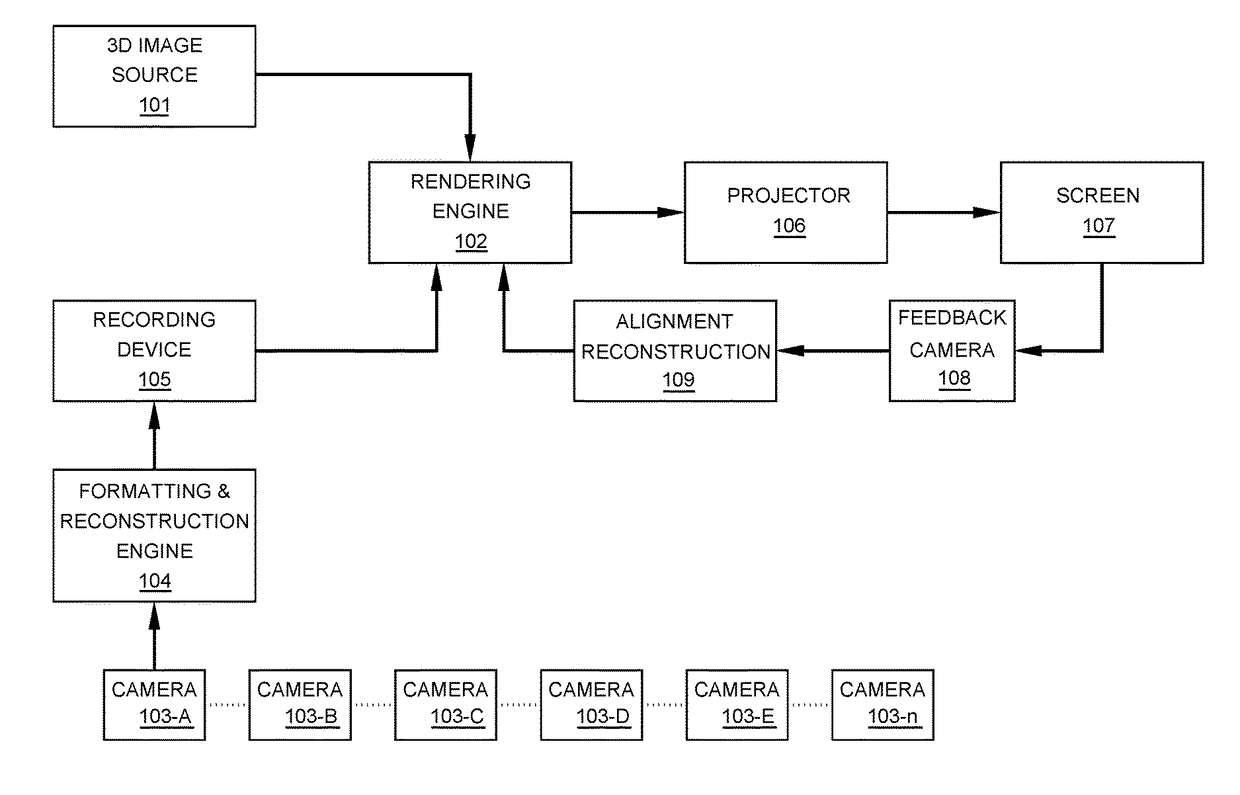
Figure 1 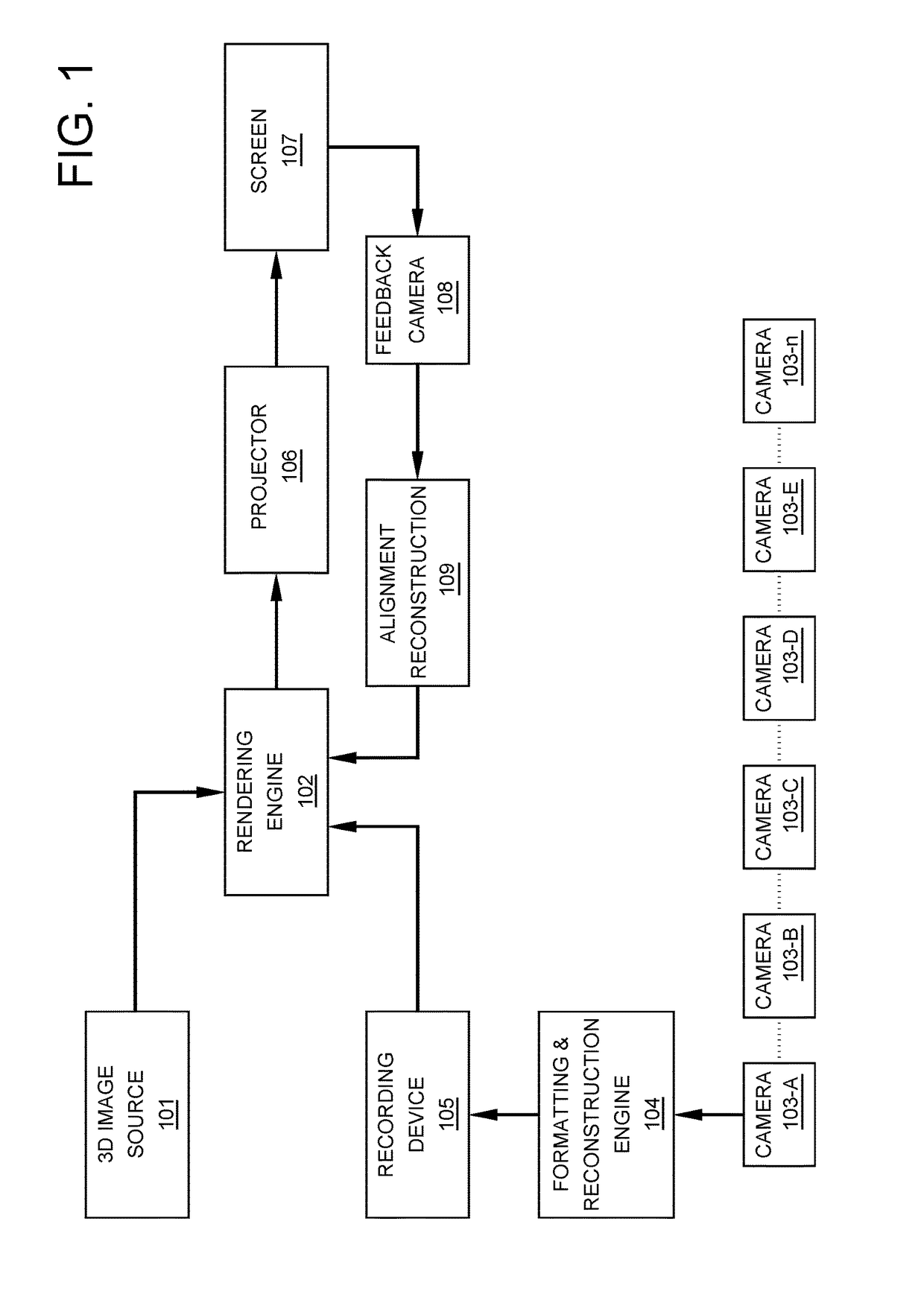
Figure 2 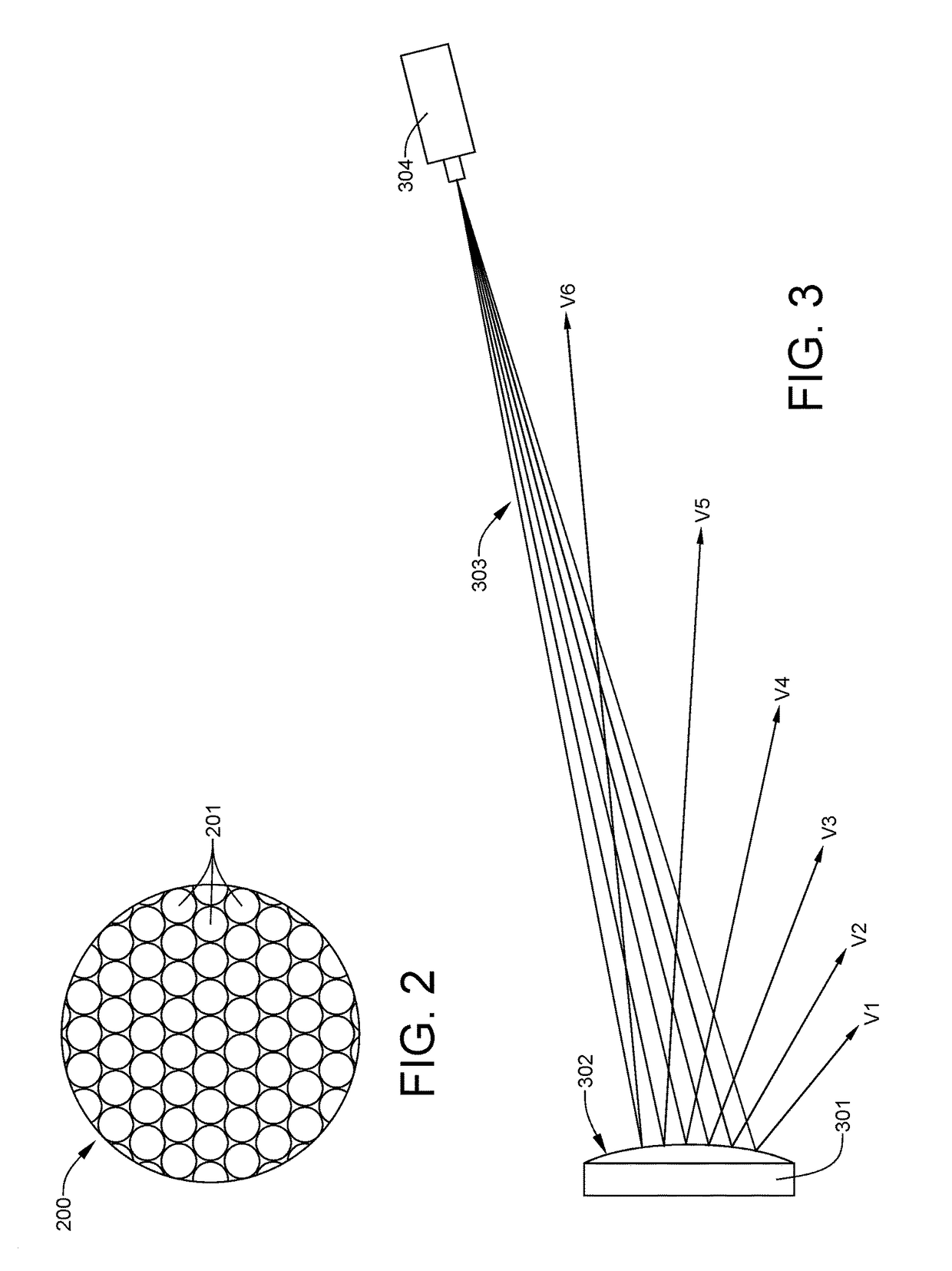
Figure 3
Abstract
Description
RELATED APPLICATIONS
[0001] This application claims a priority date of Sep. 29, 2016, based on the filing of the identically-titled provisional patent application No. 62 / 401,456.FIELD OF THE INVENTION
[0002] The present invention relates to projection screens and, m ore particularly, to projection screens capable of displaying three-dimensional images.BACKGROUND OF THE INVENTION
[0003] This focus of this invention is the simulation of three-dimensional images on a display screen. Traditional three-dimensional simulation requires each viewer to wear glasses that separate left and right eye images. There are at least two drawbacks to this traditional approach. The first is that the glasses reduce the image brightness. The second is that the glasses approach discriminates against persons having monocular vision. Whereas those having monocular vision can obtain a three-dimensional perspective of the world around them by movement within their environment, simulation of three-dimensional images...
Examples
Embodiment Construction
[0053]The present invention provides a novel way of simulating three-dimensional images on a display screen without the need for a viewer to wear image-splitting glasses. Although it incorporates elements of both lenticular printing and holography, it is likely best characterized as a super set of lenticular printing. The invention can be used to portray both individual three-dimensional photographs or three-dimensional movies. Given that the manufacturing methods for monitors, projectors, DLP® imaging systems, and other displays is likely to continue to produce improved resolutions with time, it will become practical to use lensing systems to reflect or refract small collections of pixels at various angles to produce 3D “holographic” screens and display systems. The effective image resolution is reduced from the native screen resolution, but to the extent that the native resolutions are unnecessarily high for human viewing, spatial (angular) resolution can be improved or “traded of...