
Method and apparatus for neuroenhancement
a neuroenhancement and neuroenhancement technology, applied in the field of neuroenhancement, can solve problems such as time delay between brainwave acquisition and acquisition
Patent Information
- Authority / Receiving Office
- US · United States
- Current Assignee / Owner
- Publication Date
- 2019-03-21
Smart Images
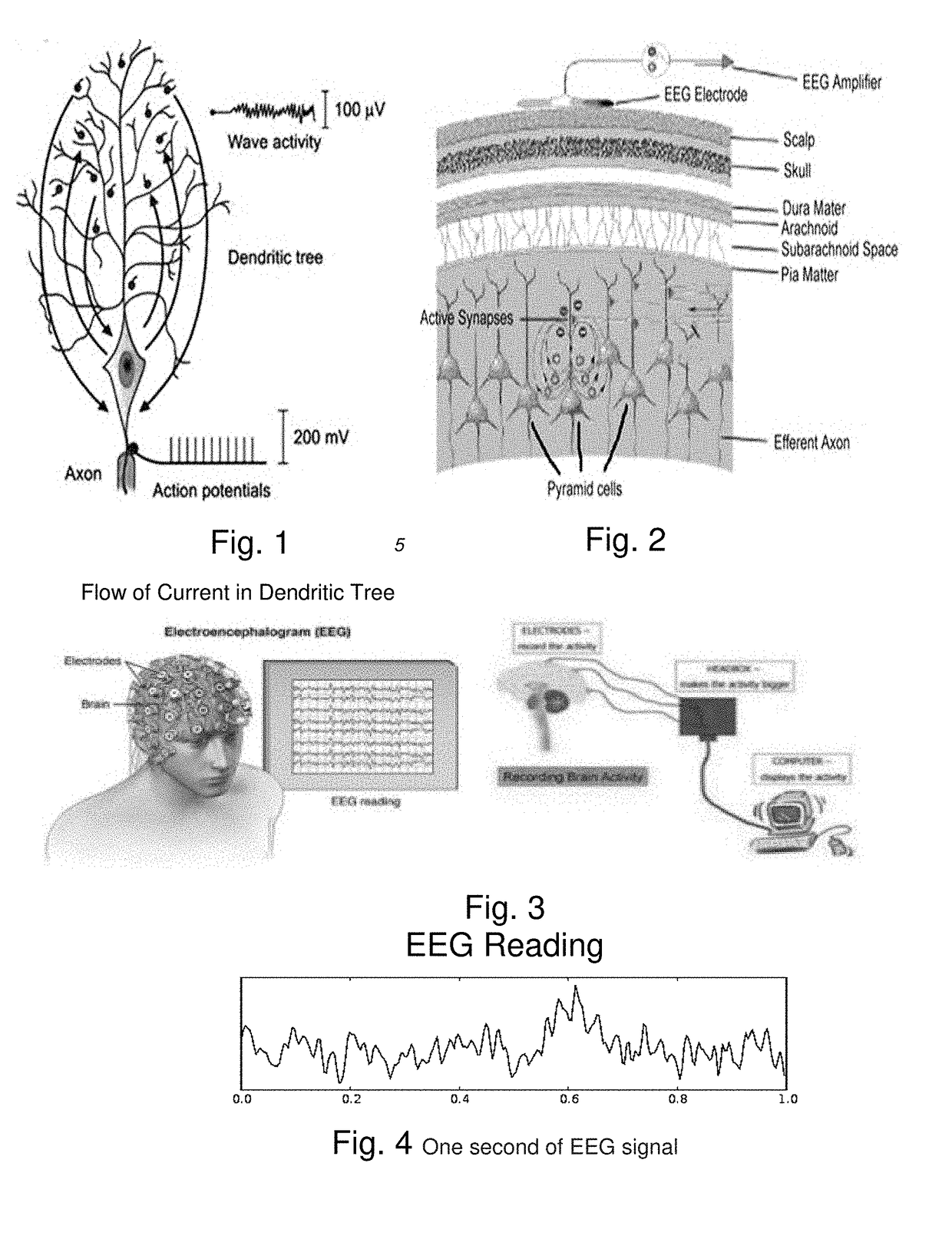
Figure 1 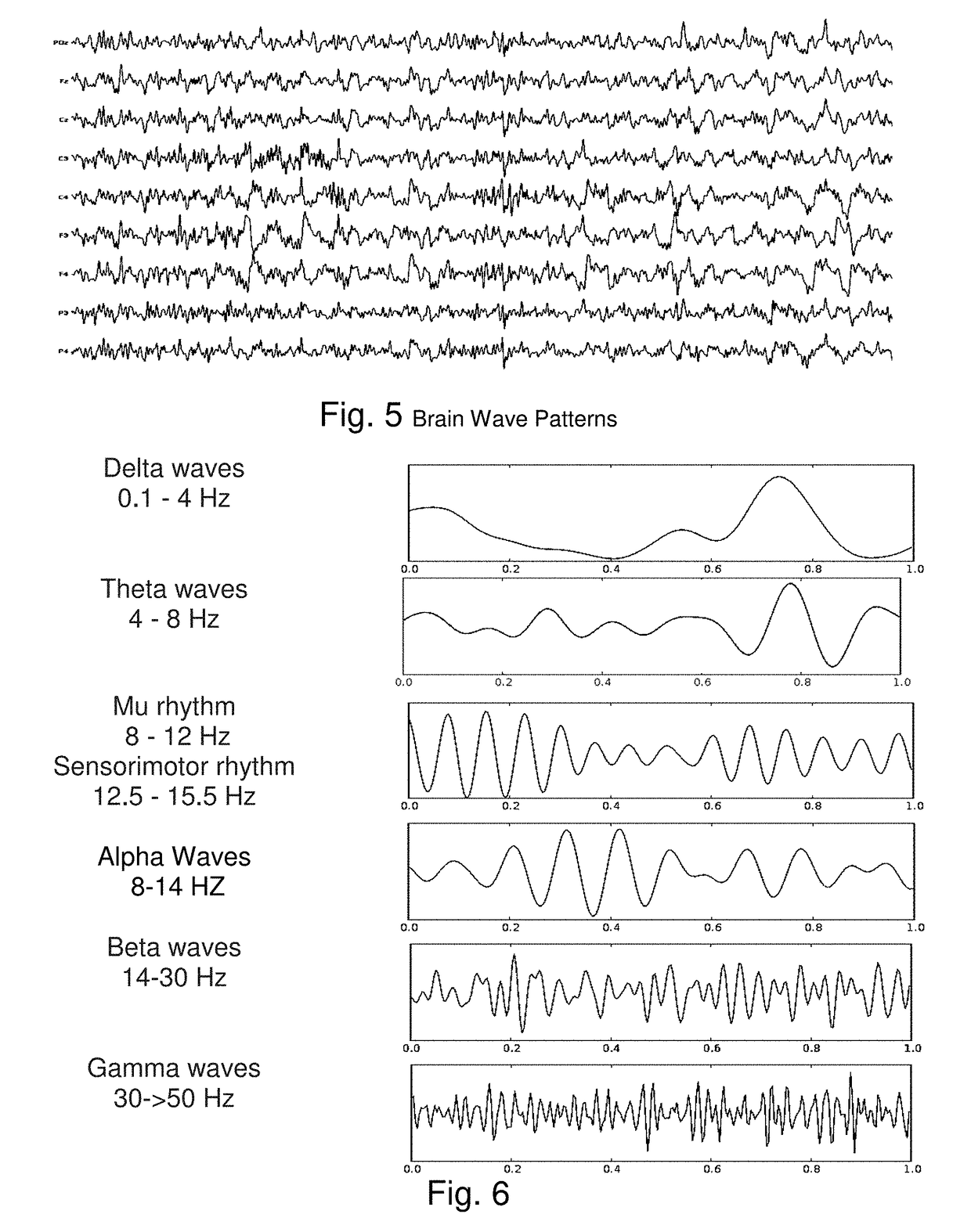
Figure 2 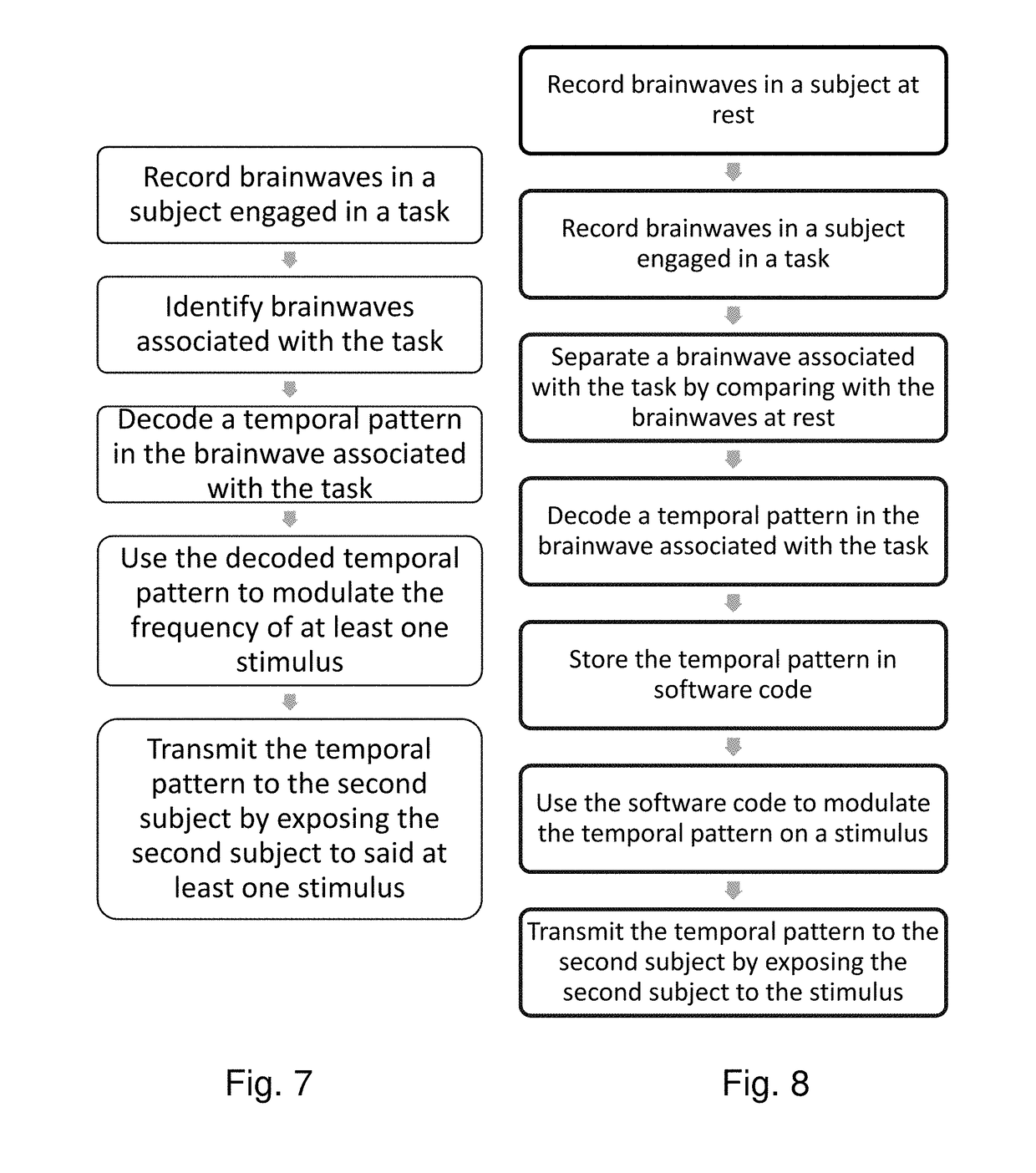
Figure 3
Abstract
Description
CROSS REFERENCE TO RELATED APPLICATIONS
[0001] The present application claims benefit of priority from U.S. Provisional Application No. 62 / 560,502, filed Sep. 19, 2017, and from U.S. Provisional Application No. 62 / 568,610, filed Oct. 5, 2017, and from U.S. Provisional Application No. 62 / 594,452, filed Dec. 4, 2017, each of which is expressly incorporated herein in its entirety, including any references cited therein. Each reference and document cited herein is expressly incorporated herein by reference in its entirety, for all purposes.FIELD OF THE INVENTION
[0002] The present invention generally relates to the field of neuroenhancement and more specifically to systems and methods for determining brain activity patterns corresponding to tasks, and inducing brain activity patterns of the desired type in a subject through, inter alia, brain entrainment.BACKGROUND OF THE INVENTION
[0003] Brain—The brain is a key part of the central nervous system, endosed in the skull. In humans, and mammals...
Examples
example 1
[0724]We record EEG of a concert pianist while the pianist is playing a particular piece (e.g., Beethoven sonata); then decode the dynamic spatial and / or temporal patterns of the EEG and encode them in software. If a music student wants to learn this particular Beethoven sonata, we use the software with an encoded dynamic temporal pattern to drive “smart bulbs” or another source of light while the student is learning to play this piece from the music sheet. The result is accelerated learning. See FIG. 1.
example 2
[0725]We record EEG of a martial art master while performing a particular move (say Karate or Kong Fu), decode the dynamic spatial and temporal patterns of the EEG and encode them in software. If a karate student wants to learn this particular move, we use the software with an encoded temporal pattern to drive smart bulbs or another source of light while the student is practicing this move. The result is accelerated learning. FIG. 2 represents an embodiment of the invention as applied to learning a drawing task, which is representative of various motor skills.
example 3
[0726]A person is reading a book, and during the course of the reading, brain activity, including electrical or magnetic activity, and optionally other measurements, as acquired. The data is processed to determine the frequency and phase, and dynamic hanges of brainwave activity, as well as the spatial location of emission. Based on a brain model, a set of non-invasive stimuli, which may include any and all senses, magnetic nerve or brain stimulation, ultrasound, etc., is devised for a subject who is to read or learn the same book. The subject is provided with the book to read, and the stimuli are presented to the subject synchronized with the progress through the book. Typically, the book is presented to the subject through an electronic reader device, such as a computer or computing pad, to assist in synchronization. The same electronic reader device may produce the temporal pattern of stimulation across the various stimulus modalities. The result is speed reading and improved com...