
Streaming virtual reality video
a virtual reality and video technology, applied in the field of streaming virtual reality vr video, can solve the problems of large bandwidth requirements, stream may place a large burden on the access network, and streaming may even be impossible at all
Patent Information
- Authority / Receiving Office
- US · United States
- Patent Type
- Applications(United States)
- Current Assignee / Owner
- Publication Date
- 2019-11-28
- Estimated Expiration
- Not applicable · inactive patent
Smart Images
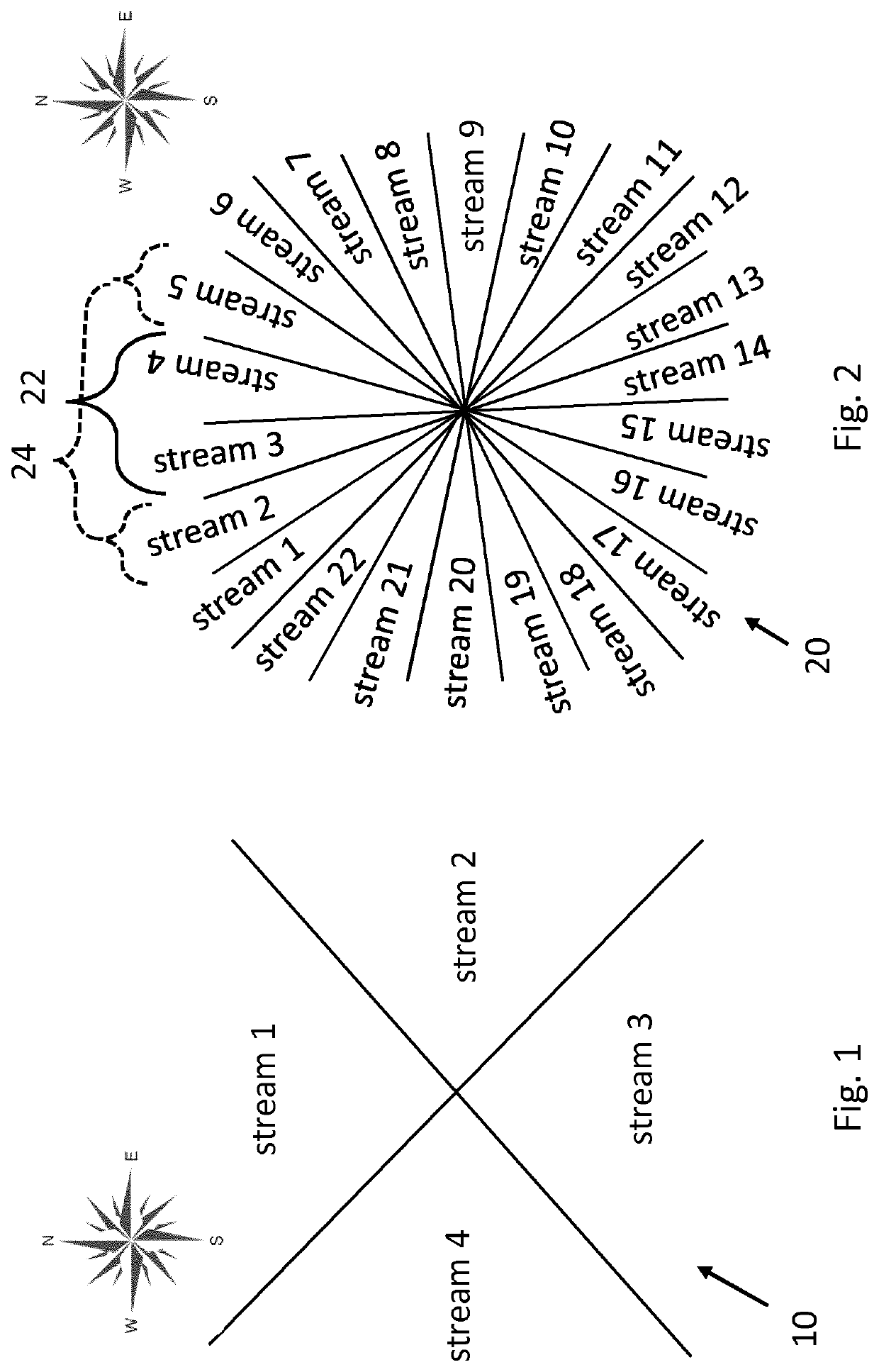
Figure 1 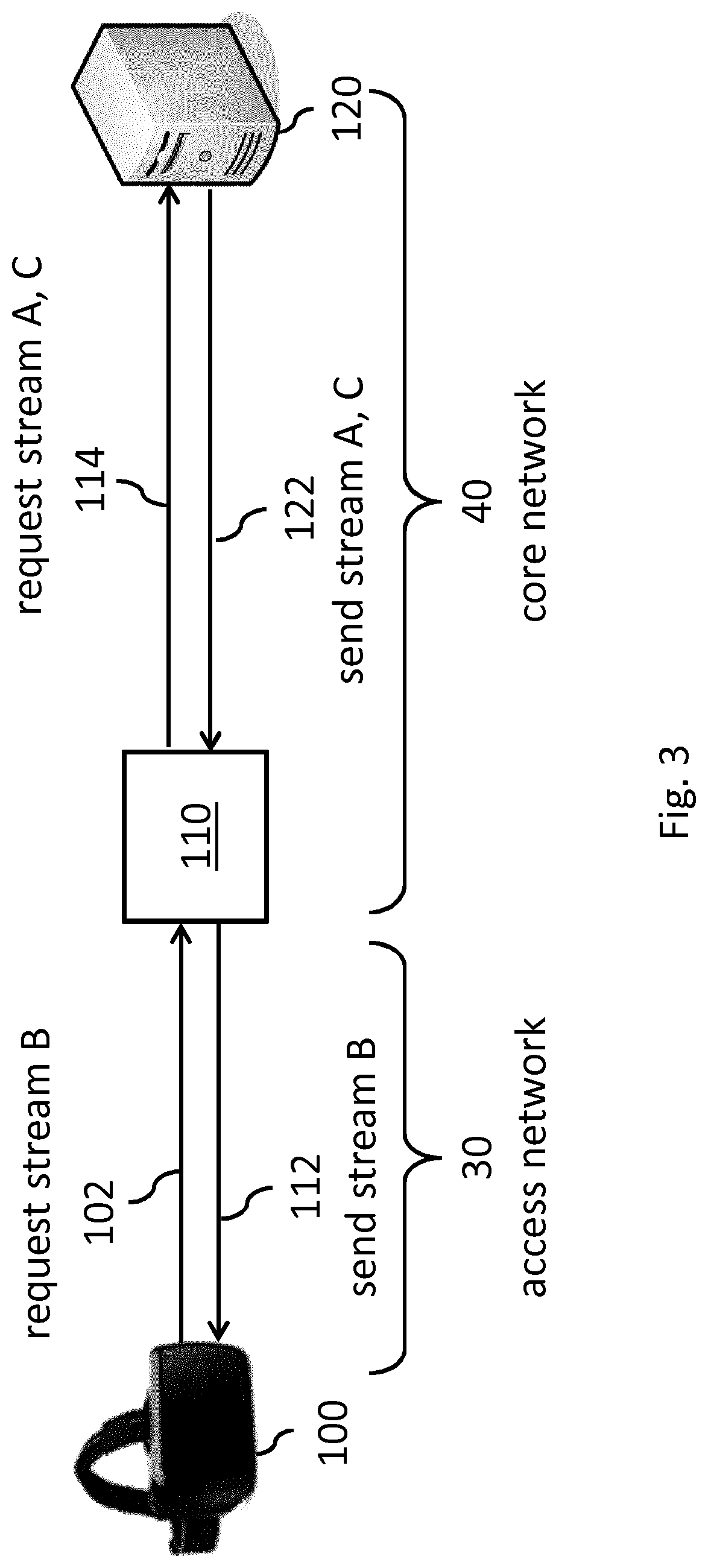
Figure 2 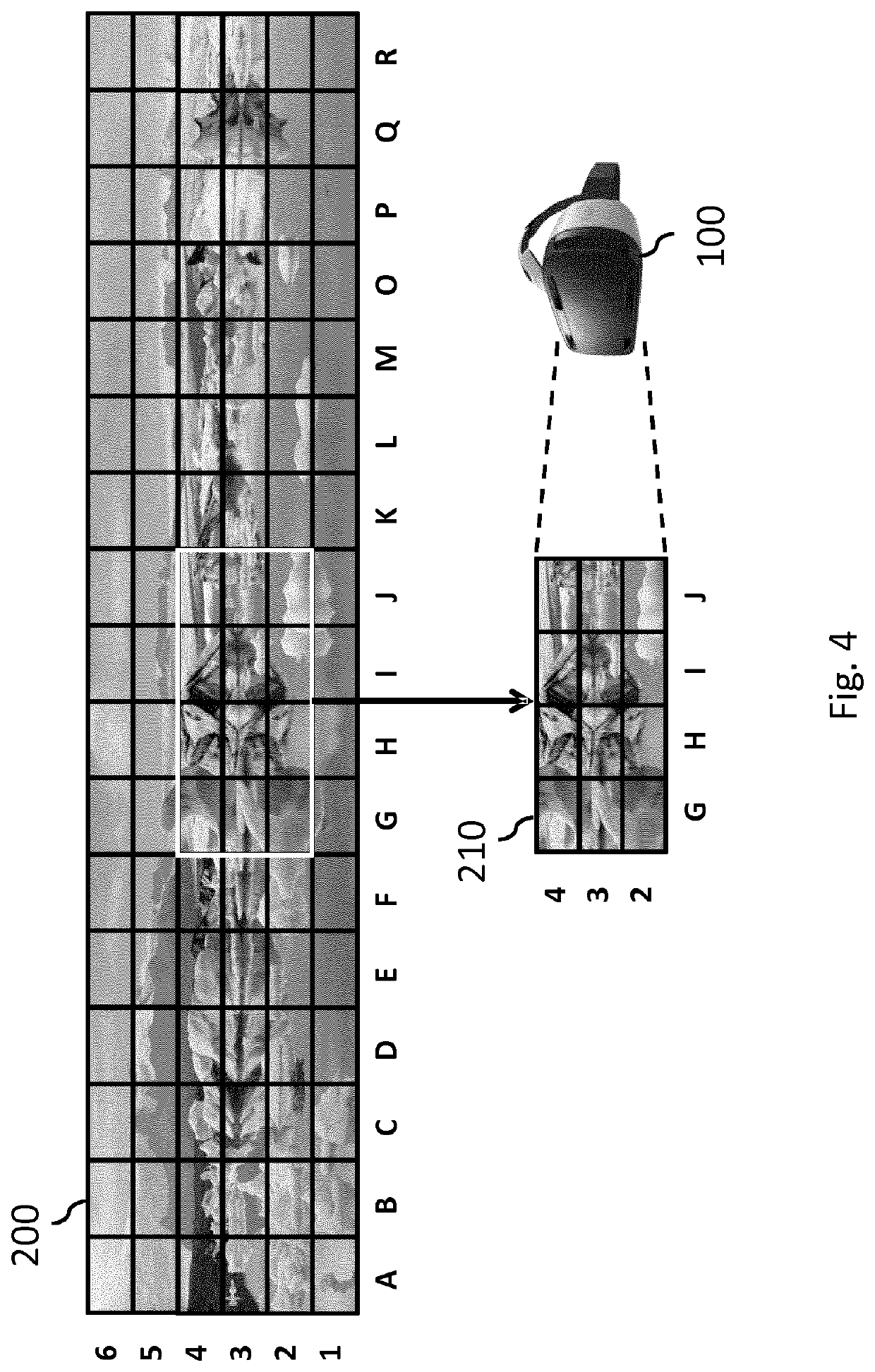
Figure 3
Abstract
Description
FIELD OF THE INVENTION
[0001] The invention relates to a method of streaming Virtual Reality [VR] video to a VR rendering device. The invention further relates to a computer program comprising instructions for causing a processor system to perform the method, to the VR rendering device, and to a forwarding node for use in the streaming of the VR video.BACKGROUND ART
[0002] Virtual Reality (VR) involves the use of computer technology to simulate a user's physical presence in a virtual environment. Typically, VR rendering devices make use of Head Mounted Displays (HMD) to render the virtual environment to the user, although other types of VR displays and rendering techniques may be used as well, including but not limited to holography and Cave automatic virtual environments.
[0003] It is known to render VR video using such VR rendering devices, e.g., a video that is suitable for being played-out by a VR rendering device. The VR video may provide a panoramic view of a scene, with the term ‘p...
Examples
Embodiment Construction
[0161]The following describes several embodiments of streaming a VR video to a VR rendering device. The VR video may be represented by a plurality of streams each providing different image data of a scene. The embodiments involve the VR rendering device rendering, or seeking to render, a selected view of a scene on the basis of a first subset of a plurality of streams. In response, a second subset of streams which provides spatially adjacent image data may be cached in a network cache.
[0162]In the following, the VR rendering device may simply be referred to as ‘receiver’ or ‘client’, a stream source may simply be referred to as ‘server’ or ‘delivery node’ and a network cache may simply be referred to as ‘cache’ or ‘delivery node’.
[0163]The image data representing the VR video may be 2D image data, in that the canvas of the VR video may be represented by a 2D region of pixels, with each stream representing a different sub-region or different representation of the 2D region. However, ...