
Treatment of cd20-positive b-cell lymphoma with obituzumab
a technology of cd20-positive b-cell lymphoma and obituzumab, which is applied in the direction of antibody medical ingredients, drug compositions, peptides, etc., can solve the problems of increased risk of infusion related reactions (irrs) mediated by cytokine release, the need for long observation times, and the increase of nursing and administration staff workload, so as to improve the efficiency of healthcare facilities and staff time, the effect of long observation
Patent Information
- Authority / Receiving Office
- US · United States
- Patent Type
- Applications(United States)
- Current Assignee / Owner
- Publication Date
- 2020-09-24
Smart Images
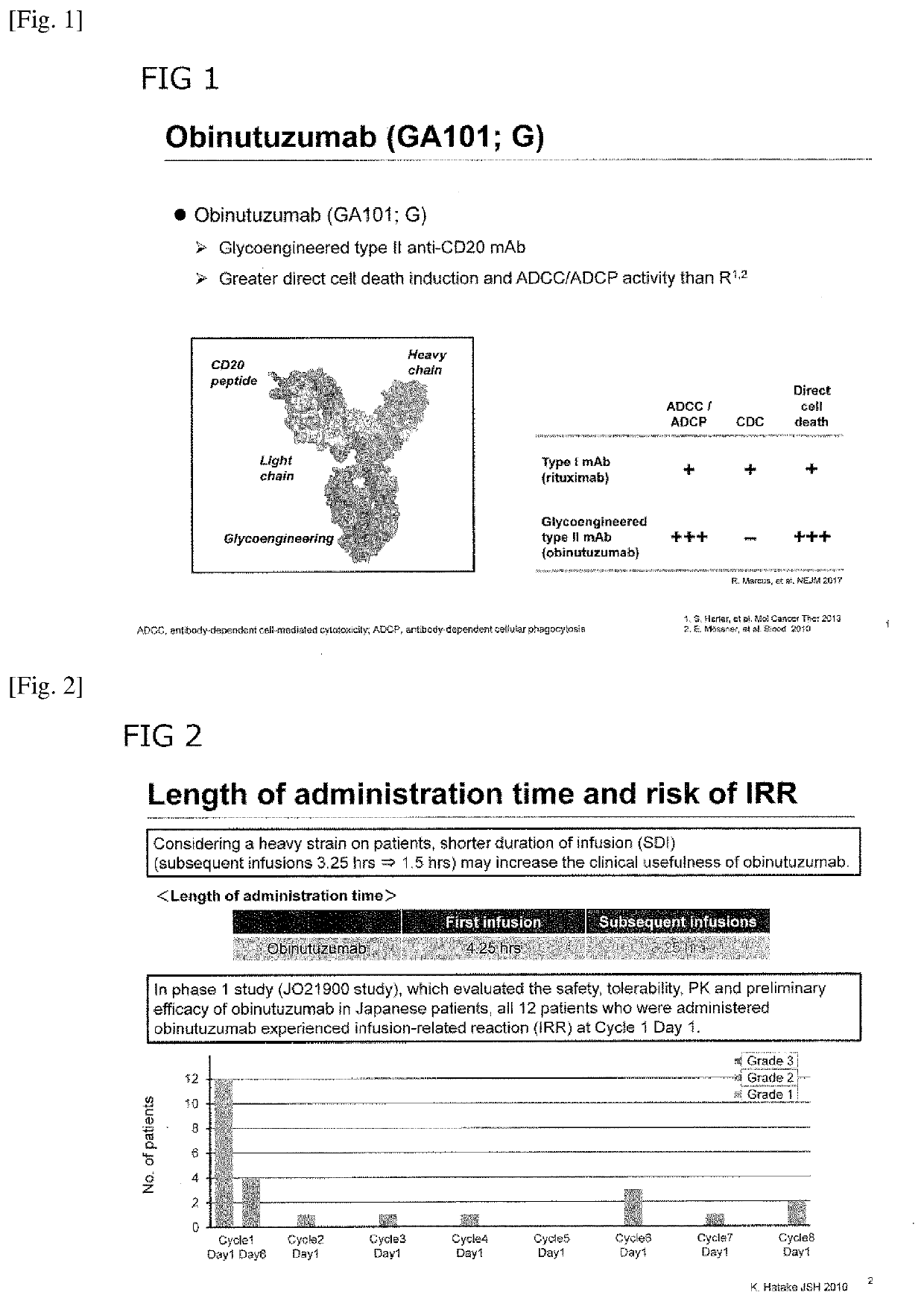
Figure 1 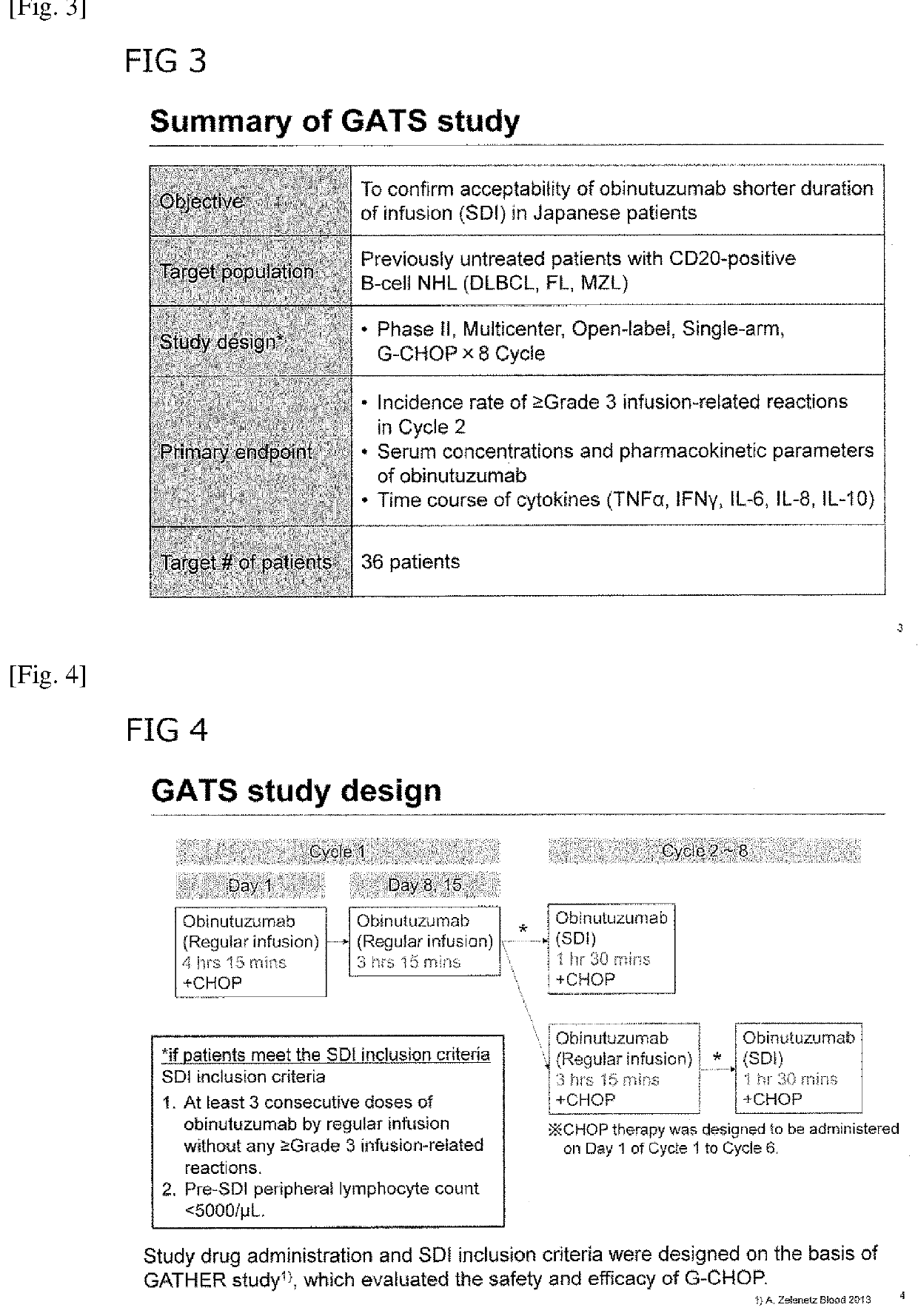
Figure 2 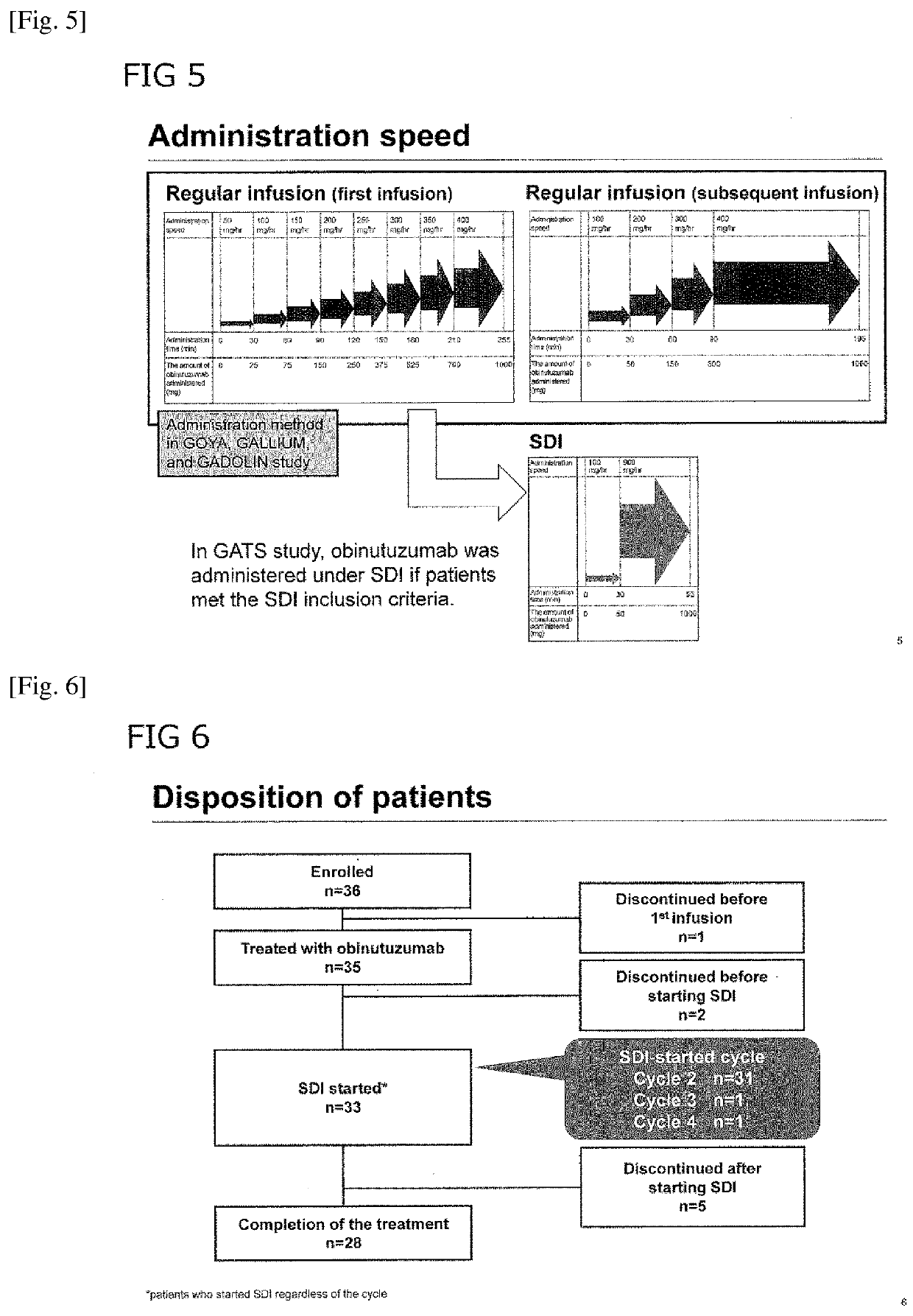
Figure 3
Abstract
Description
TECHNICAL FIELD
[0001] The present invention relates to administration speed of obinutuzumab.BACKGROUND ART
[0002] Obinutuzumab is a glycoengineered, type II anti-CD20 monoclonal antibody indicated for the treatment of B-cell malignancies. It differs from its predecessor rituximab by having lower complementdependent cytotoxicity but enhanced antibody-dependent cytotoxicity and direct B-cell death (NPL1-3, FIG. 1). In the phase III GALLIUM trial, which compared chemotherapy combined with either obinutuzumab or rituximab followed by anti-CD20 antibody maintenance therapy, obinutuzumab-based immunochemotherapy resulted in a clinically meaningful improvement in pro-gression-free survival in patients with previously untreated follicular lymphoma (FL) (NPL4, 5). Obinutuzumab plus bendamustine followed by obinutuzumab maintenance also improved efficacy over bendamustine monotherapy in rituximab-refractory patients with indolent B-cell non-Hodgkin lymphoma (NHL) in the phase III GADOLIN study (...
Examples
examples
[0111]
[0112]Title: Safety and tolerability of obinutuzumab (GA101) SDI in Japanese non hodgkin's lymphoma patient
[0113]Background: Obinutuzumab (GA101, G) is a novel anti-CD20 monoclonal antibody.
[0114]G-based immunochemotherapy resulted in a clinically meaningful improvement in progression-free survival (PFS) in patients (pts) with follicular lymphoma (FL) (ASH 2016, #6). Regular infusion (RI) of G takes approx. 3-4 hrs. Shortening the duration of administration may be more convenient for pts.
[0115]Methods: The GATS study (JapicCTI-152848) included pts with previously untreated CD20-positive B-cell non-Hodgkin's lymphoma. Treatment consisted of 8 cycles (C) of G, plus CHOP on C1-C6 (with additional G on Days 8 and 15 of C1). SDI was conducted from C2, with infusion of G over 90 min. The primary endpoints were tolerability of SDI, pharmacokinetics (PK), and cytokine release. Tolerability was assessed by incidence of infusion-related reactions (IRRs).
[0116]Results: Of 36 pts enrolled...