
Artificial intelligence based perceptual video quality assessment system
a video quality and assessment system technology, applied in the field of artificial intelligence based perceptual video quality assessment system, can solve the problems of unicast system not being able to evaluate the video quality at their local data centre (mec), single point user and providing to that endpoint unswervingly, and unable to retrieve real-time feedback on the perceptual quality of the video, etc., to achieve the effect of facilitating the performing of video quality evaluation, maintaining accuracy and throughput, and high accuracy
Patent Information
- Authority / Receiving Office
- US · United States
- Patent Type
- Applications(United States)
- Current Assignee / Owner
- Publication Date
- 2021-07-29
Smart Images
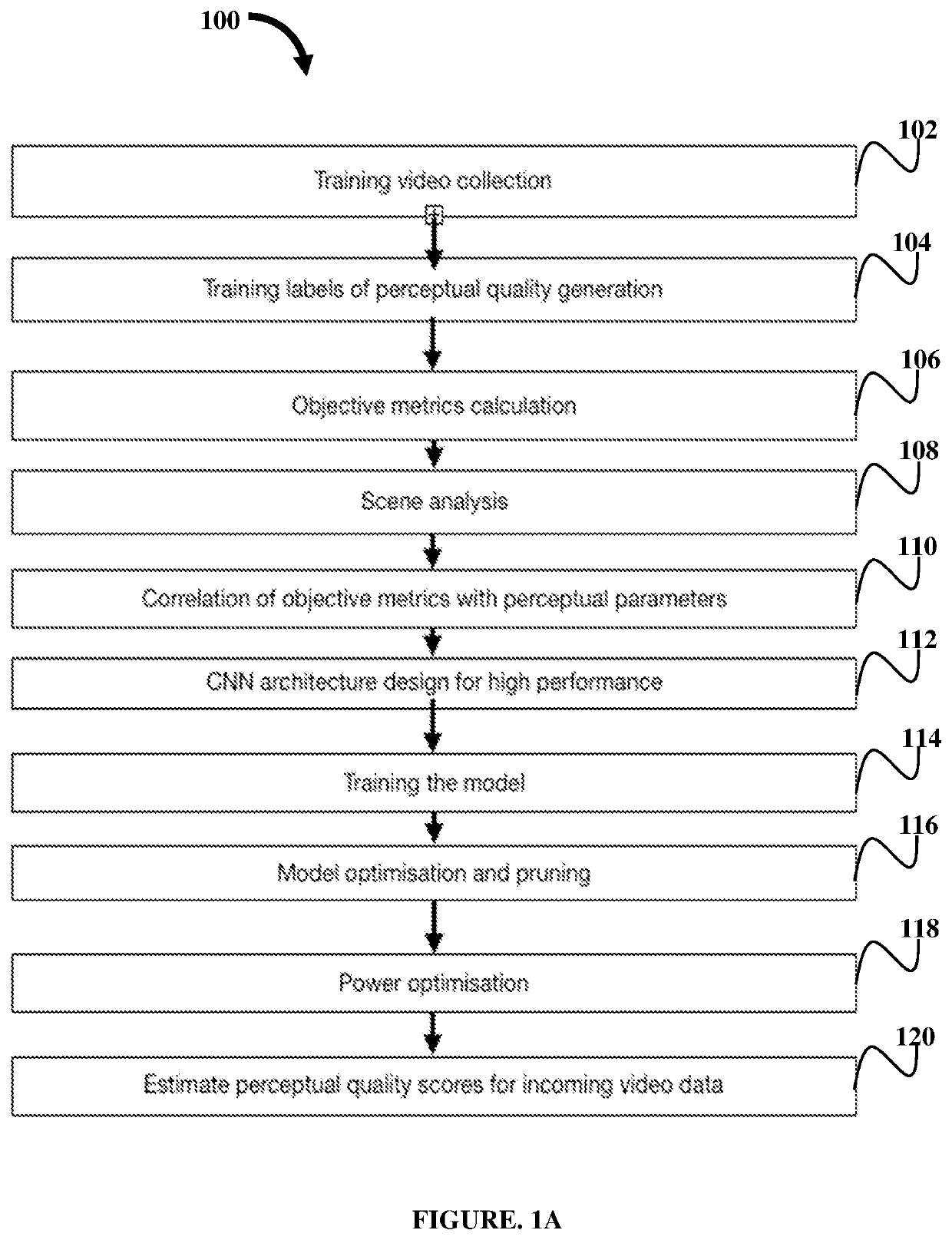
Figure 1 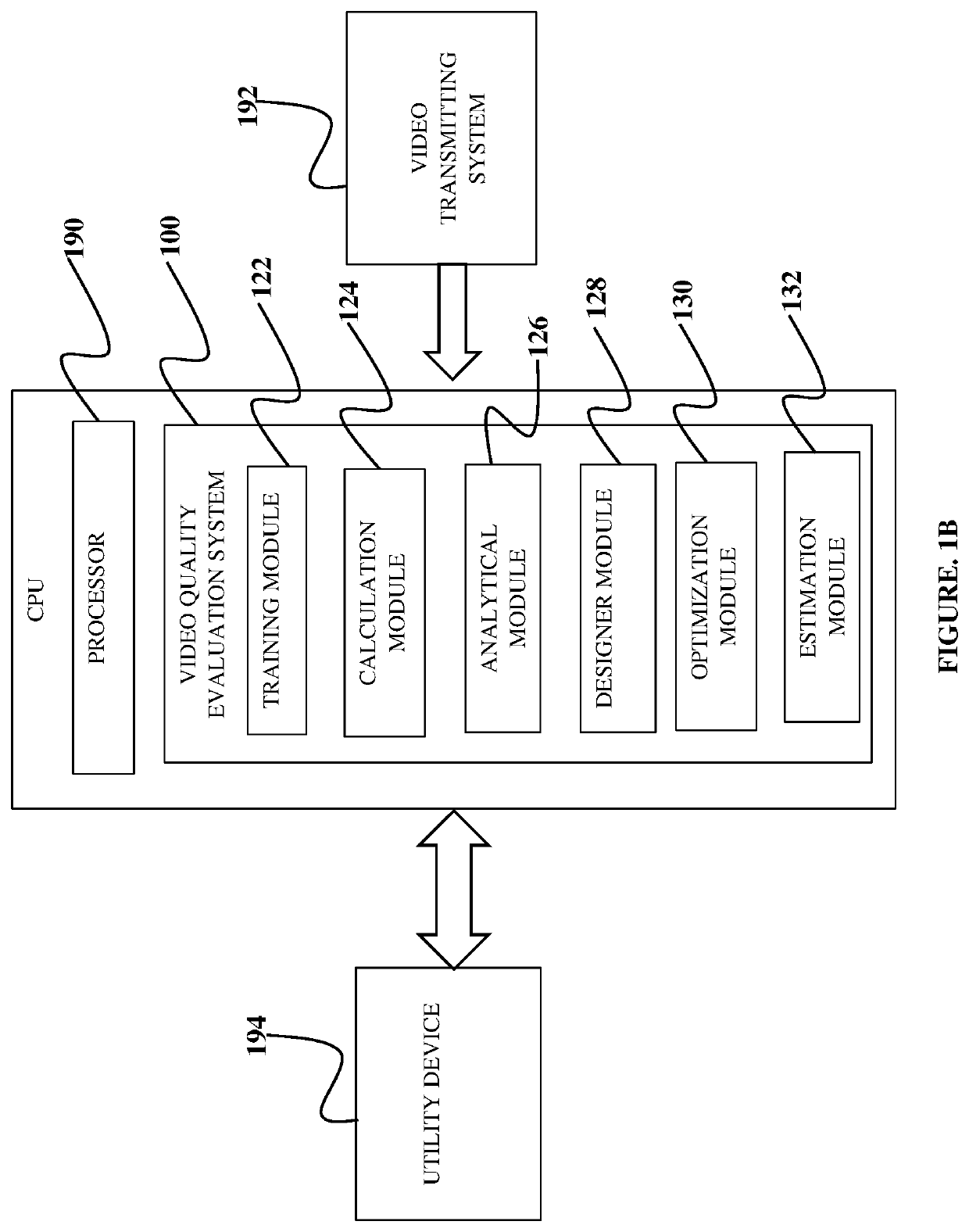
Figure 2 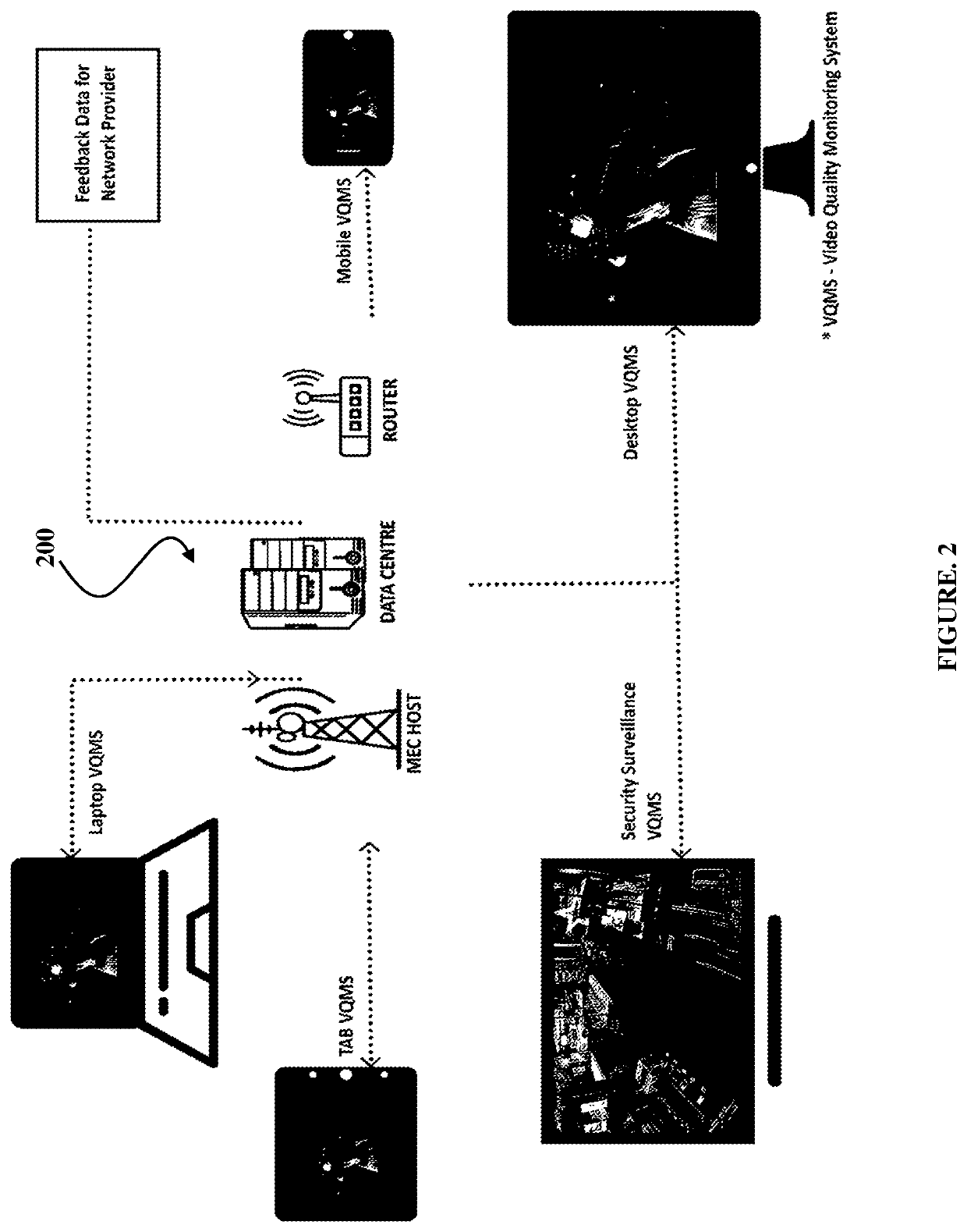
Figure 3
Abstract
Description
FIELD OF THE INVENTION
[0001] The present invention relates to an artificial intelligence (AI) based perceptual video quality assessment system. More particularly, the present invention relates to a perceptual video quality assessment system that provides a real time feedback that informs a service provider regarding the perceptual quality of the video rendered on the devices of the end user, which eventually leads to an accurate evaluation of the real time video quality experience by the end user.BACKGROUND OF THE INVENTION
[0002] Video broadcasting is a currently one of the main means of communication which demands a high level of research in terms of data transfer, bit rate speed, video clarity, etc. There are different modes or use cases where video broadcasting is being utilized, namely, Video broadcasting system (Multicast), OTT Platforms-(Unicast), Telecom (5G), Security and Surveillance, Game streaming, etc. In the case of Multicast method network providers can get the real time...
Examples
Embodiment Construction
[0019]The present invention is directed to a perceptual video quality assessment system that provides a real time feedback that tells the service provider about perceptual quality of the video rendered on the devices of the end user, eventually leading to an accurate evaluation of the real time video quality experience by the end user.
[0020]FIG. 1A shows a flow diagram of the different steps involved in the video quality evaluation system 100, according to an exemplary embodiment, and FIG. 1B shows a schematic diagram that shows the different modules involved in the video quality evaluation system 100, according to an exemplary embodiment. Based on FIG. 1B, the video transmission is considered between the video transmitting system 192 and the utility device 194. The video transmitting system 192 comprises, for example, the MEC host, data centre, and the router as shown in FIG. 2. The utility devices 194 include, for example, the laptop, TAB, security surveillance, desktop, and mobil...