
Catalytic converter and method for manufacture thereof
Patent Information
- Authority / Receiving Office
- US · United States
- Current Assignee / Owner
- Publication Date
- 2006-04-25
- Estimated Expiration
- Not applicable · inactive patent
Smart Images
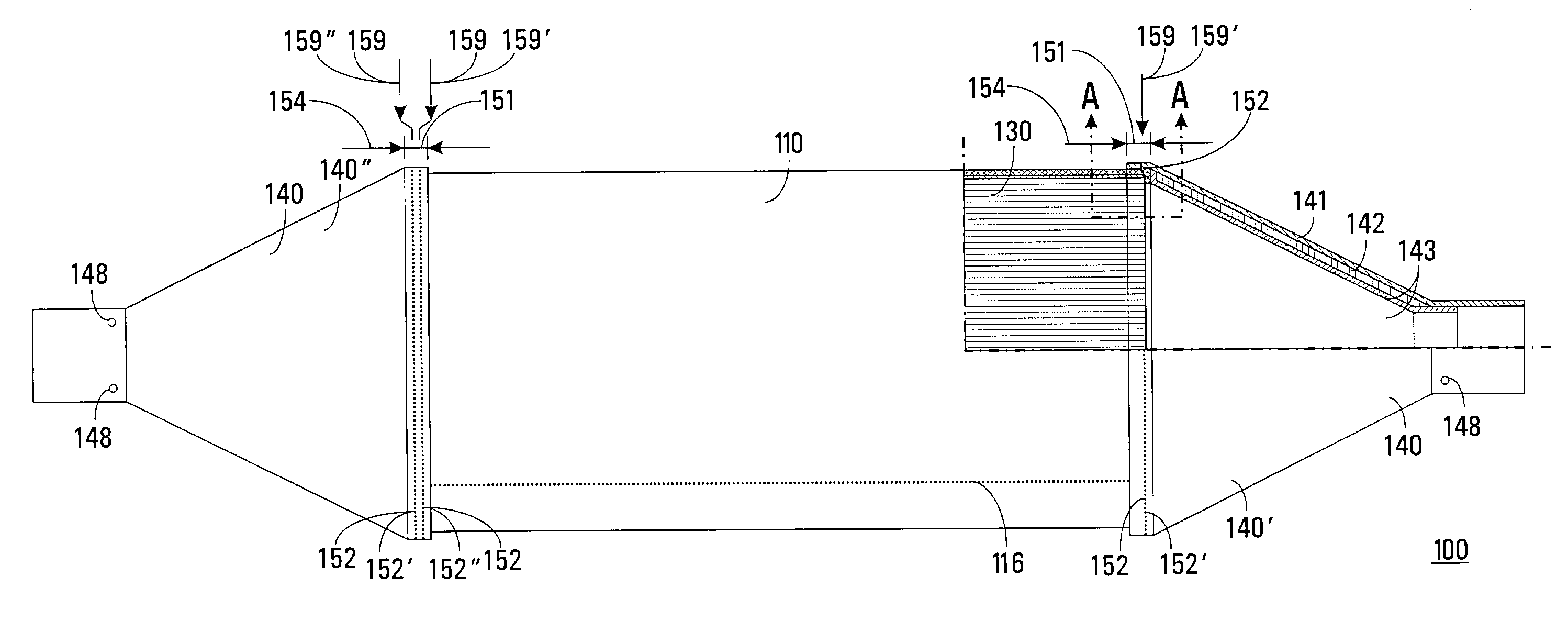
Figure 1 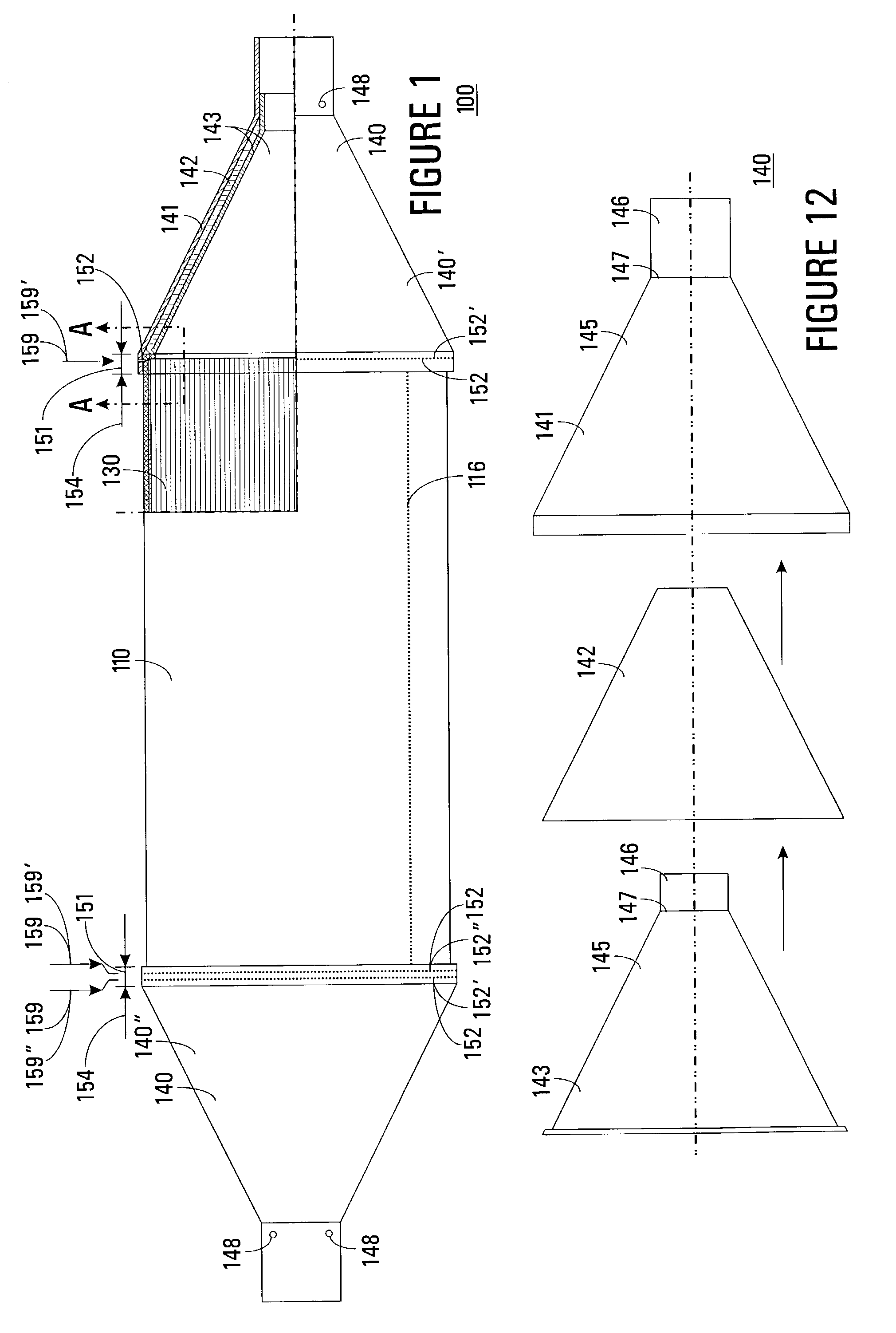
Figure 2 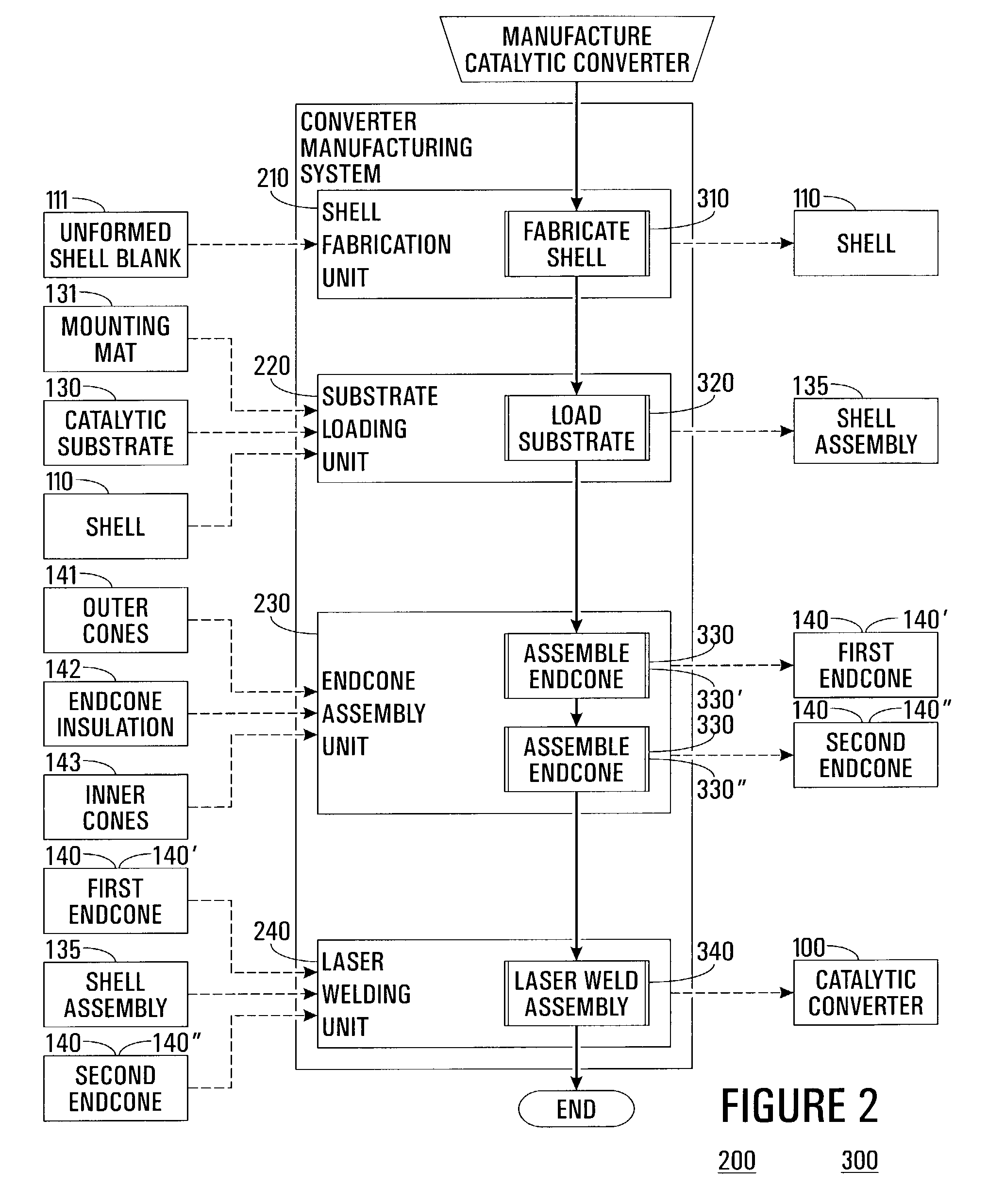
Figure 3
Abstract
Description
TECHNICAL FIELD OF THE INVENTION
[0001] The present invention relates to the field of catalytic converters. More specifically, the present invention relates to the field of the manufacture of catalytic converters using laser welding.BACKGROUND OF THE INVENTION
[0002] The automotive and light truck industries depend heavily upon catalytic converters to control exhaust emissions. These catalytic converters typically utilize ceramic substrates in the form of honeycombs coated with platinum and / or palladium to catalyze hydrocarbons, carbon monoxide, and nitrogen oxides in the exhaust into carbon dioxide, nitrogen, oxygen, and water.
[0003] During manufacture, it is important that the catalytic converters be gas tight. That is, that the converters, when coupled into an exhaust system, do not leak. If a converter leaks, then the noxious gasses the converter is intended to catalyze may pass directly into the atmosphere, thereby defeating the purpose of the converter.
[0004] A leaky converter may a...
Examples
Embodiment Construction
[0037]FIG. 1 shows a side view of a laser-welded cone-shell catalytic converter 100 with one corner cut away to depict internal components thereof. FIG. 2 shows a block diagram depicting a system 200 for the manufacture of catalytic converter 100, and a flowchart depicting a process 300 by which catalytic converter 100 may be manufactured by system 200 in accordance with a preferred embodiment of the present invention.
[0038]For purposes of clarity, a reference number assigned to an item identifies that same item throughout this discussion and in all relevant Figures. Catalytic converter 100 and all components thereof are assigned reference numbers between 100 and 199, inclusively. Similarly, catalytic-converter manufacturing system 200 and all components thereof are assigned reference numbers between 200 and 299, inclusively. Likewise, catalytic-converter manufacturing process 300 and all subprocesses and tasks thereof are assigned reference numbers between 300 and 399, inclusively....