
Capacity scaling and functional element redistribution within an in-building coax cable internet access system
a technology of capacity scaling, which is applied in the field of capacity scaling and functional element redistribution within the in-building coax cable internet access system, can solve the problems of limiting the potential two-way transmission speed of longer telephone loops, high cost and risk of new delivery systems, and intrusive installation, so as to promote economic capacity scaling and topological re-distribution, the effect of extending the breadth of applications
Patent Information
- Authority / Receiving Office
- US · United States
- Patent Type
- Patents(United States)
- Current Assignee / Owner
- Publication Date
- 2006-04-25
- Estimated Expiration
- Not applicable · inactive patent
Smart Images
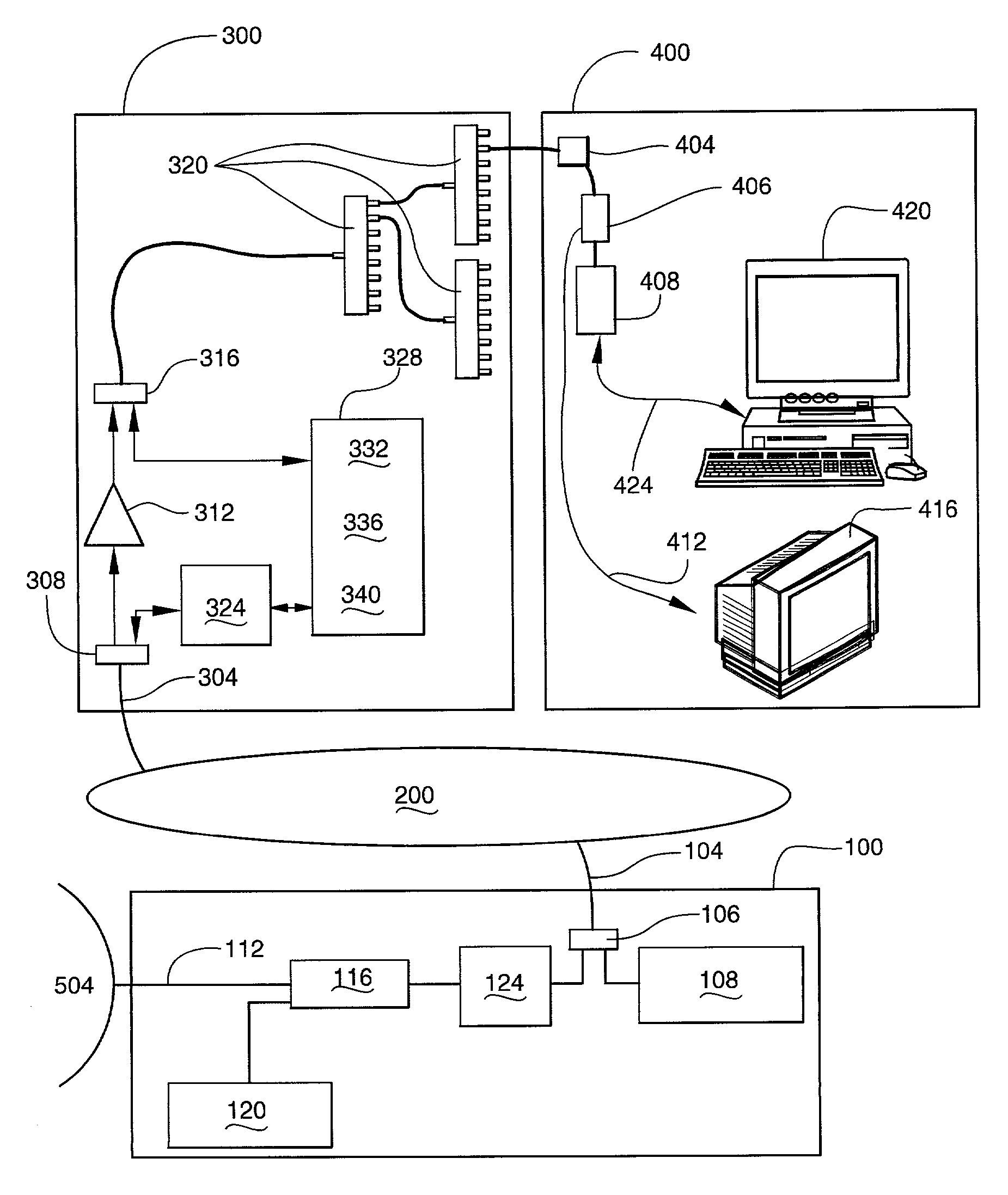
Figure 1 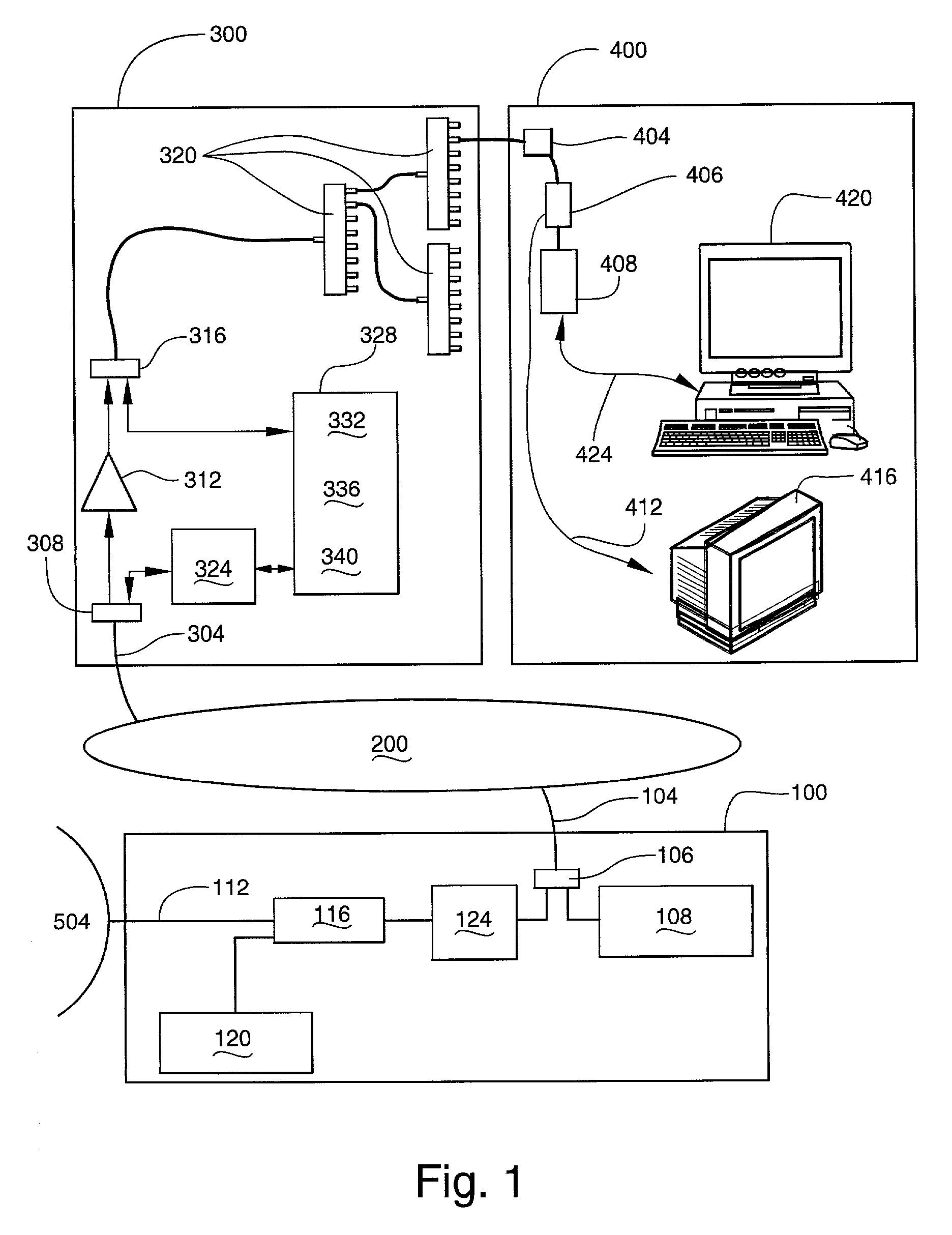
Figure 2 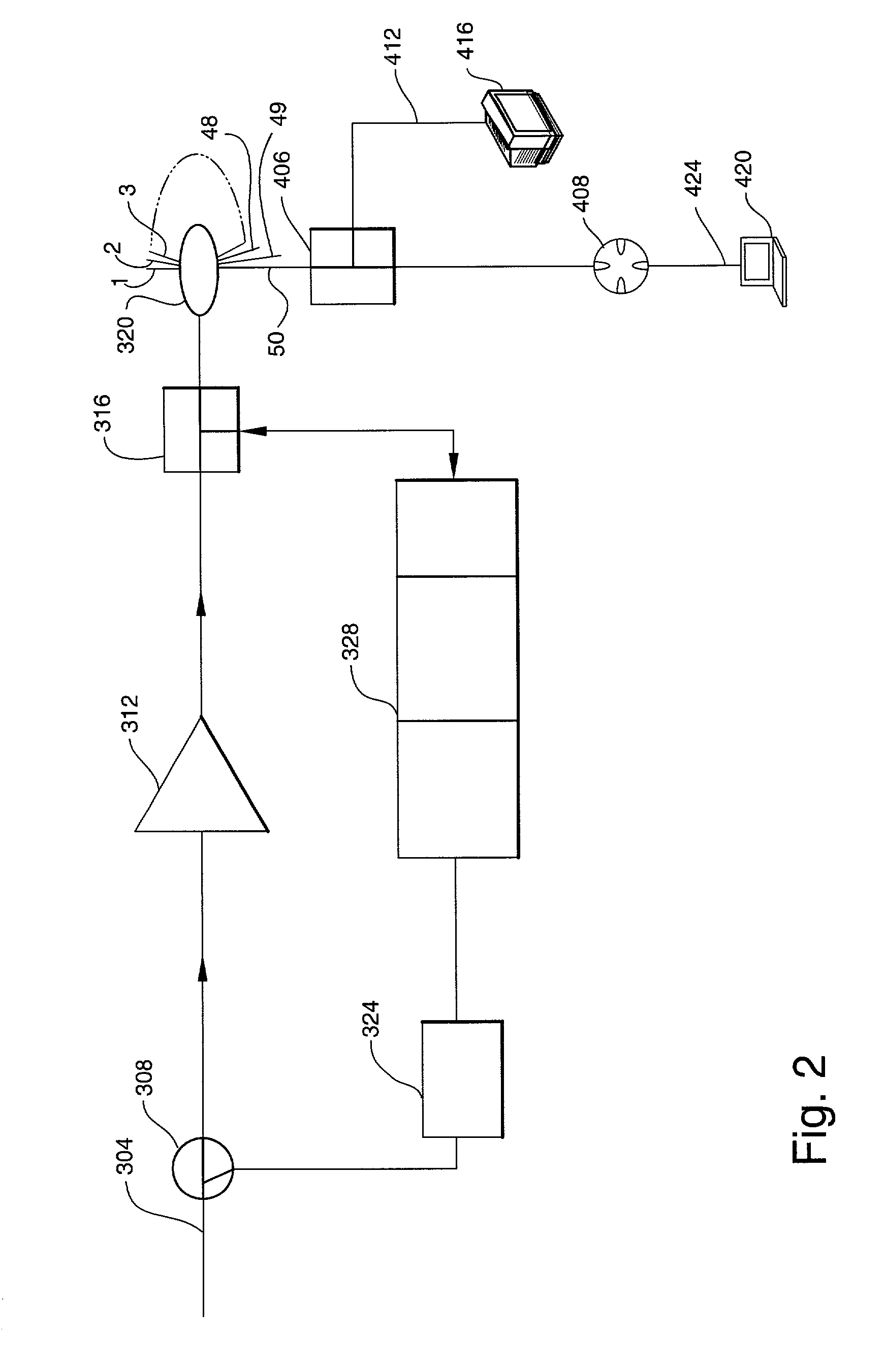
Figure 3
Abstract
Description
[0001] The present application claims priority from co-pending U.S. Provisional Application Ser. No. 60 / 226,505 filed on Aug. 21, 2000.
[0002] The present application claims priority from co-pending U.S. patent application Ser. No. 09 / 818,378 for Architecture and Method for Automatic Distributed Gain Control for Modem Communications which in turn claims priority from U.S. Provisional Application Ser. No. 60 / 193,855 filed on Mar. 30, 2000.
[0003] This application also claims priority from co-pending U.S. patent application Ser. No. 09 / 482,836 for High Speed Data Communications Over Local Coaxial Cable which in turn claims priority from U.S. Provisional Application Ser. No. 60 / 115,646 filed on Jan. 13, 1999.
[0004] To reduce repetition with the material disclosed in the '836 application, the '836 application is incorporated by reference. For the convenience of the reader, applicant has added a number of topic headings to make the internal organization of this specification apparent and to fa...
Examples
Embodiment Construction
Architecture
[0031]FIG. 1 illustrates the overall architecture. FIG. 1 can be subdivided into four clusters of components. The first cluster is Cable-TV (CATV) head-end equipment 100. The second cluster is the Hybrid Fiber-coax (HFC) Distribution Network 200. The third cluster is the premises coax distribution equipment 300 which could exist in either an MDU or an analogous situation such as a hotel. The final cluster is the cluster of equipment in the user's room 400. Clusters 300 and 400 contain elements of the present invention. In keeping with industry conventions, the CATV head-end and the Internet are the upstream end of FIG. 1 for cable TV and IP data respectively. The television set or computer in the user's room are the downstream points. Upstream data transmissions travel upstream towards the upstream end. Downstream transmissions travel downstream towards the downstream end. Thus a component on a data path receives a downstream data transmission from its upstream end and a...