

Liquid crystal display apparatus
a liquid crystal display and apparatus technology, applied in the field of display apparatus, can solve the problems of decreasing the luminance of the fluorescent lamps themselves, and achieve the effects of enhancing the luminance of the displayed image, suppressing the heat-liberation of the light source, and improving blur
Patent Information
- Authority / Receiving Office
- US · United States
- Patent Type
- Patents(United States)
- Current Assignee / Owner
- Publication Date
- 2006-09-26
- Estimated Expiration
- Not applicable · inactive patent
Smart Images
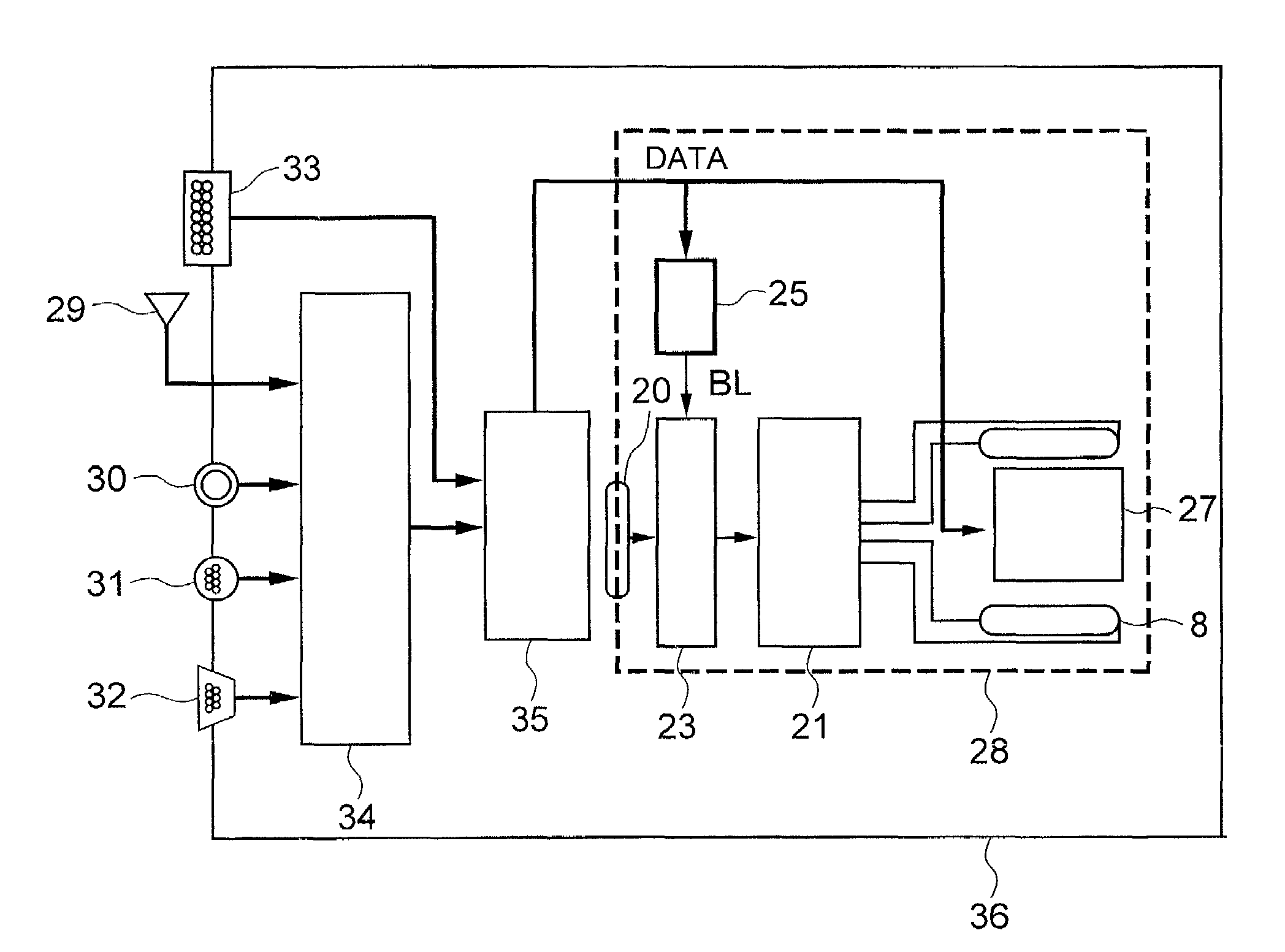
Figure 1 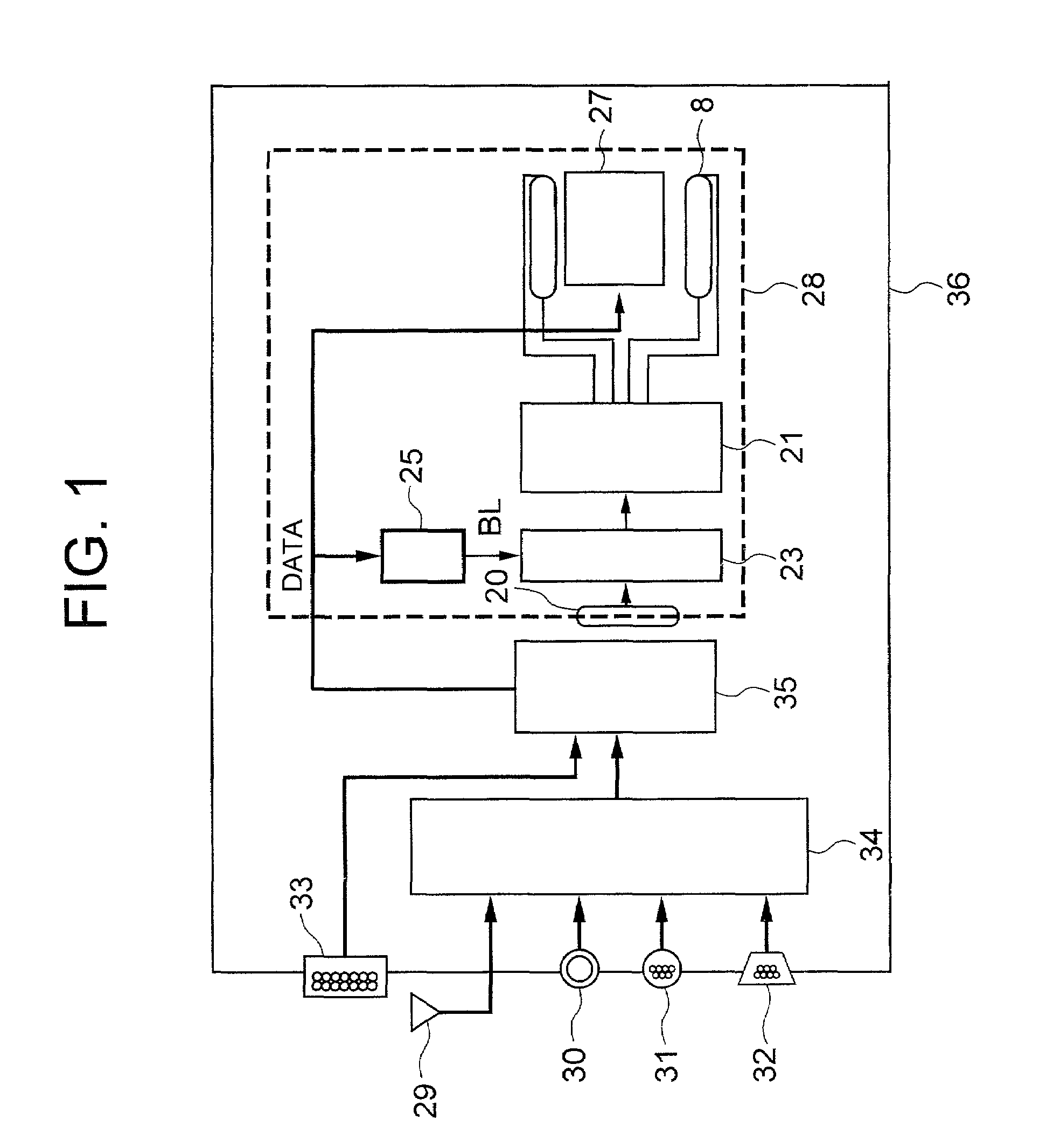
Figure 2 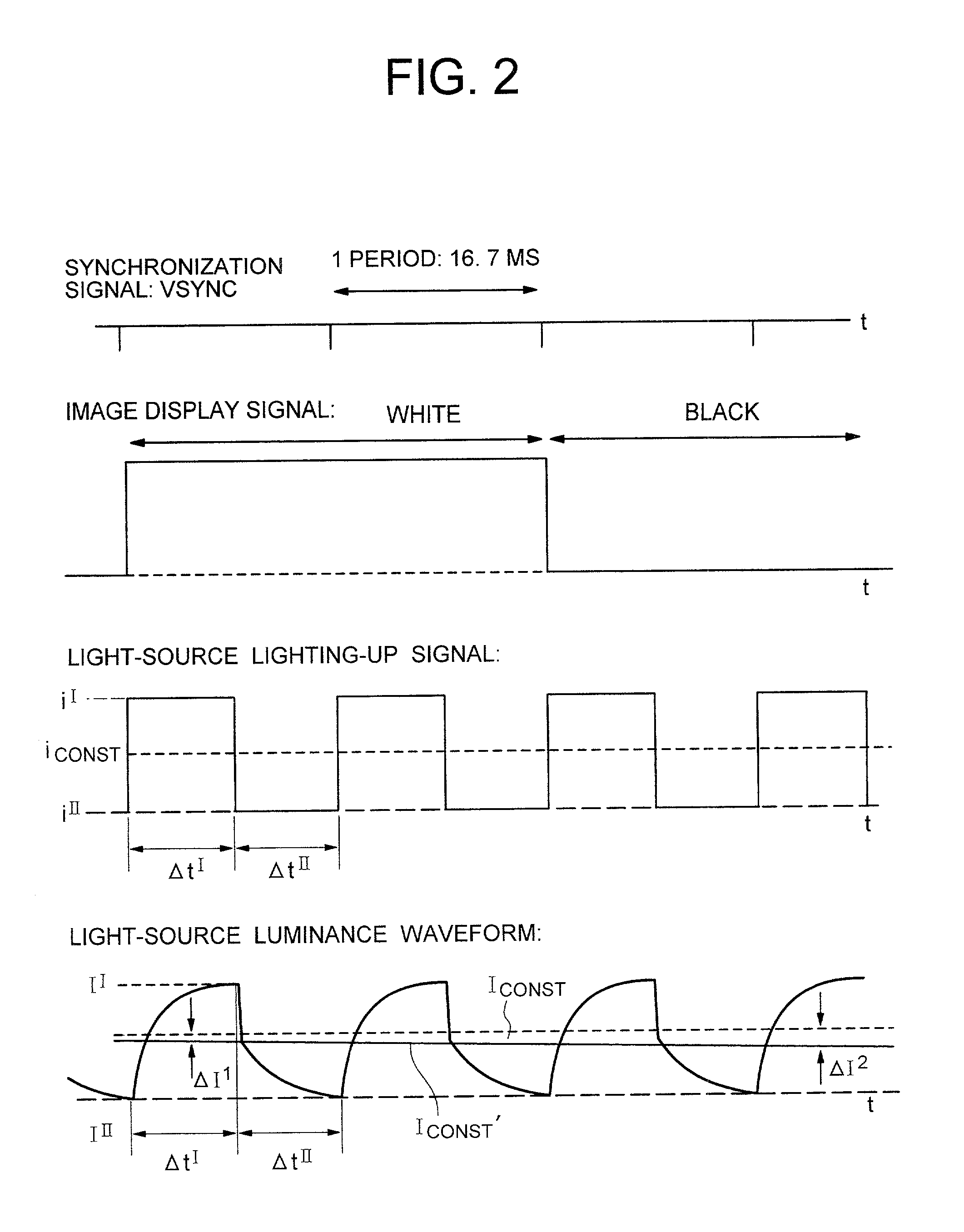
Figure 3
Abstract
Description
BACKGROUND OF THE INVENTION
[0001] 1. Field of the Invention
[0002] The present invention relates to a display apparatus using a liquid crystal display device, an electroluminescence device, or the like. More particularly, it relates to a display apparatus having a light-source that is suitable for enhancing the luminance of the display screen with a high-efficiency and for making the luminance uniform on the display screen.
[0003] 2. Description of the Related Art
[0004] The display apparatus, which uses the liquid crystal display device (which is also referred to as “liquid crystal display panel”), the electroluminescence device (which, depending on a fluorescent material used, is classified into an organic-family and an inorganic-family and, hereinafter, is referred to as “EL device”), a field emission device (which, hereinafter, is referred to as “FE device”), or the like, performs the image display. However, unlike the case of a Braun tube (which, hereinafter, is referred to as “CRT”, ...
Examples
Embodiment Construction
[0082]The present invention includes a panel on which a plurality of pixels are located, a light-source for visualizing an image displayed on the plurality of pixels, and a controlling circuit for controlling the light-source. Here, during a 1st time-period, the controlling circuit feeds the light-source an electric current having a 1st intensity. During a 2nd time-period, the controlling circuit feeds the light-source an electric current having a 2nd intensity (which differs from the 1st intensity). Also, the controlling circuit repeats the 1st time-period and the 2nd time-period periodically. Furthermore, the controlling circuit controls the light-source so that the intensity of a light emitted from the light-source in this period (i.e., an integrated value obtained by integrating the luminance of the light during this period) will become higher than an integrated value of the luminance in the case where the light-source is lit up by a rating electric current during the same time-...