
Processes for the isomerization of normal butane to isobutane
a technology of isobutane and normal butane, which is applied in the field of improved processes for the isomerization of normal butane to isobutane, can solve the problems of not finding a practical, commercial application, and increasing heat duty, and achieves the reduction of reboiler duty and the reduction of the diameter and number of distillation trays
Patent Information
- Authority / Receiving Office
- US · United States
- Patent Type
- Patents(United States)
- Current Assignee / Owner
- Publication Date
- 2009-12-29
Smart Images
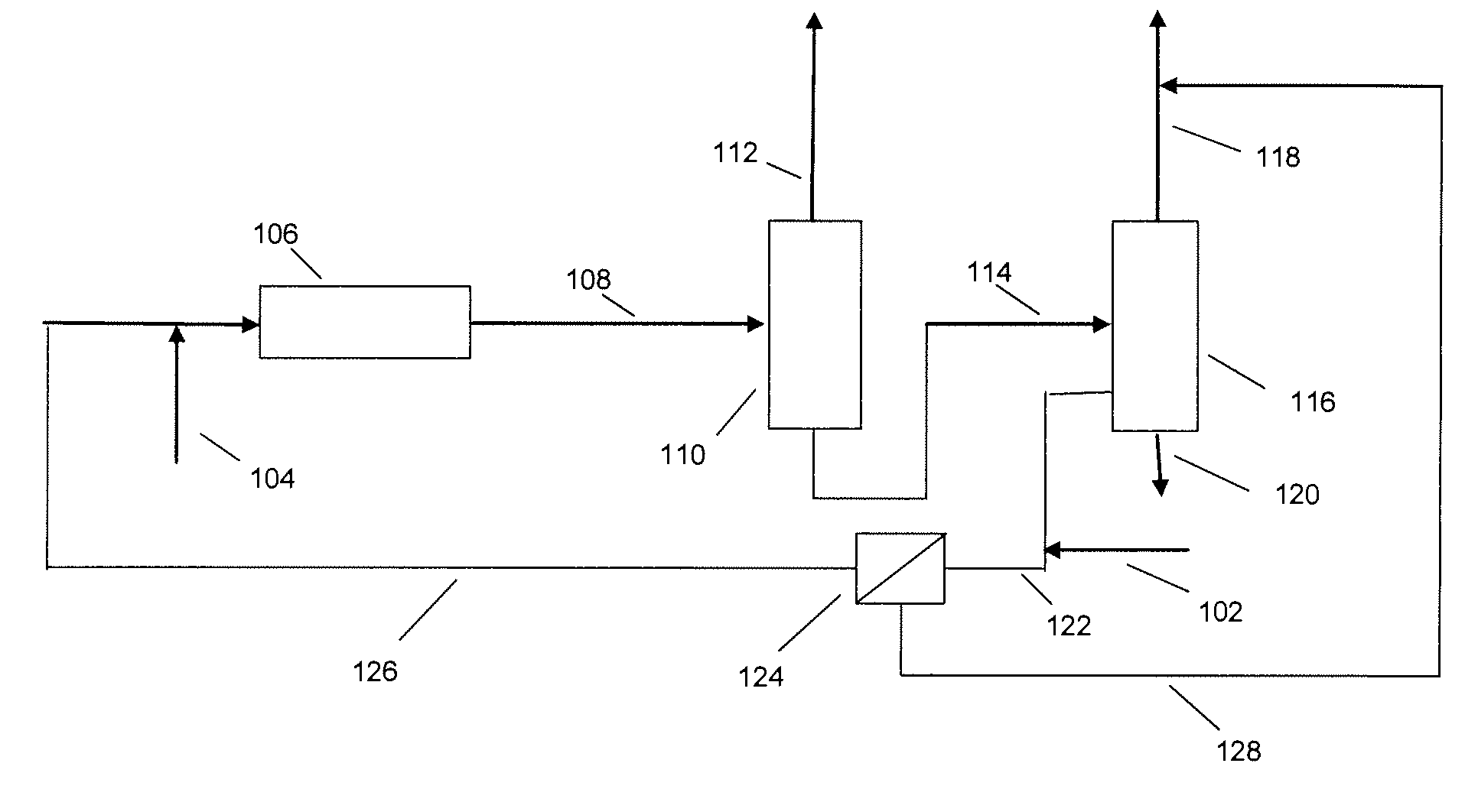
Figure 1 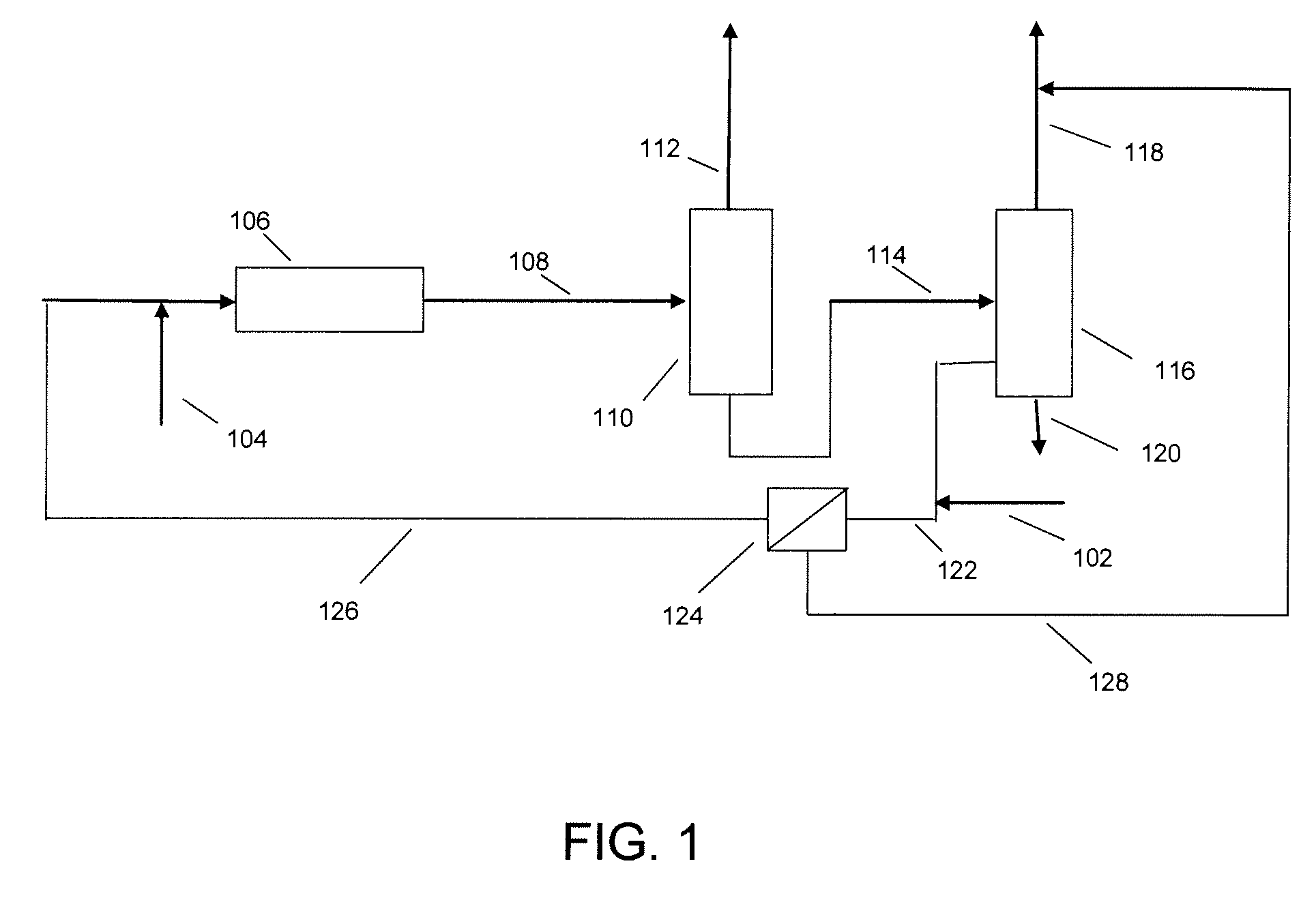
Figure 2 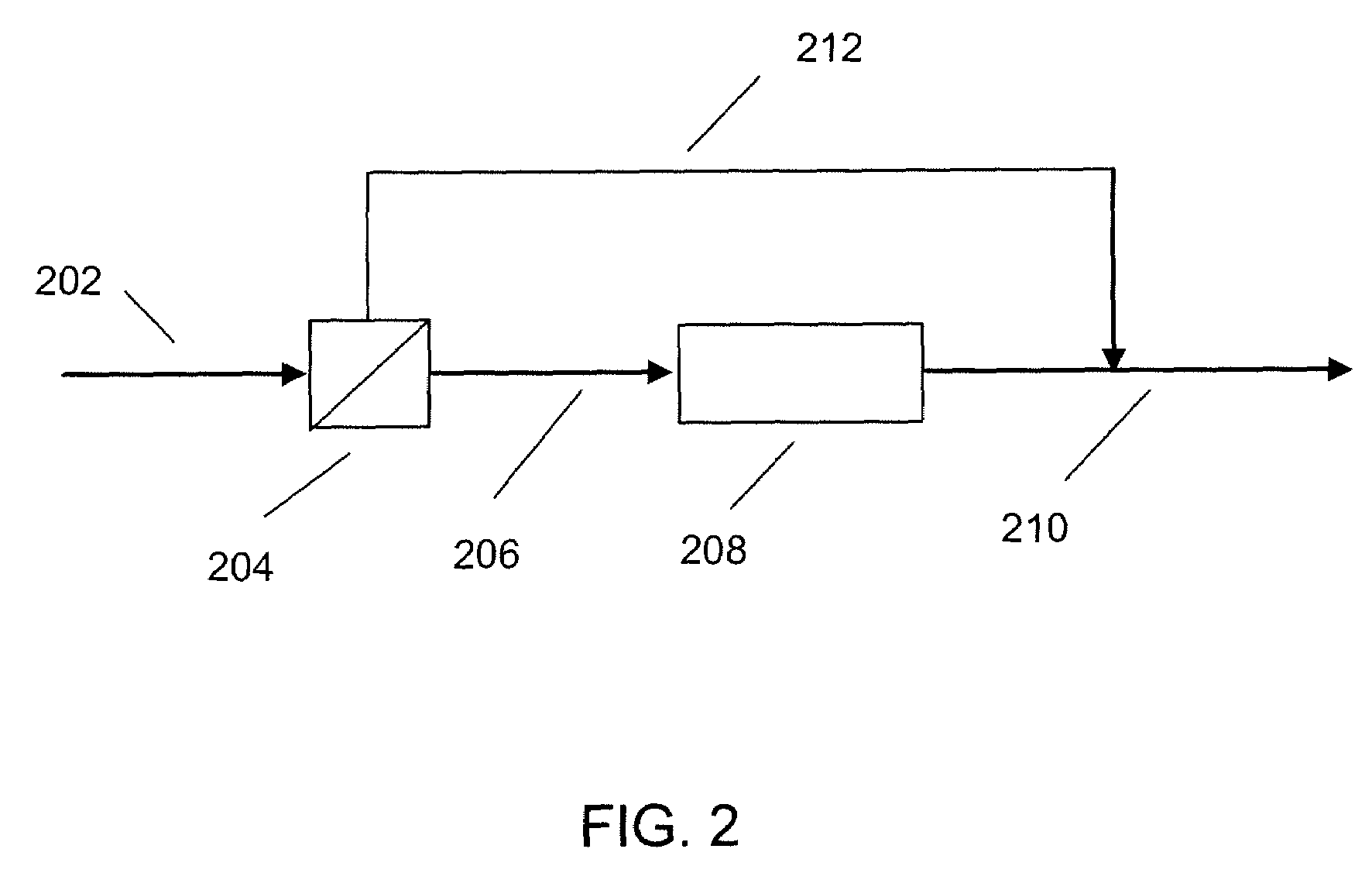
Figure 3
Abstract
Description
BACKGROUND OF THE INVENTION
[0001] This invention relates to improved processes for the isomerization of normal butane to isobutane using a deisobutanizer in combination with a membrane that is selectively permeable to normal butane as compared to isobutane and to improved processes using a membrane to recover at least a portion of isobutane contained in the normal butane-containing feedstock for the isomerization. Processes for the isomerization of normal butane to isobutane are widely practiced. The isomerization process proceeds toward a thermodynamic equilibrium. Hence, the isomerate will still contain a substantial concentration of normal butane, usually in the range of a mole ratio of isobutane to normal butane of 1.2:1 to 2:1. The sought isobutane product, usually having a purity of at least 80, often at least 90 or more, e.g., 95 to 99, mol-% isobutane, is obtained by distillation (deisobutanizer) to obtain the relatively pure isobutane product as an overhead and a normal buta...
Examples
Embodiment Construction
Isomerization
[0038]Any suitable normal butane-containing feedstock may be used in the processes of this invention. The feedstock may be obtained from any suitable source including, but not limited to fractionation or liquefaction of gaseous or normally liquid petroleum stocks, from synthetic paraffins such as from Fischer-Tropsch processes, cracking of higher molecular weight hydrocarbons and the like. The composition of the feedstock will depend upon the source of the feedstock. The preferred feedstocks will contain at least 30, say, 50 to essentially 100, mass-% normal butane. Other components that may be present include isobutane, butenes, and lighter and heavier hydrocarbons. Generally, lighter hydrocarbons are present in less than 20, preferably less than 5, mass-% and heavier hydrocarbons are present in amounts less than 10, preferably less than 5, mass-%. In the event that the feedstock contains C5 or heavier hydrocarbons, it is usually preferred that the feedstock be subject...