
Compositions and methods for modulating hemostasis
a technology of hemostasis and modulation method, which is applied in the field of medicine and hematology, can solve the problems of many coagulation enzymes that act poorly on their protein substrates, and achieve the effect of modulating the rate and specificity of cleavage reactions and modulating hemostasis
Patent Information
- Authority / Receiving Office
- US · United States
- Patent Type
- Patents(United States)
- Current Assignee / Owner
- Publication Date
- 2012-12-11
Smart Images
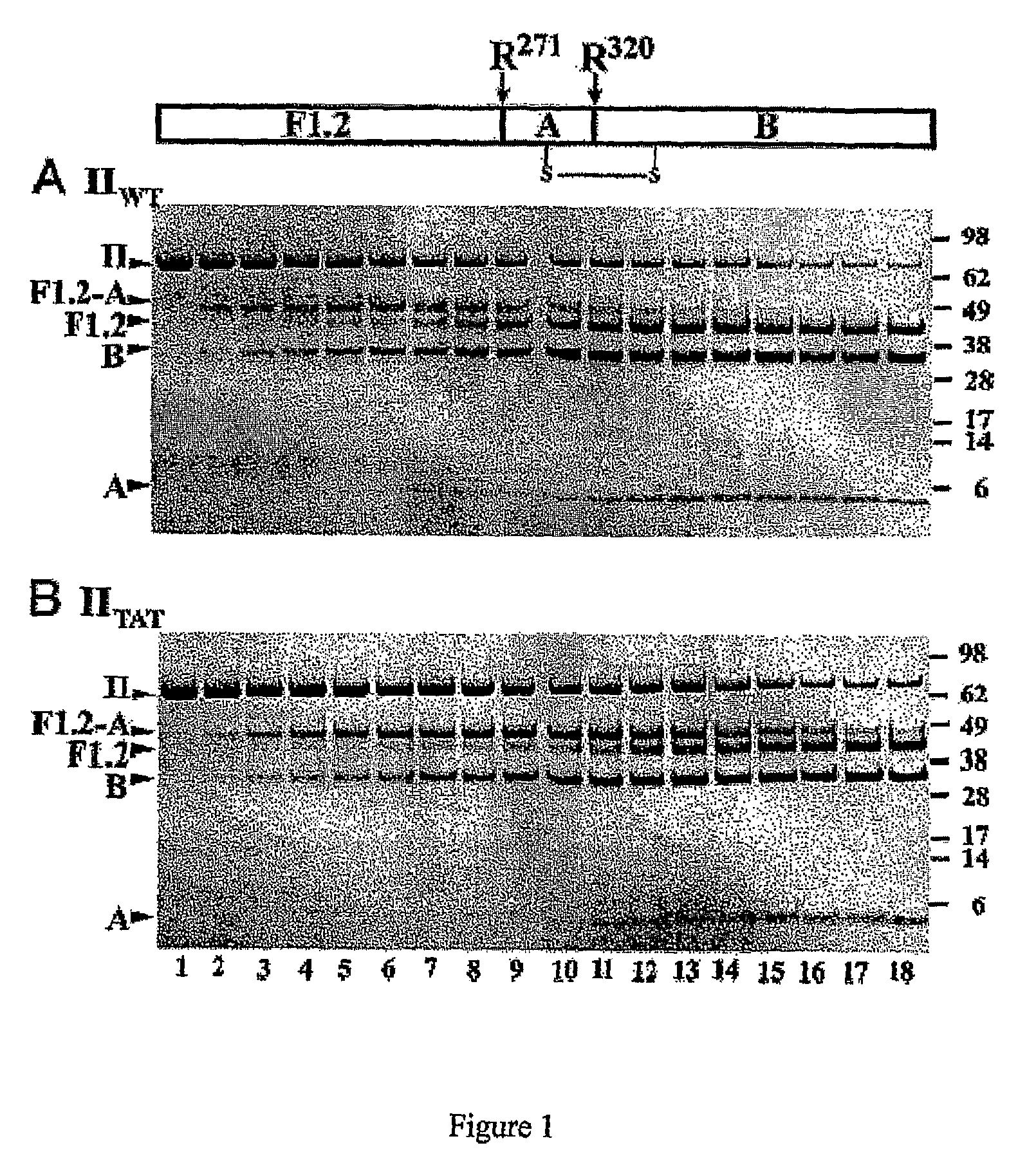
Figure 1 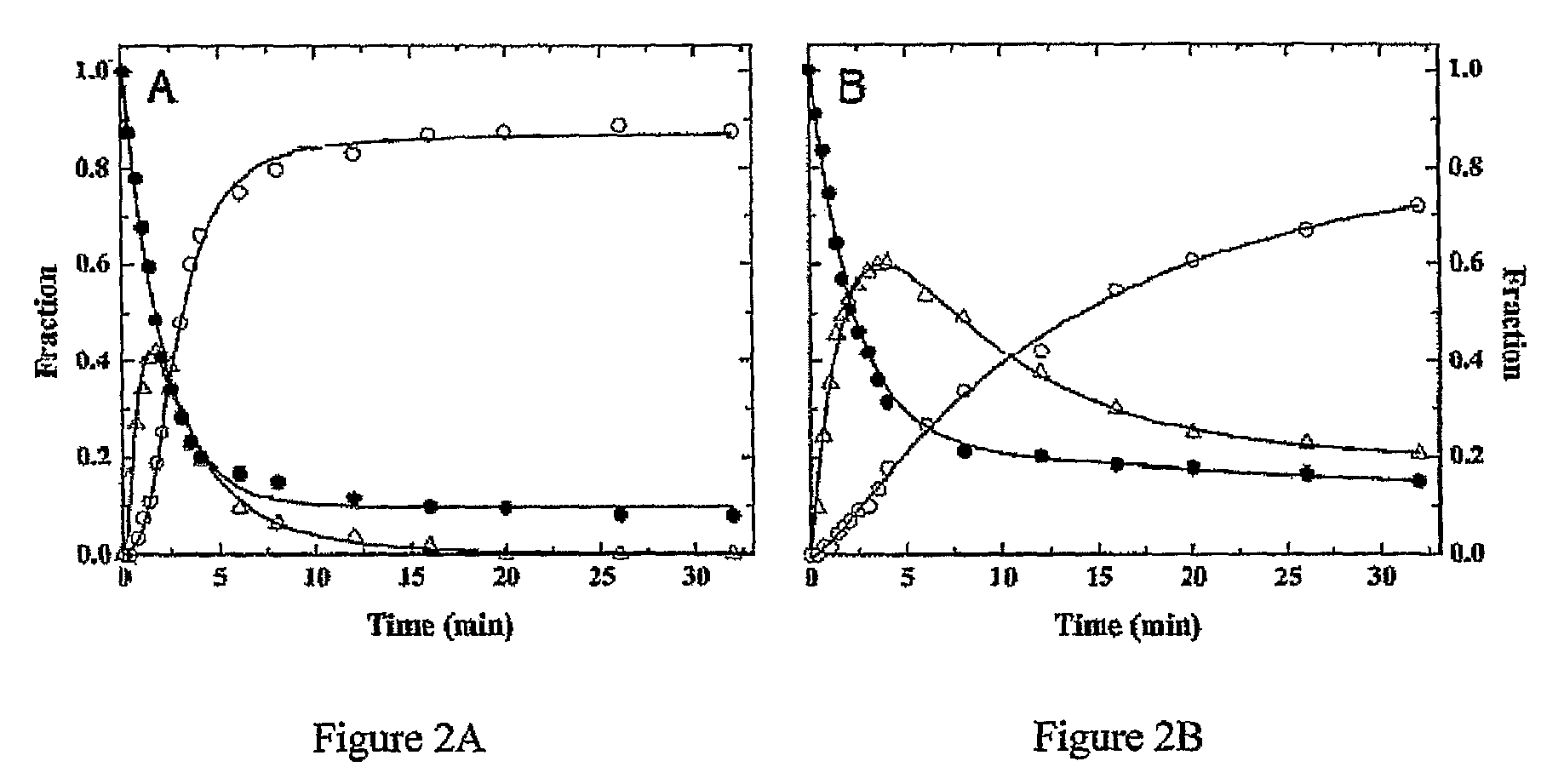
Figure 2 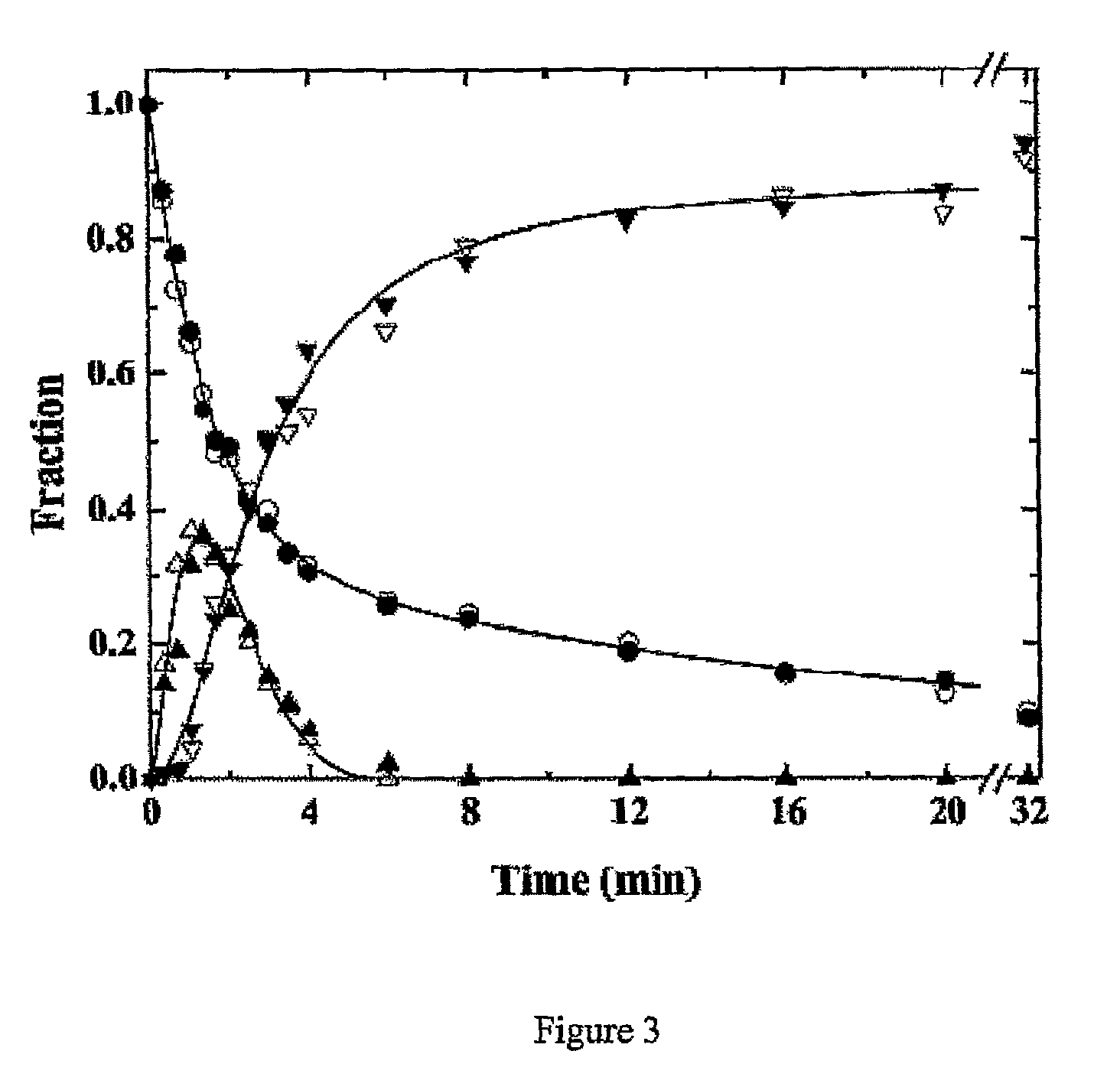
Figure 3
Abstract
Description
[0001] The present application is §371 application of PCT / US2006 / 060924 filed 15 Nov. 2006 which claims priority to U.S. 60 / 736,784 filed 15 Nov. 2005, the entire disclosure of each being incorporated by reference herein.
[0002] This application claims priority under 35 U.S.C. §119(e) to U.S. Provisional Application No. 60 / 736,784 filed Nov. 15, 2005, the entire contents being incorporated by reference herein as though set forth in full.
[0003] Pursuant to 35 U.S.C. §202(c), it is acknowledged that the U.S. Government has certain rights in the invention described herein, which was made in part with funds from the National Institutes of Health, Grant Numbers PO1 HL-74124, and HL-47465.FIELD OF THE INVENTION
[0004] The present invention relates to the fields of medicine and hematology. More specifically, the invention provides novel prothrombin / thrombin coagulation agents and methods of using the same to modulate the coagulation cascade in patients in need thereof.BACKGROUND OF THE INVENTION...
Examples
example 1
REFERENCES FOR EXAMPLE 1
[0119]1. Mann, K. G., Jenny, R. J. & Krishnaswamy, S. (1988) Annu. Rev. Biochem. 57, 915-956.[0120]2. Mann, K. G., Nesheim, M. E., Church, W. R., Haley, P. & Krishnaswamy, S. (1990) Blood 76, 1-16.[0121]3. Krishnaswamy, S., Church, W. R., Nesheim, M. E. & Mann, K. G. (1987) J. Biol. Chem. 262, 3291-3299.[0122]4. Orcutt, S. J. & Krishnaswamy, S. (2004) J. Biol. Chem. 279, 54927-54936.[0123]5. Esmon, C. T., Owen, W. G. & Jackson, C. M. (1974) J. Biol. Chem. 249, 606-611.[0124]6. Carlisle, T. L., Bock, P. E. & Jackson, C. M. (1990) J. Biol. Chem. 265, 22044-22055.[0125]7. Boskovic, D. S., Troxler, T. & Krishnaswamy, S. (2004) J. Biol. Chem. 279, 20786-20793.[0126]8. Krishnaswamy, S. (2005) J. Thromb. Haemost. 3, 54-67.[0127]9. Boskovic, D. S. & Krishnaswamy, S. (2000) J. Biol. Chem. 275, 38561-38570.[0128]10. Martin, P. D., Malkowski, M. G., Box, J., Esmon, C. T. & Edwards, B. F. (1997) Structure (London) 5, 1681-1693.[0129]11. Huber, R. & Bode, W. (1978) Acc. C...