
Gas sensor for determining hydrogen or hydrogen compounds
a technology of hydrogen or hydrogen compounds and gas sensors, applied in the field of gas sensors, can solve the problems of gas detection either being carried out, complex devices are required, and the measurement is relatively complex
Patent Information
- Authority / Receiving Office
- US · United States
- Patent Type
- Patents(United States)
- Current Assignee / Owner
- Publication Date
- 2013-07-23
- Estimated Expiration
- Not applicable · inactive patent
Smart Images
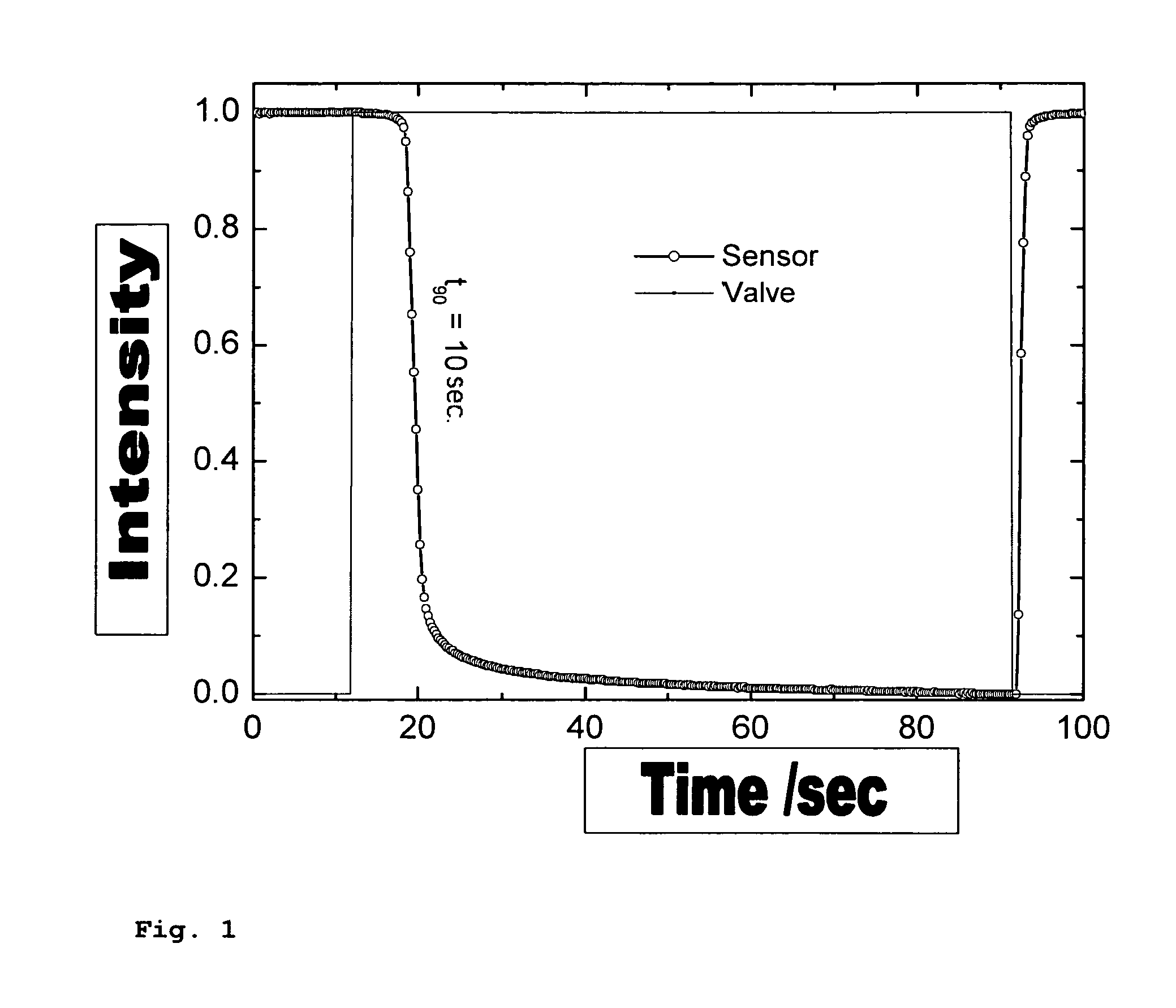
Figure 1 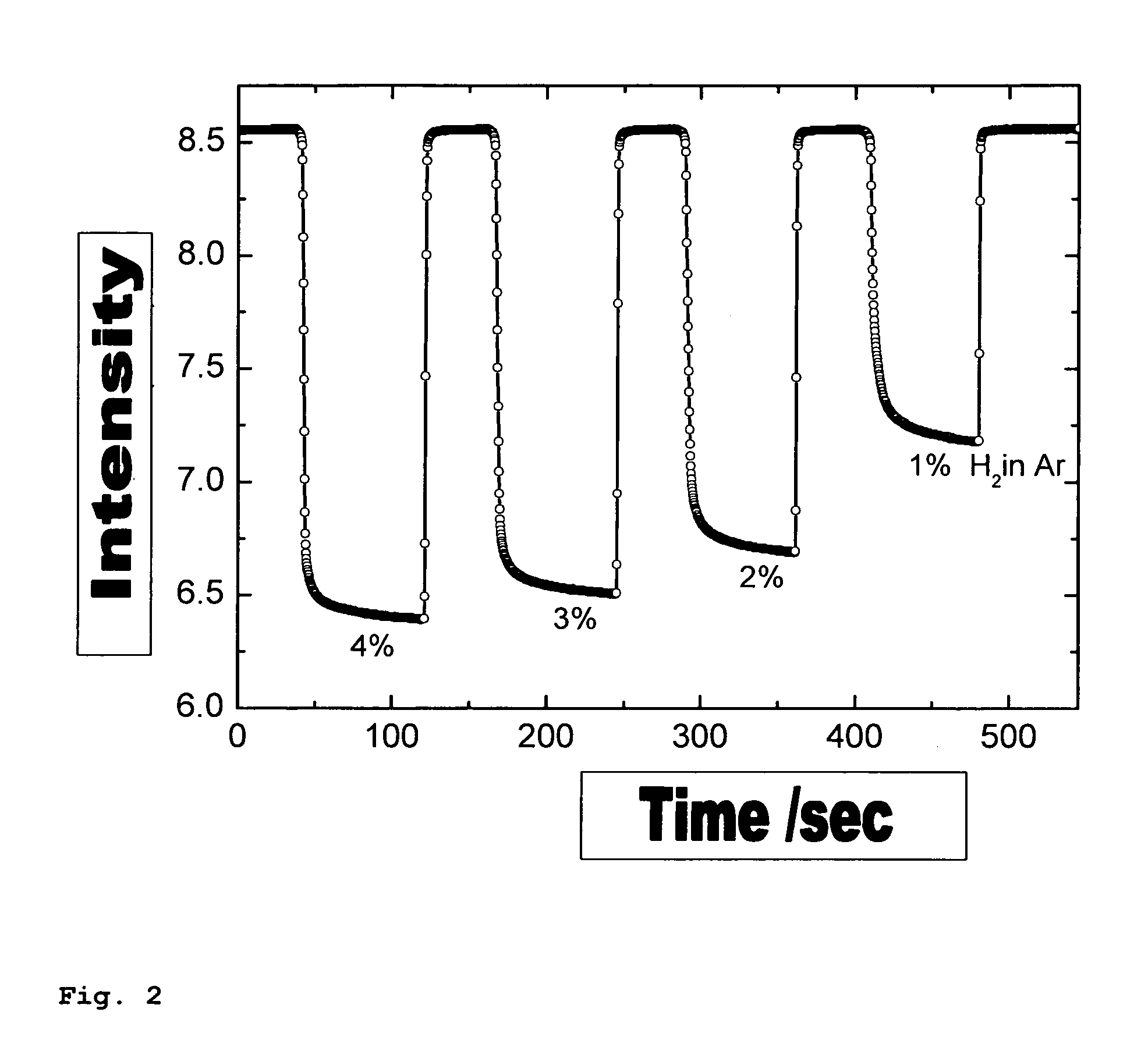
Figure 2 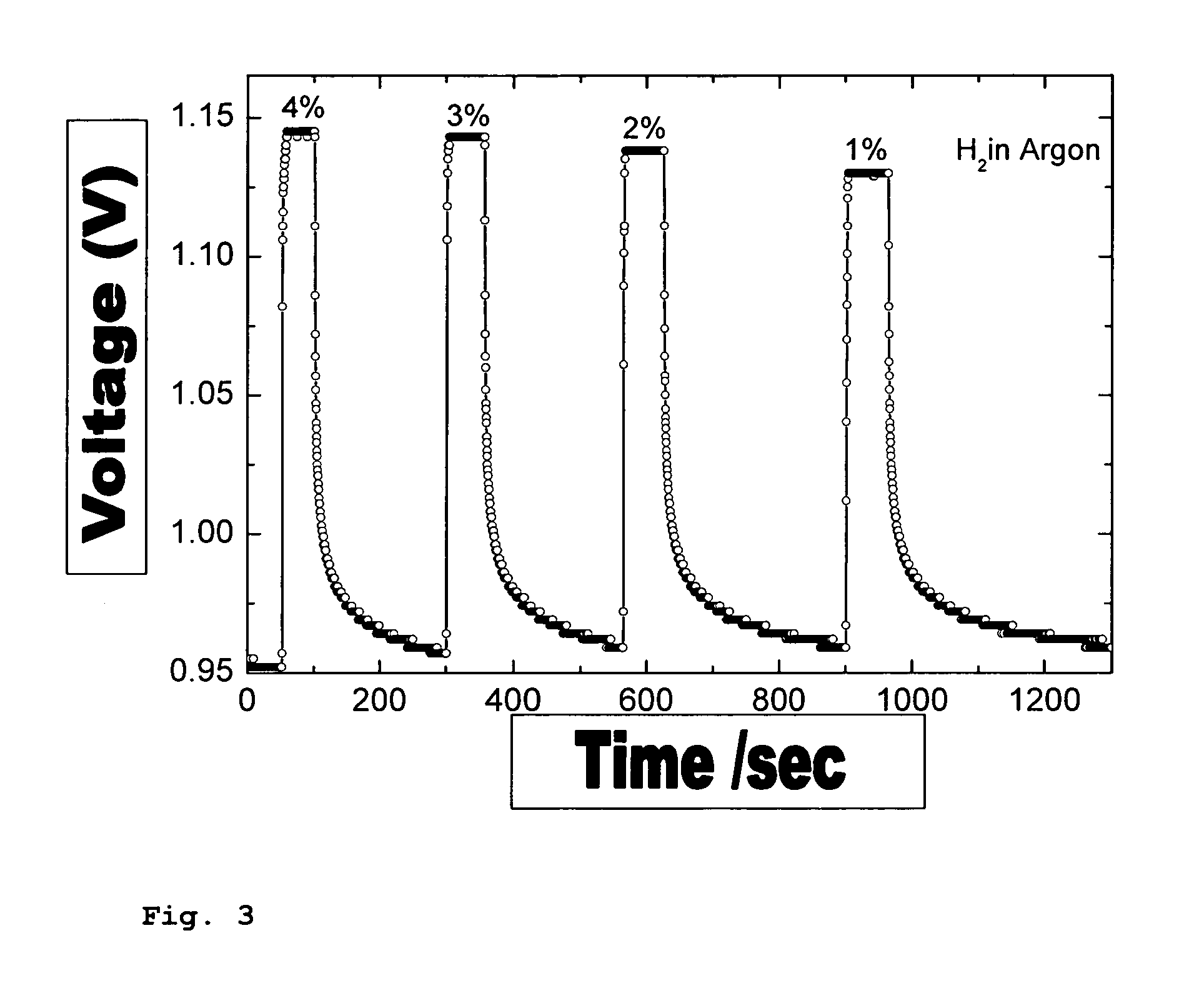
Figure 3
Abstract
Description
DESCRIPTION AND STATE OF THE ART
[0001] The invention at hand concerns a novel class of gas sensors, in particular for hydrogen or hydrogen containing fluids (gases or liquids), such as hydrocarbons, hydrogen sulphides or more complex gas mixtures or gas compositions which contain hydrogen or hydrogen compounds.
[0002] Such sensors find application in many areas, e.g. the industry and there for instance in the chemical industry or in the production of semiconductors.
[0003] Already a wide range of gas sensors, also for the measurement of gases which contain hydrogen, are known by the state of the art. DE 102 61 299, e.g., shows known gas sensors which use for the detection of flammable gases solid electrolytes (as, e.g., zirconium oxide) conducting oxide ions.
[0004] Other gas sensors use—as, e.g., in U.S. Pat. No. 5,591,321—metal-insulator-semiconductor-diodes (MIS-Sensors) for the detection of gases.
[0005] As well known are those gas sensors which use the solid state electrolysis as princi...
Examples
Embodiment Construction
[0018]In a particularly preferred embodiment, which is suitable for being read not only optically but also electronically, the substrate consists of a transparent material, e.g. glass or plastic or polymers or semiconductors.
In this embodiment, no means of electronic connection are necessary.
[0019]The functional layer or the functional area are suitable for, in the optical or in the electrical embodiment, comprising amorphous, microcrystalline or polycrystalline Mg, or Mg2Ni, or MgAl or MgAl(1-x)Nix or in the form of Mg with Al and further free combinations of elements from the following group: Li, Be, Na, Ti, V, Cr, Mn, Fe, Co, Ni, Zr, Nb, Mo, Tc, Ru, Rh, Pd, Ag, Cd, Hf, Ta, W, Re, Os, Ir, Pt, Au, Hg, Si, K, Ca, Ga, Ge, As.
[0020]The means of activation or cleavage or dissociation (in the above sense) of hydrogen are suitable for being realised—provided that the sensor is realised as a layer system—in the form of a top layer from Pd or Pt or other hydrogen activating or hydrogen cle...