
Compositions and methods for treating clostridium infection and preventing recurrence of infection
a technology of clostridium infection and compositions, applied in the field of compositions and methods for treating clostridium infection and preventing recurrence of infection, can solve the problems of less evidence of alternative therapies and difficult treatment of recurrent diseases, and achieve the effects of preventing recurrent diseases, reducing igg production, and increasing igg levels
Patent Information
- Authority / Receiving Office
- US · United States
- Patent Type
- Patents(United States)
- Current Assignee / Owner
- Publication Date
- 2016-07-12
Smart Images
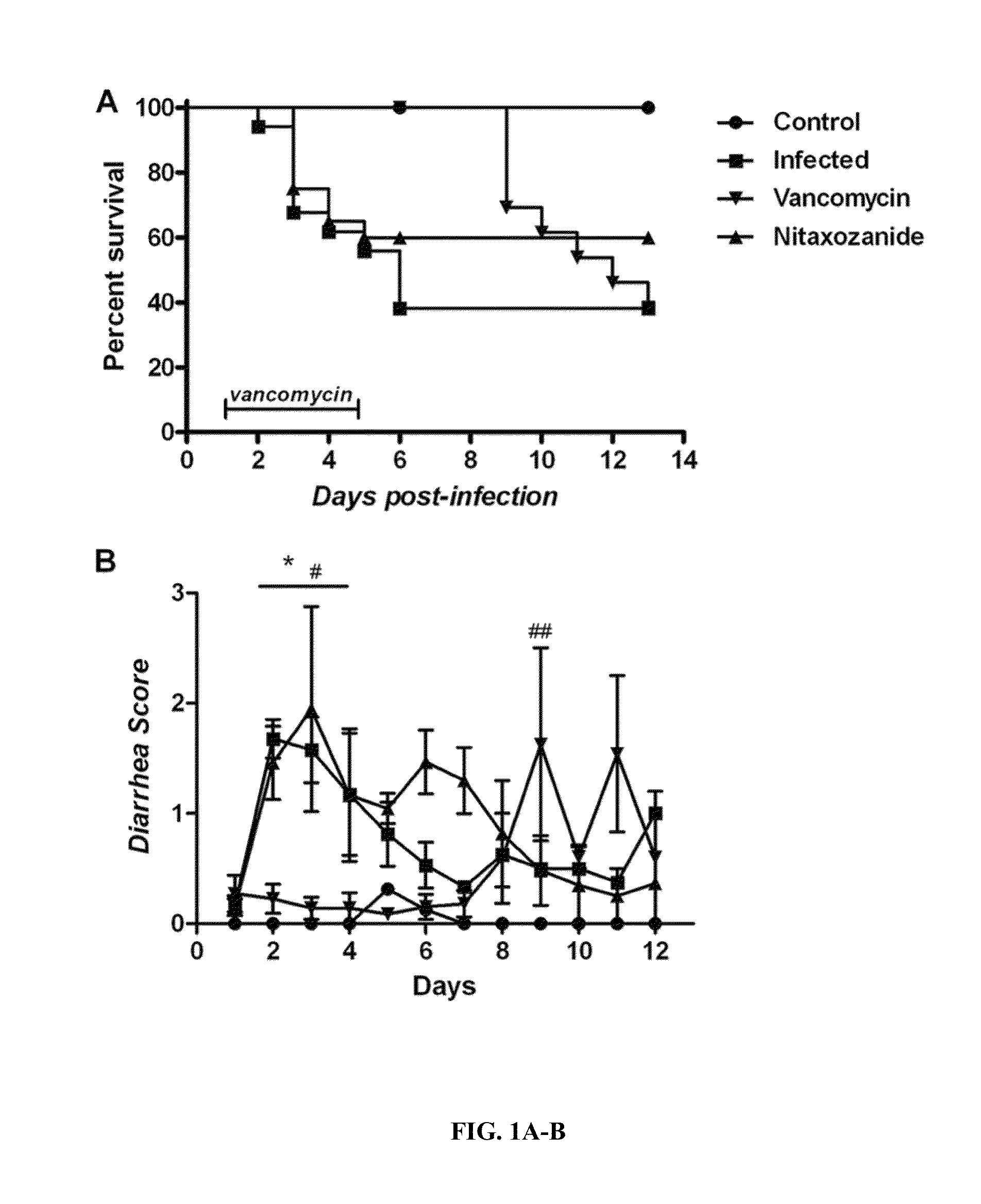
Figure 1 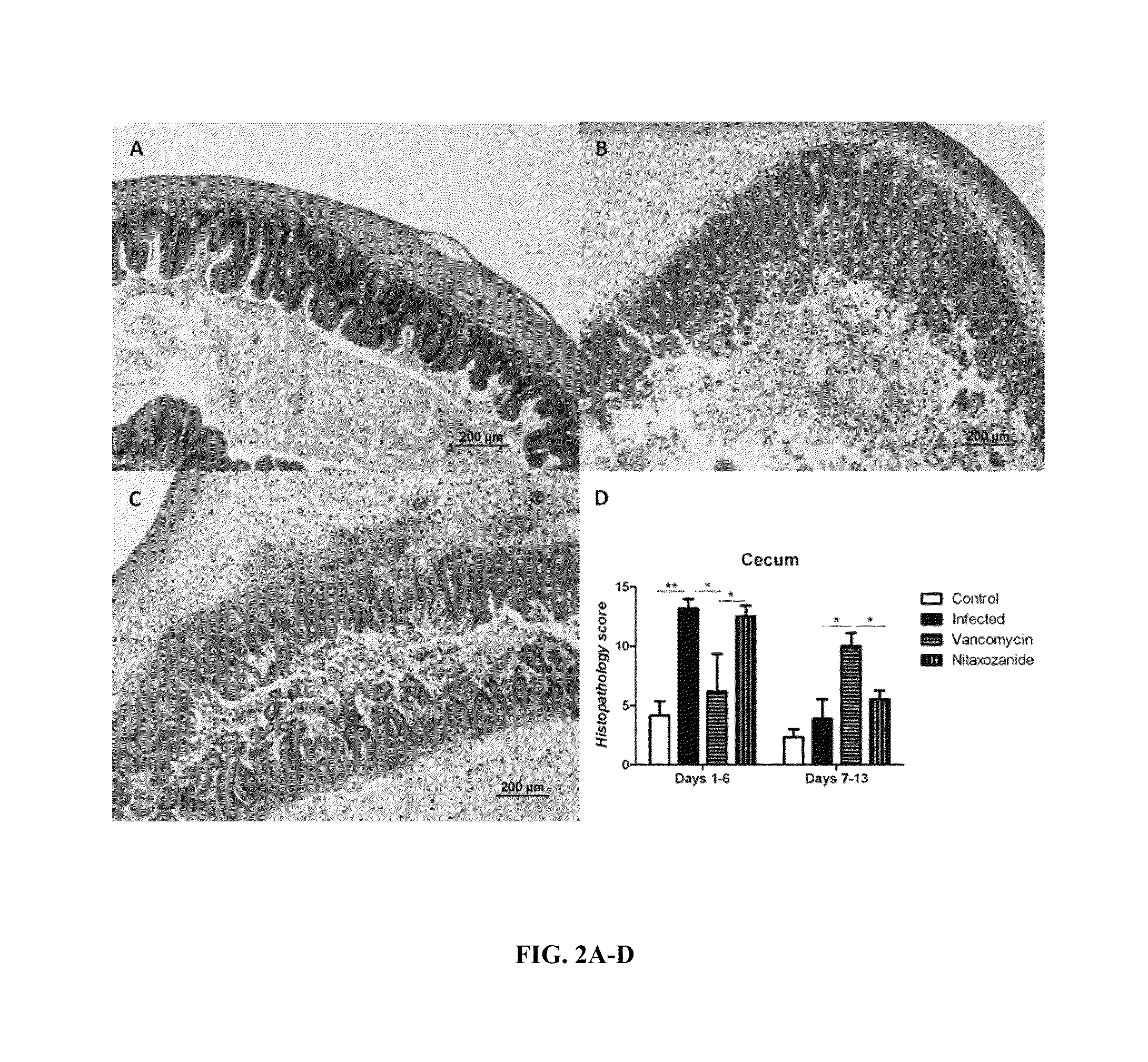
Figure 2 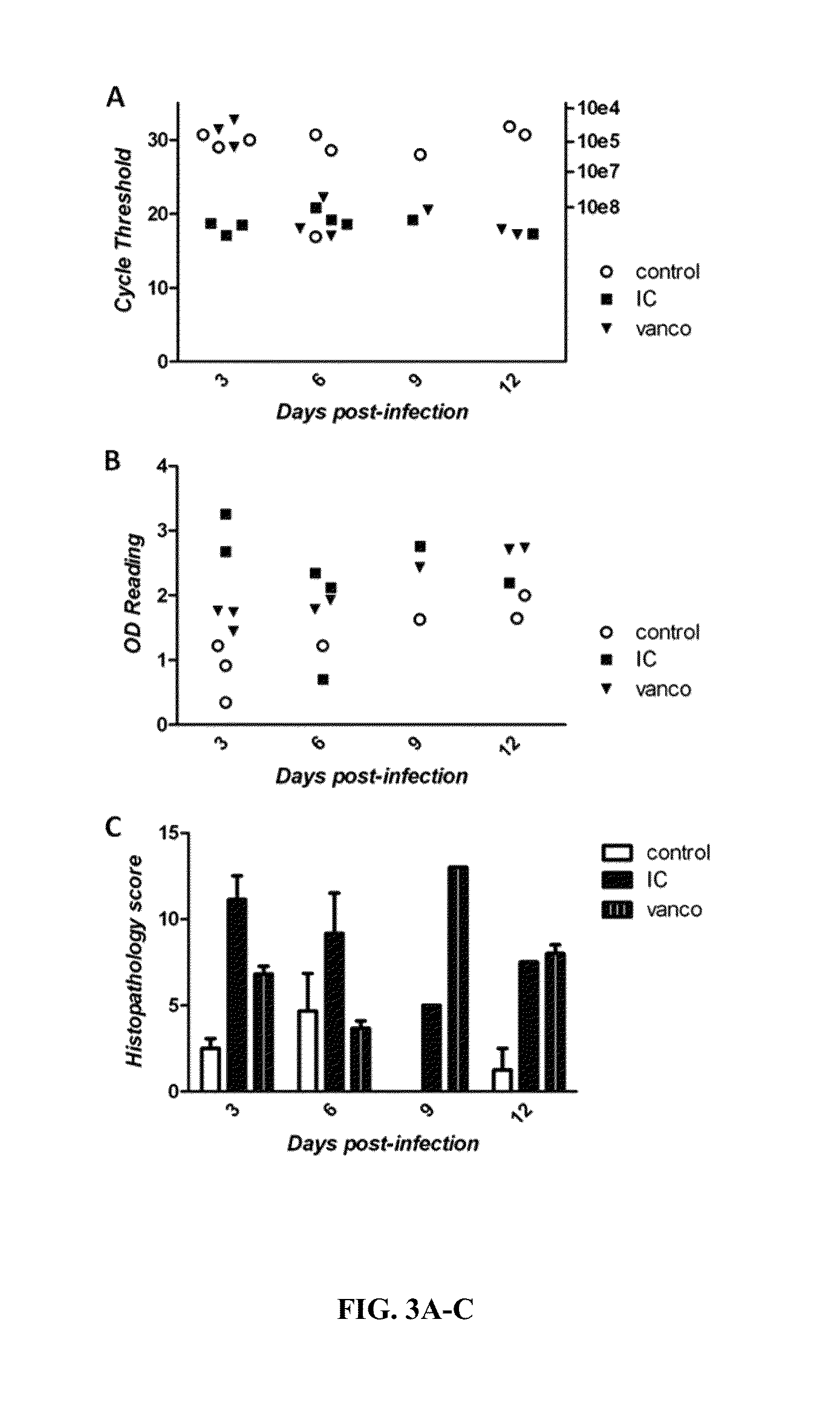
Figure 3
Abstract
Description
CROSS REFERENCE TO RELATED APPLICATIONS
[0001] This application is entitled to priority pursuant to 35 U.S.C. §119(e) to U.S. provisional patent application No. 61 / 902,842, filed on Nov. 12, 2013. The entire disclosure of the afore-mentioned patent application is incorporated herein by reference.STATEMENT REGARDING FEDERALLY SPONSORED RESEARCH OR DEVELOPMENT
[0002] This invention was made with government support under AI075526 and AI094458 awarded by the National Institute of Health. The government has certain rights in the invention.BACKGROUND
[0003] Clostridium difficile infection (CDI) is a significant cause of antibiotic-associated nosocomial diarrhea. While discontinuation of the offending antibiotic is the ideal strategy to control the disease, in most cases, treatment with antimicrobial agents active against C. difficile is deemed necessary because of the severity of the gastrointestinal disease or the presence other active infections. Unfortunately, antimicrobial treatment for a f...
Examples
example 3
[0192]FIGS. 11A-C provide three measurements of the various doses of fidaxomicin used to treat C. difficile infection. FIG. 11A shows the effectiveness of low doses on survival. It can be seen when comparing survival curves that low doses significantly increased survival of 2 mg / kg group compared with either the vehicle control (p=0.0191) or the 20 mg / kg / day group (p=0.0190), but not with the vehicle control compared to the 20 mg / kg / day group. In summary a lower dosage of Fidaxomicin significantly increased survival from infection compared with the drug vehicle and reduced relapse compared with a higher dosage (20 mg / kg). FIG. 11B shows the effectiveness of low doses on weight, that is, a two-way ANOVA did not find significant differences in weight across the course of the experiment; however you can see where infection starts to take hold or relapse occurs with weight drops in each group. FIG. 11C shows the effectiveness of low doses on clinical scores, that is, a two-way ANOVA per...
example 1
[0198]1. Cohen S H, Gerding D N, Johnson S, Kelly C P, Loo V G, McDonald L C, Pepin J, Wilcox M H. 2010. Clinical practice guidelines for Clostridium difficile infection in adults: 2010 update by the Society for Healthcare Epidemiology of America (SHEA) and the Infectious Diseases Society of America (IDSA). Infect. Control Hosp. Epidemiol. 31:431-455. doi:10.1086 / 651706.[0199]2. Surawicz C M, Alexander J. 2011. Treatment of refractory and recurrent Clostridium difficile infection. Nat. Rev. Gastroenterol. Hepatol. 8:330-339. doi:10.1038 / nrgastro.2011.59.[0200]3. Pepin J, Alary M E, Valiquette L, Raiche E, Ruel J, Fulop K, Godin D, Bourassa C. 2005. Increasing risk of relapse after treatment of Clostridium difficile colitis in Quebec, Canada. Clin. Infect. Dis. 40:1591-1597. doi:10.1086 / 430315.[0201]4. Johnson S, Homann S R, Bettin K M, Quick J N, Clabots C R, Peterson L R, Gerding D N. 1992. Treatment of asymptomatic Clostridium difficile carriers (fecal excretors) with vancomycin o...
example 2
[0228]1: Li Y, Figler R A, Kolling G, Bracken T C, Rieger J, Stevenson R W, Linden J, Guerrant R L, Warren C A. Adenosine A2A receptor activation reduces recurrence and mortality from Clostridium difficile infection in mice following vancomycin treatment. BMC Infect Dis. 2012 Dec. 10; 12:342. doi: 10.1186 / 1471-2334-12-342.