
Method for determining a variable of a sample
a variable and sample technology, applied in the field of methods for determining variables of samples, can solve the problems of insufficient precision, high cost, and effort implying corresponding costs, and achieve the effect of not requiring much effort in its performan
Patent Information
- Authority / Receiving Office
- US · United States
- Patent Type
- Patents(United States)
- Current Assignee / Owner
- Publication Date
- 2018-05-22
Smart Images
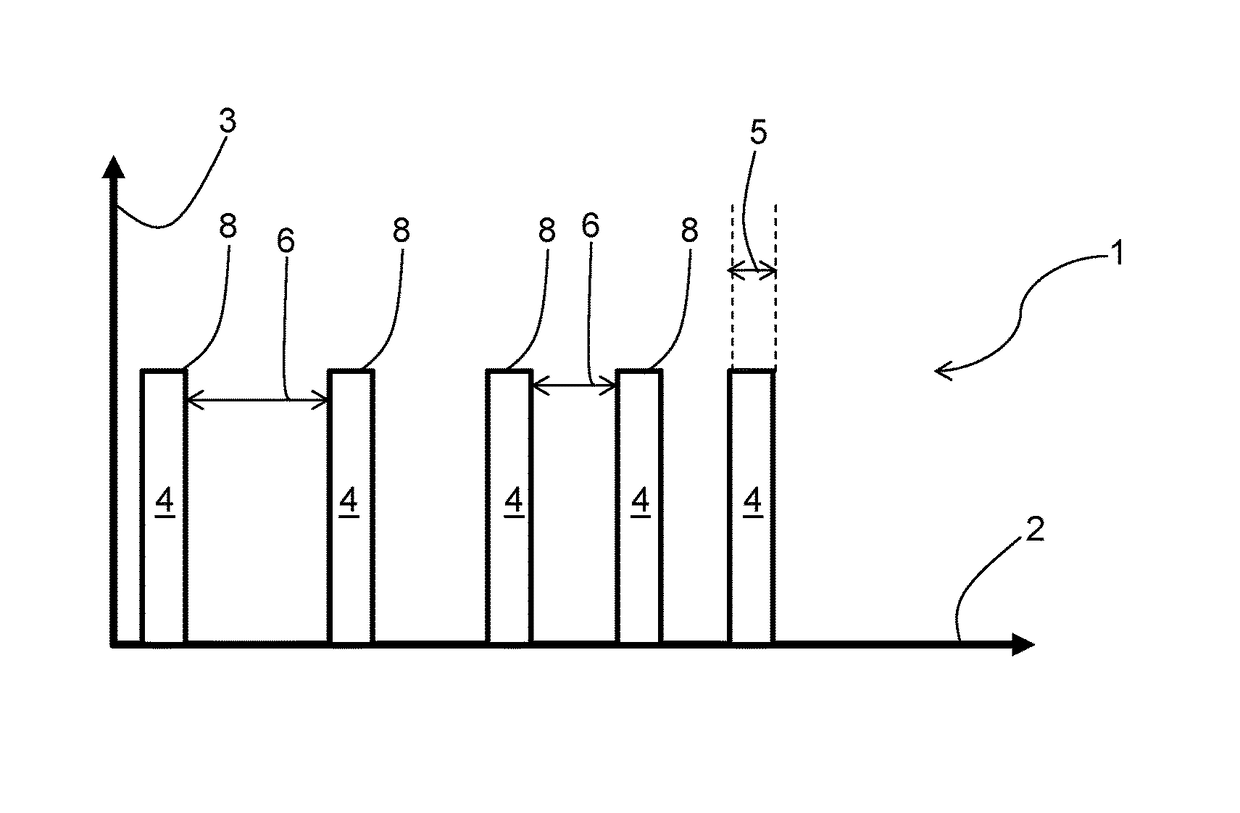
Figure 1 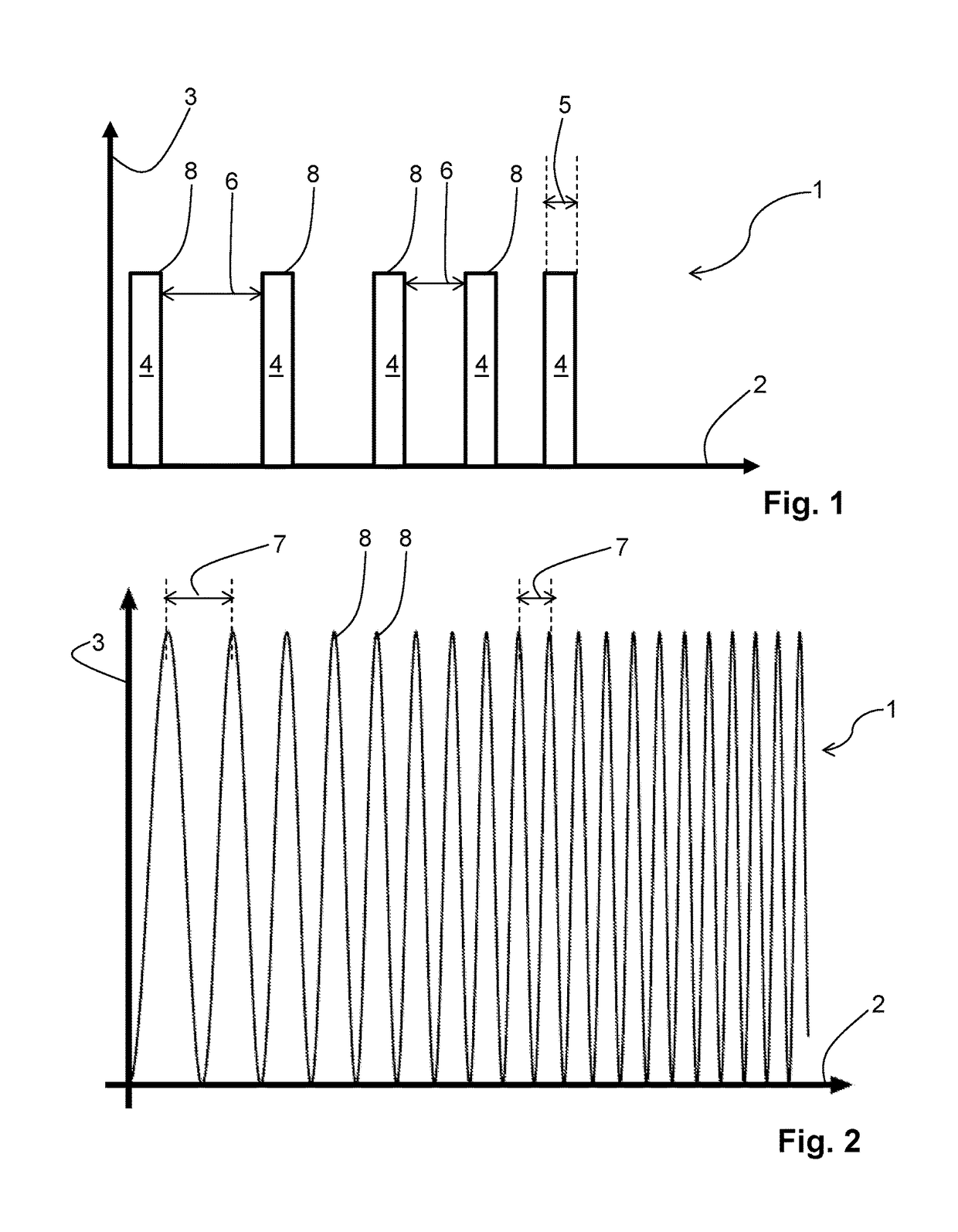
Figure 2 
Figure 3
Abstract
Description
[0001] This is a Continuation of International Patent Application No. PCT / IB2014 / 063765, filed Aug. 7, 2014 which claims the benefit of German Patent Application DE 10 2013 109 010.9, filed Aug. 21, 2013, both of which are hereby incorporated by reference herein.
[0002] The present invention relates to a method for determining a variable of a sample, more specifically to a method in which the variable of the sample is determined from the luminescence behavior of a sensor substance.BACKGROUND
[0003] The German published patent application DE 196 34 873 A1 describes an apparatus and a method for discriminating, by a time-resolved fluorescence measurement, at least two differently fluorescing types of molecule groups bound to analyte molecules. Therein a light source for illuminating a sample volume is activated for a time-interval T1, then, after a time-interval T2, a detector is activated for a time T3. Which of the at least two molecule groups are contained in the sample volume is determ...
Examples
Embodiment Construction
[0054]FIG. 1 shows an excitation signal 1, which is a sequence of pulses, as may be used for exciting a luminescence of a sensor substance in the method according to the invention. Time is shown on the abscissa 2, the ordinate 3 shows a measure for the strength of the excitation signal 1, for example the intensity of the excitation signal 1. The excitation signal 1 comprises a sequence of pulses 4, and is characterized by pulse durations 5 and distances 6 between pulses. In the sequence of pulses shown, the pulse durations 5 are constant over the duration of the sequence of pulses, the distances 6 between pulses, however, decrease from pulse 4 to pulse 4. The sum of pulse duration 5 and distance 6 between pulses for the rectangular pulses shown here corresponds to the temporal distance of consecutive signal maxima 8. The decreasing distances 6 between pulses therefore imply that the distances between consecutive signal maxima 8 of the excitation signal 1 decrease over the duration o...